





Active recovery
Active recovery during strength training programs refers to the performance of aerobic exercise after one strength training workout with the goal of accelerating recovery, such that the next strength training workout can be performed sooner. It is believed to work by increasing blood flow to the fatigued muscles, thereby removing metabolites and providing nutrients such as glucose.
.
#1. Does active recovery work?
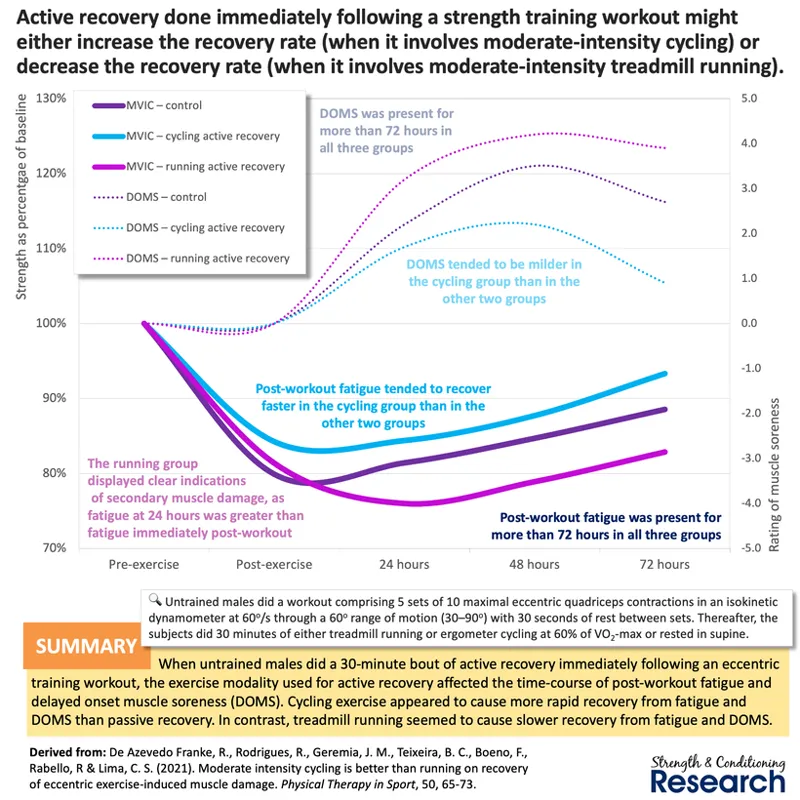
Active recovery involves doing some sort of low-intensity exercise (usually some kind of cardiovascular exercise) in the period of time between strength training workouts. Even so, there is very little evidence that it plays any positive role in accelerating recovery.
.
Indeed, the exact same observation has been made in very well-trained lifters as well as in untrained individuals (included here since training status is commonly used as a reason to ignore research).
.
#2. Does the type of active recovery matter?
Types of aerobic exercise that cause more post-workout fatigue (such as treadmill running, since it involves repeated eccentric contractions) are clearly less effective than those that cause less fatigue (such as cycling).
.
Even so, low-intensity aerobic exercise is more problematic for recovery after a strength training workout than moderate-intensity aerobic exercise of the same duration. This really does not make sense in the context of treating active recovery as identical to concurrent training, and suggests that there may be something else going on. Exactly what that might be, however, is not clear.
.
#3. Is active recovery the same as concurrent training?
Arguably, active recovery is essentially the same thing as concurrent training. Concurrent training is commonly associated with reduced hypertrophy after strength training rather than greater adaptations (read more).
.
Concurrent training involves reduced strength training adaptations precisely because aerobic exercise causes MORE post-workout fatigue rather than helping post-workout fatigue after strength training workouts to dissipate more quickly (read more).
.
#4. Would increasing blood flow to the muscle accelerate recovery?
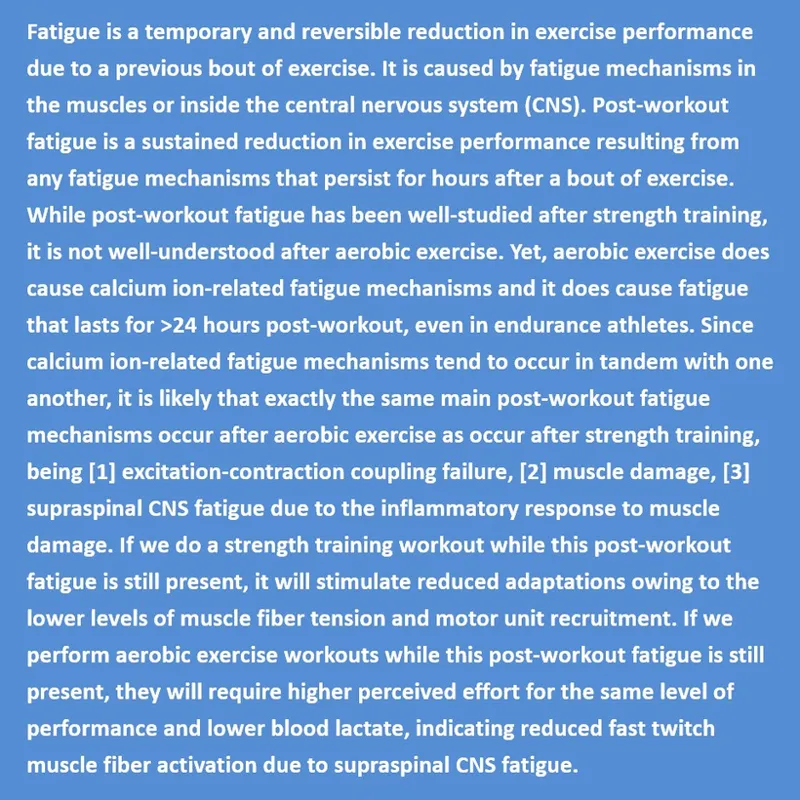
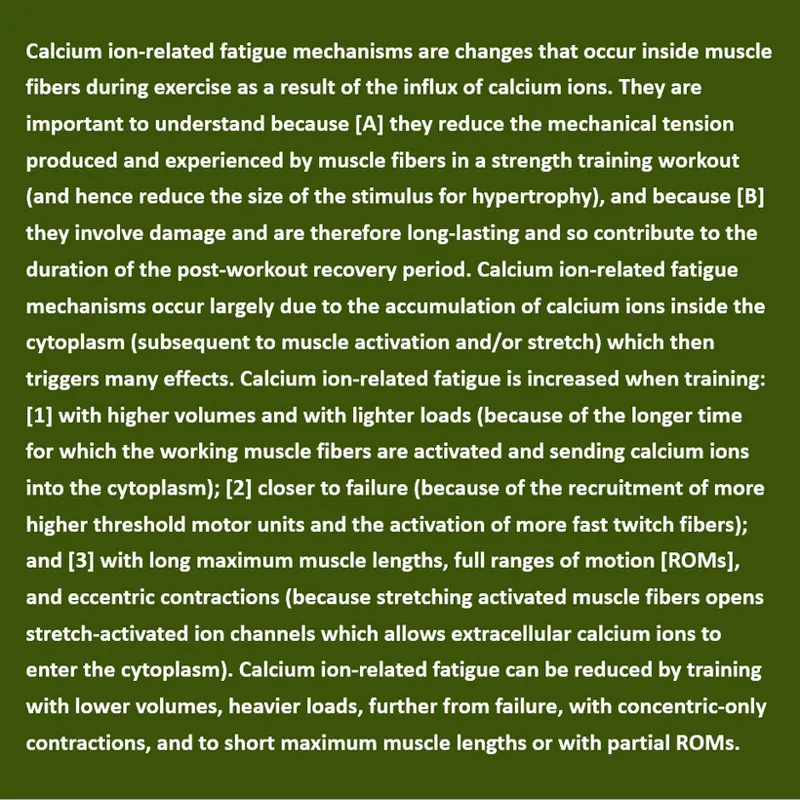
Post-workout fatigue exclusively involves calcium ion-related fatigue mechanisms. Calcium ion-related fatigue mechanisms are not caused by metabolites. Therefore, increasing blood flow to the muscle in order to improve the rate of metabolite clearance is irrelevant (read more).
.
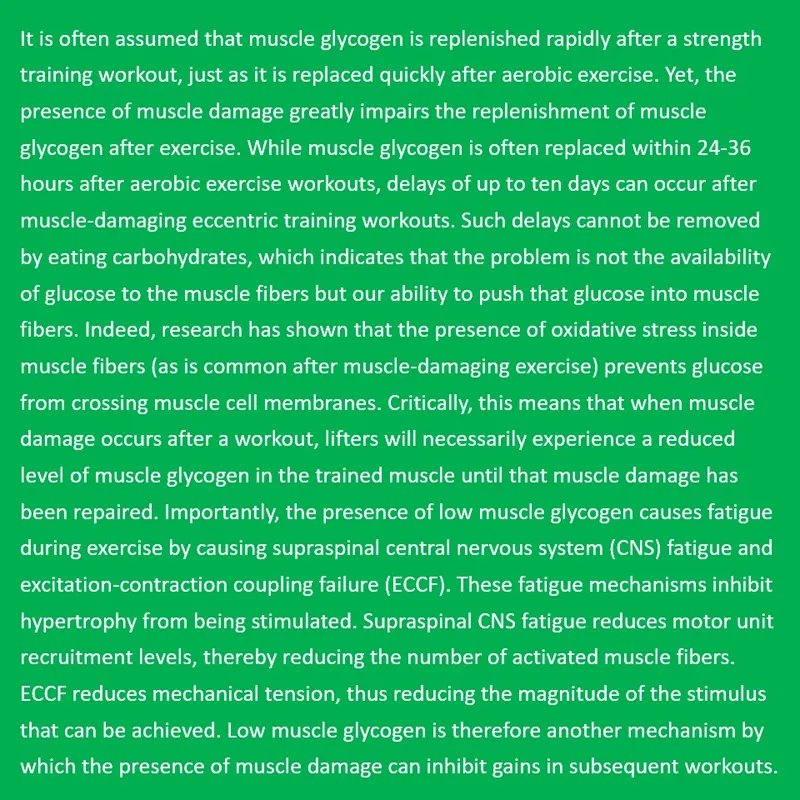
Additionally, the presence of oxidative stress resulting from calcium ion-related fatigue seems to prevent glucose transported through the bloodstream from entering damaged muscle fibers. This means that the provision of glucose is also irrelevant (read more).
.
Conclusion
Active recovery involves performing an aerobic exercise bout between strength training workouts with the goal of accelerating recovery. Currently, there is minimal evidence that active recovery after a strength training workout does speed up the rate of recovery. This makes sense for two reasons. Firstly, active recovery is identical to concurrent training, which has frequently been linked to reduced strength training adaptations (rather than greater strength training adaptations) owing to the post-workout fatigue caused by the aerobic exercise interfering with the stimulus caused by later strength training workouts. Secondly, active recovery has been proposed to work by increasing blood flow to the fatigued muscles, thereby removing metabolites and providing nutrients. Yet, calcium ion-related fatigue is not caused by metabolites (so the rate of metabolite clearance is irrelevant), and the presence of oxidative stress resulting from calcium ion-related fatigue probably prevents glucose from entering damaged muscle fibers (so the provision of glucose is also irrelevant). Ultimately, even if active recovery does work through another mechanism, we still need to treat it as concurrent training and avoid causing more post-workout fatigue by means of muscle-damaging contractions. So low-to-moderate intensity cycling (or some other, low-impact exercise) is going to be much more effective than running.


Comments (1)
Interesting point with Low Intensity Active Recovery being worse than Moderate Intensity Active Recovery.