






Metabolic stress (hypertrophy)
Metabolite accumulation (or "metabolic stress" as it is often called without any real justification) has been proposed as a hypertrophy mechanism based on at least nine different observations. However, we can see that all of them are very flawed either insofar as they are simply not true or can be easily explained by alternative physiological phenomena.
.
#1. Comparisons between eccentric and concentric training
Many years ago, researchers suggested that metabolite accumulation could cause hypertrophy because similar volumes of eccentric contractions and concentric contractions cause the same muscle growth, but the external forces are higher during eccentric contractions than during concentric contractions. It was suggested that the greater accumulation of metabolites during concentric training could compensate for the reduced mechanical tension experienced by the individual muscle fibers.
.
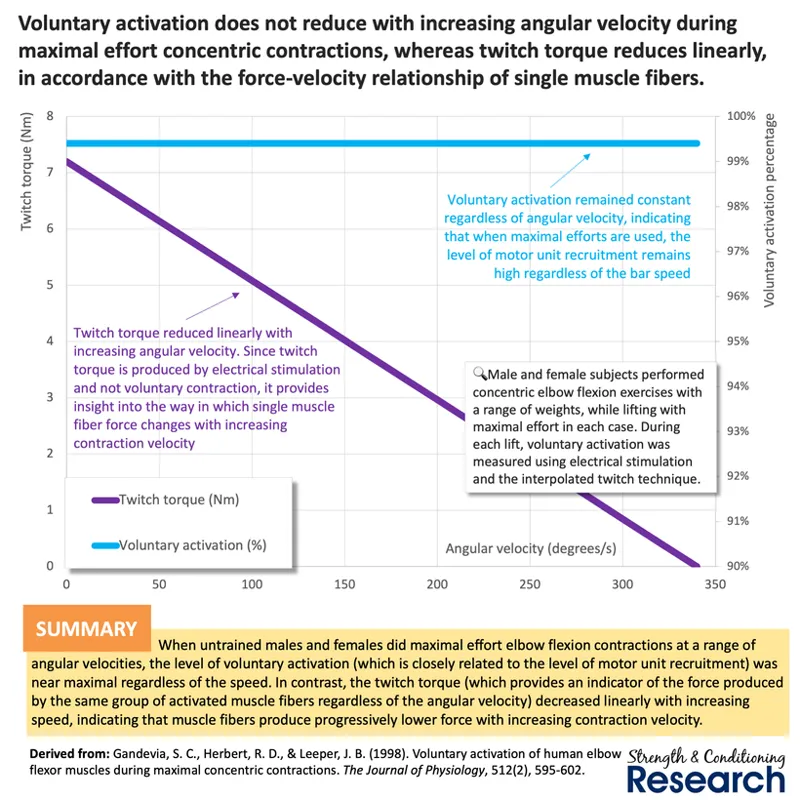
However, there is an alternative explanation that is easily verifiable and which does not require any hypothetical role for metabolites. Eccentric contractions typically involve lower levels of motor unit recruitment than concentric contractions, even when maximal efforts are being exerted. Thus, we might expect eccentric training to cause more hypertrophy to occur in fewer muscle fibers, while concentric training might cause less hypertrophy in more muscle fibers. Hence, overall whole muscle hypertrophy could be similar.
.
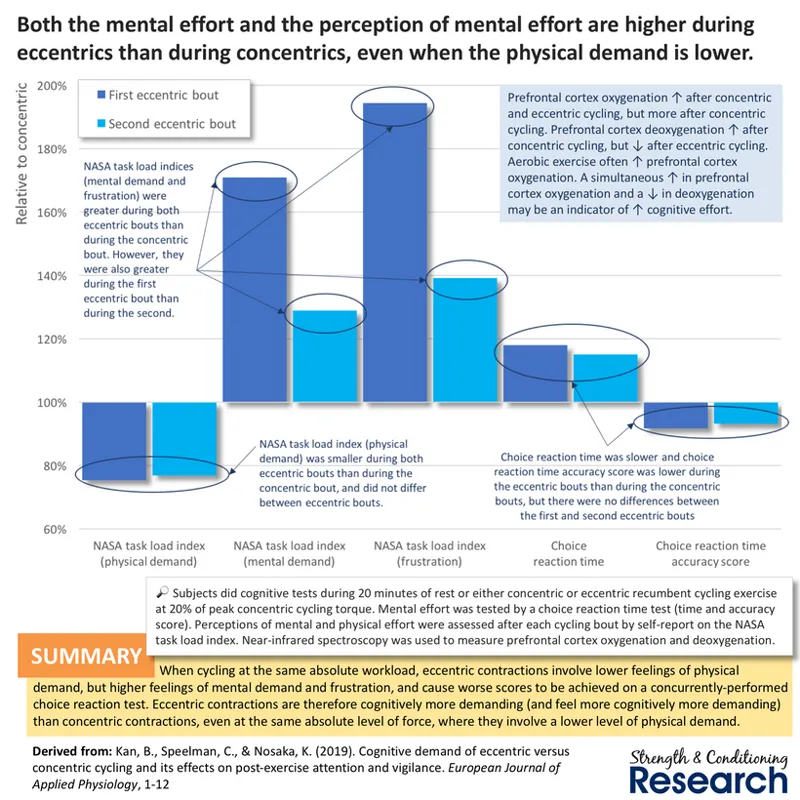
Incidentally, the lower level of motor unit recruitment in eccentric contractions is likely the result of the greater coordination requirement. By requiring more mental effort, the greater coordination requirement increases the perception of effort for a given level of motor unit recruitment. This then causes the maximum tolerable level of effort (which determines the maximum possible magnitude of central motor command) to occur at a lower level of motor unit recruitment.
.
#2. Comparisons between fatiguing and non-fatiguing isometric training
Many years ago, researchers also suggested that metabolite accumulation could cause hypertrophy because they noticed that fatiguing isometric contractions caused more muscle growth than non-fatiguing isometric contractions that involved exactly the same force-time integral (implying that they involved the same dosage of mechanical tension, assuming that whole muscle force is the factor that drives mechanical tension). Once again, this observation failed to hit the mark because it did not take into account that motor unit recruitment at a given level of external force varies depending on the force-producing capacity of the muscles.
.
#3. Now-discarded belief that short rest periods enhance hypertrophy
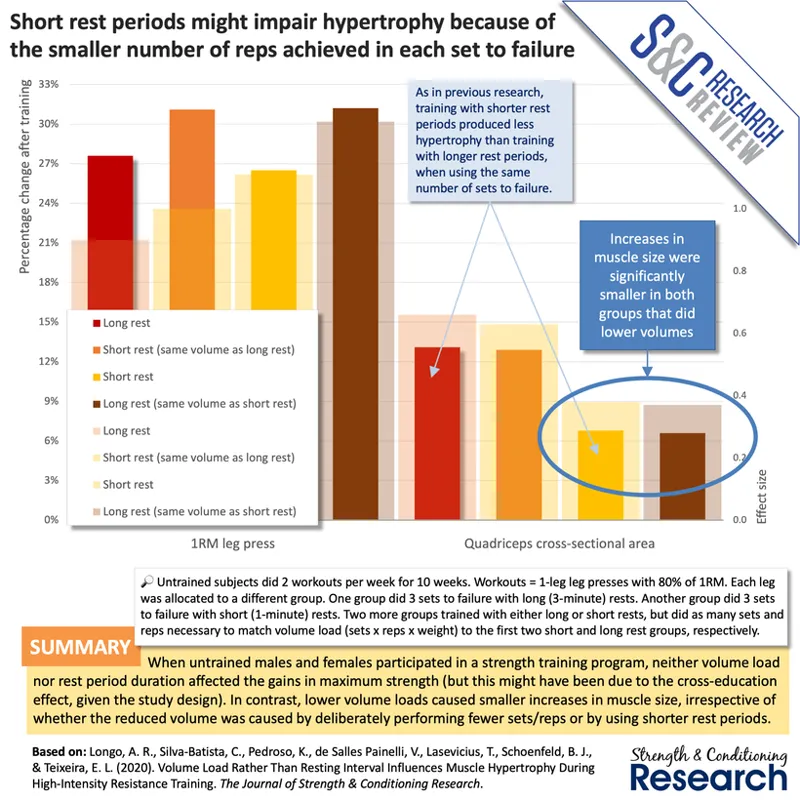
Many years ago, researchers also suggested that metabolite accumulation could cause hypertrophy because short rest periods appear to cause more metabolite accumulation and were commonly used by bodybuilders. Nevertheless, later research revealed that short rest periods do not cause more muscle growth. In fact, since they involve training while fatigue is still present (where the fatigue either reduces motor unit recruitment or the amount of single fiber mechanical tension), they actually impair whole muscle hypertrophy.
.
#4. Does metabolite accumulation increase motor unit recruitment?
Many years ago, researchers also suggested that metabolite accumulation could cause hypertrophy because the fatigue that it produces leads to increased motor unit recruitment, thereby allowing more muscle fibers to experience hypertrophy. This explanation is still often used today. Nevertheless, it is physiologically incorrect. The level of motor unit recruitment that we experience at any point in time is completely under voluntary control. If we choose to exert a relatively low level of effort (and thereby move the weight at a slow tempo) then the level of motor unit recruitment is low. Conversely, if we choose to exert a relatively high level of effort (and thereby move the weight as fast as possible) then the level of motor unit recruitment is high. The onset of metabolite-related fatigue simply changes the speed that the weight travels for the level of effort being applied.
.
#5. Does metabolite accumulation cause preferential slow twitch fiber hypertrophy?
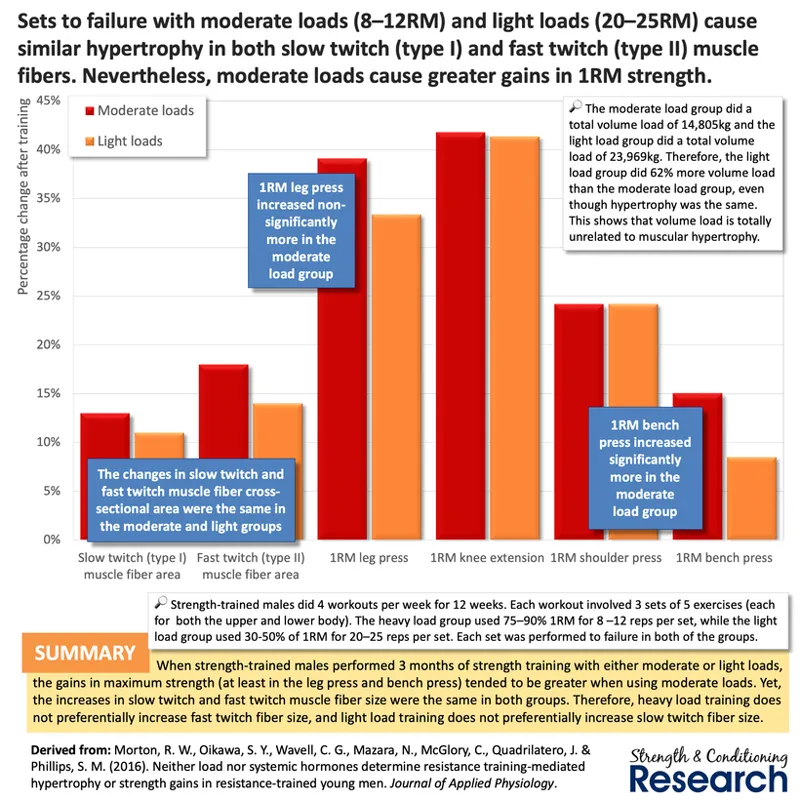
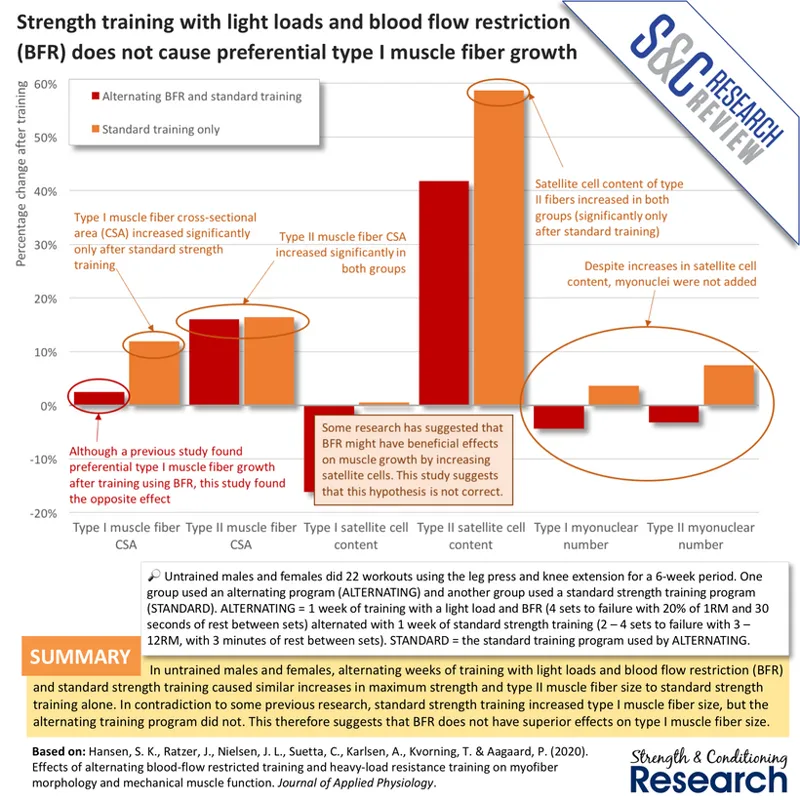
Early research suggested that light load strength training with or without blood flow restriction (BFR) might cause preferential slow twitch (type I) muscle fiber hypertrophy. For this reason, it was suggested that metabolite accumulation might cause slow twitch fiber growth, while mechanical tension might cause fast twitch fiber growth. However, the most recent research has shown that light load strength training to failure does not produce preferential slow twitch hypertrophy.
Similarly, the most recent research shows that light load strength training with BFR does not cause preferential slow twitch muscle fiber growth either.
.
#6. Does lactate accumulation cause hypertrophy?
Another recent hypothesis in support of metabolite accumulation is that lactate directly stimulates hypertrophy. While early studies supported this idea, it has since been overturned (read more).
.
#7. Does reactive oxygen species (ROS) accumulation cause hypertrophy?
Researchers have identified that oxidative stress in the form of reactive oxygen species (ROS) is often associated with increases in anabolic signaling. This has been taken as evidence that ROS might directly stimulate hypertrophy. Nevertheless, this is just muscle damage repair signaling (which uses the same pathway) because ROS are a good proxy that muscle damage has happened (read more).
.
#8. Does hypoxia cause hypertrophy?
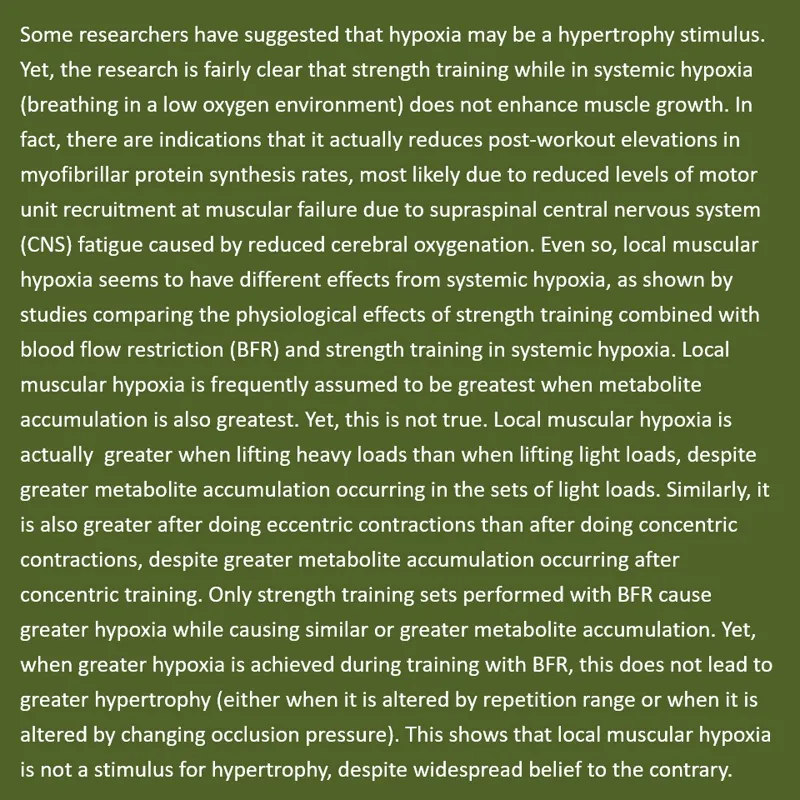
Another recent hypothesis in support of metabolite accumulation is that hypoxia directly stimulates hypertrophy. This is wrong for two reasons. Firstly, metabolite accumulation is inversely associated with hypoxia, which means that hypoxia can never be a metabolic stress mechanism. Secondly, the experience of hypoxia does not stimulate hypertrophy anyway (read more).
.
#8. Does the muscle pump cause hypertrophy?
Yet another recent hypothesis in support of metabolite accumulation is that the muscle pump can increase the active mechanical tension that stimulates hypertrophy. While this is a very interesting idea, the current data suggest that the muscle pump actually reduces active mechanical tension by accelerating calcium ion-related fatigue (read more).
.
Conclusions
Some researchers have suggested that the accumulation of metabolites inside a muscle might cause hypertrophy, owing to nine observations: [1] similar muscle growth after eccentric-only and concentric-only training despite much greater mechanical tension in eccentric contractions, [2] greater muscle growth after isometric training under fatiguing conditions compared to isometric training in non-fatiguing conditions, [3] the belief that shorter inter-set rest periods caused more muscle growth, [4] early observations that light load strength training might cause preferential slow twitch hypertrophy, [5] the mistaken idea that fatigue can directly affect motor unit recruitment levels, [6] early rodent studies indicating that lactate might cause hypertrophy directly, [7] a link between reactive oxygen species and anabolic signaling, [8] early indications that hypoxia might contribute to muscle growth, and [9] the notion that transitory muscle swelling (the muscle pump) could increase mechanical tension inside muscle fibers in muscular contractions. All of these observations have been discarded either because they are simply incorrect (as is the case with short rest periods enhancing hypertrophy, light load strength training causing more slow twitch fiber hypertrophy, fatigue directly affecting levels of motor unit recruitment, lactate and hypoxia causing hypertrophy, and the muscle pump increasing mechanical tension) or because they have been explained by reference to other more well-established physiological phenomena. Therefore, it seems self-evident that the metabolic stress hypothesis of hypertrophy must similarly be discarded.



Comments (1)
Great article Chris - thanks - it seems like your writings reinforce the specific adaptation to imposed demands principle. The demand during metabolite accumulation would seem to be fatigue resistance not muscular hypertrophy. Interestingly I can remember in hard core gyms the bodybuilders referring to light load training as cardio. So while they may have embraced short rest intervals they also acknowledged that training characterized more by metabolite accumulation than force production was not a growth stimulus.