




Reactive oxygen species do not cause hypertrophy
Although we can perfectly easily explain all observations about hypertrophy by reference to (active and passive) mechanical tension, some researchers continue to argue that metabolite accumulation and related physiological changes are able to stimulate muscle growth. Recently, it has been suggested that reactive oxygen species (ROS) may be able to cause hypertrophy.
.
#1. Reactive oxygen species cause muscle damage
Research has shown that reactive oxygen species are a major cause of muscle damage inside muscle fibers after exercise. These reactive oxygen species are produced through various mechanisms resulting from muscular contractions.
.
Muscle damage leads to repair processes that involve largely identical pathways to hypertrophy. Indeed, this is why muscle damage was for many years believed to be another stimulus for muscle growth, because researchers were unable to differentiate between the pathways that caused muscle damage repair of existing muscle protein and the pathways that caused the addition of new muscle protein. Since reactive oxygen species cause muscle damage, we would predict that they will cause signaling in hypertrophic pathways.
.
#2. Reactive oxygen species cause specific types of muscle damage
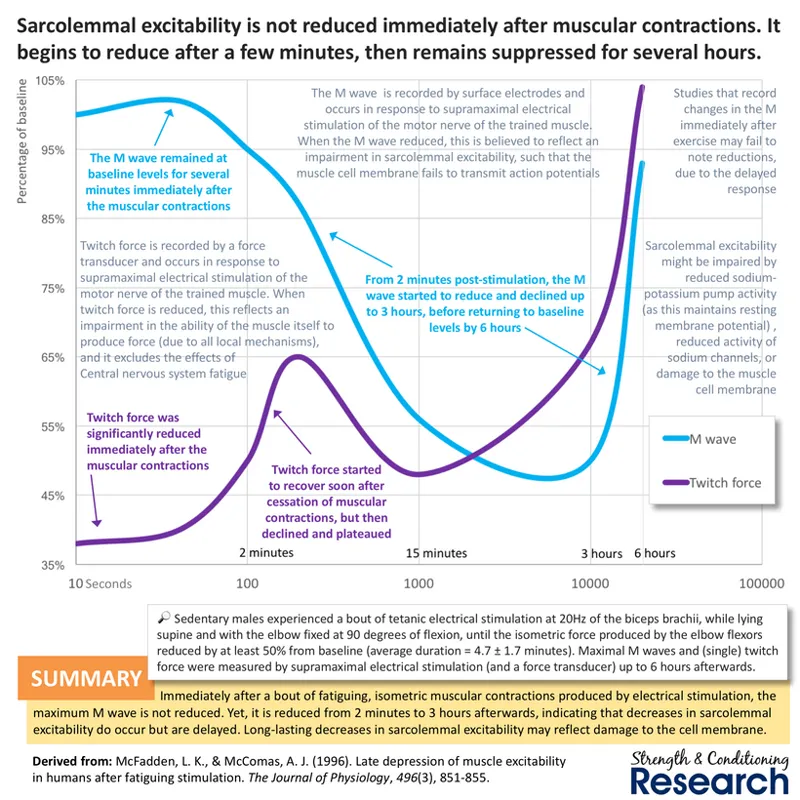
Importantly, we know that oxidative stress does not just cause muscle damage generally but rather produces very specific types of muscle damage in certain locations within the muscle fiber. For example, reactive oxygen species very likely contributes to damage to the cell membrane of the muscle fiber, causing losses in sarcolemmal excitability and leading to reduced excitation-contraction coupling.
.
Reactive oxygen species cause damage to occur at the muscle cell membrane because their production stimulates the release of phospholipases inside the muscle fiber cytoplasm, which in turn damage the muscle cell membrane. We also know that reactive oxygen species causes damage to the sarcoplasmic reticulum of the muscle fiber (alongside the calpains that are more commonly associated with this type of damage), causing impaired function of the ryanodine receptors and thereby contributing to reduced excitation-contraction coupling.
.
Interestingly, repeated exercise that causes the production of oxidative stress increases fatigue resistance while reducing this type of sarcoplasmic reticulum damage. This indicates that the damage repair process causes certain adaptations inside the triadic junction, causing resistance to excitation-contraction coupling failure. Consequently, reactive oxygen species signaling may well be the key to stimulating resistance to certain calcium ion-related fatigue mechanisms.
.
Indeed, the idea that the addition of such proteins is key to improving fatigue resistance is supported by the recent repeated bout effect literature, which has shown that one feature of the repeated bout effect is an increase in the amount of proteins located close to the cell membrane and the sarcoplasmic reticulum.
.
Conclusions
Although we can perfectly easily explain all observations about hypertrophy by reference to (active and passive) mechanical tension, some researchers still argue that metabolite accumulation and related physiological events can stimulate muscle growth directly. Indeed, it has been suggested that oxidative stress or reactive oxygen species (ROS) can cause hypertrophy. Even so, we can much more easily explain the role of ROS by reference to [1] their involvement in causing muscle damage, and [2] their involvement in stimulating improvements in fatigue resistance. Indeed, research has shown that ROS cause muscle damage that then requires repair processes that use anabolic signaling pathways, which can easily be mistaken for playing a role in hypertrophy. The types of muscle damage caused by ROS include disruptions to the cell membrane and to the sarcoplasmic reticulum. These two types of muscle damage are calcium ion-related fatigue mechanisms that occur during exercise and lead to reduced excitation-contraction coupling and hence reduced crossbridge formation. Additionally, long-term training studies and repeated bout effect studies indicate that experiencing these types of muscle damage seems to cause the addition of more proteins at the cell membrane and in the sarcoplasmic reticulum that are connected to improved fatigue resistance. Therefore, ROS seems to be more closely involved in causing muscle damage and subsequent fatigue resistance adaptations than in stimulating hypertrophy.