





Lactate does not stimulate hypertrophy
Some researchers have proposed that lactate may be a direct stimulus for muscle growth and may therefore provide support for the "metabolic stress" hypothesis of hypertrophy. Nevertheless, the most recent studies have contradicted this idea and an analysis of the physiology suggests that it was never really a possibility.
.
Does lactate stimulate hypertrophy directly?
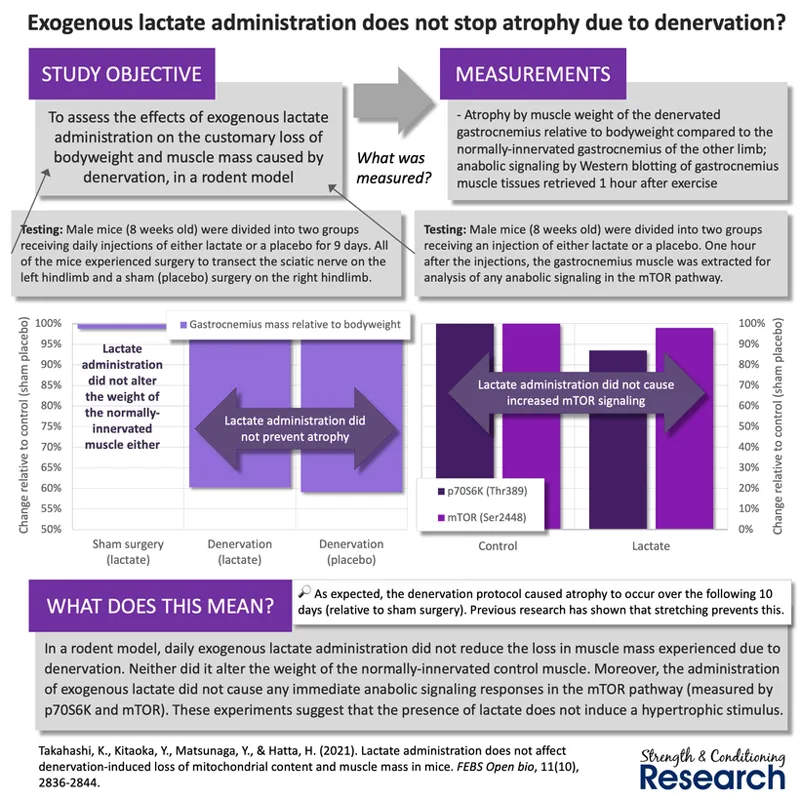
In recent years, some in vitro and rodent studies have found that introducing lactate into a muscle or into a muscle fiber can cause hypertrophy. Yet, more recent studies using rodents have contradicted these early findings and have shown that introducing lactate into rodent muscle does not cause muscle growth.
.
In fact, the administration of lactate into rodent muscle cannot even prevent atrophy after muscles are denervated. Since the stimulus required to keep muscle from atrophying is much smaller than the stimulus required for hypertrophy, this strongly suggests that lactate does nothing at all for stimulating muscle growth.
.
In addition to studies in rodents, there has also been research in humans. A recent study tested the effects of introducing additional lactate into a muscle during a strength training workout in strength-trained subjects, and it found no increase in the post-workout elevation in muscle protein synthesis over the next 24 hours.
.
In reality, this finding was not unexpected, since there are good reasons to reject any connection between lactate and hypertrophy. Let us consider these now.
.
#1. Lactate is shuttled around the body
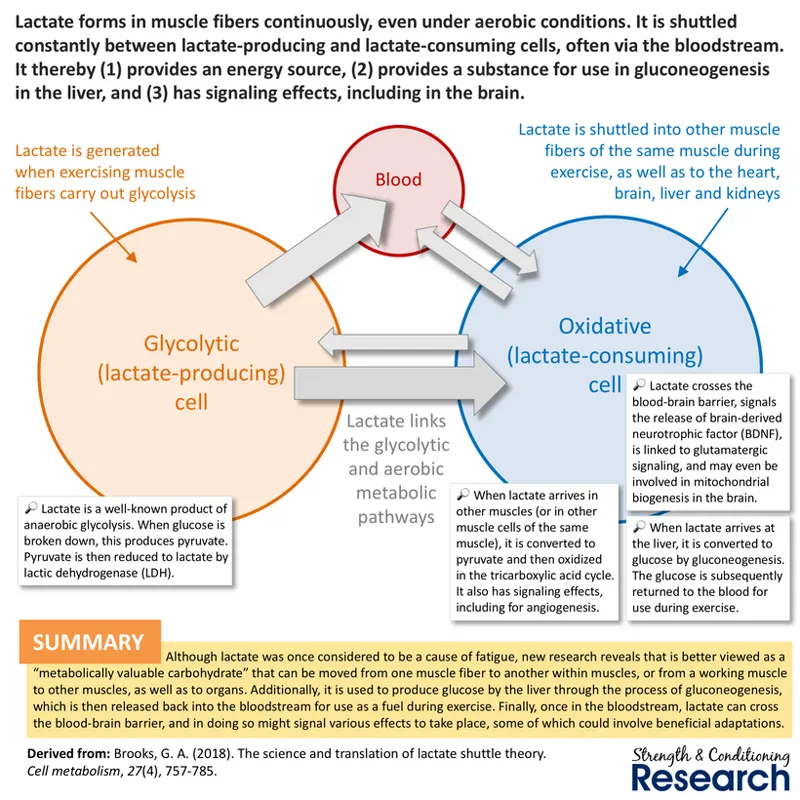
When lactate is produced in anaerobic exercise, it is shuttled out of the muscle fiber that produced it and into either neighboring muscle fibers of the same muscle even or other muscles entirely (by traveling through the bloodstream). This causes huge problems for any hypothesis that tries to link muscle lactate to hypertrophy, because we need to explain how lactate only triggers muscle fibers to grow when they produce lactate and not when they consume it. Otherwise, we are back to the "hormone hypothesis" and people believing that squats cause the whole body to grow, and we all know how well that turned out.
.
#2. Lactate is produced during high-velocity exercise too
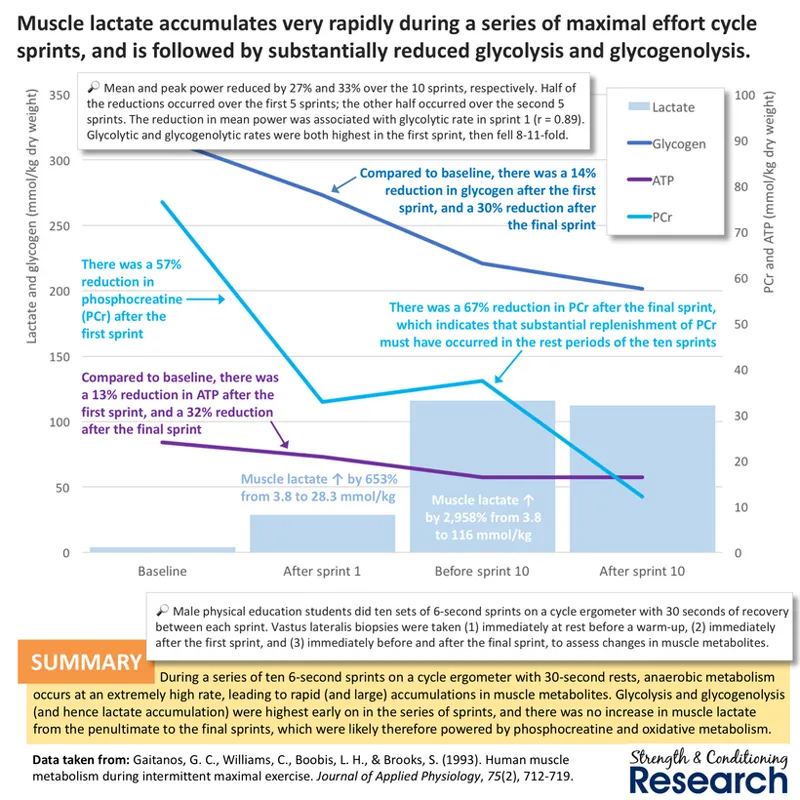
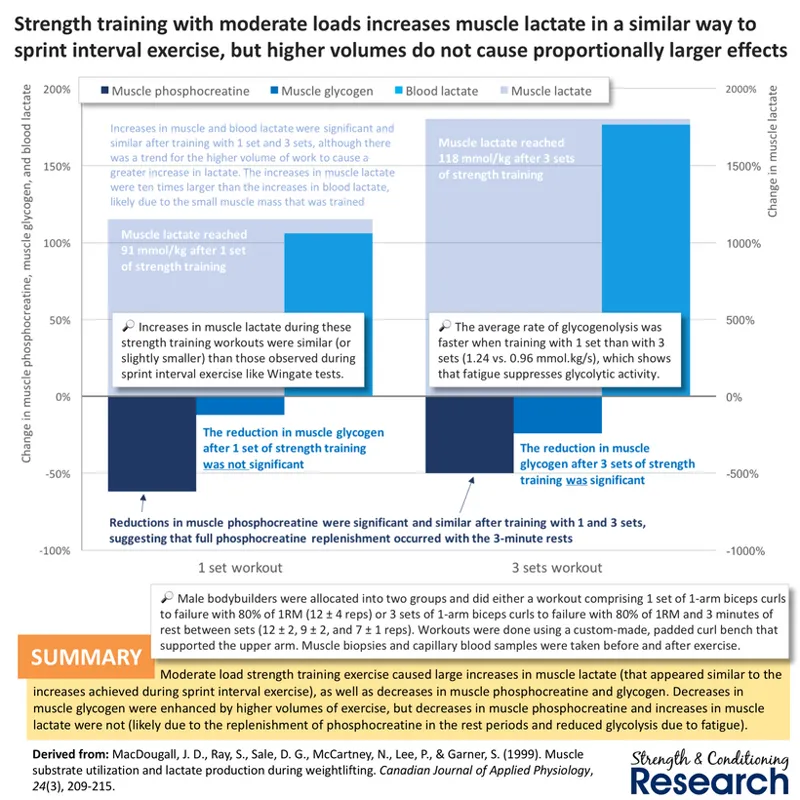
There are forms of exercise that cause a great deal of lactate accumulation, but which cannot be used to trigger meaningful muscle growth. Indeed, when we do a series of short-duration, high-velocity cycling sprints or 800-1500m track running, muscle lactate accumulates very fast, and reaches quite high levels.
.
Moreover, the level of muscle lactate that are reached during short-duration, high-velocity cycling sprints is extremely similar to the level that is reached during traditional, bodybuilding type strength training. Since short-duration cycle sprints do not cause muscle growth, while strength training does, this suggests that the presence of lactate is coincidental to hypertrophy, and is likely just a marker that fast twitch (glycolytic) fibers of high-threshold motor units have been activated.
.
#3. Lactate may cause supraspinal CNS fatigue which reduces muscle growth
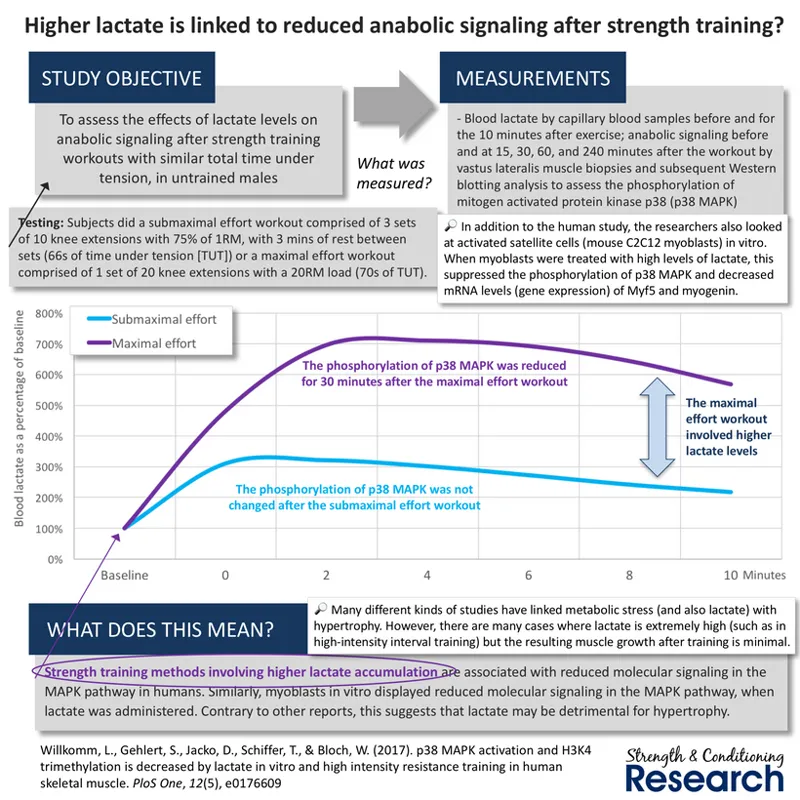
While some rodent studies did report that introducing lactate into a muscle can cause hypertrophy, research in humans has found an inverse relationship between lactate production and anabolic signaling after strength training workouts.
.
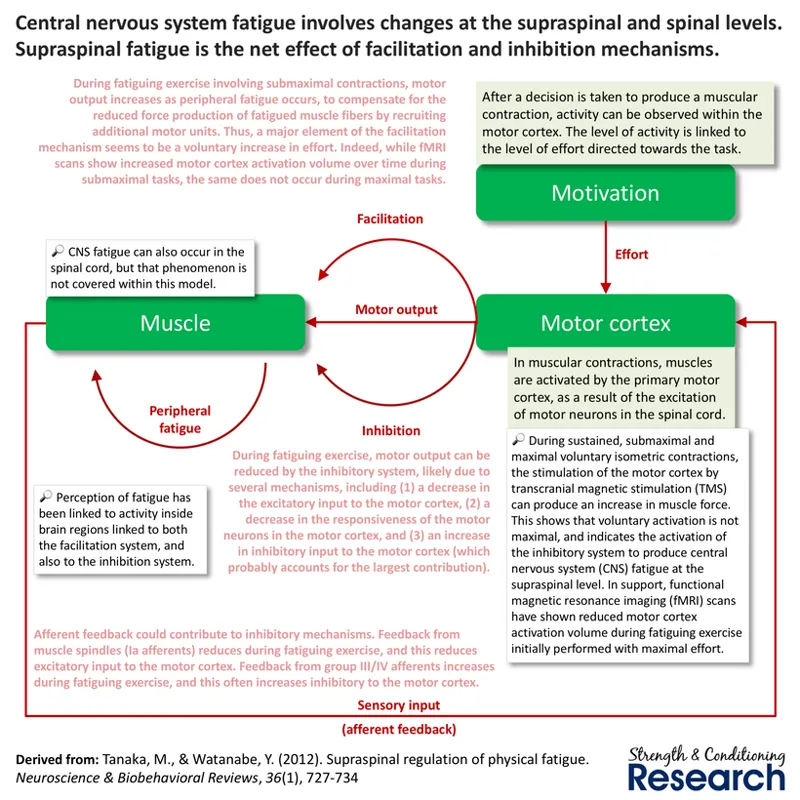
This reduced hypertrophy may result from increased supraspinal central nervous system (CNS) fatigue. Supraspinal CNS fatigue could be stimulated by lactate through two different mechanisms. Firstly, the production of lactate is associated with increased afferent feedback from muscles (when the production of lactate occurs in tandem with other metabolites).
.
Indeed, this afferent feedback is known to produce supraspinal CNS fatigue.
.
Secondly, lactate is known to increase the amount of inflammatory signaling that is generated by the working muscles during an exercise bout.
.
Indeed, the presence of inflammation during exercise (particularly IL-6) can cause supraspinal CNS fatigue, which impairs the recruitment of high-threshold motor units. Importantly, when the high-threshold motor units are not recruited, this subsequently stops their muscle fibers being activated and mechanically loaded.
.
Conclusions
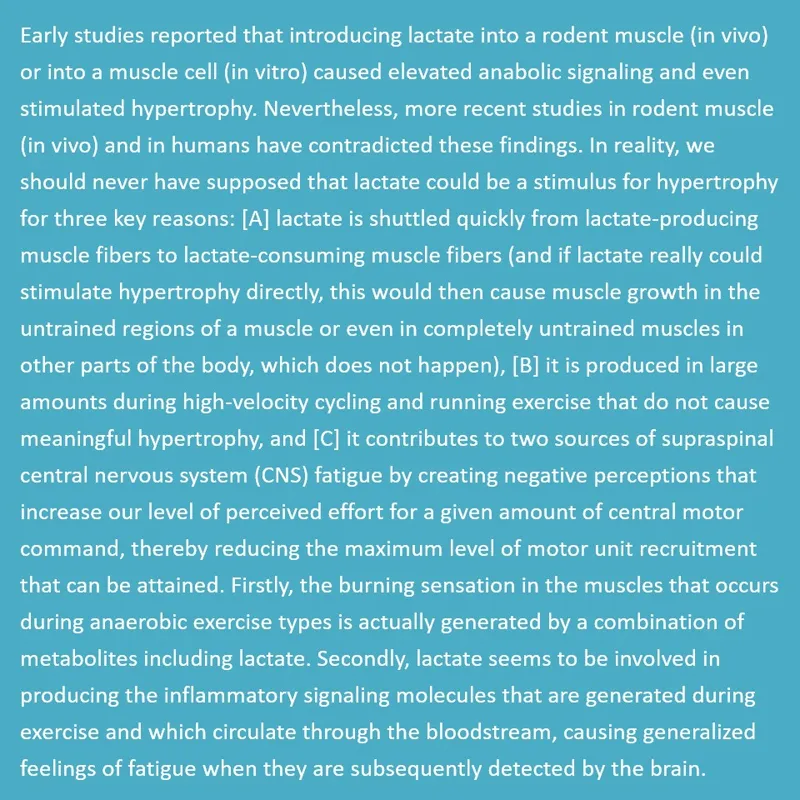
Early studies reported that introducing lactate into a rodent muscle (in vivo) or into a muscle cell (in vitro) caused elevated anabolic signaling and even stimulated hypertrophy. Nevertheless, more recent studies in rodent muscle (in vivo) and in humans have contradicted these findings. In reality, we should never have supposed that lactate could be a stimulus for hypertrophy for three key reasons: [A] lactate is shuttled quickly from lactate-producing muscle fibers to lactate-consuming muscle fibers (and if lactate really could stimulate hypertrophy directly, this would then cause muscle growth in the untrained regions of a muscle or even in completely untrained muscles in other parts of the body, which does not happen), [B] it is produced in large amounts during high-velocity cycling and running exercise that do not cause meaningful hypertrophy, and [C] it contributes to two sources of supraspinal central nervous system (CNS) fatigue by creating negative perceptions that increase our level of perceived effort for a given amount of central motor command, thereby reducing the maximum level of motor unit recruitment that can be attained. Firstly, the burning sensation in the muscles that occurs during anaerobic exercise types is actually generated by a combination of metabolites including lactate. Secondly, lactate seems to be involved in producing the inflammatory signaling molecules that are generated during exercise and which circulate through the bloodstream, causing generalized feelings of fatigue when they are subsequently detected by the brain.
Comments (3)
How about think 1 1/4 technique for hypertrophy ..?
Thanks Chris - I see now the notion that stretching can cause hypertrophy. Do you agree? If so how does this comport with progressive mechanical tension overload on the muscle fibers?
I explain this in my hypertrophy book. Essentially, the creation of actin-myosin crossbridges inside a muscle fiber is what produces mechanical tension actively. The stretching of titin inside muscle fibers is what produces mechanical tension passively. In both cases, mechanical tension is what creates the signal that leads to hypertrophy.