





Eccentric overload training
Eccentric overload refers to an increase in the external force in the lowering (eccentric) phase of a repetition. Eccentric overload is different from a slow lowering (eccentric) phase during normal strength training, which involves using the same load in the lifting (concentric) and lowering (eccentric) phases. Eccentric overload techniques increase the external force used in the lowering (eccentric) phase of a repetition by using weight releasers, flywheels, and certain motorized machines.
.
#1. Eccentric overload involves higher motor unit recruitment in the eccentric phase compared to the lowering phase of a normal strength training rep
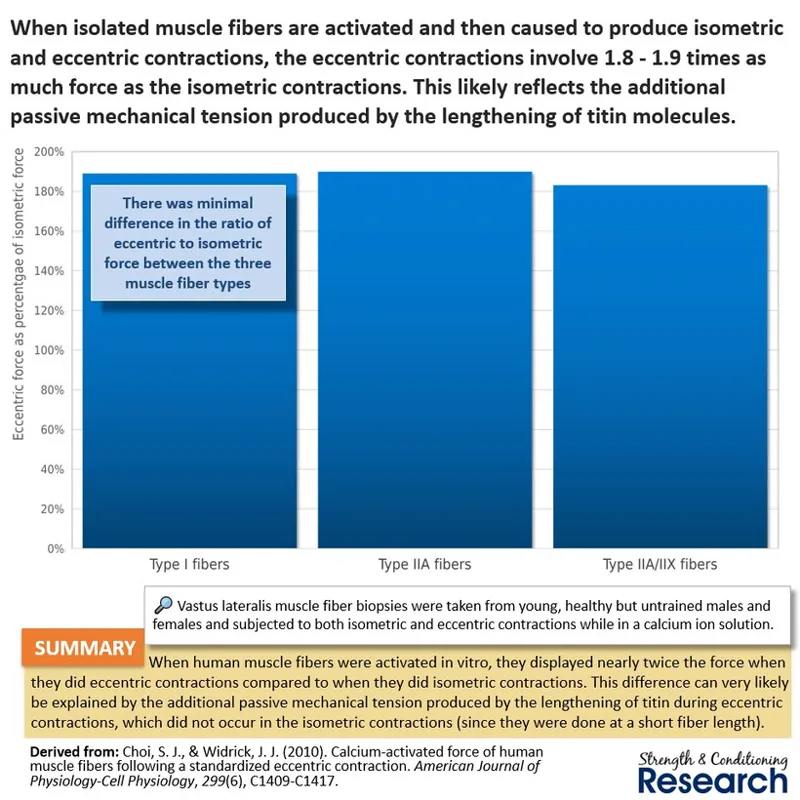
When comparing eccentric overload with normal lowering (eccentric) phases, whole muscle force and joint torques are higher. Even so, whole muscle force is not higher because of a higher level of mechanical tension being produced by single muscle fibers. Rather, it occurs as a result of an increase in the level of motor unit recruitment and the subsequent increase in the number of activated muscle fibers.
.
Of course, muscle fiber mechanical tension is higher in eccentric contractions compared to in isometric and concentric contractions because of the addition of passive mechanical tension. Nevertheless, when comparing two different eccentric contractions with different whole muscle force levels, the difference between them is always caused by degrees of motor unit recruitment.
.
#2. Eccentric overload training increases muscle fascicle length
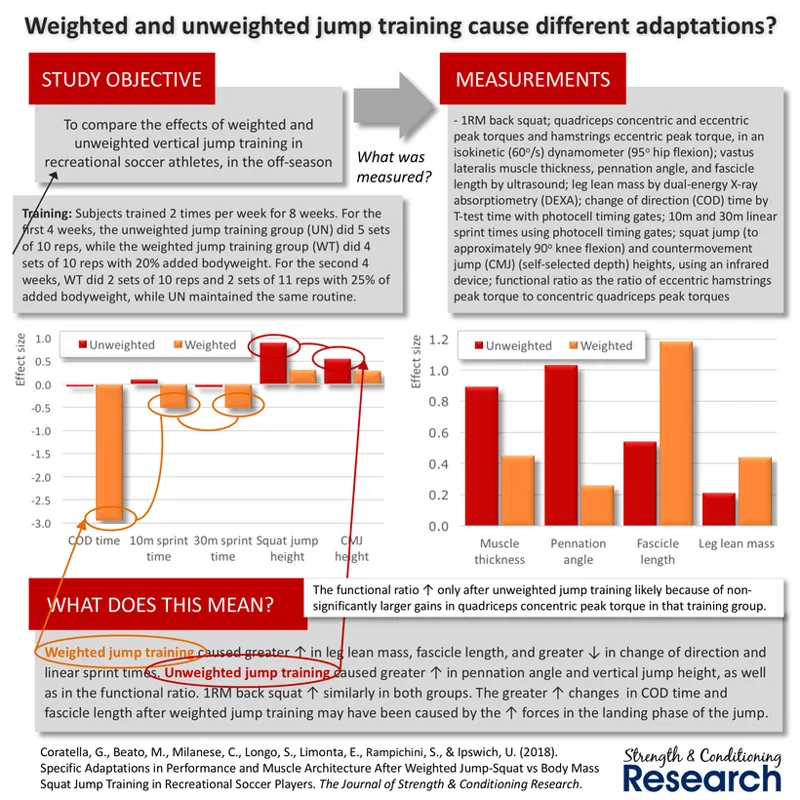
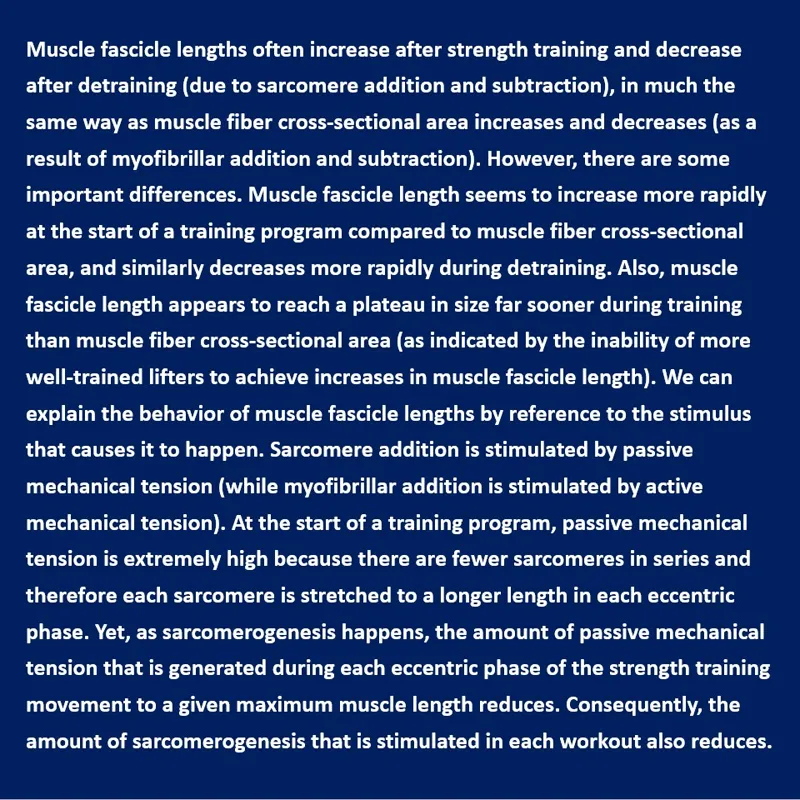
Eccentric overload strength training stimulates increases in muscle fascicle length in much the same way as eccentric-only strength training. In contrast, conventional strength training produces much smaller increases in muscle fascicle length, since far fewer muscle fibers are activated in the eccentric phase of the lift and so do not experience passive mechanical tension.
.
This result can be observed when looking at plyometric exercise that involves high forces in the landing phase of an exercise, such as loaded jump squats.
.
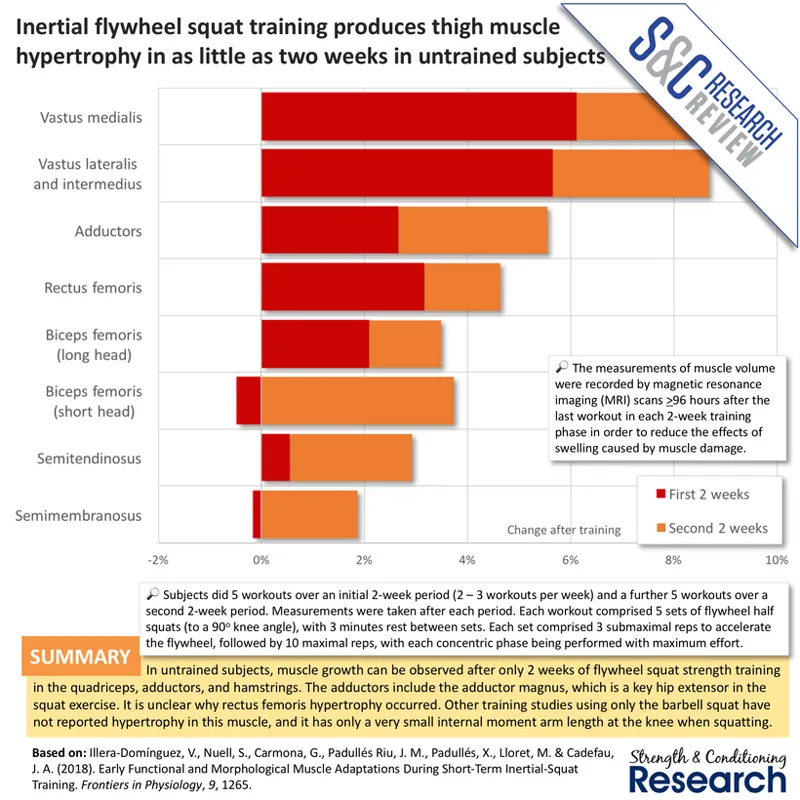
Owing to these much greater increases in fascicle length, eccentric overload training also causes far more rapid gains in muscle size at the very start of a strength training program.
.
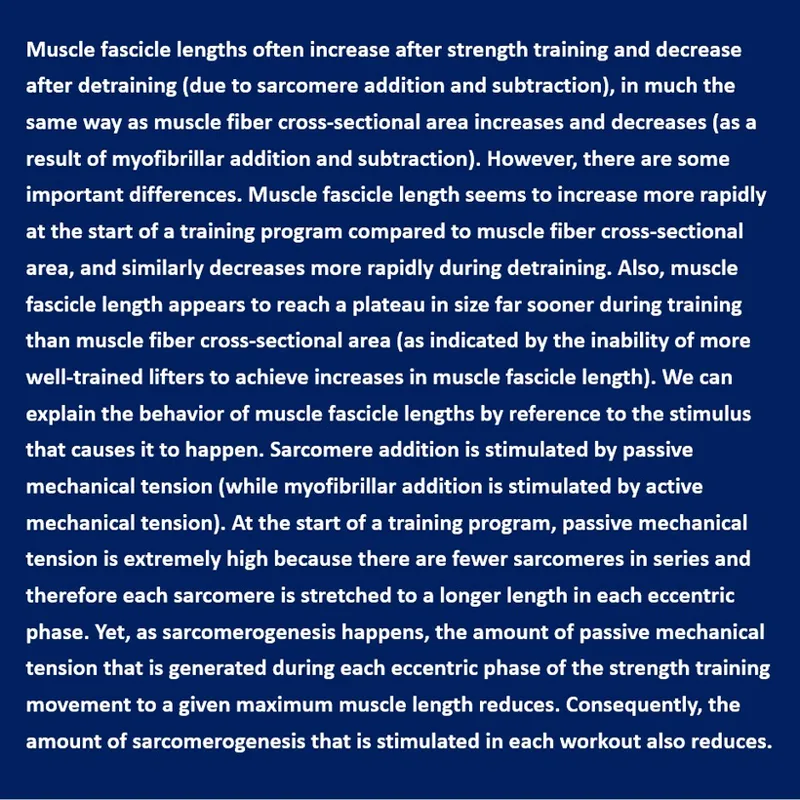
This happens because the sarcomerogenesis that causes increases in fascicle length occurs much faster than the increases in myofibrillar addition that increase muscle fiber cross-sectional area. Even so, this adaptation also reaches a plateau much earlier (read more).
.
#3. Eccentric overload increases voluntary activation in maximum eccentric contractions
Eccentric overload strength training also causes greater increases in muscle activation in maximum eccentric strength tests compared to in maximum concentric strength tests, which obviously contributes greatly to preferential increases in eccentric strength.
.
This is a very common observation after eccentric-only training and it arises because of the greater deficit in motor unit recruitment during maximal effort eccentric strength tests before the training program commences (read more).
.
#4. Eccentric overload causes more post-workout fatigue
Eccentric overload training causes much more post-workout fatigue than conventional strength training.
.
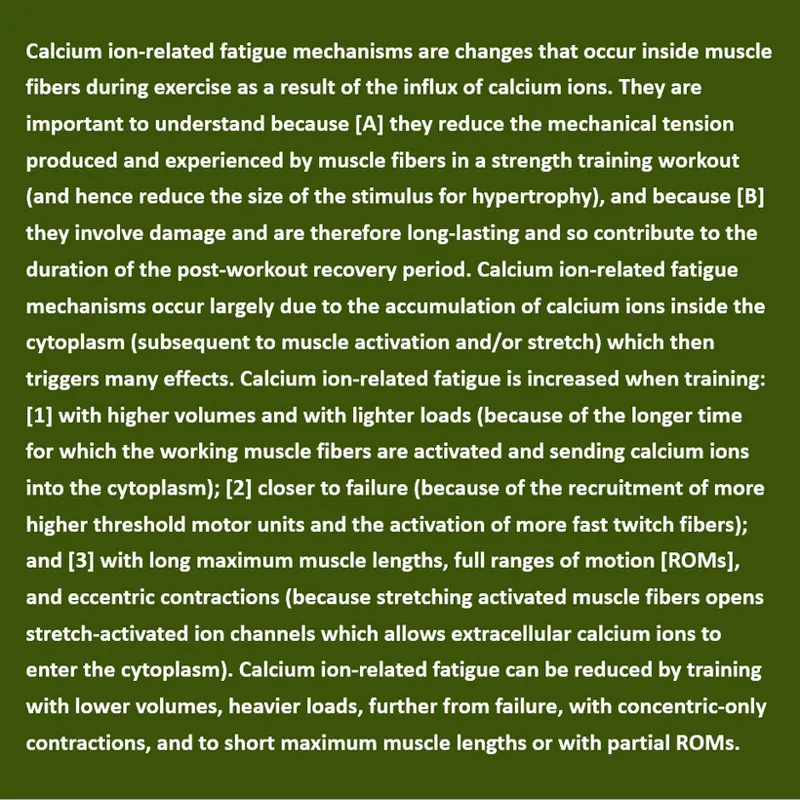
This greater post-workout fatigue is caused by the greater accumulation of calcium ions during the eccentric phase of each repetition.
.
#5. Eccentric overload causes more calcium ion-related fatigue during the workout
The main characteristic of calcium ion-related fatigue is to reduce the level of mechanical tension created by muscle fibers during exercise (read more).
.
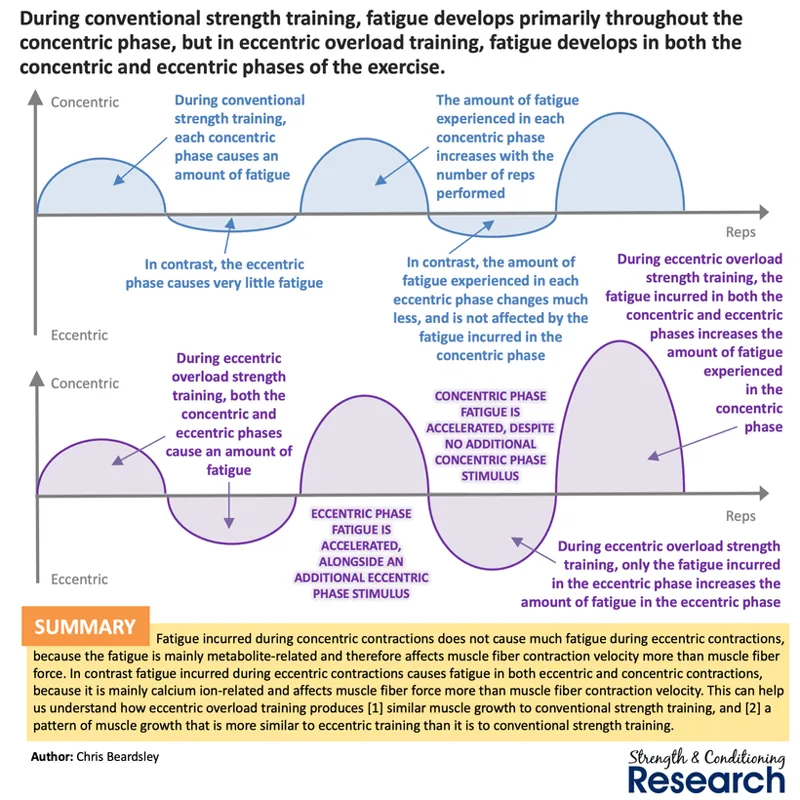
This greater calcium ion-related fatigue can explain why eccentric overload training causes similar local muscular adaptations to eccentric-only training instead of a combination of the adaptations produced by normal strength training and eccentric-only training. The extra calcium ion-related fatigue that is generated in the eccentric phases at the start of eccentric overload training sets prevents mechanical tension from being produced and experienced in the concentric phases of the final reps of the same set (which should really be the stimulating reps), essentially making the concentric phase redundant.
.
Conclusions
Eccentric overload refers to an increase in the external force in the lowering (eccentric) phase of a repetition, by means of a higher level of effort and hence a higher level of motor unit recruitment. Eccentric overload training causes similar adaptations to eccentric-only training, instead of the expected combination of adaptations from normal strength training (or concentric-only training) and eccentric-only training. It causes [1] preferential increases in eccentric strength compared to concentric strength, [2] preferential increases in motor unit recruitment in eccentric strength tests compared to in concentric strength tests, [3] greater increases in fascicle length and more rapid hypertrophy in the early phase of a training program (both of which indicate more sarcomerogenesis), and [4] greater post-workout muscle damage due to more calcium ion-related fatigue. It seems likely that the greater calcium ion-related fatigue caused by eccentric overload training is responsible for its similar peripheral adaptations to eccentric-only training. Owing to differences in the eccentric and concentric force-velocity relationships, maximal effort eccentric contractions involve a maximal stimulus for hypertrophy in the first reps of the set, but maximal effort concentric contractions involve a maximal stimulus at the end of the set. The extra calcium ion-related fatigue that is generated in the eccentric phases at the beginning of eccentric overload training sets prevents mechanical tension from being produced and experienced in the corresponding concentric phases of the final reps of the same set, essentially making the concentric phase redundant.


Comments (4)
Is eccentric strength velocity specific? Would eccentric overloaded calf raise be comparable to depth jump?
That sounds fantastic! I’m very interesting in calisthenics and strenght sports. Thanks!!
Hi Chris! Eccentric overload cause similar hypertrophy. But for strenght gains, why do you think for Sports like powerliftling or streetlifting? Maybe a reducction of fast twich? Thanks
That's a great topic for an FAQ. I will write one detailing the cross-over benefits of eccentric training for concentric/isometric strength. There are some interesting mechanisms there.