


Mechanisms of strength gains
Often, I am asked about the mechanisms by which increases in maximum strength occur. Here is a summary of the primary adaptations that contribute.
.
#1. Coordination improvements
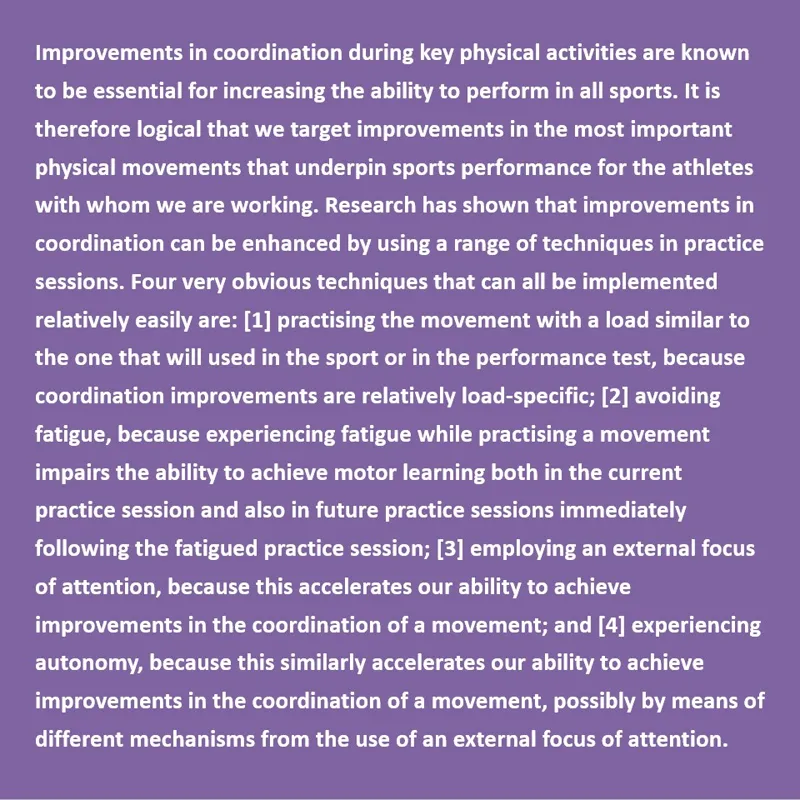
Coordination improvements are a key contributor to strength gains after strength training (read more).
.
#2. Reductions in antagonist coactivation
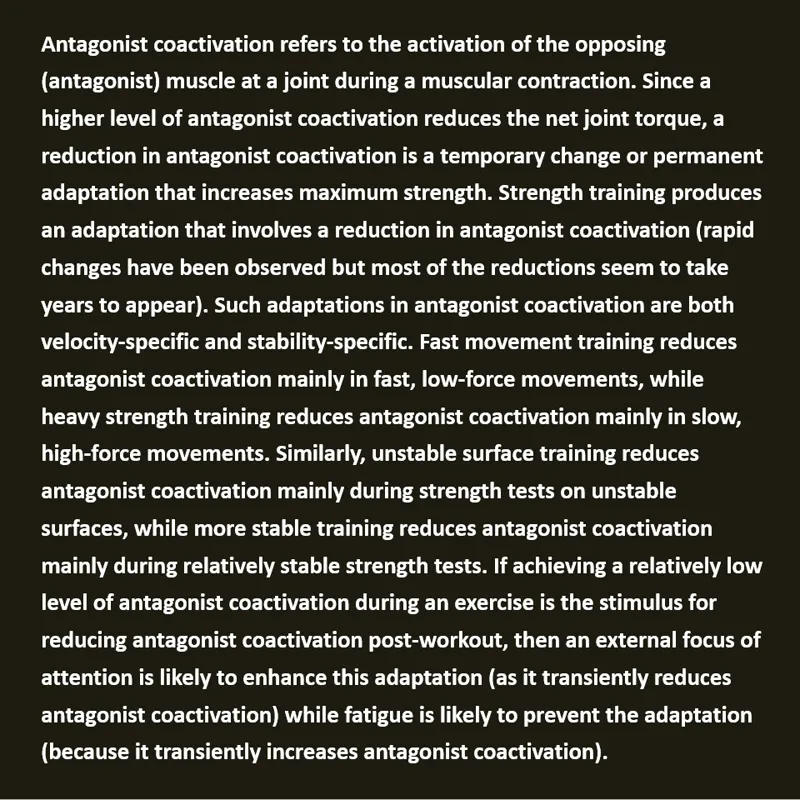
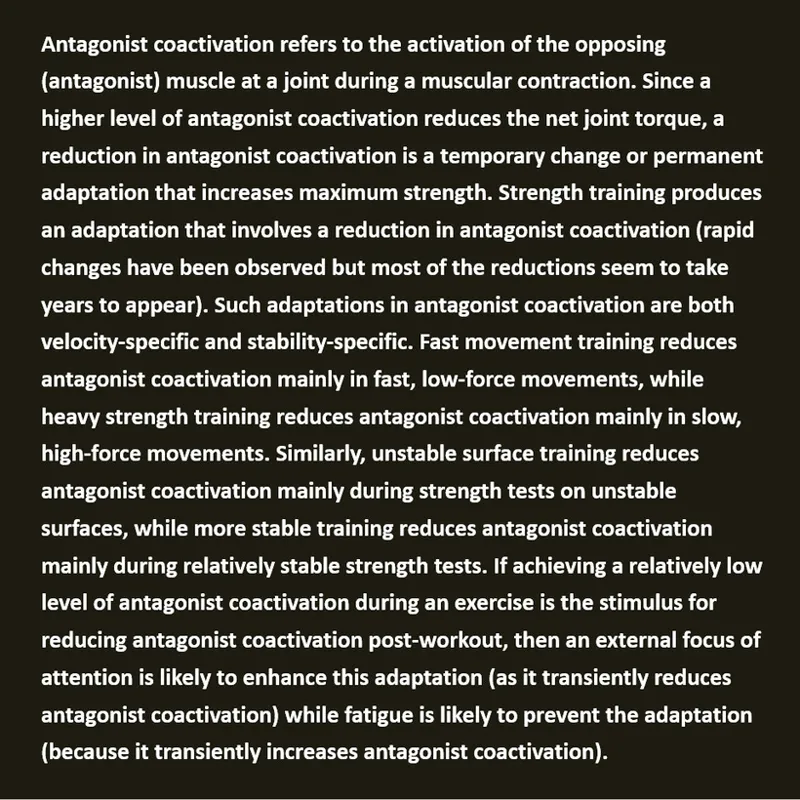
Reductions in the activation of the antagonist muscle at a joint also happen after strength training. This adaptation behaves very similarly to changes in coordination (read more).
.
#3. Increases in motor unit recruitment
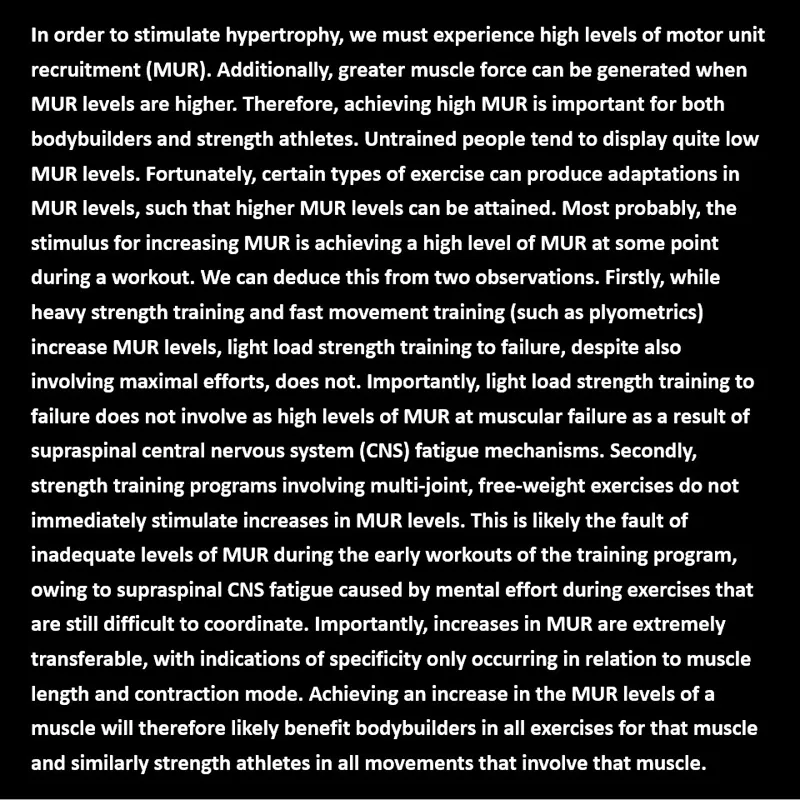
An increase in the ability to recruit high-threshold motor units is the most important neural adaptation when we are interested in transferable strength gains, because improvements in coordination and in antagonist coactivation are quite specific to the exercise (read more).
.
#4. Hypertrophy
An increase in muscle fiber size increases maximum strength because it increases the number of myofibrils in parallel inside the muscle. Muscle fibers increase in cross-sectional area in response to producing and experiencing a high level of contractile force through actin-myosin crossbridge binding, which requires a slow movement speed. To activate a lot of muscle fibers requires a high level of muscle activation (and therefore a high level of motor unit recruitment). This means that whole muscle hypertrophy is stimulated by both a high level of motor unit recruitment and a slow movement speed at the same time. This is the stimulating rep model (read more).
.
#5. Increases in tendon stiffness
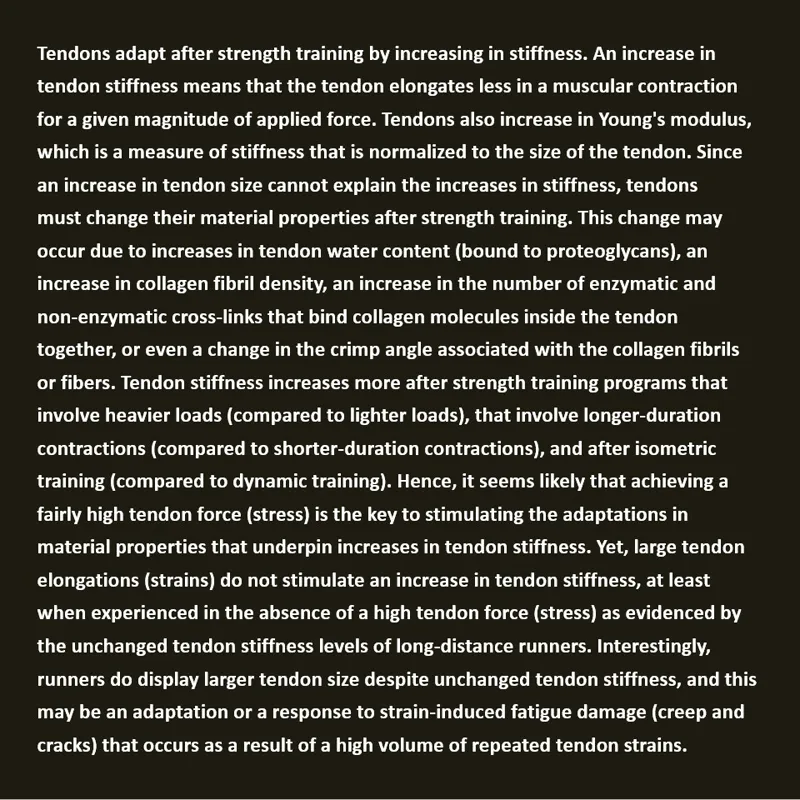
Increases in tendon stiffness can increase maximum strength depending on the nature of the contraction that is tested. It likely increases maximum strength in concentric-only contractions and isometric contractions but may not similarly improve maximum strength in stretch-shortening cycle contractions (read more).
.
#6. Increases in lateral force transmission
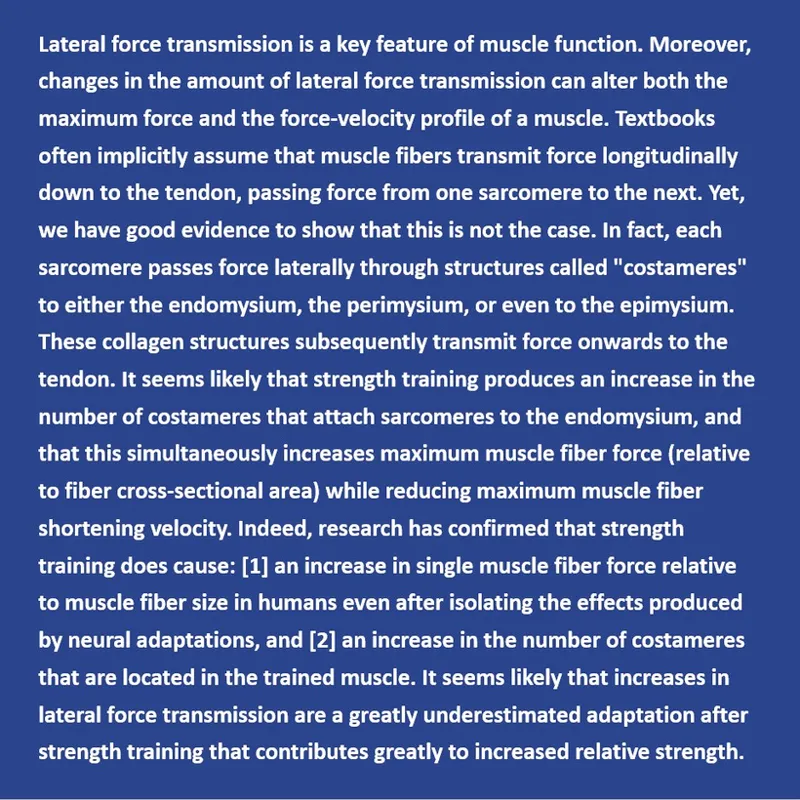
Increases in the number of costameres that a muscle fiber possesses can increase the amount of force that is transmitted laterally to the endomysium and then onwards to the tendon (read more).
.
Conclusions
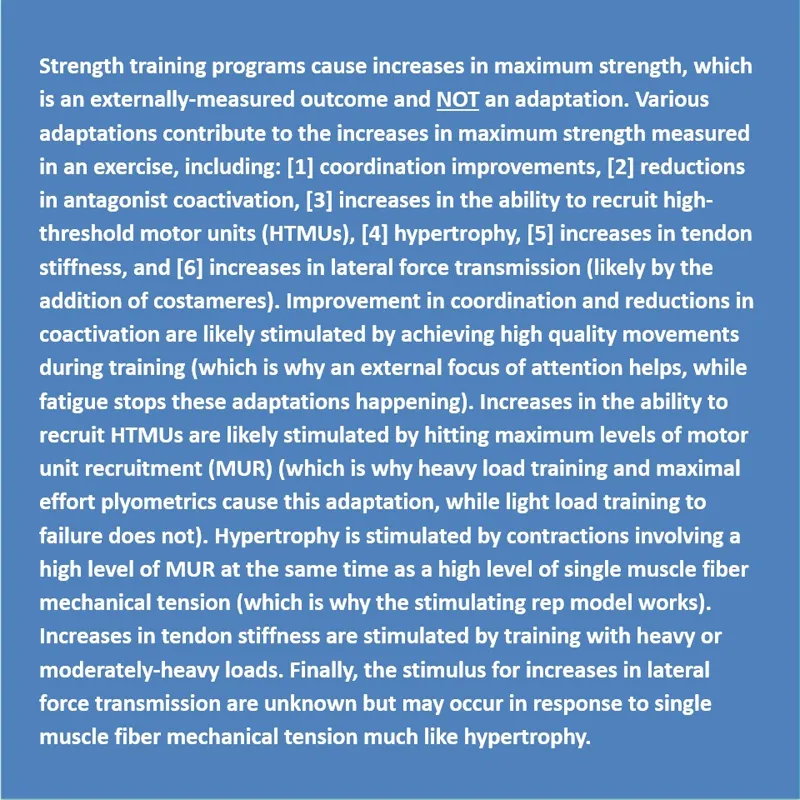
Strength training programs cause increases in maximum strength, which is an externally-measured outcome and NOT an adaptation in and of itself. Various adaptations contribute to the increases in maximum strength measured in a test exercise, including: [1] coordination improvements, [2] reductions in antagonist coactivation, [3] increases in the ability to recruit high-threshold motor units (HTMUs), [4] hypertrophy, [5] increases in tendon stiffness, and [6] increases in lateral force transmission (likely by the addition of costameres). Improvement in coordination and reductions in coactivation are likely stimulated by achieving high quality movements during training (which is why an external focus of attention helps, while fatigue stops these adaptations happening). Increases in the ability to recruit HTMUs are likely stimulated by hitting maximum levels of motor unit recruitment (MUR) (which is why heavy load training and maximal effort plyometrics cause this adaptation, while light load training to failure does not). Hypertrophy is stimulated by contractions involving a high level of MUR at the same time as a high level of single muscle fiber mechanical tension (which is why the stimulating rep model works). Increases in tendon stiffness are stimulated by training with heavy or moderately-heavy loads. Finally, the stimulus for increases in lateral force transmission are unknown but may occur in response to single muscle fiber mechanical tension much like hypertrophy.