









Stimulating reps
The stimulating rep model of hypertrophy states that only those repetitions that have [1] a high level of motor unit recruitment AT THE SAME TIME AS [2] a sufficiently high level of single muscle fiber mechanical tension will stimulate hypertrophy. In the context of conventional strength training, this refers to the final handful of reps that are performed just before reaching muscular failure.
.
#1. Stimulating reps must involve high levels of motor unit recruitment
Maximal levels of motor unit recruitment are achieved at approximately 90% of maximal unfatigued isometric force production. This corresponds to approximately a 5RM load. This is where the idea comes from that the last five reps of the set are the stimulating reps (but, as we will see later in this article, this is not always true).
.
Since motor unit recruitment is determined by our effort, we can achieve more-or-less the same level of motor unit recruitment when lifting a moderate (6-15RM) or light (16-30RM) load so long as we train in the exact same proximity to failure (which is within 5 reps in reserve). Note that the level of motor unit recruitment is slightly lower when training with lighter loads because of supraspinal CNS fatigue, but the difference does not seem to be big enough to affect the hypertrophy recorded in most training studies at the present time.
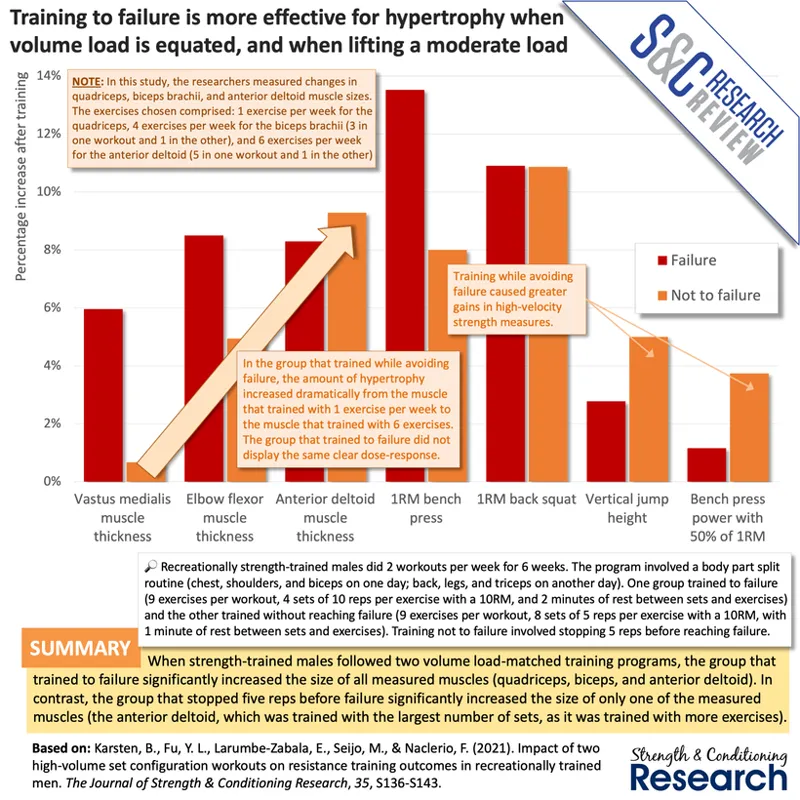
We can see the motor unit recruitment element of the stimulating rep model playing out in cluster training studies. In such studies, moderate load strength training with a cluster configuration causes substantially less hypertrophy than the same volume load of a straight set configuration. This shows that the high levels of motor unit recruitment that are typically achieved at the end of a set to failure are necessary for stimulating muscle growth.
#2. Stimulating reps involve high levels of single muscle fiber mechanical tension
Single muscle fiber mechanical tension has literally nothing to do with motor unit recruitment levels. We can have a very high level of motor unit recruitment alongside very low levels of single muscle fiber mechanical tension (as in fast movements) and we can have very high levels of single muscle fiber mechanical tension alongside very low levels of motor unit recruitment (as in activities of daily life). This is because the force-velocity relationship is what determines single muscle fiber mechanical tension. The force-velocity relationship is a phenomenon inherent to single muscle fibers. When a muscle fiber shortens quickly, it produces a small force since few myosins attach to actin. When the same muscle fiber shortens more slowly, it produces a large force because more myosins can attach to actin.
Since muscle fibers grow in response to the level of mechanical tension that they experience, hypertrophy is only stimulated by concentric reps that involve slow movement speeds. Indeed, we can see from animal studies that concentric contractions that involve fast movement speeds do not stimulate much hypertrophy even when motor unit recruitment levels are maximal.
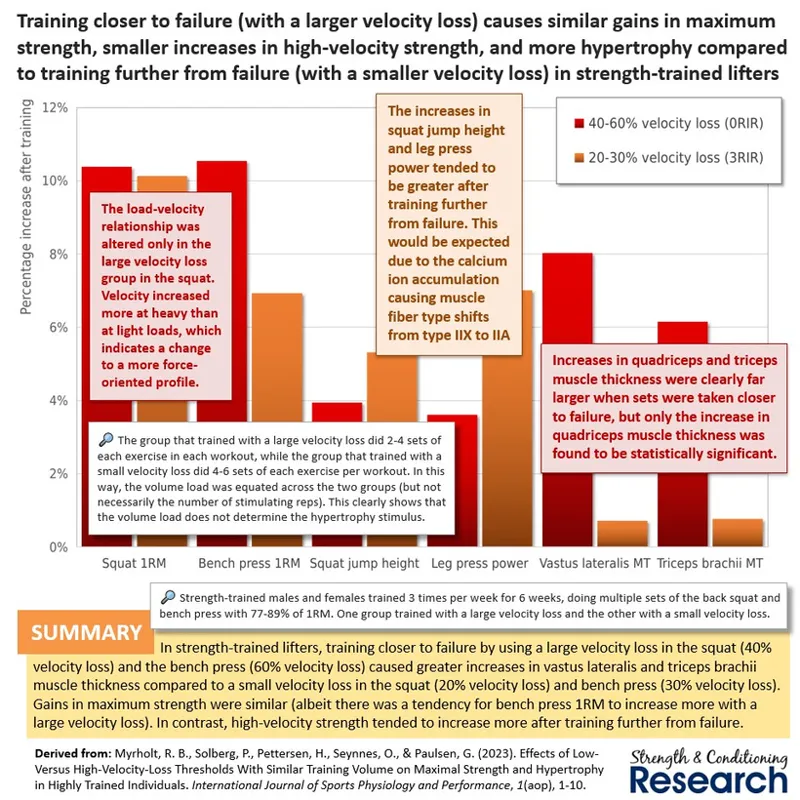
We can see the mechanical tension element of the happening in human studies of velocity-based training. In such studies, training with maximal effort reps (and therefore maximum motor unit recruitment) does not cause hypertrophy unless bar speed is allowed to slow down by reaching a closer proximity to failure. This shows that high levels of motor unit recruitment alone are not sufficient for stimulating muscle growth. High levels of muscle fiber mechanical tension are also needed.
#3. The stimulating rep model predicts the effects of all training variables
[A] Repetition range (load)
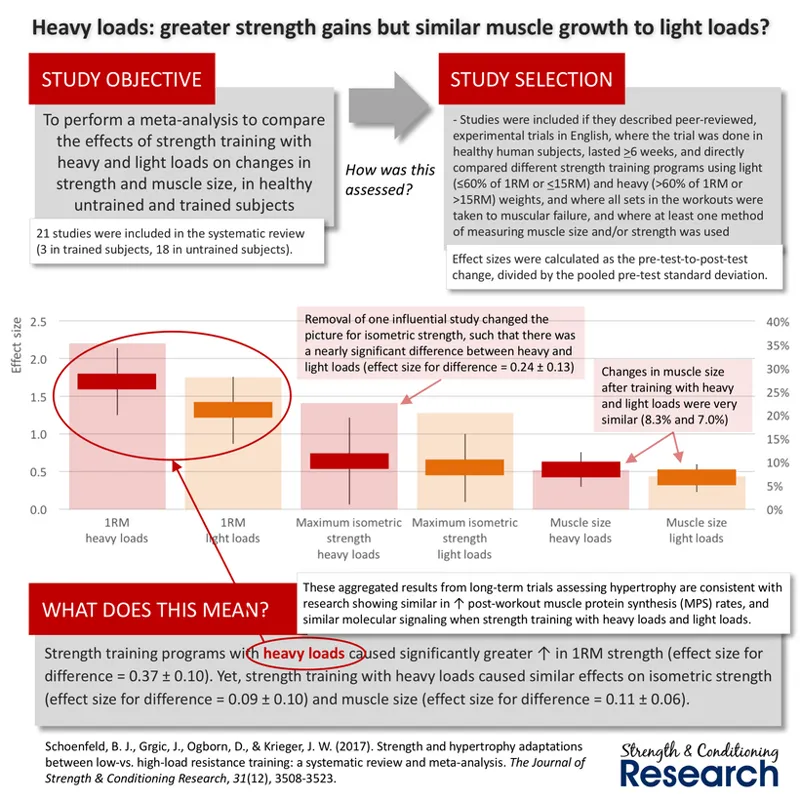
The stimulating rep model states that only those reps with simultaneously high levels of motor unit recruitment and high muscle fiber mechanical tension (typically as a result of a slow bar speed) will produce hypertrophy. In the context of conventional strength training, this refers to the final handful of reps that are performed just before reaching muscular failure. Obviously, this allows us to explain why different rep ranges (within the range of 5-30RM) produce the same hypertrophy after training. They all contain the same number of stimulating reps.
It is noteworthy that very light loads (lighter than approximately 25-30% of 1RM or 35-40RM) fail to produce meaningful hypertrophy during conventional strength training. Nevertheless, this can still be explained by the stimulating reps model because of differences in the way that the various fatigue mechanisms play out in sets with different rep ranges.
Critically, there is a whole muscle force threshold below which the blood does not remain inside the muscle during concentric contractions. This levels corresponds to approximately 30% of 1RM. Any contraction with a whole muscle force level at or above this level will prevent blood from leaving the muscle (and taking metabolites with it). Thus, contractions with loads lighter than 30% of 1RM will not involve any metabolite-related fatigue. Instead, the majority of the fatigue mechanisms will come from CNS fatigue (which reduces motor unit recruitment) and calcium ion-related fatigue (which reduces single muscle fiber mechanical tension).
.
Indeed, we known from a large number of investigations that central nervous system (CNS) fatigue is much greater when training with a high number of very light load repetitions or with a longer duration of very low isometric force contractions. CNS fatigue literally just means an involuntary reduction in motor unit recruitment for a given level of effort perception. When CNS fatigue happens, it limits the number of stimulating reps by reducing recruitment levels. For this reason, the stimulating rep model can be applied easily to all repetition ranges (and not just the classic 5-30RM that other models use).
[B] Repetition tempo
The stimulating rep model states that only those reps with simultaneously high levels of motor unit recruitment and high muscle fiber mechanical tension (typically as a result of a slow bar speed) will produce hypertrophy. In the context of conventional strength training, this refers to the final handful of reps that are performed just before reaching muscular failure. Obviously, this allows us to explain why different tempos produce the same hypertrophy after training. We can generally only manage to keep a specific tempo when our efforts are not already necessarily maximal. Thus, tempo does not matter.
[C] Volume (number of sets to failure)
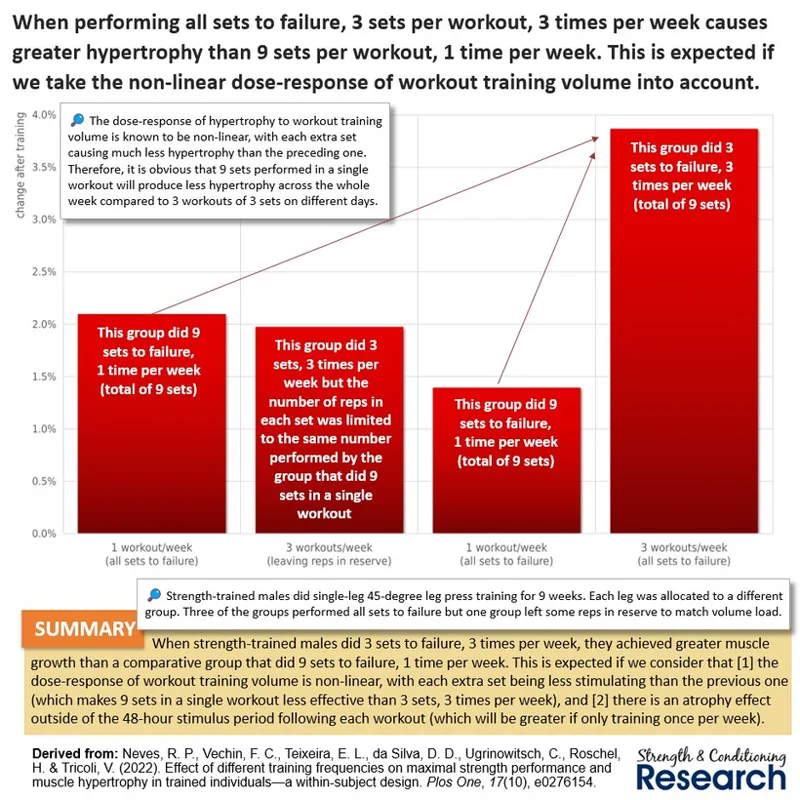
The stimulating rep model states that only those reps with simultaneously high levels of motor unit recruitment and high muscle fiber mechanical tension (typically as a result of a slow bar speed) will produce hypertrophy. In the context of conventional strength training, this refers to the final handful of reps that are performed just before reaching muscular failure. Obviously, this allows us to explain why training volume produces a non-linear dose-response on hypertrophy such that there are strongly diminishing returns of successive sets. As each previous set produces CNS fatigue mechanisms that interfere with motor unit recruitment or calcium ion-related fatigue mechanisms that interfere with the levels of single muscle fiber mechanical tension, the subsequent set is much less stimulating.
Indeed, we have quite good data showing that CNS fatigue does accumulate over successive sets.
.
[D] Proximity to failure
The stimulating rep model states that only those reps with simultaneously high levels of motor unit recruitment and high muscle fiber mechanical tension (typically as a result of a slow bar speed) will produce hypertrophy. In the context of conventional strength training, this refers to the final handful of reps that are performed just before reaching muscular failure. Obviously, this allows us to explain why proximity to failure is incredibly important for hypertrophy. We can see this from many cluster training studies as well as from velocity-based training studies.
The most important thing about the velocity-based training studies is that they are quite frequently volume-load controlled. This means that the two groups do exactly the same work (reps and sets) and therefore the only difference exists in the proximity to failure.
.
[E] Rest period duration
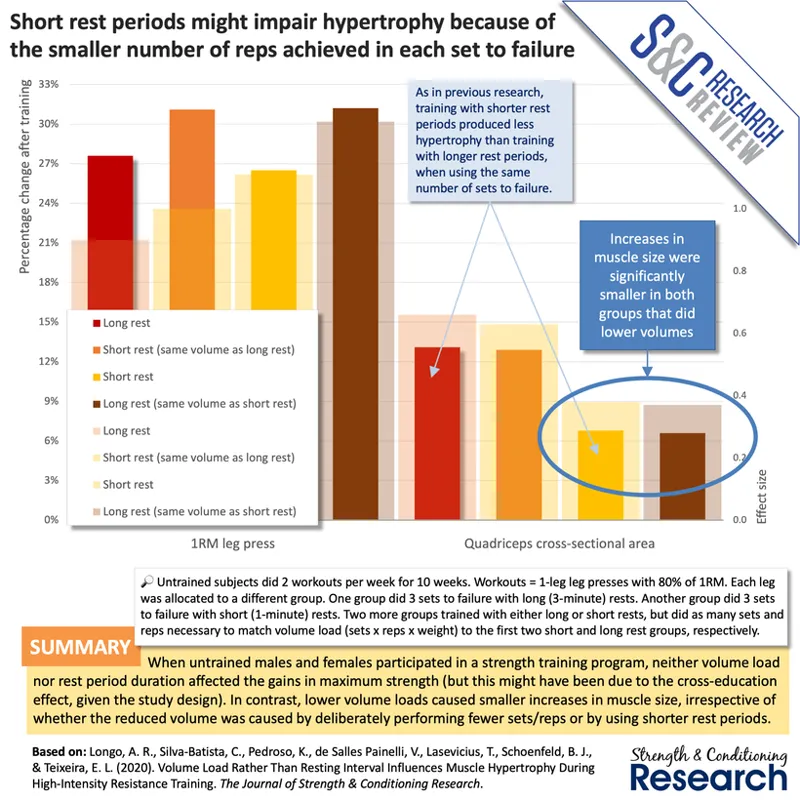
The stimulating rep model states that only those reps with simultaneously high levels of motor unit recruitment and high muscle fiber mechanical tension (typically as a result of a slow bar speed) will produce hypertrophy. In the context of conventional strength training, this refers to the final handful of reps that are performed just before reaching muscular failure. Obviously, this allows us to explain why rest period duration matters for hypertrophy. When using short rest periods, more of the CNS fatigue that occurred in the previous set is still present at the start of the next set. The reduction in the levels of motor unit recruitment then reduce the hypertrophy stimulus achievable in the next set.
.
Indeed, most studies have shown that shorter rest periods are disadvantageous for hypertrophy.
[F] Frequency
The stimulating rep model states that only those reps with simultaneously high levels of motor unit recruitment and high muscle fiber mechanical tension (typically as a result of a slow bar speed) will produce hypertrophy. In the context of conventional strength training, this refers to the final handful of reps that are performed just before reaching muscular failure. Obviously, this allows us to explain why frequency matters for hypertrophy (so long as the workouts being performed are within the bounds of what can be recovered from). Indeed, if we look only at the frequency studies that have implemented sensible workout volumes (1-3 sets/workout for 3 workouts/week or 4-5 sets for 2 workouts/week) then we always see a beneficial effect of higher training frequencies, which is exactly what we would expect based on the diminishing returns effect of successive sets in each individual workout.
.
[G] Range of motion
The stimulating rep model states that only those reps with simultaneously high levels of motor unit recruitment and high muscle fiber mechanical tension (typically as a result of a slow bar speed) will produce hypertrophy. In the context of conventional strength training with different ranges of motion, however, we need to introduce the concept of passive mechanical tension as well. However, since this also operates at the single muscle fiber level, it still fits within the same model. Since passive tension is often greater when training with longer muscle lengths, we can explain the results of range of motion studies relatively easily.
Yet, there are some muscles (like the triceps brachii) that do not seem to benefit from the use of longer muscle lengths. This is totally logical because such muscles tend to have many more sarcomeres in series and this means that each sarcomere stretches far less in long muscle length exercises.
Indeed, we know from the animal model research that it is sarcomere stretch and not muscle fiber or whole muscle stretch that determines the magnitude of the resulting stretch-mediated hypertrophy.
.
[H] Advanced training techniques
The stimulating rep model states that only those reps with simultaneously high levels of motor unit recruitment and high muscle fiber mechanical tension (typically as a result of a slow bar speed) will produce hypertrophy. In the context of conventional strength training, no advanced training methods have ever been shown to defeat straight sets with long rest periods. This is because the majority of the advanced training techniques involve greater CNS fatigue and/or calcium ion-related fatigue than the standard straight set approach. This reduces their potential for producing a hypertrophy stimulus.
.
[I] Concurrent aerobic exercise
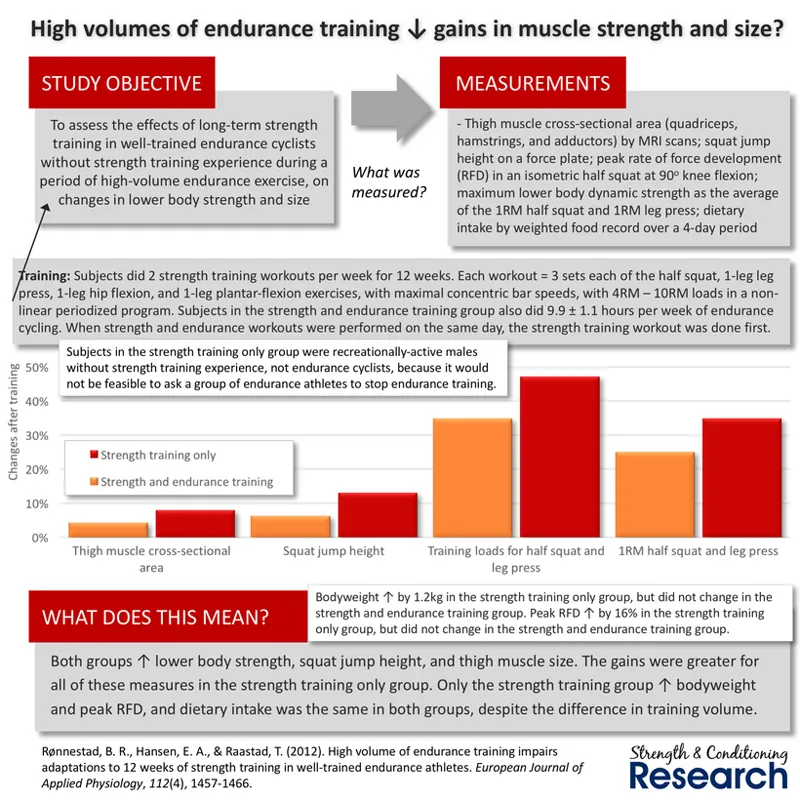
The stimulating rep model states that only those reps with simultaneously high levels of motor unit recruitment and high muscle fiber mechanical tension (typically as a result of a slow bar speed) will produce hypertrophy. This tells us why concurrent aerobic exercise will interfere with our ability to stimulate hypertrophy during strength training programs. The muscle damage and other post-workout fatigue mechanisms that occur after the aerobic exercise reduce either motor unit recruitment or single muscle fiber mechanical tension in the strength training workouts.
.
[J] Overreaching
The stimulating rep model states that only those reps with simultaneously high levels of motor unit recruitment and high muscle fiber mechanical tension (typically as a result of a slow bar speed) will produce hypertrophy. This tells us why overreaching frequently does not produce better hypertrophy than simply training after full recovery has happened. The post-workout fatigue mechanisms interfere with either the levels of motor unit recruitment or single fiber mechanical tension (or both).
.
Indeed, in animal overreaching models of endurance exercise, we can see reductions in single muscle fiber mechanical tension occurring (as measured by changes in low-frequency fatigue).
.
Conclusions
The stimulating rep model of hypertrophy during strength training states that only those reps that have [1] a high level of motor unit recruitment at the same time as [2] a high level of muscle fiber mechanical tension will stimulate hypertrophy. Earlier reps in a moderate load set with a self-selected tempo involve insufficient motor unit recruitment since effort levels are not maximal. This is why cluster training with moderate loads and matched volume load to straight sets to failure does not cause much muscle growth. Earlier reps in a velocity-based training set involve insufficient muscle fiber mechanical tension since the force-velocity relationship determines muscle fiber force production because it governs the number of attached actin-myosin crossbridges. Since fatigue mechanisms can and do affect motor unit recruitment and muscle fiber mechanical tension, we can use the very extensive fatigue literature to explain the effects of ALL training variables, including repetition range (for all loads and not just within the range of 5-30 reps), repetition duration (tempo), volume, proximity to failure, rest period duration, frequency, range of motion, advanced training techniques, concurrent aerobic exercise, and even (functional and non-functional) overreaching blocks. Ultimately, the stimulating rep model is the only hypertrophy model that [1] uses well-established physiological concepts (the size principle, the force-velocity and length-tension relationships, and fatigue mechanisms) to explain how a hypertrophy stimulus is applied to muscle fibers, and that [2] explains all known training variables.