
Lagging muscles
One of the most common questions in the fitness industry is how to bring up lagging muscle groups. Unfortunately, the two most popular answers to that question are completely wrong.
.
#1. More volume is not the answer
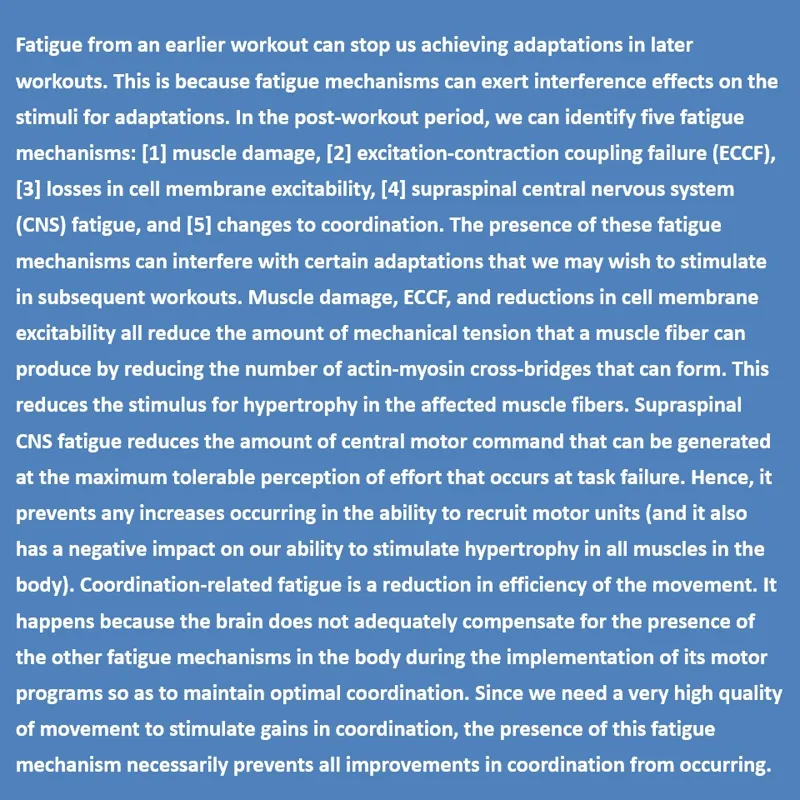
Most fitness influencers will tell you to perform more volume with the lagging muscle group. The problem with that suggestion is that most people are already doing more workout volume that they can recover from without causing post-workout fatigue to accumulate.
Although some fitness influencers have argued that post-workout fatigue does not accumulate based on the early literature involving maximum effort eccentric training, more recent data in conventional strength training shows that it definitely does build up (read more).
Accumulating post-workout fatigue is not recommended because post-workout fatigue leads to a reduced stimulus being experienced by that muscle in any subsequent workout of the training program when it is present (read more).
#2. More stretch is not the answer
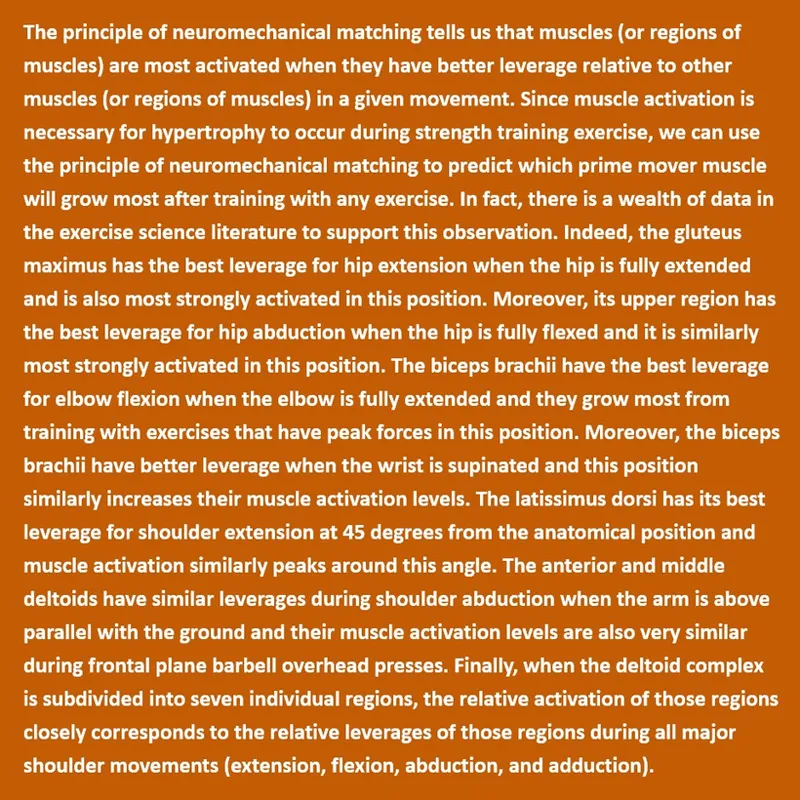
Some fitness influencers will tell you to do exercises with a greater stretch for the lagging muscle group. There are two problems with this idea. Firstly, the target muscle may not actually be activated in the stretched position. For example, it is popular to recommend pullovers in the sagittal plane with a large stretch for the latissimus dorsi. Yet, the latissimus dorsi does not have the necessary leverage to be activated in that position in accordance with neuromechanical matching, so it cannot benefit (read more).
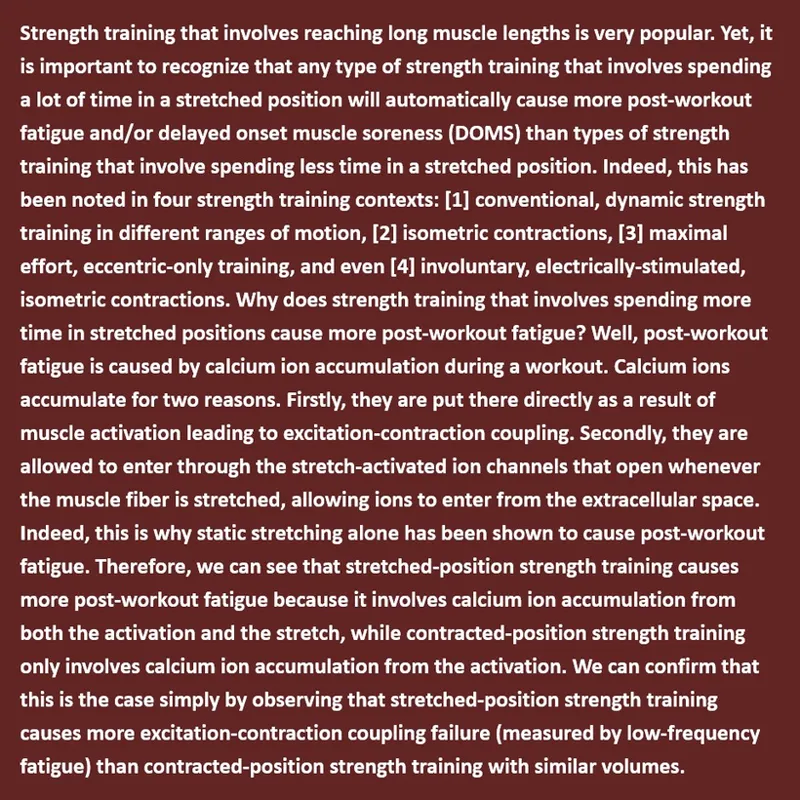
Secondly, training muscles with peak forces in the stretched position creates more post-workout fatigue, which then means that we have to use lower workout volumes in order to be able to recover in time for the next workout. Of course, this then reduces the stimulus that we achieve in each workout (read more).
#3. Higher motor unit recruitment is the answer
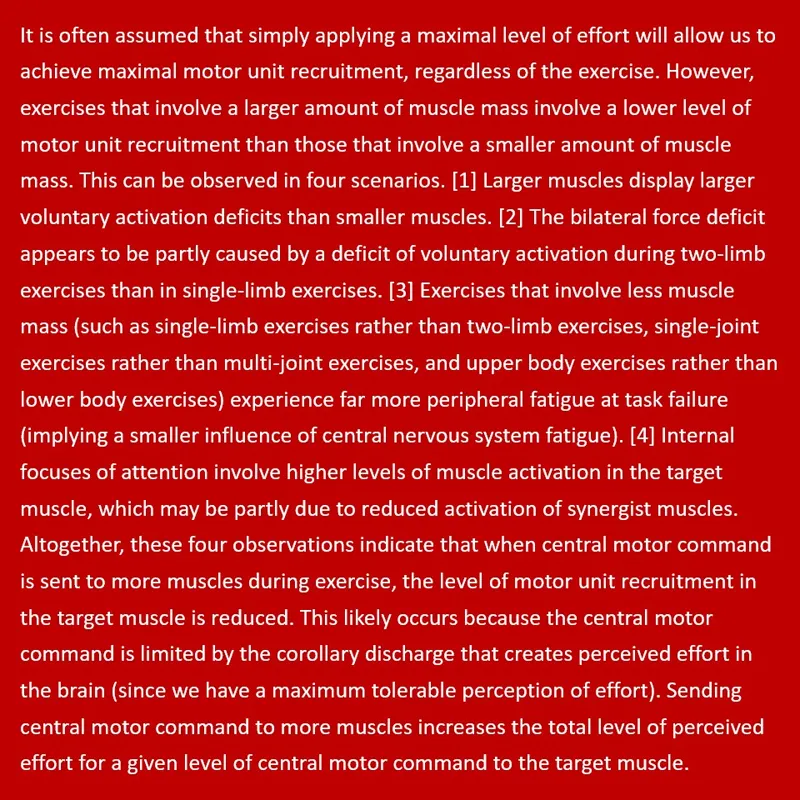
When we achieve higher motor unit recruitment in an exercise for a muscle group, we expose more muscle fibers to mechanical loading and therefore stimulate greater muscle growth. One way in which we can increase motor unit recruitment is to use exercises that involve less muscle mass, like single-joint, single-limb variations (read more).
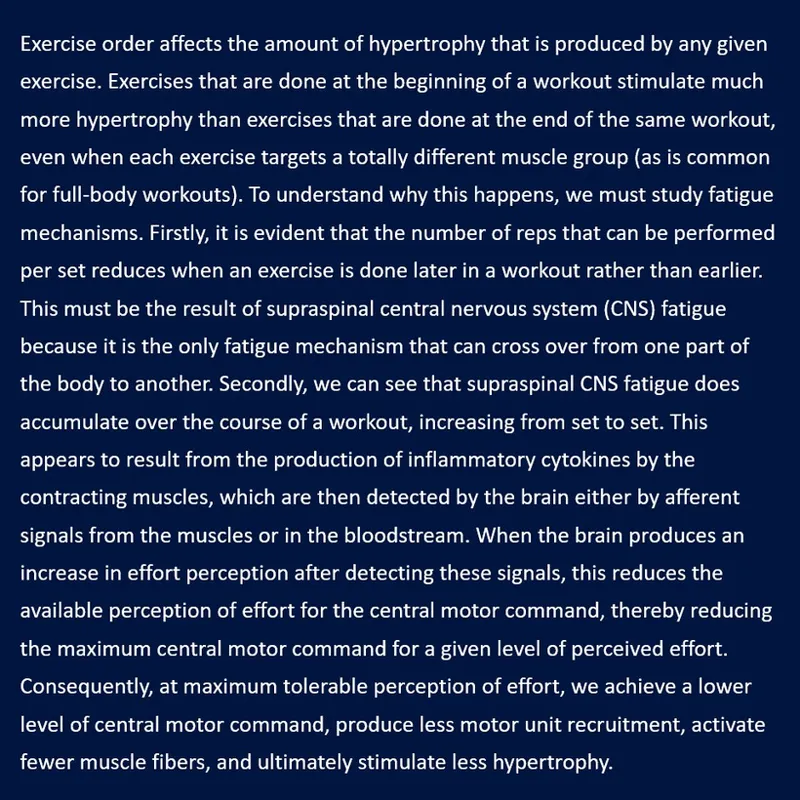
Another way in which we can increase motor unit recruitment in a target muscle group is to perform exercises for that muscle first in each training session. The exercise order effect means that exercises done first in a workout involve higher levels of motor unit recruitment than exercises done later on (read more).
Conclusions
How can we bring up a lagging muscle? Most fitness influencers usually recommend increasing workout volume for that muscle. Yet, there is a relatively low limit on how much volume we can do per workout and still recover in time for the next one. Doing excessive workout volume and accumulating post-workout fatigue is not recommended because it leads to a reduced hypertrophy stimulus being experienced by that muscle in subsequent workouts. Some fitness influencers recommend performing more stretched position exercises (or exercises with greater degrees of stretch). However, some muscles may not have the leverage to contribute in the stretched position and so cannot benefit from this suggestion. Also, stretched position exercises cause more post-workout fatigue, which reduces the maximum amount of workout volume that we can do and still recover in time for the next workout. The best way to bring up a lagging muscle is therefore to train in a way that increases its motor unit recruitment levels. Firstly, we can program exercises that involve less muscle mass and therefore send all of the central motor command to one place (such as single-joint, single-limb variations). Secondly, we can perform exercises for the target muscle first in every workout, so as to train it when motivation levels are highest.