
Hypertrophy occurs rapidly
Historically, researchers believed that muscular hypertrophy was delayed for the first weeks and even months of a strength training program and that neural adaptations accounted for all of the strength gains during this time. While strength gains are indeed likely substantial in the first weeks of a training program due to coordination improvements, more recent research has shown that hypertrophy can and does occur throughout this time as well.
.
#1. Hypertrophy involves increases in muscle fiber cross-sectional area and length
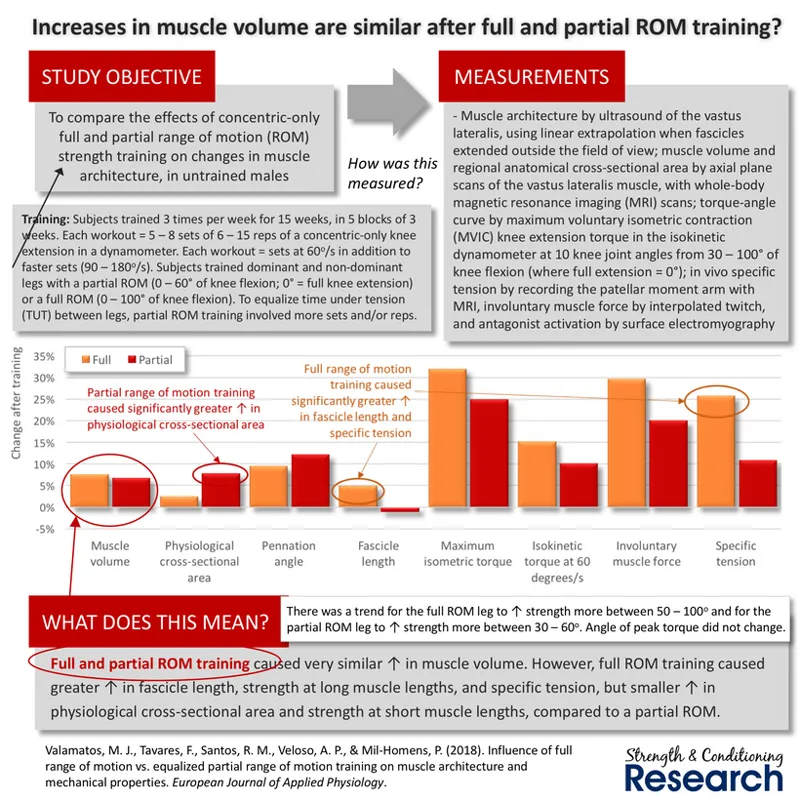
At the whole muscle level, hypertrophy can be defined practically as an increase in muscle mass and/or muscle volume. As far as individual muscle fibers are concerned (which is the more physiologically relevant concept), hypertrophy can happen either as a result of the addition of myofibrils in parallel within the fiber (which then increases its cross-sectional area) or as a result of the addition of sarcomeres in series (which then increases its length). Studies have shown that whole muscle volume can increase as a result of increases in both muscle cross-sectional area (reflecting muscle fiber cross-sectional area) and muscle fascicle length (reflecting muscle fiber length).
.
#2. Hypertrophy occurs after just two weeks of strength training
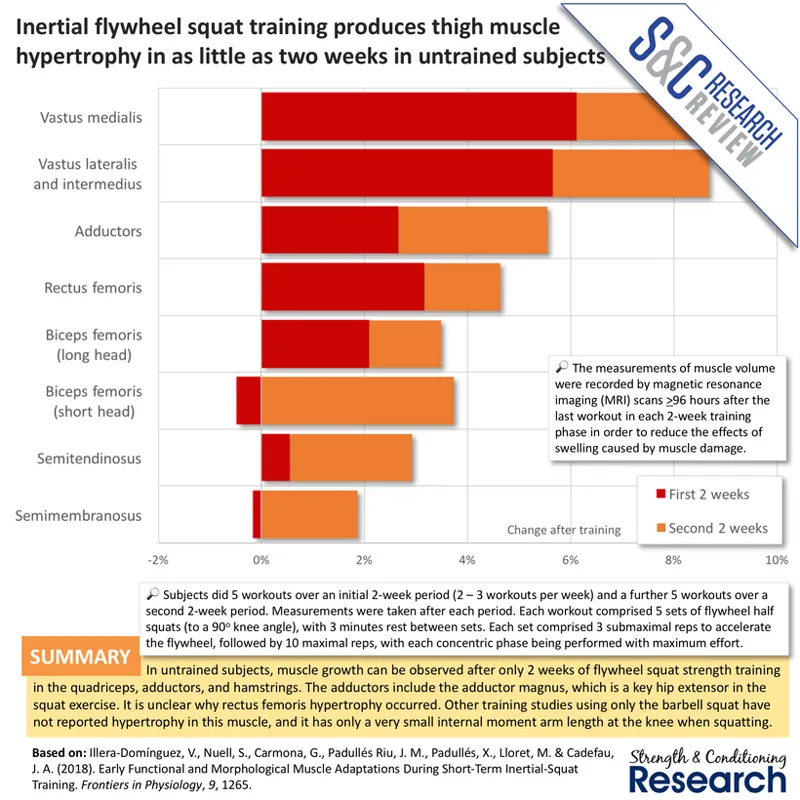
Although older studies tended to find that hypertrophy did not occur during the early weeks of a training program, this was likely simply a lack of sufficient accuracy in the measurement methods that were used. Now that we have access to better measurement methods, studies have shown that hypertrophy occurs within the first two weeks of training untrained lifters.
.
#2. Muscle fiber length increases faster than muscle fiber cross-sectional area
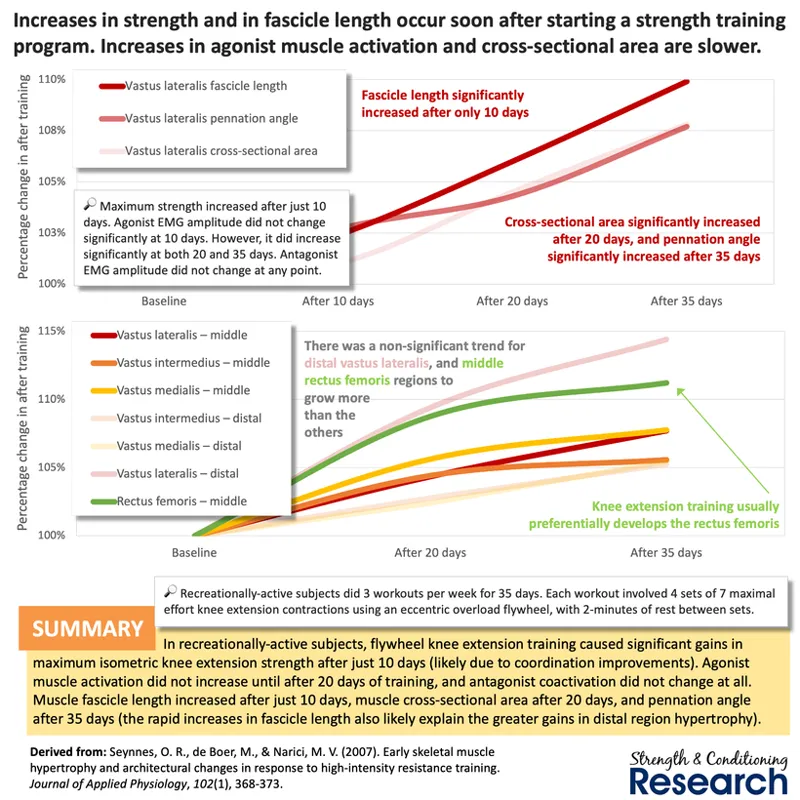
Interestingly, when increases in both muscle cross-sectional area and muscle fascicle length are measured during the early weeks of a strength training program, the increases in muscle fascicle length are much more rapid.
.
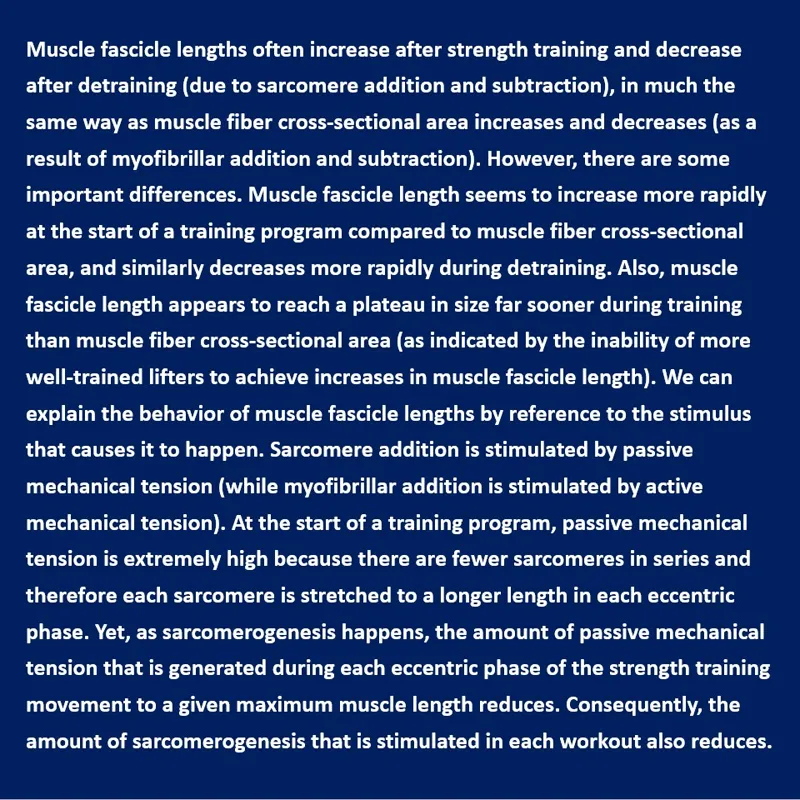
Indeed, the research has consistently shown that increases in muscle fascicle length occur much more rapidly than increases in muscle cross-sectional area. This is likely because the stimulus for increasing muscle fiber length is passive tension and this is greatest at the start of a strength training program when sarcomere operating lengths are longest (read more).
.
Conclusions
Historically, researchers believed that muscular hypertrophy did not occur during the early weeks of a strength training program. Instead, they proposed that neural adaptations accounted for all of the strength gains during this time. Yet, more recent research has revealed that meaningful hypertrophy can and does happen within just two weeks of starting a strength training program. At the whole muscle level, hypertrophy can be defined practically as an increase in muscle mass or muscle volume. As far as individual muscle fibers are concerned, hypertrophy can be defined either as the addition of myofibrils in parallel inside the fiber (which increases its cross-sectional area) or as the addition of more sarcomeres in series to the end of the fiber (which then increases its length). Interestingly, when increases in muscle cross-sectional area and muscle fascicle length are measured during the early weeks of a strength training program, the increases in muscle fascicle length are much more rapid. This suggests that much of the hypertrophy that occurs in the first few weeks of a strength training program comprises the addition of more sarcomeres in series. The greater contribution from sarcomere addition during this time likely occurs because the stimulus for increasing muscle fiber length is passive tension. Passive tension is greatest at the start of a strength training program when sarcomere operating lengths are longest (sarcomere operating lengths likely reduce as sarcomeres are added in series over the training program, and this then reduces the passive tension each sarcomere generates during eccentric contractions).