






Fatigue interference effects
Many researchers and fitness industry commentators are heavily invested in the idea that fatigue mechanisms (like metabolite accumulation and muscle damage) can actually stimulate hypertrophy. Nevertheless, it is clear that many fatigue mechanisms instead interfere with the hypertrophy stimulus, either by stopping motor units from being recruited or by stopping the muscle fibers themselves from producing mechanical tension. This is very clear when we look at fatigue during any individual exercise bout.
.
#1. What are the mechanisms of fatigue during a workout?
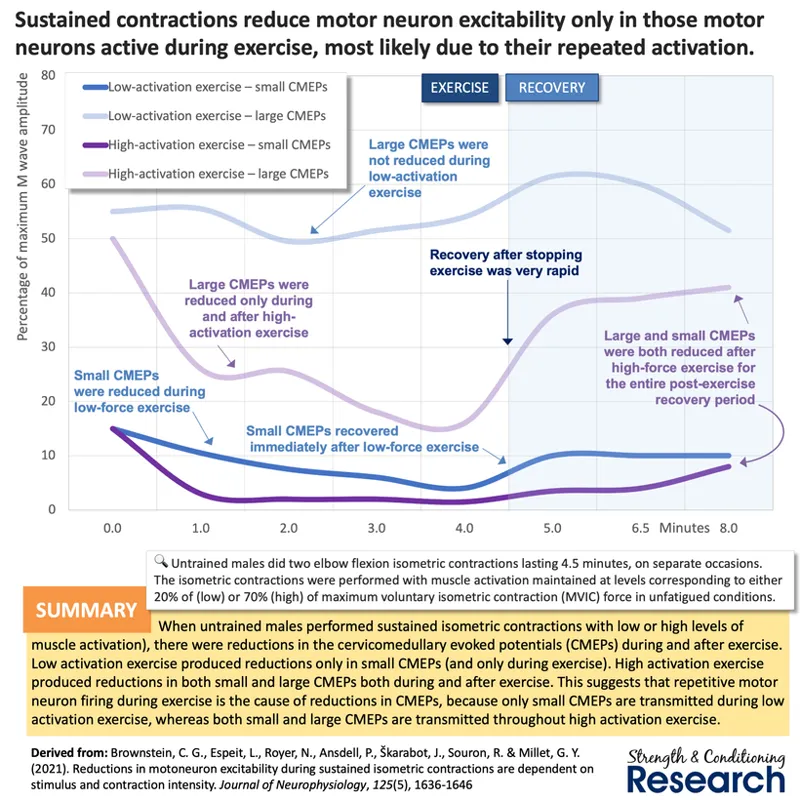
Fatigue mechanisms are the physiological changes that cause fatigue, which is a temporary and reversible reduction in exercise performance. Just as there are a variety of adaptations that cause strength gains (but a gain in strength gains is not an adaptation), there are several fatigue mechanisms that cause fatigue. In a workout, there are eight fatigue mechanisms: [1] acidosis, [2] phosphate accumulation, [3] excitation-contraction coupling failure (ECCF), [4] losses in cell membrane excitability, [5] reductions in calcium ion sensitivity, [6] supraspinal central nervous system (CNS) fatigue, [7] spinal CNS fatigue, and [8] changes to coordination.
.
#2. How does acidosis affect adaptations?
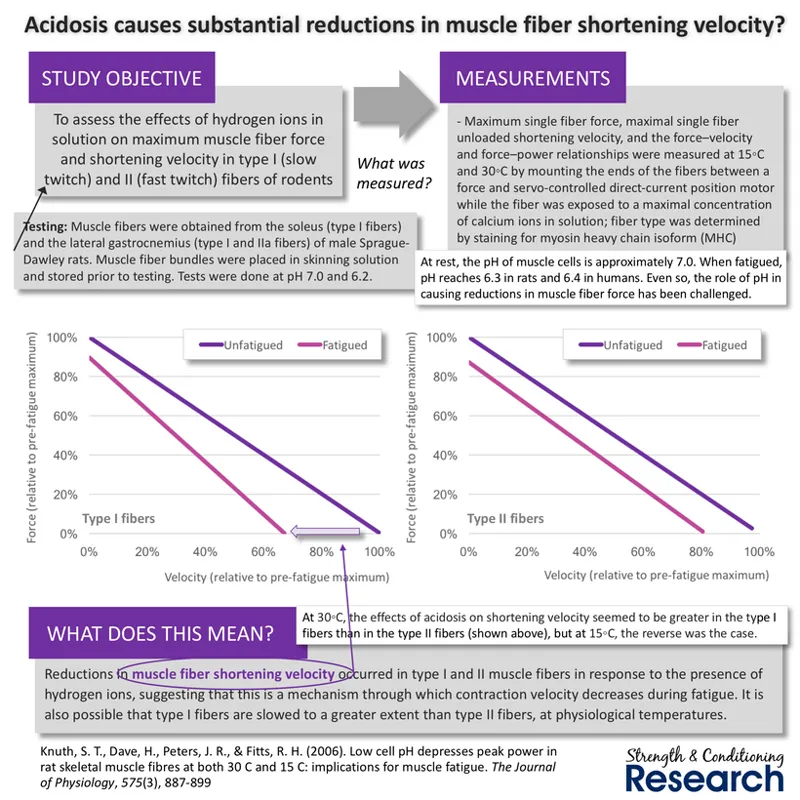
Muscle fibers are stimulated to increase their maximum shortening velocity when they reach high shortening velocities (through mechanisms that are still not fully understood). This is a key adaptation that contributes to gains in speed after fast movement training programs.
.
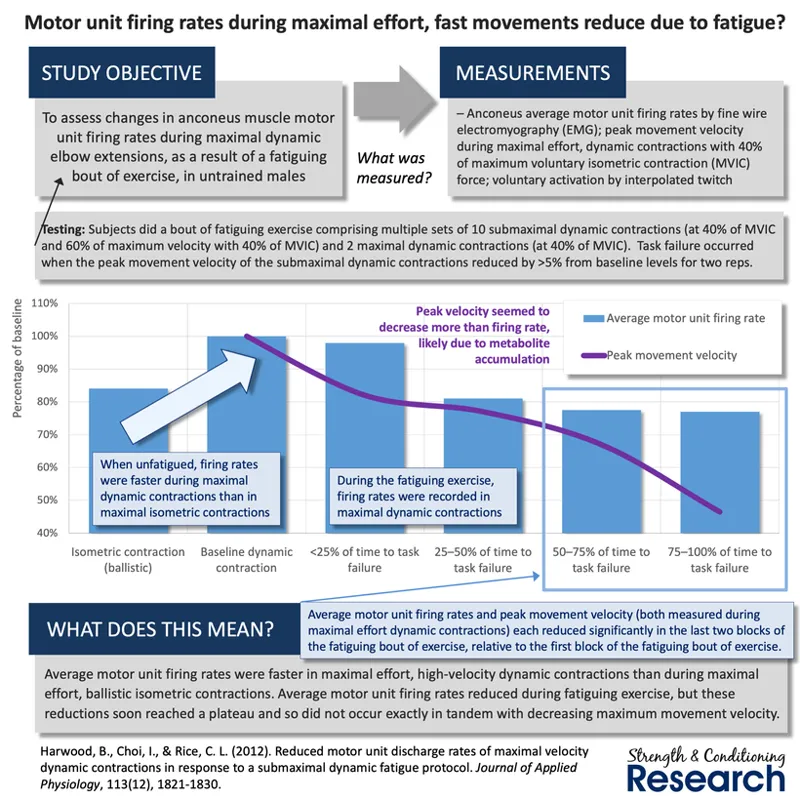
Fast movement speeds are also the key stimulus for increasing motor unit firing frequencies, as the motor unit firing frequency itself is closely linked to the movement speed even during maximum effort contractions.
.
During anaerobic exercise, hydrogen ions accumulate and produce acidosis inside the working muscle fibers. This acidosis reduces muscle shortening velocity (and also motor unit firing frequency) and impairs the ability of the muscle fiber to stimulate these two adaptations that contribute to speed increases after training.
.
#3. How does phosphate accumulation affect adaptations?
Muscle fibers are stimulated to increase their maximum shortening velocity when they reach high shortening velocities (through mechanisms that are still not fully understood). This is a key adaptation that contributes to gains in speed after fast movement training programs. In addition, muscle fibers are stimulated to increase their size when they reach sufficiently high levels of mechanical tension during strength training (this tension is modulated largely due to the force-velocity relationship). Phosphates accumulate during anaerobic exercise and easily causes reductions in muscle fiber shortening velocity by interfering with the crossbridge cycle at a number of places (shown below). Potentially, they could also reduce muscle fiber tension.
.
#4. How does excitation-contraction coupling failure affect adaptations?
Muscle fibers are stimulated to grow when they experience a sufficiently high level of muscle fiber mechanical tension. The main way in which muscle fibers produce mechanical tension is by the formation of actin-myosin crossbridges. Thus, when the excitation-contraction coupling failure process switches off the ability of muscle fibers to convert electrical signals into the chemical signals that create actin-myosin crossbridges, we stop the hypertrophy stimulus.
.
#5. How do losses in cell membrane excitability affect adaptations?
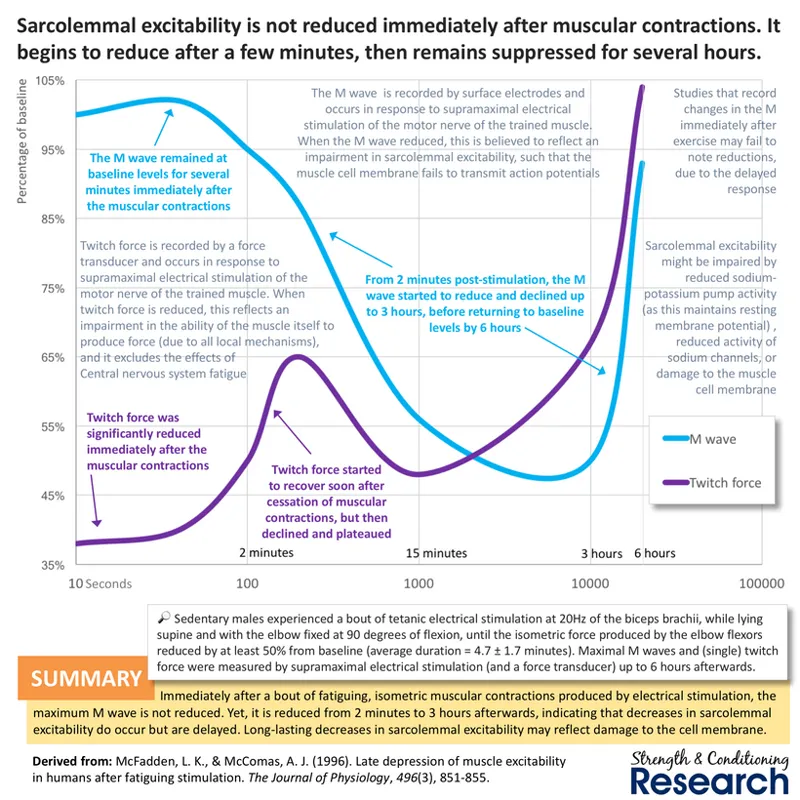
Muscle fibers are stimulated to grow when they experience a sufficiently high level of muscle fiber mechanical tension. The main way in which muscle fibers produce mechanical tension is by the formation of actin-myosin crossbridges. Thus, when cell membrane of a muscle fiber is damaged and this stops action potentials from reaching the triadic junction to produce the excitation-contraction coupling process, this stops muscle fibers from receiving the electrical signals that it typically converts into chemical signals that create actin-myosin crossbridges. Evidently, just like excitation-contraction coupling failure, this stops the hypertrophy stimulus.
.
#6. How does supraspinal CNS fatigue affect adaptations?
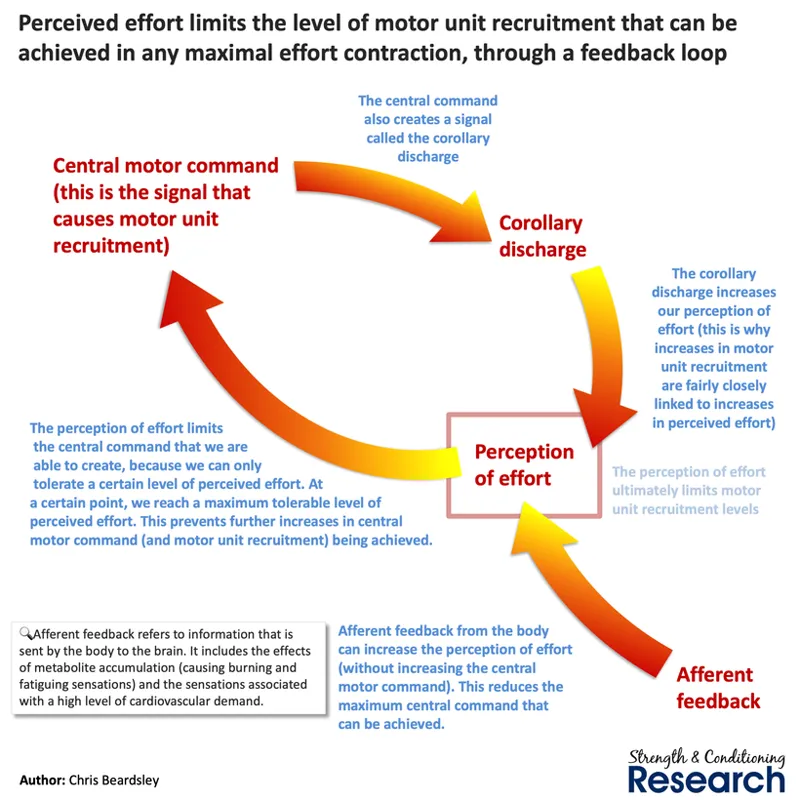
To stimulate an increase in the level of central motor command (and therefore in the level of motor unit recruitment) that can be achieved for a given muscle group, we need to be able to send a very high level of central motor command to that muscle. This means that the presence of any supraspinal CNS fatigue will inhibit this adaptation from occurring. In addition, a loss of motor unit recruitment levels will inhibit hypertrophy from occurring by stopping us from training the muscle fibers of the highest high-threshold motor units. Any negative feeling during exercise can cause a reduction in our ability to generate a central motor command.
.
Such negative feelings can occur due to metabolites causing burning sensations, a lack of muscle glycogen or blood glucose, pain and inflammatory responses to muscular contractions.
.
#7. How does spinal CNS fatigue affect adaptations?
To stimulate muscle hypertrophy, we must activate a muscle fiber (which normally occurs by means of motor unit recruitment) and then cause it to exert a sufficiently high degree of force (by making it shorten slowly). Therefore, anything that reduces motor unit recruitment will in turn reduce the hypertrophy stimulus by preventing us from training the muscle fibers of the highest high-threshold motor units. Spinal CNS fatigue reduces the level of motor unit recruitment that is generated by a given level of central motor command by reducing the extent to which the signal is transmitted down the motor neurons of the spinal cord.
.
#8. How does coordination-related fatigue affect adaptations?
To improve coordination in an exercise or a movement, we need to be able to perform that exercise or movement with the best possible degree of coordination. This means that the presence of any fatigue mechanism inside the muscles will prevent this adaptation from happening. Indeed, we know that the presence of fatigue negatively affects motor patterns. Motor learning research has shown that when exercises or movements are practised with poor coordination due to the presence of fatigue, this fails to enhance coordination in those exercises or movements. This is very important, because many sports coaches believe that it is possible to improve the ability to improve the ability to maintain good movement patterns while in a fatigued state by practising in a fatigued state. This does not seem to be the case.
.
Conclusions
Fatigue during a strength training workout can reduce the adaptations caused by that workout because the fatigue mechanisms reduce individual stimuli. In a workout, there are eight fatigue mechanisms: [1] acidosis, [2] phosphate accumulation, [3] excitation-contraction coupling failure (ECCF), [4] losses in cell membrane excitability, [5] reductions in calcium ion sensitivity, [6] supraspinal central nervous system (CNS) fatigue, [7] spinal CNS fatigue, and [8] changes to coordination. Metabolites (acidosis and phosphates) slow down muscle fibers and hence reduce the stimulus for increasing both muscle fiber shortening velocity and motor unit firing rate. ECCF and reductions in cell membrane excitability reduce the amount of mechanical tension that a muscle fiber can produce by reducing the number of actin-myosin cross-bridges, which reduces the hypertrophy stimulus. Supraspinal CNS fatigue reduces the level of central motor command that can be generated at the maximum tolerable perception of effort at task failure. Hence, it prevents any increases occurring in the ability to recruit motor units and also reduces the hypertrophy stimulus. Spinal CNS fatigue reduces the level of motor unit recruitment of the target muscle without altering central motor command, thereby reducing the hypertrophy stimulus in that muscle. Coordination-related fatigue reduces the efficiency of the movement since the brain does not fully compensate for the presence of the other fatigue mechanisms in the body as it implements motor programs. Since we need a high quality of movement to improve coordination, this fatigue mechanism stops gains in coordination from occurring.
Comments (6)
Thanks Chris 👍
Hi Chris, I have been following the podcast and reading articles to try and work out how to program to reduce fatigue as much as possible. You have previously said you trained full body 3 days per week / 4 exercises per session and recently moved from 3 sets of 5 to 4 sets of 4 with 1 RIR- Mon - wide grip pull-ups and overhead press. wed - narrow grip rows and horizontal press. Fri- pullover and dips. What were the other 2 exercises that you programmed on each day? I assume they were lower body? And would you still think this was a good route to minimize fatigue - many thanks 👍
Yes, lower body exercises like machine hack squat, leg press, knee extensions and leg curl variations are what I would include in that kind of program. My personal program is a little different because I have goals outside of gym numbers
Hi Chris, tackling one mechanism at a time, can we reduce acidosis during the training session by ensuring we stick to 3 minute rest between sets, being proper hydrated, having enough carbohydrates in the system and making sure we apply the concept of progressive overload correctly? In terms of outside of the training session, will developing a strong aerobic base improve our ability to clear lactate and maintain a more balanced pH level during intense exercise?
Yes, the supraspinal CNS fatigue can be mitigated by [1] long rests, [2] heavier loads, [3] sufficient muscle glycogen. Yes, having a higher lactate threshold will allow higher rep ranges to be used, but honestly it is just easier to work in the 4-8RM range
Extremely common Chris W