


Back-off sets with very light loads
Sometimes, bodybuilders program back-off sets after their main sets. Frequently, these back-off sets involve lighter loads than those used in the main sets and sometimes the loads used are even classifiable as "very light" (lighter than 30RM). But are these back-off sets actually effective for hypertrophy?
.
#1. Do very light loads cause hypertrophy?
Loads can be subdivided into four categories: heavy (1-5RM), moderate (6-15RM), light (16-30RM) and very light (30RM+). When the same number of sets are performed to failure with moderate or light loads, hypertrophy is very similar. However, when very light loads are used, hypertrophy is dramatically reduced.
.
#2. Why is hypertrophy less when using very light loads?
Although light loads (16-30RM) and very light loads (30RM+) can appear very similar in nature on the surface, they are actually very different physiologically. The magnitude of whole muscle force required to lift a light load is sufficient to also produce venous occlusion, which prevents blood (and thus also metabolites) from leaving the muscle during exercise. This causes metabolite-related fatigue to occur and contribute to muscular failure. When we lift very light loads, the amount of whole muscle force is not sufficient to close the veins inside the muscle, such that calcium ion-related fatigue is the only type of peripheral fatigue that occurs.
.
Calcium ion-related fatigue mechanisms have been very well-described in exercise science and are known to produce very meaningful reductions in the amount of mechanical tension that the working muscle fibers can generate (read more).
.
#3. Does this change when very light loads are performed as back-off sets?
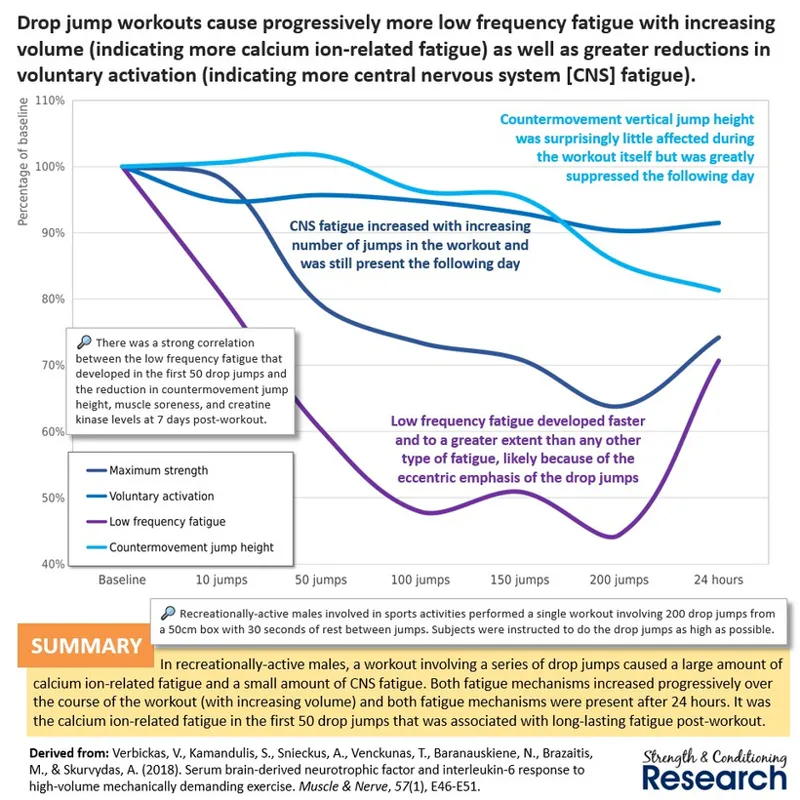
When very light load sets are performed at the end of a workout as back-off sets, their potential for causing hypertrophy is likely even further reduced because of the accumulated supraspinal central nervous system (CNS) fatigue that has been generated over the course of the workout. This CNS fatigue reduces the level of motor unit recruitment that can be achieved even at a maximal level of effort.
.
Alongside this accumulated supraspinal CNS fatigue, there is also likely to be some accumulated calcium ion-related fatigue from the previous exercises, especially if those involved strength training in stretched positions.
.
#4. Do very light loads increase mental toughness or pain tolerance?
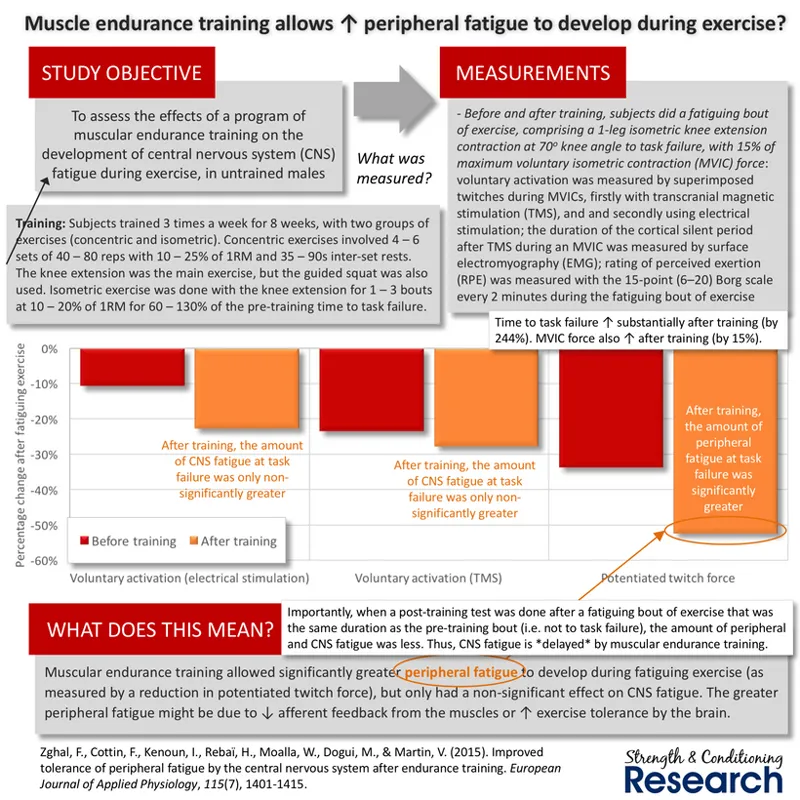
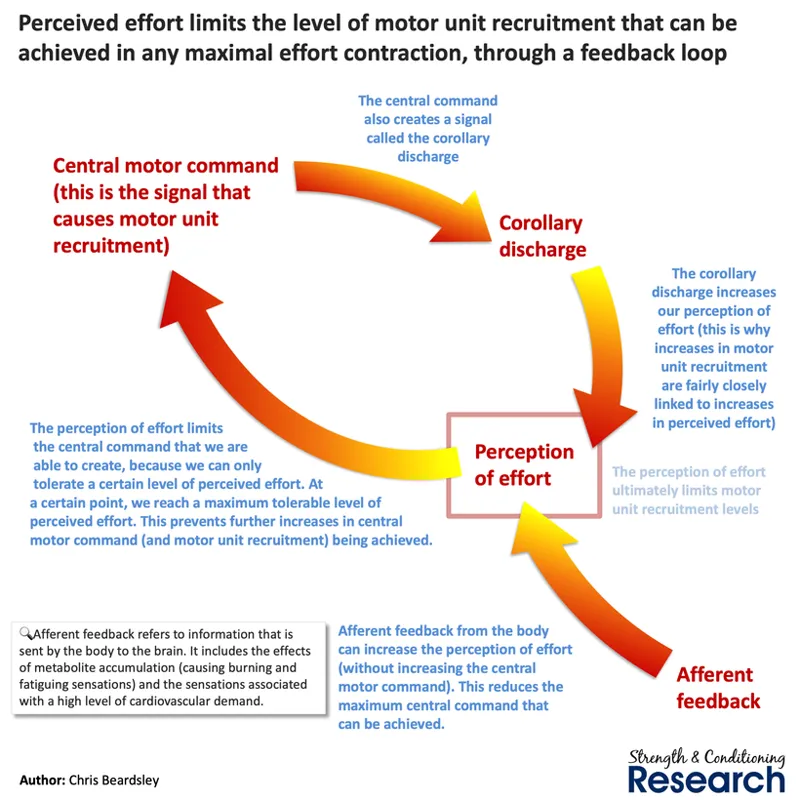
Some research shows that strength training with very light loads does cause an increase in the amount of peripheral fatigue relative to central nervous system (CNS) fatigue at muscular failure. This most likely occurs due to an increased tolerance to the discomforting sensations produced by afferent feedback.
.
However, it is important to note that this improved resistance to supraspinal CNS fatigue is only necessary because of the presence of the discomforting and painful feelings that are caused by the use of very light loads. If we simply lift heavy or moderately-heavy weights instead, there are minimal discomforting and painful feelings and therefore there is minimal supraspinal CNS fatigue. For this reason, we are unlikely to experience any improvement in motor unit recruitment levels or in hypertrophy with heavy or moderately-heavy weights as a result of occasionally using very light loads to improve our tolerance to these feelings of discomfort.
.
Conclusions
Some bodybuilders program back-off sets with very light loads (lighter than 30RM) after their main sets. Yet, research shows that very light loads cause far less hypertrophy than moderate (6-15RM) or light (16-30RM) loads, even if the same number of sets to failure (and a much higher volume load) are done. Very light loads cause less hypertrophy than light or moderate loads because the level of whole muscle force they require is too low to cause venous occlusion, which means that metabolites cannot accumulate and cause metabolite-related fatigue. Hence, the only source of peripheral muscular fatigue is calcium ion accumulation, which reduces the levels of mechanical tension that stimulates muscle growth. When very light loads are done as back-off sets at the end of the workout, their ability to stimulate hypertrophy is likely further reduced by [1] the calcium ion-related fatigue that occurred in the main sets (which reduces mechanical tension), and by [2] the supraspinal central nervous system (CNS) fatigue that builds up over a workout (which reduces motor unit recruitment levels at task failure). Finally, while it is true that supraspinal CNS fatigue during very light load sets can be reduced (to a certain extent) by training with very light loads in order to increase the ability to tolerate discomforting feelings and pain during exercise, it is far easier to avoid the problem by using heavier loads that never generate this sensory feedback in the first place.

Comments (5)
Hi Chris, in very light load training, what causes the pain felt, and increase in afferent feedback, if not metabolite accumulation? Is it the build up of calcium ions?
https://www.patreon.com/posts/perceptions-62952250
Can you do a topic on reciprocal inhibition?
I think that most of the time, the problem is the two-joint muscle principle and not true reciprocal inhibition: https://www.patreon.com/posts/two-joint-68673491
I will say though, that reps of any two given movements are not necessarily created equal. Like reps of a pump out style tricep pushdown to 90 degrees of elbow flexion, are not the same as reps on a ATG pause squat. You’ll be able to do a lot more reps of the pushdowns before metabolite accumulation becomes the limiting factor. This is where “time under tension” or set duration can be a more useful proxy than rep counts. Even if we know it’s not a driver of hypertrophy, maybe too much TUT is a limiter of hypertrophy, which makes tracking it potentially quite useful in this conversation