




Rest period duration
Modern-day bodybuilders often use short rest periods between sets, because this method of training enhances many of the feelings that are associated with lifting weights, including [A] the muscle pump during the workout, [B] fatiguing and burning sensations inside the muscle during the workout, and [C] delayed onset muscle soreness after the workout. Even so, research has demonstrated that short rest periods are actually less effective for hypertrophy than longer rest periods.
.
#1. Short rest periods reduce hypertrophy and strength gains
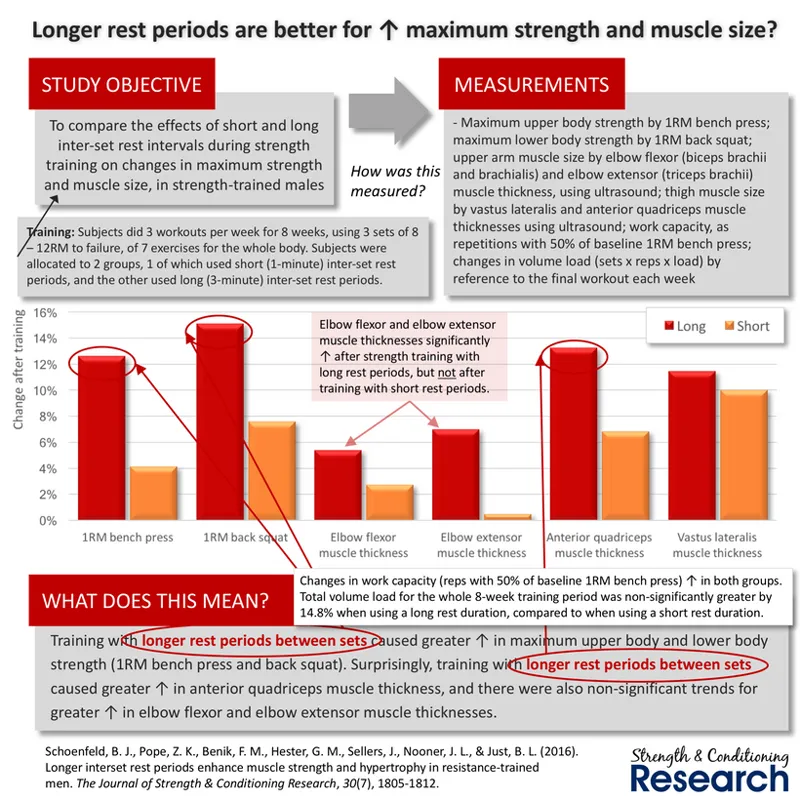
Several years ago, researchers investigating the roles of short and long rest period durations between sets were surprised to discover that long rest periods were superior for increasing both strength and size. Previous to this study, it had long been known that long rest periods were superior for increases in strength, but it was believed that short rest periods were superior for hypertrophy.
.
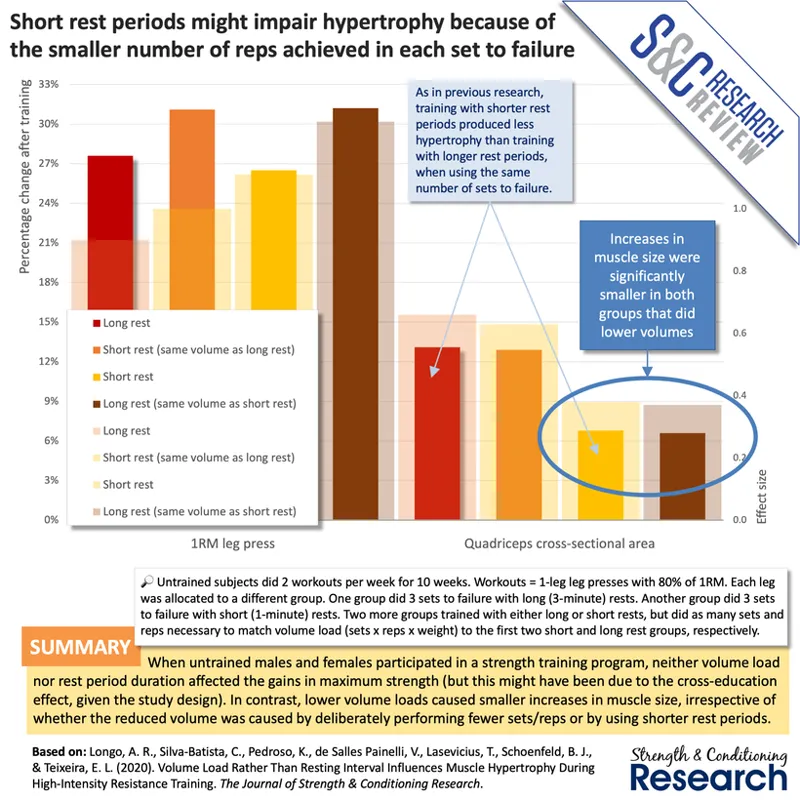
Subsequent studies have confirmed these early findings, and indicate that short rest periods are certainly not as effective for hypertrophy as long rest periods.
.
#2. Short rest periods reduce post-workout myofibrillar protein synthesis rates
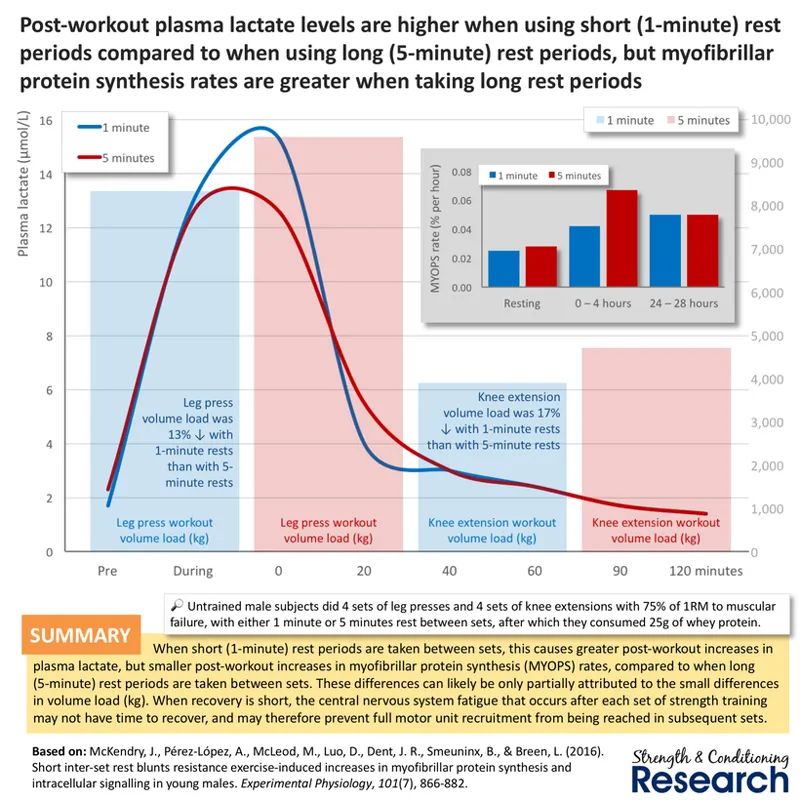
Research has also shown that post-workout increases in myofibrillar protein synthesis rates are smaller after strength training with short rest periods. Yet, the metabolite accumulation is greater when training with short rest periods.
.
Indeed, this is one of the reasons why the metabolic stress hypothesis of muscle growth has now been rejected by many researchers (read more).
.
#3. What is the mechanism?
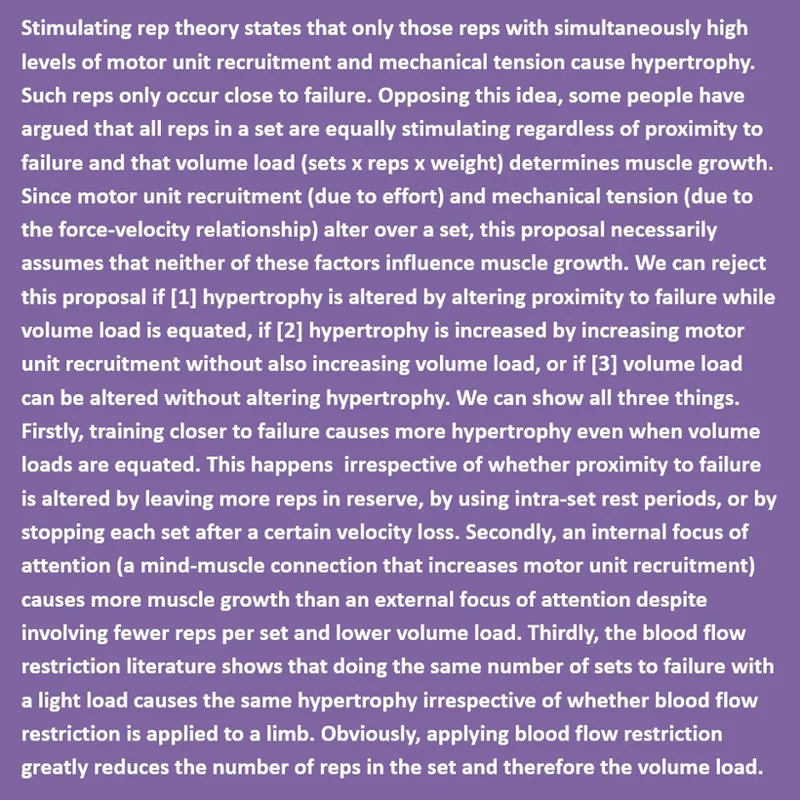
Researchers have attempted to explain the fact that short rest periods produce less hypertrophy by reference to the reduced number of reps that are possible to perform. Yet, it is probably invalid to argue that the reduction in volume load itself is responsible for the reduced stimulus, since volume load is totally unrelated to hypertrophy (read more).
.
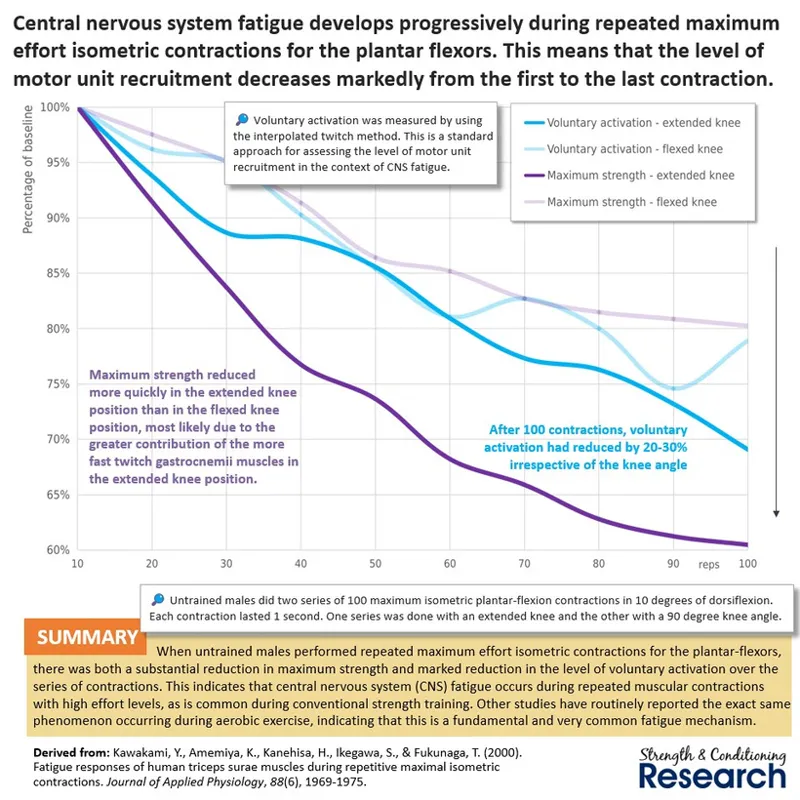
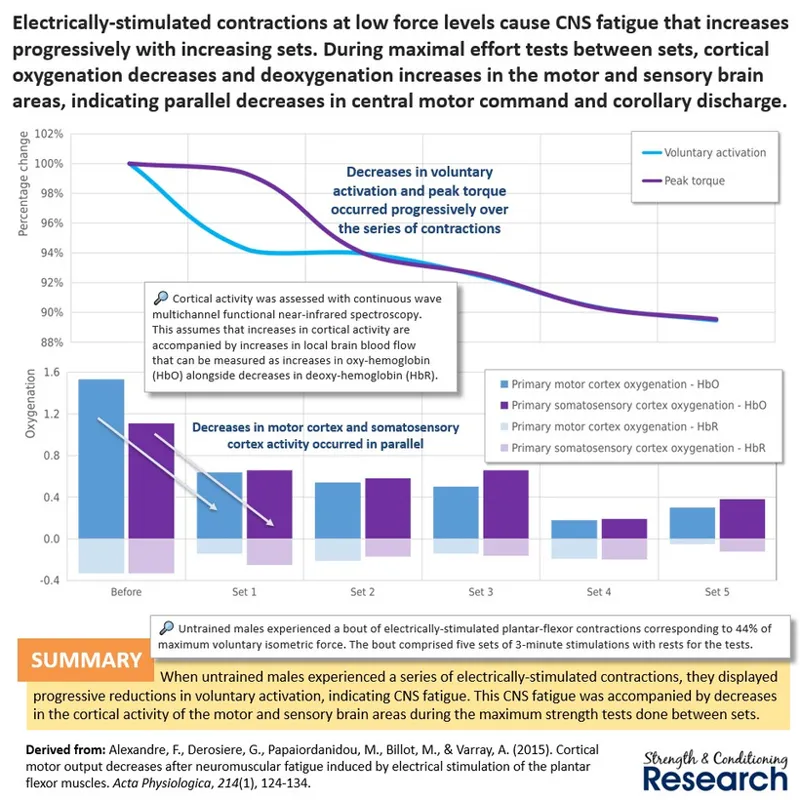
Multiple studies have shown that when incomplete rest periods are taken between forceful muscular contractions, central nervous system (CNS) fatigue mechanisms build up, reducing the level of motor unit recruitment that is achieved and therefore the number of muscle fibers that are activated and hence exposed to active mechanical tension.
.
Supraspinal CNS fatigue occurs when the brain perceives effort from a source that is not the central motor command, usually because of some disagreeable sensation somewhere in the body (like feeling out of breath or the burning sensations in the muscles). When this happens, the maximum amount of central motor command that can be produced is reduced, which reduces motor unit recruitment levels. The recovery speed of this fatigue mechanism is relatively fast since it is linked to the disappearance of the perception of the disagreeable sensation. Since short rest periods are more likely to make us feel out of breath or experience burning sensations in the muscles, there will be more supraspinal CNS fatigue in the later sets of a workout when using short rests compared to when using long rests.
.
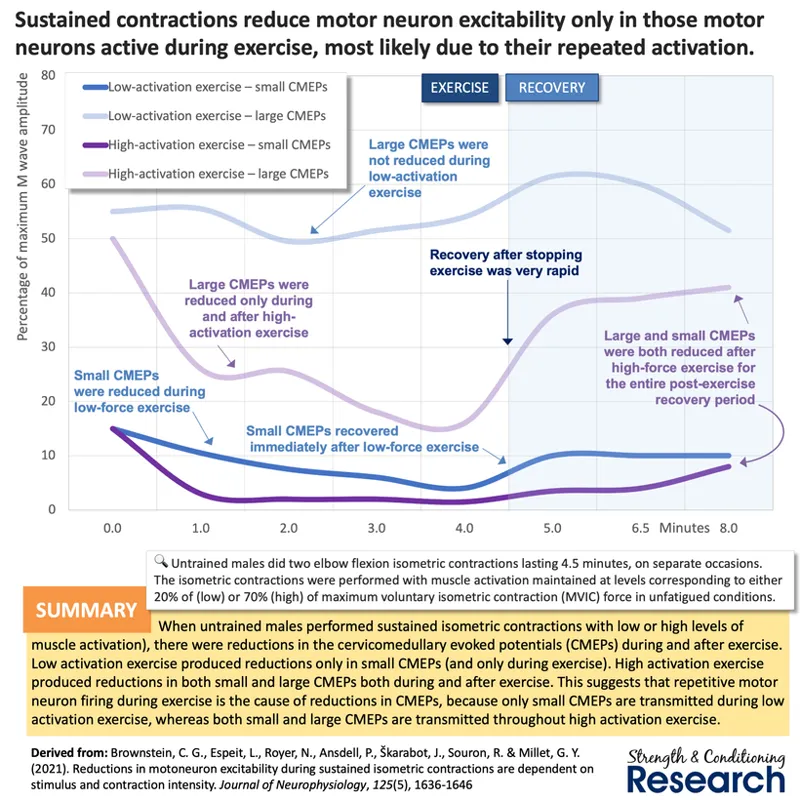
Spinal CNS fatigue seems to be caused by repetitive motor neuron firing, and also recovers relatively quickly after finishing exercise. This suggests that there will be more spinal CNS fatigue present in the later sets of a workout when using short rest periods compared to when using long rest periods. The effect of spinal CNS fatigue is to reduce the level of motor unit recruitment at the muscular level, which obviously reduces the hypertrophy stimulus.
.
We can illustrate the effect of CNS fatigue mechanisms on later sets as follows:
.
#4. How does rest period duration relate to muscle damage?
It is possible that short rest periods between sets or between bouts of exercise might cause more muscle damage, but this phenomenon has only been observed during eccentric training. Since eccentric contractions do not involve much metabolite-related fatigue, it is possible that different results might be observed during conventional strength training, which involves a great deal of metabolite-related fatigue. Moreover, when metabolite-related fatigue is increased (such as by using short rest periods), this likely reduces the amount of calcium ion-related fatigue proportionally. Thus, the opposite results might occur in the context of normal strength training.
.
Conclusions
Modern-day bodybuilders often use short rests between sets, since this method of training enhances many of the feelings that are associated with lifting weights, including [A] the muscle pump during the workout, [B] burning sensations inside the muscle during the workout, and [C] delayed onset muscle soreness (DOMS) after the workout. Even so, research has shown that training with short rests stimulates smaller post-workout increases in myofibrillar protein synthesis rates and causes less hypertrophy after long-term strength training. Why does this happen? Some researchers have suggested that the reduction in volume load (sets x reps x weight) could be the explanation. Yet, volume load is completely unrelated to muscle growth. The only measure of volume that has ever been linked to hypertrophy is the number of sets performed to failure. It is more likely that central nervous system (CNS) fatigue mechanisms are responsible. CNS fatigue mechanisms reduce the level of motor unit recruitment and therefore the number of activated muscle fibers. Evidently, this reduces the hypertrophy stimulus achieved. Training with short rests means starting subsequent sets before the CNS fatigue mechanisms have dissipated after the previous set. Indeed, both supraspinal and spinal CNS fatigue mechanisms recover relatively quickly after a set of muscular contractions. Moreover, since supraspinal CNS fatigue is caused by experiencing disagreeable feelings (like being out of breath or a burning sensation in the muscle), and since training with short rests tends to cause these to occur more readily, it is likely that supraspinal CNS fatigue is the main reason why short rests are less effective for hypertrophy than long rests.


Comments (4)
Are there any noticeable physiological signs of maximum inter-set recovery? Can heart rate monitoring tell us anything about intra-session recovery for hypertrophy?
Hey Chris, just got in on the content. Really interesting breakdowns. Muscle fatigue is really intriguing. I do commercial metabolic testing with clients and incorporate the use of a NIRS-Moxy device which I can include the whole resistance training demographic as well besides the endurance people looking at performance in running/cycling. I'm using the Moxy looking at simply SmO2% to gauge readiness (pertaining to weight lifters). You- and the research, bringing in the aspect of CNS fatigue and the different components completely takes muscle oxygen out of the picture or at least introduces a whole other component to readiness for the next set or just in general. A study incorporating NIRS into rest sets looking at the fatigue relationship would be extremely interesting to see the pattern across a workout and a whole period maybe.
Do you happen to have any data on levels of hormones in the blood - specifically HGH and testosterone - during training periods? Part of my understanding was that taking longer rest periods also allowed for the maximum release of growth factors and more sustained serum levels.
There are quite a few studies that have measured the effects of various training variables on post-workout hormone release. However, since I don't believe that the post-workout hormone release causes hypertrophy (because otherwise, hypertrophy would not be muscle-specific), I haven't really studied that literature in any detail.