




Fatigue mechanisms are protective
Fatigue is a temporary, reversible reduction in exercise performance after a preceding bout of exercise. Fatigue mechanisms are physiological changes that cause fatigue. Why do fatigue mechanisms exist? They are protective. They stop muscle fibers from running out of energy in the form of ATP.
.
#1. Running out of ATP is extremely damaging to muscle fibers
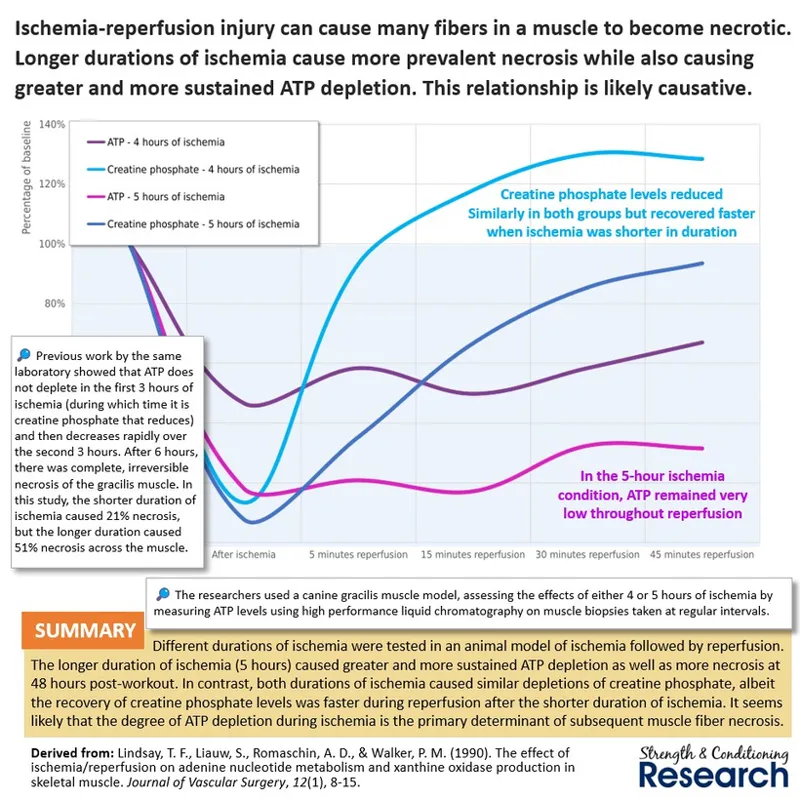
Ischemia studies have shown that when the blood flow to muscles is prevented for several hours, this leads to a substantial reduction in ATP levels, and subsequently to the necrosis of muscle fibers.
#2. Muscles do not run out of ATP during exercise
In contrast to sustained periods of ischemia, exercise does not cause a reduction in ATP levels, despite producing considerable reductions in muscle glycogen, because the fatigue mechanisms prevent that from happening (read more).
#3. CNS fatigue mechanisms deactivate fast twitch muscle fibers (externally)
Supraspinal and spinal central nervous system (CNS) fatigue mechanisms reduce the magnitude of the central motor command that reaches the muscle (either by reducing the amount that is created in the brain or by reducing the amount that is transmitted down the neurons of the spinal cord). By reducing the size of the central motor command, they reduce the number of high-threshold motor units that are recruited and therefore the number of fast twitch muscle fibers that are activated. Since fast twitch muscle fibers are most susceptible to running out of ATP, this has a protective effect (read more).
#4. Calcium ion-related mechanisms deactivate fast twitch muscle fibers (internally)
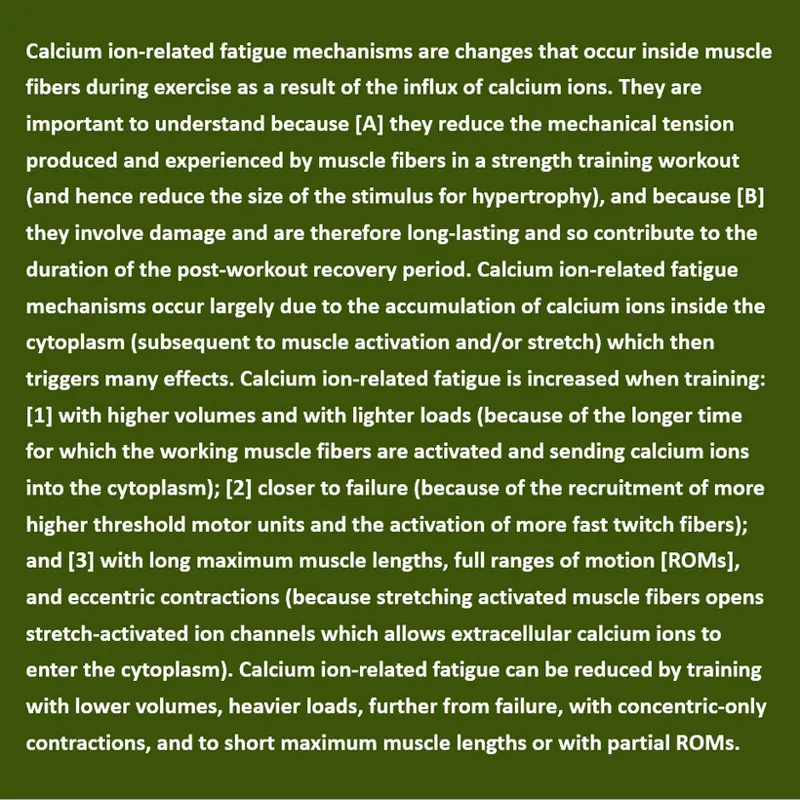
Calcium ion-related fatigue mechanisms switch off muscle fibers internally even when they are electrically-activated externally by directly stopping excitation-contraction coupling and crossbridge formations from happening. Since these are the main two processes that use ATP inside a muscle fiber, this has a protective effect (read more).
#5. Metabolite-related fatigue mechanisms slow the rate at which muscle fibers use ATP
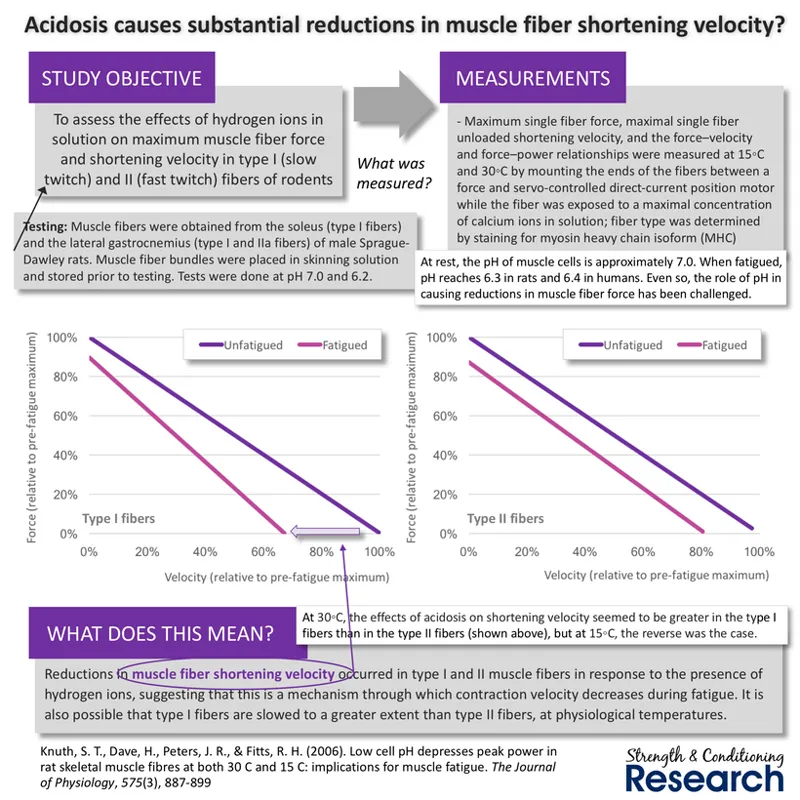
Metabolite-related fatigue mechanisms slow down the rate of crossbridge cycles, which of course then reduces the rate of ATP usage. The two main metabolite-related fatigue mechanisms involve phosphates and acidosis. Phosphates inhibit the transition of actin-myosin crossbridges through the cycle stages at various points, thereby slowing the completion of the cycle.
Acidosis slows down the rate of crossbridge formation by sticking myosin to actin and preventing it from leaving, which of course then slows the number of the crossbridges that can form per second.
Conclusions
Fatigue is a temporary, reversible reduction in exercise performance (such as strength or bar speed) after a preceding bout of exercise. Fatigue mechanisms are physiological changes that cause fatigue. Why do fatigue mechanisms exist? They are PROTECTIVE. They stop muscle fibers from running out of energy in the form of ATP. When blood flow to muscles is prevented by ischemia for several hours, this leads to a large reduction in ATP levels, and subsequently to the necrosis of muscle fibers. In contrast, exercise does not reduce ATP levels (despite producing considerable reductions in muscle glycogen) because fatigue mechanisms prevent that from happening. Supraspinal and spinal central nervous system (CNS) fatigue mechanisms switch off muscle fibers by stopping them from being activated (especially the fast twitch fibers that can use ATP most rapidly). Similarly, calcium ion-related fatigue mechanisms switch off muscle fibers internally even when they are electrically-activated externally by stopping excitation-contraction coupling and actin-myosin crossbridge formations from happening (which are the two main processes that use ATP inside a muscle fiber). Finally, metabolite-related fatigue mechanisms slow down the rate of crossbridge cycles, thereby reducing the rate of ATP usage. All of these categories of fatigue mechanisms are therefore protective from the point of view of muscle fibers running out of ATP.

