








Heavy loads cause less CNS fatigue
One of the biggest myths in the fitness industry is that heavy loads cause greater CNS fatigue during and/or after strength training workouts. Even when referring only to the most direct types of evidence, this is untrue. When incorporating a wider understanding of how fatigue mechanisms work, it is impossible. Let us examine why this is the case.
.
#1. Direct measurements of CNS fatigue during strength training workouts
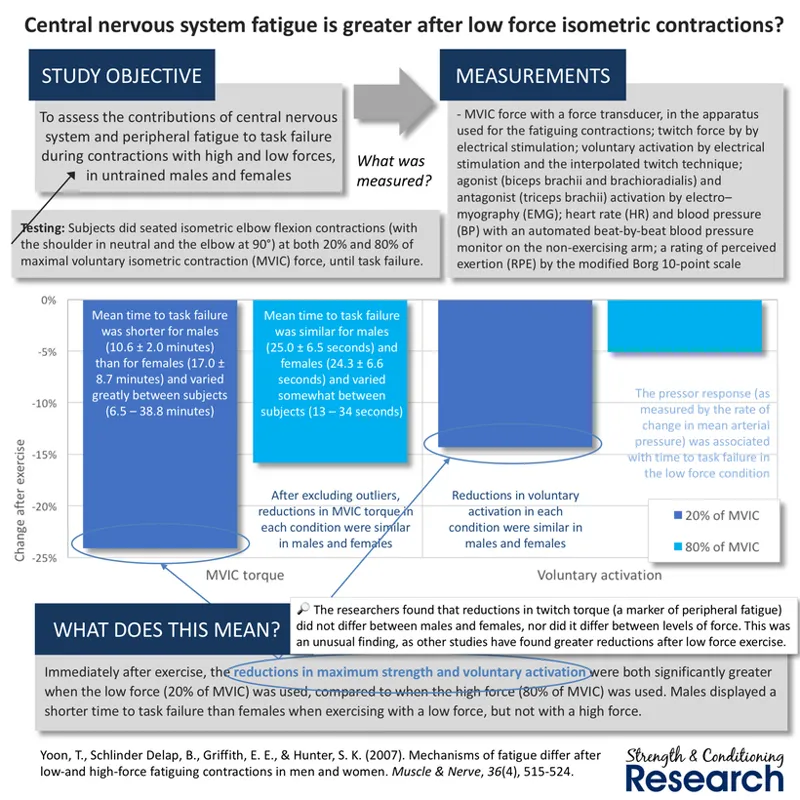
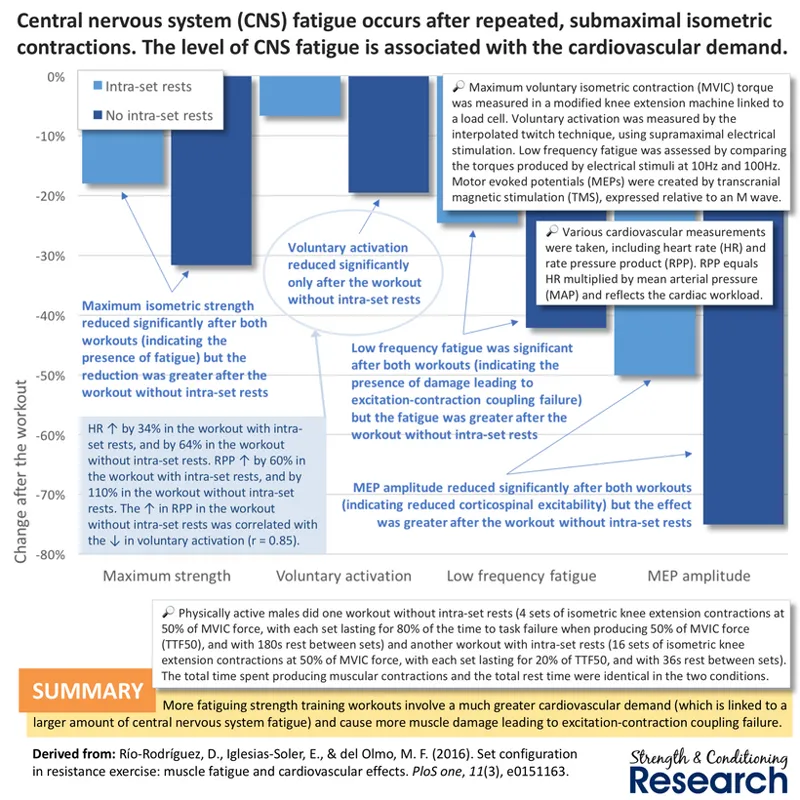
CNS fatigue is often measured immediately after strength training sets or isometric contractions. Several studies have compared the amount of CNS fatigue after isometric contractions involving higher and lower force levels to task failure. In such studies, there is a clear trend for lower forces to cause much more CNS fatigue immediately after the exercise bout has been completed.
.
This is a very repeatable finding, with all current studies reporting exactly the same outcome. This study was particularly interesting because a cardiovascular measurement was associated with time to task failure in the lower force condition, indicating that the behavior of the cardiovascular system was involved in determining the performance of that condition.
.
To be clear, this is a universal observation across all types of exercise, with greater CNS fatigue always being recorded after longer durations of lower-intensity endurance exercise compared to after shorter durations of higher-intensity endurance exercise.
.
A great many studies have been performed to examine this comparison and every single one has shown that longer durations of exercise (in absolutely any context and with any exercise mode) always cause much more CNS fatigue than shorter durations of exercise, so long as each of the conditions is performed to task failure.
.
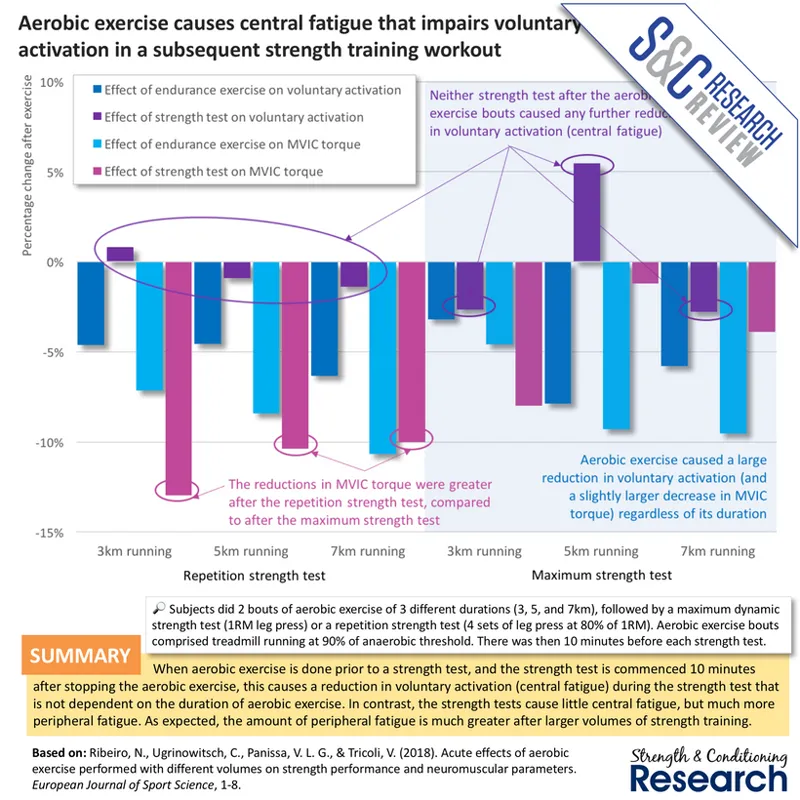
And just to be 100% clear (although it should be obvious by this point), CNS fatigue is definitely greater immediately after aerobic exercise than immediately after strength training exercise. This study showed that just 3km of running caused substantially more CNS fatigue than both strength training workouts and 1RM tests, despite causing similar or less total fatigue.
.
#2. Direct measurements of CNS fatigue after strength training workouts
CNS fatigue is often measured in the days after strength training workouts. When workouts that involve lighter loads are compared with workouts that involve heavier loads, the workouts of light loads cause more post-workout CNS fatigue than the workouts of heavier loads.
.
#3. Why is CNS fatigue lower during heavy load strength training workouts?
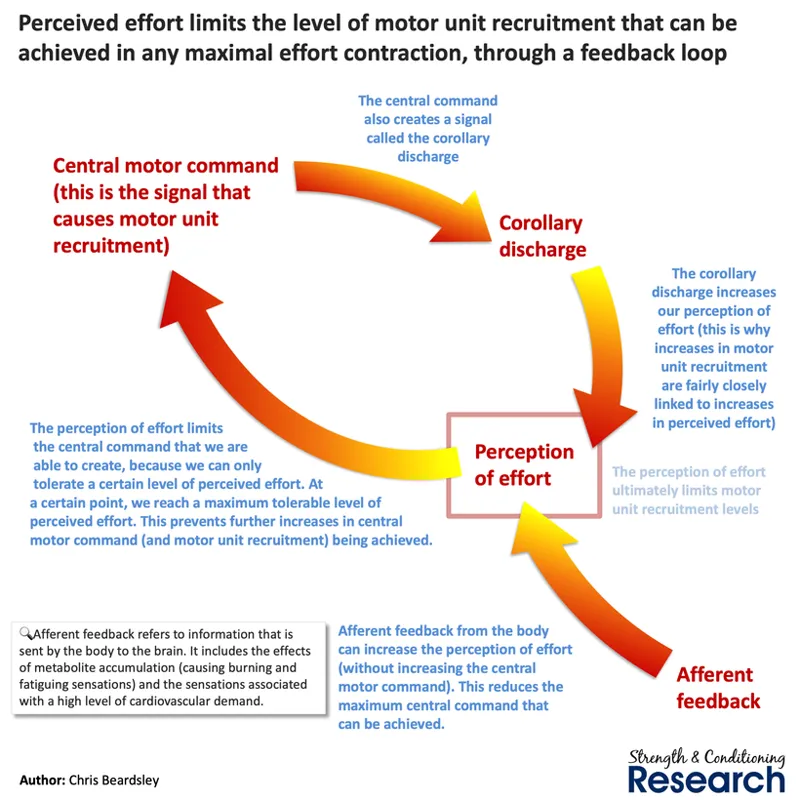
To understand why CNS fatigue is lower during strength training workouts involving heavy loads, you need a model of what causes CNS fatigue. Currently, the best model is the psychobiological fatigue model, which shows us that anything that contributes to an increase in the perception of effort will reduce our ability to generate central motor command, thus reducing the amount of motor unit recruitment we can produce at our maximum tolerable perception of effort.
.
We can more easily visualize the effects of the psychobiological model of fatigue as follows. This graphic shows how any negative feeling (such as those caused by afferent feedback) will reduce our ability to generate the central motor command that produces motor unit recruitment.
.
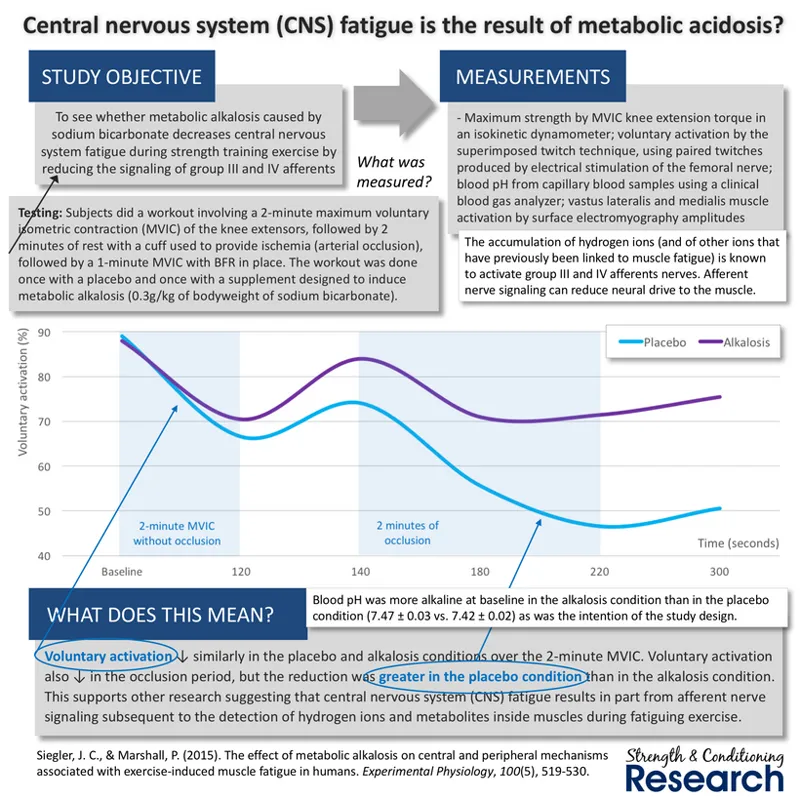
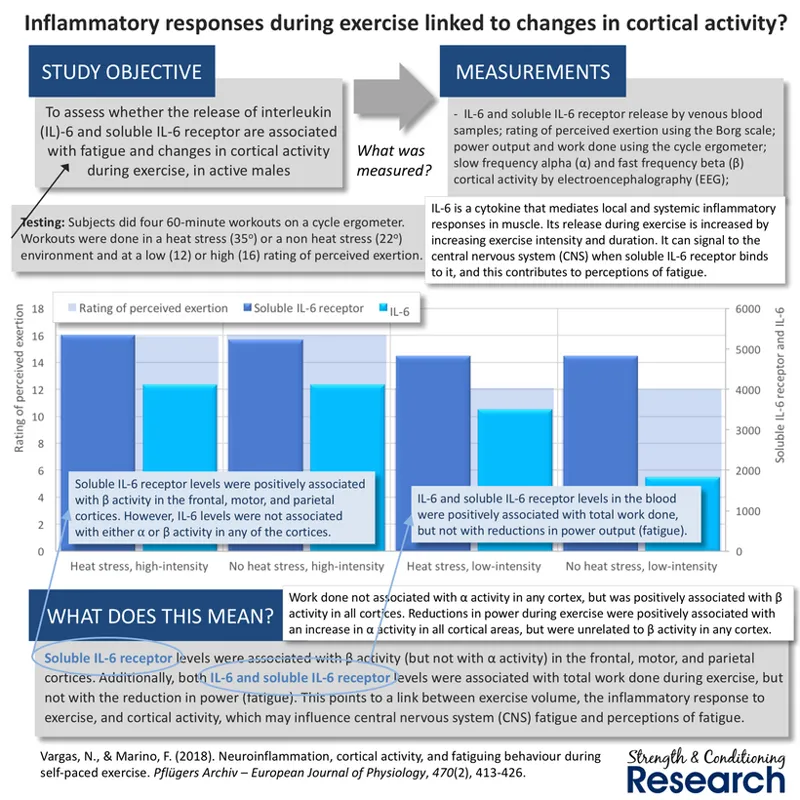
Longer durations of strength training exercise (such as sets of lighter loads) cause increased perceptions of effort from various sources. Firstly, they involve much greater metabolite-induced afferent feedback. Metabolites are detected inside the muscle by receptors. These receptors send signals to the brain along afferent nerves, which the brain then uses to produce pain. This pain increases our perception of effort, which then reduces the maximum level of motor unit recruitment that we can achieve, by taking up space that the corollary discharge needs to use in order to maximize central motor command.
.
Secondly, lighter load sets involve greater feelings of being out of breath. This discomforting sensation also increases our perception of effort, which similarly reduces the maximum level of motor unit recruitment that we can achieve, by taking up space that the corollary discharge needs to use in order to maximize central motor command.
.
Thirdly, lighter load sets being about greater feelings of tiredness, which is caused by circulating inflammation resulting from muscular contractions. This discomforting sensation also increases our perception of effort, thereby reducing the maximum level of motor unit recruitment that we can achieve.
.
#4. Why is CNS fatigue lower after heavy load strength training workouts?
The psychobiological fatigue model also explains why heavier loads involve less post-workout CNS fatigue. Research has shown that post-workout muscle damage leads to a circulating inflammatory response and this inflammatory response then produces CNS fatigue. Hence, we can see that the greater the muscle damage caused by a workout, the greater the CNS fatigue.
.
Various studies have confirmed that post-workout muscle damage is greater after training with lighter loads, owing to the greater calcium ion-related fatigue that occurs during the workout itself (since calcium ion accumulation is what causes muscle damage). Read more.
.
Conclusions
Heavy loads cause less CNS fatigue than lighter loads both during and after strength training workouts. During high-force and low-force tasks to failure, the low-force, long-duration task causes more CNS fatigue. According to the psychobiological model of fatigue, this happens because the lighter load tasks involve greater pain and discomfort (such as from the burning sensations in the muscles, the feeling of being out of breath, and the general sensation of tiredness caused by inflammation). Since we reach muscular failure in a set when we reach the maximum tolerable perception of effort, anything that causes pain or discomfort necessarily leads us to reach muscular failure earlier, even before we reach maximum levels of motor unit recruitment. In this way, lighter loads involve a lower level of motor unit recruitment at muscular failure, which is defined as experiencing CNS fatigue. Similarly, after strength training workouts comprising lighter and heavier loads, CNS fatigue is greater when using lighter loads because they cause greater muscle damage than heavier loads. Muscle damage causes an inflammatory response that produces CNS fatigue by generating feelings of tiredness (in the same way as during the workout). Since lighter loads cause more muscle damage than heavier loads, they therefore also cause more CNS fatigue.

Comments (2)
Why is peripheral fatigue greater in High intensity (Endurance exercise) and greater in Low force exercise?
Wow.. this is great information