Beginning of the "4T" target study: "Task" and "Target". "Threat" and "Tactics" will follow.
Now that we have established the mission's feasibility and explored general tactical options, we can turn our attention to a comprehensive target study. To structure this analysis, we will employ the "4T" framework, a methodology well known by any fighter pilot, and that I will elaborate on in a subsequent dedicated article.
Short Intro to the "4T"
The 4T (+ Time) concept is a crucial tool in mission planning, providing a structured approach to analyzing the key elements of an air attack.
Task: this defines the mission's objective and what needs to be accomplished.
Target: this involves a detailed analysis of the objective, including its location, vulnerabilities, and surrounding environment.
Threat: this assesses potential enemy capabilities and defenses that could hinder the mission.
Tactics: this outlines the specific actions and strategies to be employed to achieve the task while mitigating threats.
Time: this considers the temporal aspects of the mission, including timing, sequencing, and duration of events.
By systematically examining these five elements, we can try to develop a comprehensive and effective attack plan that will maximize chances of success.
Note: as you've seen it in the Electronic Target Folder introduction, specialized units usually perform a substantial portion of the target study, with the results summarized in the ETF. In the absence of an ETF, you are responsible for conducting a comprehensive target study to the best of your ability.
3. "4T" Target Study
3.1 - Task
Let's make sure that we have a good understanding of the task that we have been given.
When we read the mission briefing, we understand that the primary task of Operation Bakwa Hammer is to disrupt the Iranian Air Force's ability to support their ground operations east of Farah. This is to be achieved by denying the use of Farah airport through a swift and decisive airstrike focused on neutralizing the runway. The execution of this task will have strategic impacts wince it will demonstrate the international community's resolve in countering Iranian aggression.
The broad context of the task is given in the "Context" page. The "what" is explained here: neutralize Farah airfield.
More details are available in the "Tasking" page. It tells us "how" we are supposed to do the "what" introduced above.
Given the constraint of a single or two-player mission (with only one or two strike aircraft available), we can say that:
With a very limited ordnance and attack capacity, the focus shifts to the most critical aspect of runway denial. In our case, the emphasis is on targeting as precisely as possible the specific sections of the runway identified in the target folder.
We need to be efficient. This demands meticulous planning to ensure accurate weapon delivery and optimal damage. The attack profile, timing, and weapon release parameters become even more critical. There's no room for error or re-attacks.
We know that we have to accept an increased risk level. A small strike force faces increased risk due to a lack of redundancy. If one aircraft is lost, experiences a weapon malfunction, or if the pilot has "finger troubles", the whole mission is a failure. This necessitates, again, careful planning to minimize exposure and threat mitigation strategies.
We know that our flexibility is very reduced. The pre-planned attack is the sole focus, and any deviations from the plan are highly undesirable.
Note: it is your responsibility to seek clarification from the tasking authority (e.g. the mission designer) if the given tasking is insufficiently detailed. For instance, if the instruction is merely to 'neutralize Farah airfield' without further explanation of the expected result (e.g., 'render the runway unusable'), you must initiate a dialogue to present options and validate that they align with the intended mission accomplishment.
3.2 - Target
The primary target for Operation Bakwa Hammer is the runway at Farah Airport. The objective is to deny its use to the Iranian Air Force, thereby disrupting their ability to support ground operations east of Farah. To achieve this, a detailed understanding of the target's characteristics and vulnerabilities is essential.
Target Characteristics:
Location: Farah airport's geographical coordinates and orientation are essential for overall navigation and attack planning. While precise coordinates (available in mission documents) are nice to have, for our visual delivery of unguided munitions, the primary requirement is establishing visual contact with the runway (or a reliable visual reference point) no later than 15-30 seconds prior to bomb release. The coordinates must, at a minimum, direct us to that acquisition point.
The target coordinates (with a TLE giving us a general uncertainty of 301 to 1000 ft) are given in the mission documents. The DMPIs tell us where we are supposed to cut the runway to make it unusable by the deployed Su-25s.
Dimensions: the runway's length, width, and construction materials are key parameters in the general assessment of target vulnerability and the selection of appropriate ordnance. In our case, these factors have been pre-analyzed. The weapon types and Desired Mean Points of Impact (DMPIs) have been established and prioritized, simplifying the planning process by eliminating the requirement for further calculations related to ordnance selection.
Surrounding terrain: the relief directly impacts approach profiles, requiring adjustments to flight paths and altitudes. It also dictates weapon delivery parameters, influencing release points and angles. Furthermore, terrain features can create advantageous positions for enemy threats, affecting intervisibility and requiring careful route planning. To achieve this understanding, a dedicated terrain study must be conducted, utilizing tools such as topographical maps and oblique imagery.
Topographical map of Farah airfield's surroundings.
Oblique view of Farah airfield.
Target Vulnerabilities:
We can now transition from a general understanding of the target's characteristics (location, recognition) to an analysis of its vulnerabilities. This analysis is crucial as it directly informs the development of effective "Tactics" to achieve the "Task" objectives, while considering the "Threat".
Typically, professional targeters conduct a detailed vulnerability analysis using specialized tools like the Joint Munitions Effectiveness Manual (JMEM). However, aircrews must conduct a sufficient analysis when mission details lack comprehensive targeting data to ensure mission success.
This analysis begins by defining the desired effects. For example, achieving the task of "destroying a factory" requires significantly more effort and resources than the task of "disrupting production for one week."
When mission tasking lacks specific details, it's necessary to consider the role and importance of supporting infrastructure. For Farah Airfield, this would normally include assessing the impact on elements like control tower, fuel storage, aircraft parking areas or repair facilities.
However, in Operation Bakwa Hammer, the tasking specifies runway neutralization using two Desired Mean Points of Impact (DMPIs). This precise guidance narrows our focus to the runway's vulnerabilities:
Runway construction (materials, thickness): This critically influences weapon effectiveness.
Critical impact areas: These are areas where damage disproportionately affects operations (e.g., intersections, touchdown zones).
Enemy repair capabilities: Estimating repair capacity and timelines informs the necessary level of damage.
Given the specific DMPIs in our tasking, much of the detailed vulnerability analysis is pre-determined.
Detail of the DMPIs for our target. We are clearly being told where the bombs should hit.
The following step is weapon selection, derived directly from the vulnerability analysis:
What ordnance will achieve the desired effects (cratering, displacement) against the runway's construction?
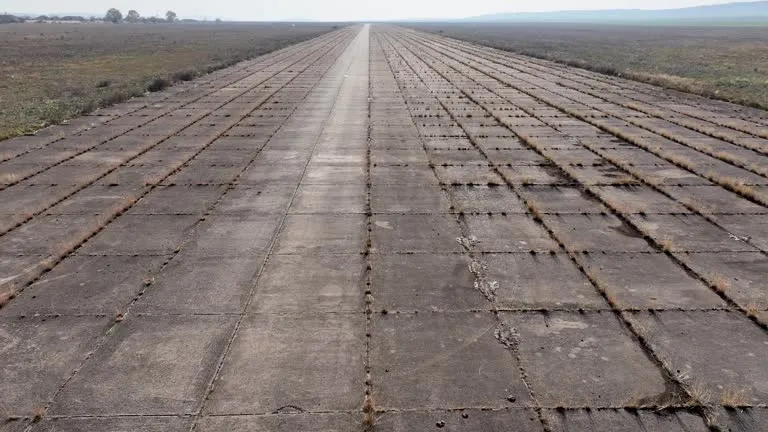
Runways made of steel plates (PSP), like in Ouadi Doum, are more vulnerable than reinforced concrete runways. The image above shows a soviet runway made of concrete plates.
What attack parameters (approach, release) maximize damage to critical runway areas?
With limited ordnance, how should we prioritize its use for maximum effect?
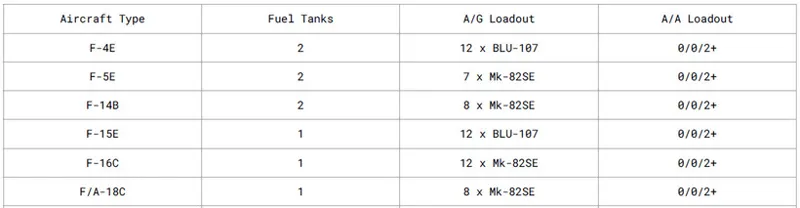
Again, in Operation Bakwa Hammer, weapon type and quantity are pre-assigned. However, aircrews must still critically assess the assigned weapon load and be prepared to recommend alternative SCLs (Standard Conventional Load) if tactically advantageous. Factors include for example weapon availability, tactical flexibility across different conditions (altitude, weather), or weapon conservation for higher-priority targets.
The weapon selection has been made for you in Operation Bakwa Hammer.
Once this comprehensive target vulnerability analysis has been done, we can start the next phase: threat analysis, which will be detailed in a next article!