How to Bomb a Runway: Learning from Real-World Attacks
Historical analysis of runway attacks.
Runway attacks, as discussed in the previous post, are not just theoretical exercises—they have been conducted in real-world conflicts with varying degrees of success. Studying these historical strikes allows us to understand what worked, what didn’t, and how these lessons apply to DCS World. I will examine here three real-world runway attacks, two of which will be briefly analyzed before diving into a detailed case study of one of the most well-executed airfield denial operations of the Cold War era. These examples will serve as a basis for the next articles, which will break down the calculations, figures, and tables necessary to plan and execute an effective runway strike.
The British Attack on Port Stanley
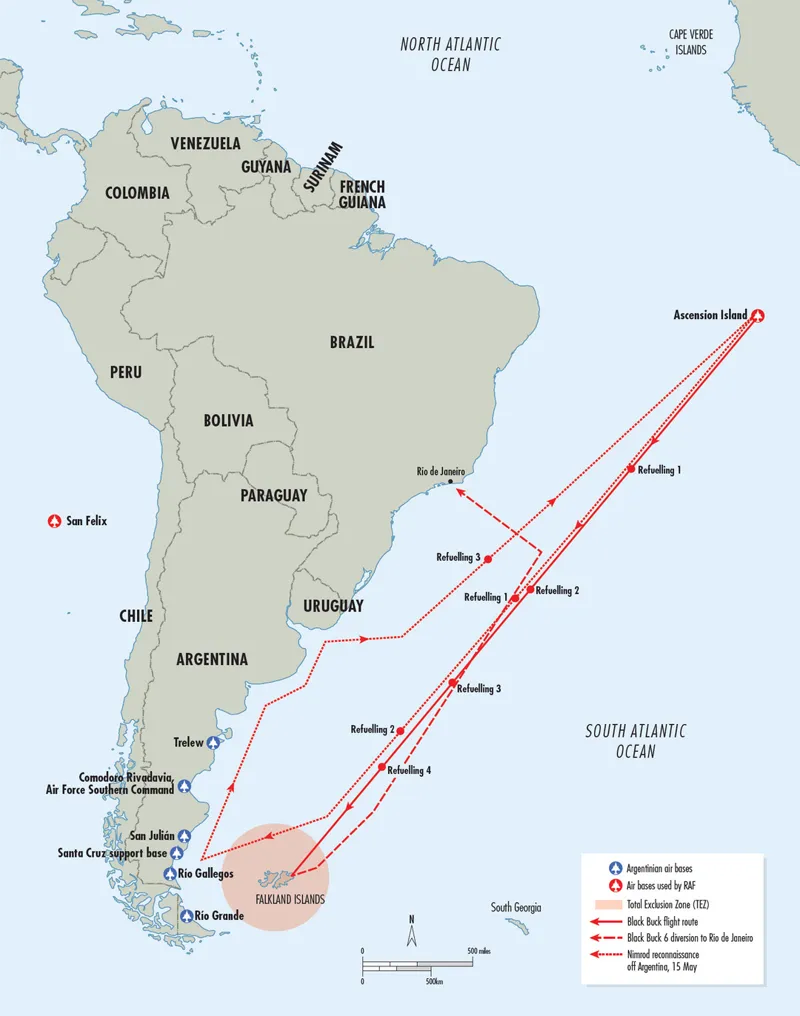
During the Falklands War in 1982, the British Royal Air Force launched a series of long-range bombing raids known as Operation Black Buck, aiming to render the runway at Port Stanley Airport inoperable. The first three missions specifically targeted the airstrip, with Vulcan bombers flying from RAF Ascension Island—over 6,500 kilometers away—requiring extensive aerial refueling to reach their destination.
Each Vulcan carried twenty-one 1,000-pound bombs, released in a straight-line pattern across the runway. The objective was to achieve at least one or two direct hits, making the airstrip unusable for fast jets. The first mission, Black Buck One, successfully placed a single crater on the runway, effectively preventing the operation of high-performance aircraft. However, the remaining bombs missed the target, highlighting the challenges of high-altitude bombing with unguided munitions. Black Buck Two followed a few days later but failed to hit the runway, while Black Buck Three was canceled due to poor weather conditions.
View of a Vulcan releasing the same 1000 lbs bombs that were used on Port Stanley runway. Source: Osprey.
Despite the impressive logistical effort, the actual physical damage was limited. The airstrip remained in use by transport aircraft such as the C-130 Hercules, and the Argentine military quickly adapted, keeping the runway operational for supply missions. However, the psychological impact of the raids played a role in shaping Argentine strategy, as the continued threat of British bombing discouraged the deployment of fast jets to the islands.
Post-strike imagery on Port Stanley. The two lines of craters are clearly visible. Source: Osprey.
From a tactical perspective, the Black Buck missions underscore the difficulties of relying on unguided bombs for precise runway denial. The Circular Error Probable (CEP) of the high-altitude drops meant that even with a carefully planned attack, most bombs fell outside the intended target area. The raids demonstrated that a single bomb could disable a runway but also reinforced the need for multiple direct hits across its width to ensure prolonged denial of service.
The NATO Strike on Sombor Airbase
During the Kosovo War in 1999, NATO targeted Sombor Airbase in Serbia as part of Operation Allied Force. Like the Black Buck raids, this attack was conducted with massed unguided bomb strikes. In other instances during this campaign, PGM (Precision Guided Munitions) will be employed, marking a significant evolution in airfield denial tactics.
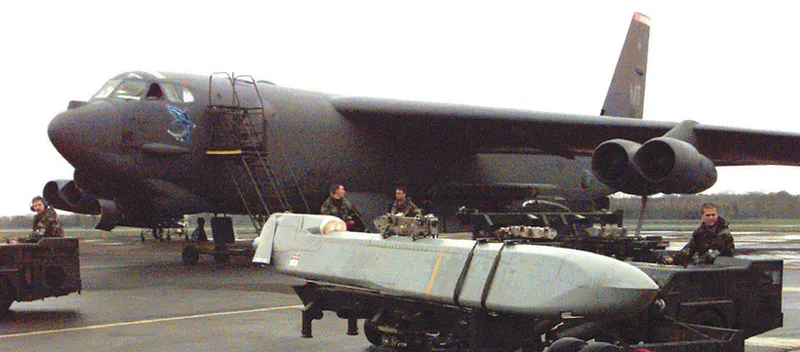
The strike on Sombor was carried out by two USAF B-52 bombers on the night of May 11–12, 1999. Each aircraft dropped 41 Mk-82 bombs in two separate lines, totaling 82 bombs across the airfield. The targeting plan aimed to distribute the bombs across the entire width and key operational sections of the runway, ensuring multiple craters that would require significant repair efforts.
Analysis of post-strike reconnaissance imagery revealed that 20 of these bombs had a direct and damaging effect, with nine impacting the northwest side of the runway and eleven cratering the middle section. The extent of the damage was such that repair attempts were deemed impractical, and to this day, bomb craters can still be seen through the dense vegetation that has grown over the abandoned airstrip.
Post-strike imagery of the attack on Sombor airfield. Source: fas.org.
We can see that, while the attack was not as precise as later JDAM-guided runway strikes, it has been demonstrated that well-executed unguided bombing could still effectively close an airbase. The major change enabling this excellent result, since Port Stanley's attack, is the aircraft's positioning precision given by GPS-aided INS systems that equipped the B-52s, largely reducing the CEP of their attack.
The French Strike on Ouadi Doum
One of the most well-executed Cold War runway denial operations took place on January 16, 1986, when French Air Force Jaguars conducted a precision strike on the Libyan airbase at Ouadi Doum in northern Chad. At the time, Libya had expanded its influence into Chad, establishing a heavily defended airbase deep in the desert. The French viewed this as a direct threat and launched a retaliatory strike to cripple Libyan air capabilities in the region.
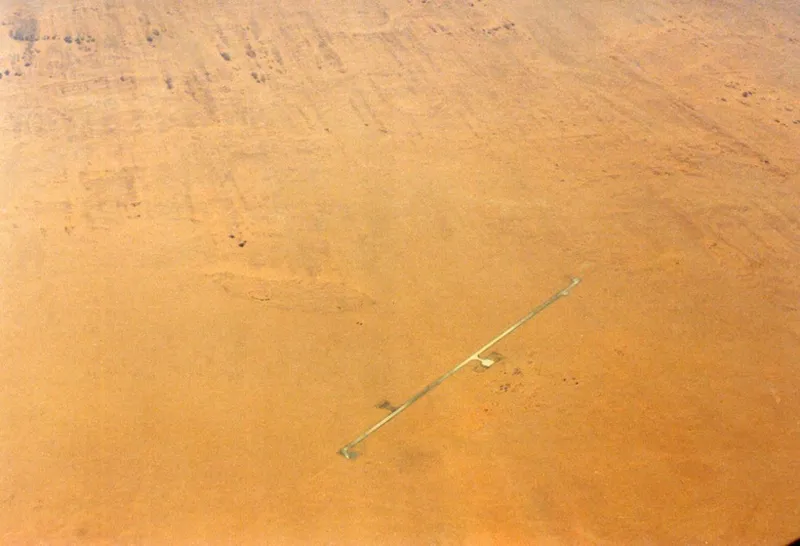
A pre-strike reconnaissance imagery of the airfield, lost in the desert.
The attack was carried out by twelve SEPECAT Jaguars from Escadron de Chasse 1/11 Roussillon. Eight of these aircraft were armed with BAP-100 anti-runway bombs, while the remaining four carried two 250 kg high-drag bombs each for secondary strikes. Each Jaguar also carried self-protection electronic warfare equipment and external fuel tanks to extend their range. The strike package was escorted by four Mirage F1C fighters, responsible for protecting the force from potential Libyan air counterattacks. The entire mission was supported by six C-135F tankers for aerial refueling and a Breguet Atlantic airborne command post coordinating the operation in real time.
Overview of the strike mission from Bangui to Ouadi-Doum.
Mission Planning and Execution
Planning for the mission had been underway for over a year, with reconnaissance flights regularly monitoring the construction of the Ouadi Doum airbase. French intelligence determined that the runway was made of double-layered metallic plates, different from conventional concrete runways. The BAP-100 bombs were chosen for their ability to penetrate and warp these surfaces, making repairs extremely difficult. Their lighter weight also allowed each Jaguar to carry up to 18 bombs, maximizing the number of impacts across the airstrip.
BAP-100 anti-runway weapons principle.
BAP-100 anti-runway weapons being loaded on the aircraft on the day of the strike.
The attack plan called for a low-altitude, high-speed ingress to avoid detection. The Jaguars flew at very low level for most of the approach, staying below the radar horizon of Libyan early warning systems. The formation split into two attack waves, each targeting different sections of the runway. The aircraft approached the airfield at a 10–15 degree offset angle (rather than directly perpendicular or parallel, cf. previous article), ensuring that the BAP-100 strikes would cut across the entire usable width of the runway. As discussed earlier, this tactic compensated for aiming errors and increased the likelihood of multiple bombs impacting critical takeoff and landing zones.
Upon reaching the release point, the pilots tried to keep steady flight parameters to maximize weapons computer's precision, before releasing their bombs in a calculated sequence to maximize coverage. Each aircraft’s BAP-100s deployed in a linear pattern, detonating just beneath the metallic plates and causing severe structural deformation. The second wave of Jaguars dropped their 250 kg retarded bombs on airbase infrastructure and fuel depots to further degrade the base’s operational capabilities.
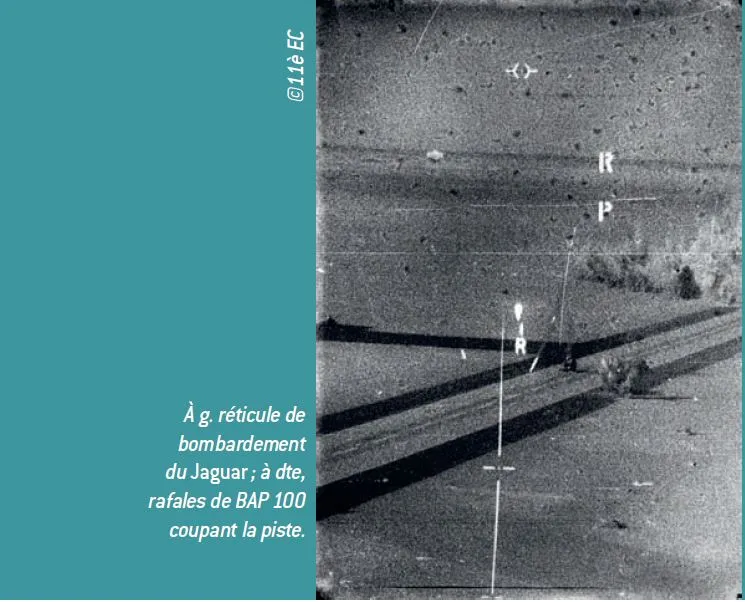
HUD view of one the the Jaguars at the time of bomb release: the piper is just before the runway. Explosions from the previous aircraft can bee seen on the right of the picture.
Battle Damage Assessment and Tactical Success
The results of the attack were decisive. Post-strike reconnaissance revealed that the entire length of the runway was rendered inoperable, with multiple sections broken apart and warped beyond quick repair. The BAP-100s had successfully pierced through the metallic surface, lifting and twisting the plates in such a way that no aircraft could take off or land. Libyan forces were unable to repair the runway in a timely manner, effectively neutralizing the base as a threat to Chadian forces and French interests in the region.
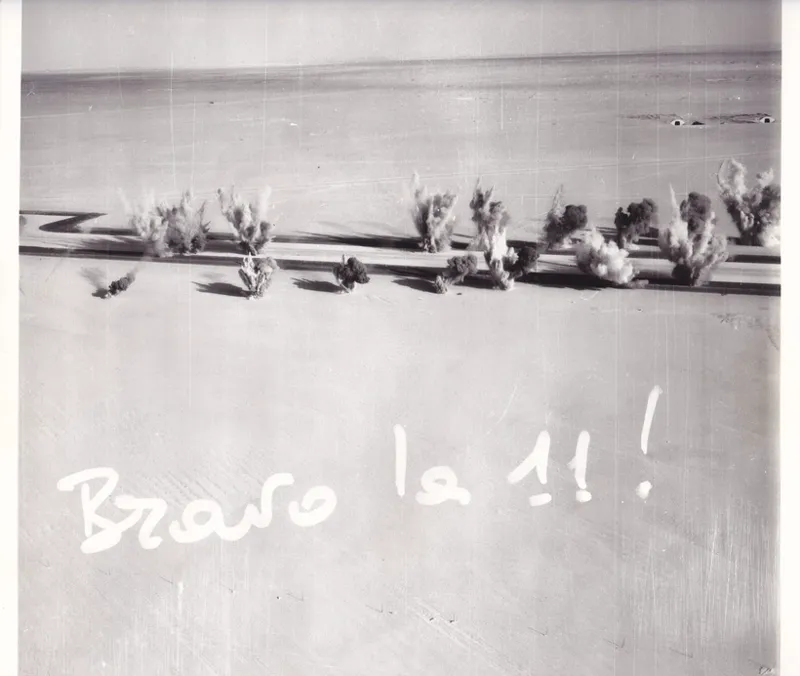
Real-time imagery of the strike taken by the Omera 40 camera integrated in the Jaguar's nose.
Additionally, secondary targets such as fuel storage facilities and ground infrastructure sustained significant damage, further crippling Libyan operations. The mission also demonstrated the importance of low-level ingress and careful attack planning, proving that even with unguided munitions, an effective strategy could achieve near-total airfield denial.
Lessons Learned from Ouadi Doum
The Ouadi Doum strike remains a textbook example of an effective Cold War-era runway denial operation. Several key lessons emerge from this mission:
Weapon selection matters: the BAP-100 bombs were specifically design to destroy runways, proving that matching ordnance to target characteristics is crucial for success.
Attack heading and bomb spacing are critical: the offset attack angle and calculated bomb spacing ensured that the every shooter was nearly guaranteed to hit part of the runway width.
A precise tactical planning reduces exposure: the very low level approach helped the strike force avoid detection and minimize vulnerability to Libyan air defenses located on the airfield. The time coordination maximized the surprise effect and prevented the Libyans to respond in a timely manner. Eventually, the attack sector ensured that the Jaguar approached with the sun in their back, a tactic that will always be effective against visual or infrared acquisition.
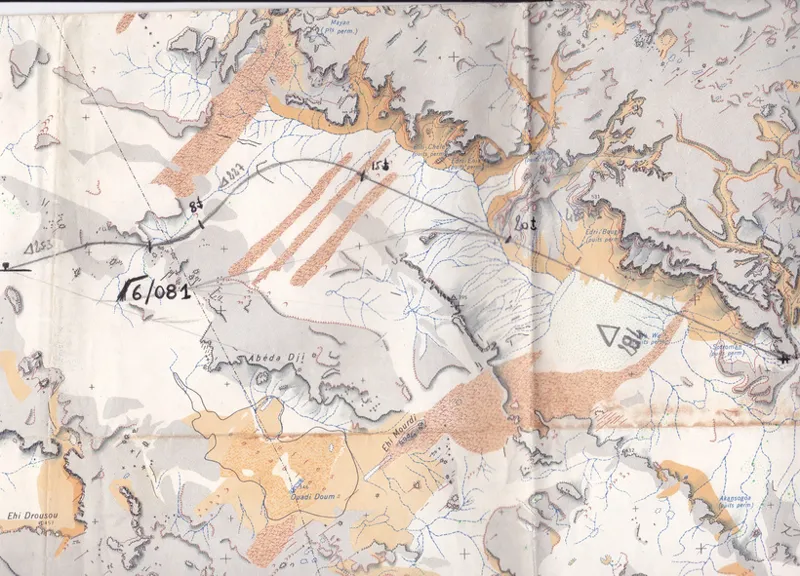
The attack run as drawn on the map used by one of the pilots.
Multi-aircraft coordination maximizes effectiveness: the split attack waves, escorted fighter cover, and real-time command coordination ensured that each aircraft played a crucial role in the overall success of the mission.
Conclusion: Building a Better Attack Plan
These three real-world examples illustrate different approaches to runway denial. The British attempt at Port Stanley showed the difficulty of achieving success with high-altitude unguided bombing. NATO’s strike on Sombor demonstrated the advantages of massed unguided bomb patterns. The French attack on Ouadi Doum proved that, even with dumb bombs, a well-planned strike with the right tactics can achieve devastating results.
Moving forward, the next articles will shift from historical analysis to practical application. We will study the detailed calculations on attack angles, bomb spacing, and munitions selection. By combining real-world lessons with rigorous mathematical thinking, we will develop a framework for executing the most effective runway attacks in DCS World.
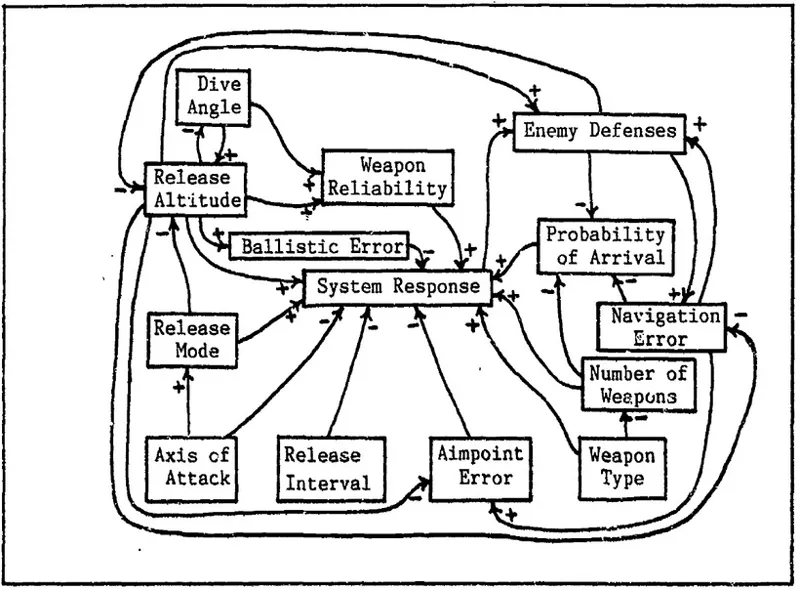
Example of the parameters influencing the attack success chances.