






Post-workout fatigue training variables
Last week, we looked at how post-workout fatigue from a previous workout can reduce the stimulus from the following workout. This week, we will review which training variables cause more post-workout fatigue.
.
#1. Why is post-workout fatigue a problem?
Post-workout fatigue is a problem if it is still present during subsequent workouts because it creates interference effects on the adaptations that we want to produce, such as increases in motor unit recruitment and hypertrophy (read more).
.
#2. What causes post-workout fatigue?
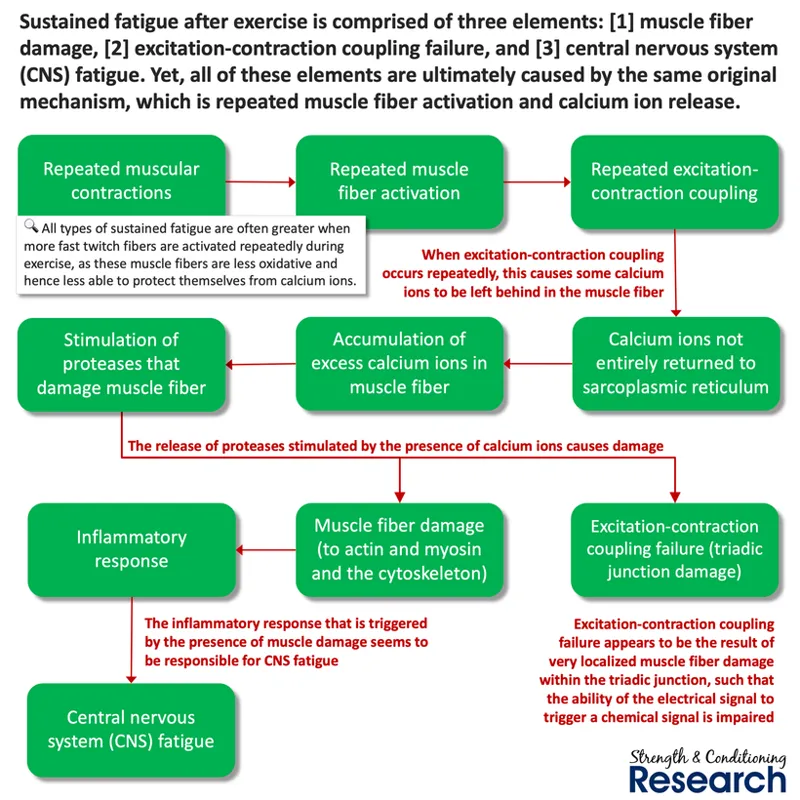
Post-workout fatigue is entirely dependent upon the production of calcium ion accumulation and the subsequent calcium ion-related fatigue mechanisms that result from that, such as excitation-contraction coupling failure, muscle damage, and the supraspinal central nervous system fatigue that results from the inflammation associated with that muscle damage.
.
#3. What training variables increase post-workout fatigue?
Introduction
Since post-workout fatigue is entirely dependent upon the production of calcium ion accumulation during a workout, we can easily identify those training variables that cause greater post-workout fatigue, since they are the same training variables that cause more calcium ion accumulation and more calcium ion-related fatigue mechanisms during exercise.
.
Light loads (higher repetitions)
Higher repetition ranges cause more post-workout fatigue than lower repetition ranges (contrary to popular belief) because each set involves a long duration of muscle fiber activation, which means more calcium ion influx from the sarcoplasmic reticulum.
.
Since muscle damage is caused by calcium ion accumulation and since the inflammatory response to this muscle damage causes supraspinal central nervous system fatigue, we see greater non-local fatigue after light load strength training than after moderate or heavy load strength training (again, contrary to popular belief).
.
Closer proximity to failure
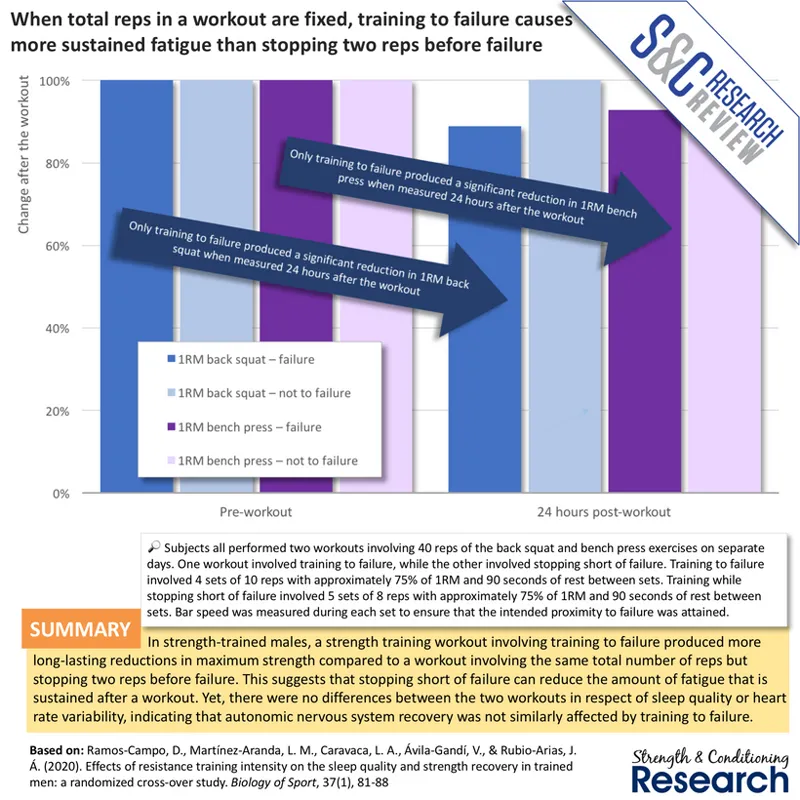
Training closer to failure causes more post-workout fatigue than stopping a couple of reps in reserve because the accumulation of calcium ions happens non-linearly and tends to occur predominantly in the final few reps of the set.
.
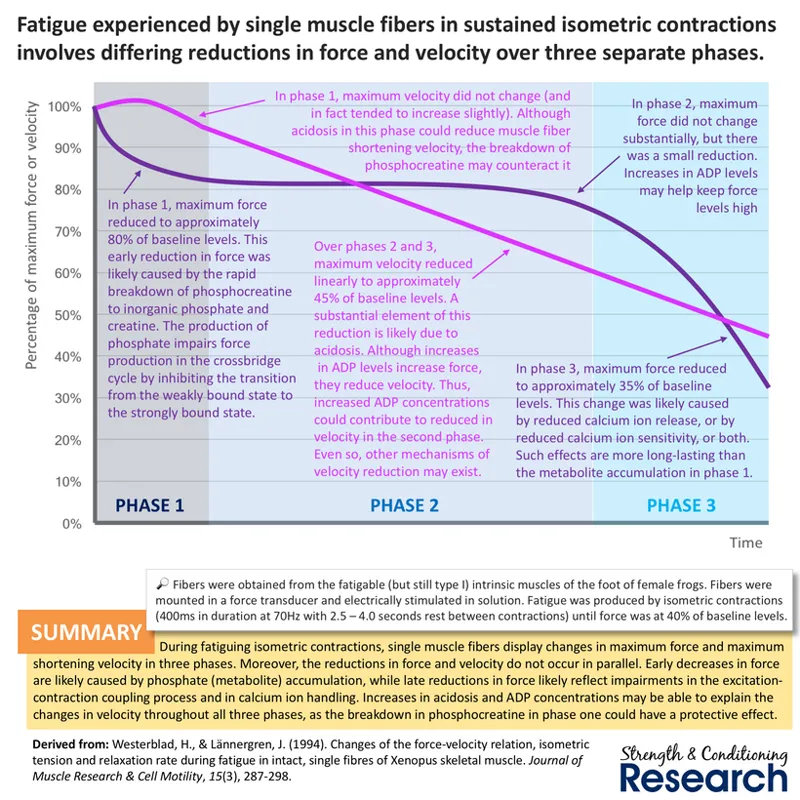
Indeed, this is why we tend to see a plateau in force during fatiguing contractions until the end of the exercise bout. Calcium ion-related fatigue caused by calcium ion accumulation is what reduces force production, while the previous metabolite-related fatigue mechanisms mainly just reduce muscle fiber shortening velocity.
.
Greater volume
Training with higher volume causes more post-workout fatigue compared to training with less volume because the accumulation of calcium ions happens incrementally and therefore each additional set allows more calcium ion-related fatigue to occur.
.
Stretched-position exercises
Training with stretched-position exercises causes more post-workout fatigue than training with contracted-position exercises because the accumulation of calcium ions is enhanced when muscle fibers are lengthened due to the opening of stretch-activated ion channels.
.
Researchers have shown that calcium ion-related fatigue mechanisms (including the amount of cell membrane permeability) are greatly affected by these stretch-activated channels).
.
Eccentric contractions
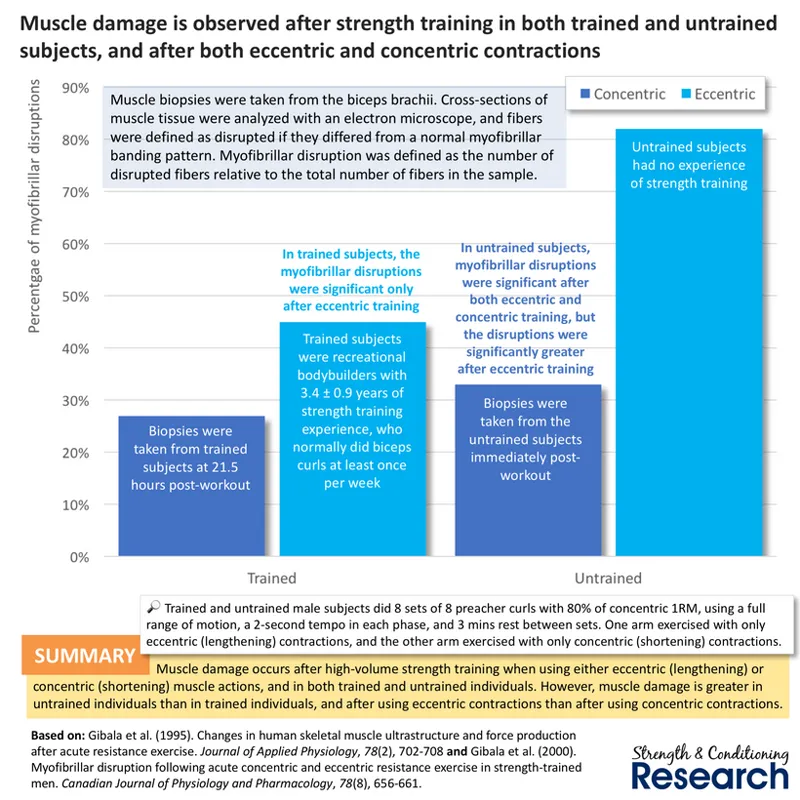
Training with eccentric contractions causes more post-workout fatigue than training with concentric contractions again because the accumulation of calcium ions is enhanced when muscle fibers are lengthened due to the opening of stretch-activated ion channels.
.
Conclusions
When post-workout fatigue is still present from a previous workout, it reduces the hypertrophy stimulus in our current workout. Yet, since all post-workout fatigue mechanisms are dependent on the accumulation of calcium ions during a workout, we can identify the training variables that cause greater post-workout fatigue, since they are the same training variables that cause more calcium ion accumulation during exercise. The five training variables that increase calcium ion accumulation during exercise (and which therefore cause more post-workout fatigue) are: [1] Repetition range (lighter loads cause more post-workout fatigue since they cause more calcium ion accumulation over the course of a longer set duration). [2] Proximity to failure (training closer to failure causes more post-workout fatigue since calcium ion accumulation is not linear over the course of a set and tends to occur mainly towards the end). [3] Volume (higher volumes cause more post-workout fatigue since more calcium ion accumulation occurs in each additional set). [4] Exercise resistance profile or range of motion (exercises that involve peak forces in more stretched positions cause more post-workout fatigue because they allow more opening of stretch-activated ion channels and hence more calcium ion accumulation). [5] Contraction mode (exercises that involve eccentric contractions, especially if those are longer in duration or higher in intensity cause more post-workout fatigue because they allow more opening of stretch-activated ion channels and hence more calcium ion accumulation).
Comments (2)
Hello, if exercise with short muscle and peak resistance profile in short position cause more burning sensation and therefore more CNS fatigue...but exercises in long muscle positions and resistance profile peak in this stretch position also cause CNS fatigue by increase in calcium ions...what % of short vs long exercises do you choose for hypertrophy program?
What is your preference?