




Fast twitch muscle fibers and metabolic stress
Fast twitch muscle fiber proportion determines the amount of metabolite accumulation that a muscle displays during high-intensity exercise. This observation can easily explain some of the findings that have been used to defend the metabolic stress hypothesis.
.
#1. Fast twitch muscle fibers display more anabolic signaling
Fast twitch muscle fibers display greater anabolic signaling after strength training workouts in comparison with slow twitch muscle fibers.
.
#2. Fast twitch muscle fibers display more hypertrophy in animal models
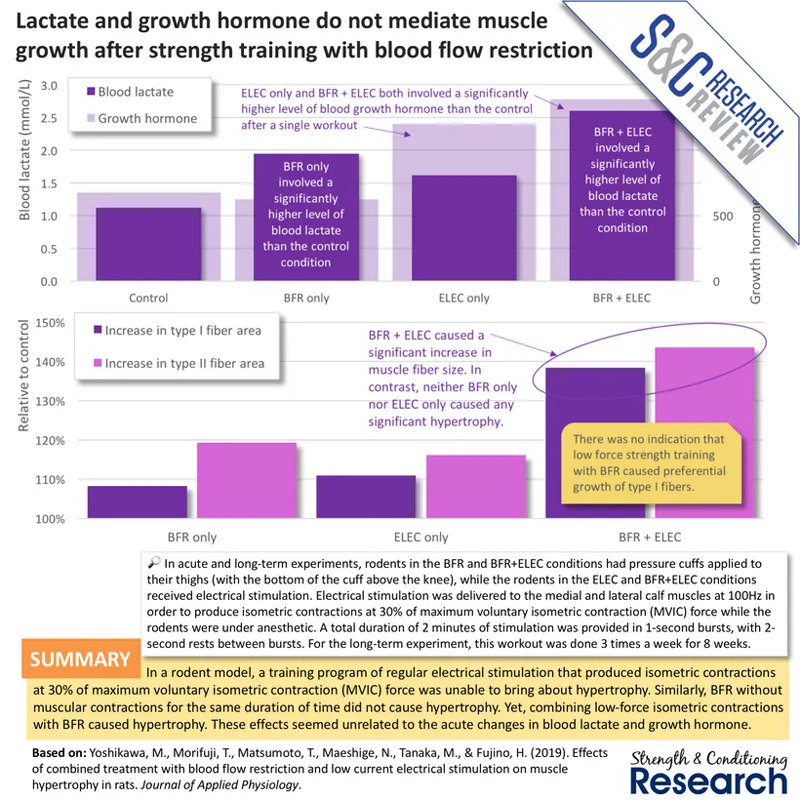
In rodents, muscles with greater proportions of fast twitch muscle fibers (like the plantaris) display greater hypertrophy after strength training models in comparison with muscles that contain a greater proportion of slow twitch muscle fibers (like the soleus).
.
Similarly, fast twitch muscle fibers tend to display greater hypertrophy after strength training models in rodents in comparison with slow twitch muscle fibers.
.
#3. Fast twitch muscle fibers display more hypertrophy in humans
In humans, those muscles having greater proportions of fast twitch muscle fibers (like the gastrocnemius) display greater hypertrophy after strength training programs in comparison with muscles that contain a greater proportion of slow twitch muscle fibers (like the soleus).
.
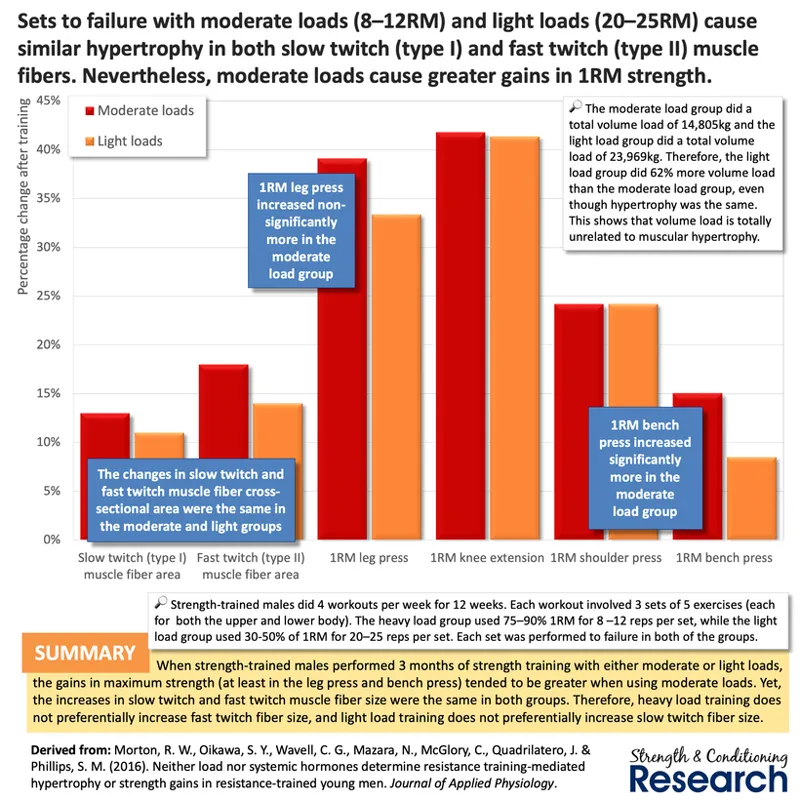
Similarly, fast twitch muscle fibers tend to display greater hypertrophy after strength training than slow twitch muscle fibers (irrespective of the repetition range that is used in training).
.
#4. Fast twitch muscle fibers produce more metabolite accumulation
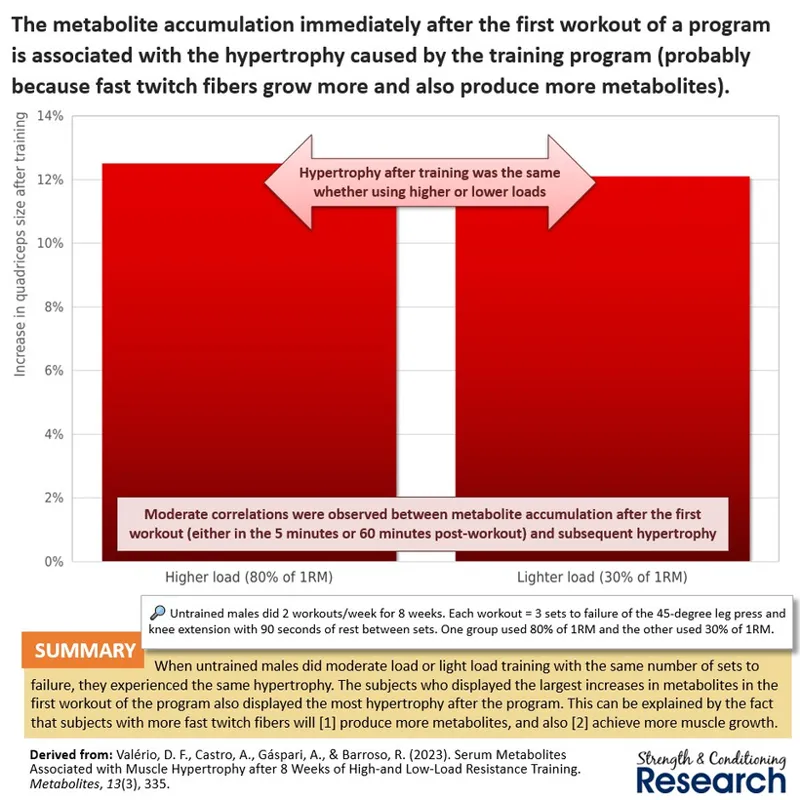
When a muscle contains more fast twitch muscle fibers, it produces greater accumulation of metabolites in a strength training workout or even just during a single strength training set. This means that we should expect muscles that produce more metabolites at the start of a strength training program to produce greater hypertrophy after training (simply because they have more fast twitch muscle fibers).
.
Indeed, some researchers have shown that when a muscle generates a higher proportion of metabolites at the start of any given strength training program, this is associated with more hypertrophy after finishing the training program. While this has been claimed as supporting evidence for the metabolic stress hypothesis, it is explicable by the fact that those individuals who start the program with more fast twitch fibers will experience more hypertrophy.
.
Conclusions
After strength training workouts, fast twitch muscle fibers display greater anabolic signaling than slow twitch muscle fibers. Also, after both strength training in humans and animal models of strength training, muscles with larger proportions of fast twitch muscle fibers (like the gastrocnemius) display more hypertrophy than muscles that contain a larger proportion of slow twitch muscle fibers (like the soleus). Similarly, fast twitch muscle fibers themselves display more hypertrophy than slow twitch muscle fibers after strength training. Therefore, we should always expect greater hypertrophy to occur when a muscle or an individual has a high proportion of fast twitch muscle fibers. One key feature of fast twitch muscle fiber proportion is the tendency to generate a large quantity of metabolites such as lactate during high-intensity exercise. For this reason, we should expect that muscles and individuals who generate larger amounts of metabolites during high-intensity exercise will experience much more hypertrophy after any given strength training program than muscles and individuals that generate smaller amounts of metabolites. Such findings do not indicate that metabolites stimulate hypertrophy. They simply indicate that muscles and individuals who are capable of generating more metabolites have a larger proportion of fast twitch muscle fibers and are therefore capable of more rapid and substantial muscle growth than those who have smaller proportions of fast twitch muscle fibers.