





Advanced training techniques
Bodybuilders often try to find ways of making strength training more productive. Many such ways can be categorised under the heading of "advanced training techniques" and include methods like drop sets, agonist super-sets, giant sets, forced reps, rest-pause, and pre-exhaustion. The one thing that these techniques have in common is that they involve additional reps being performed immediately or soon after reaching muscular failure with the same muscle group. We can see that agonist super-sets, giant sets and pre-exhaustion techniques do this using different exercises, while drop sets, forced reps and rest-pause involve the same exercise.
.
#1. Impact of central nervous system (CNS) fatigue
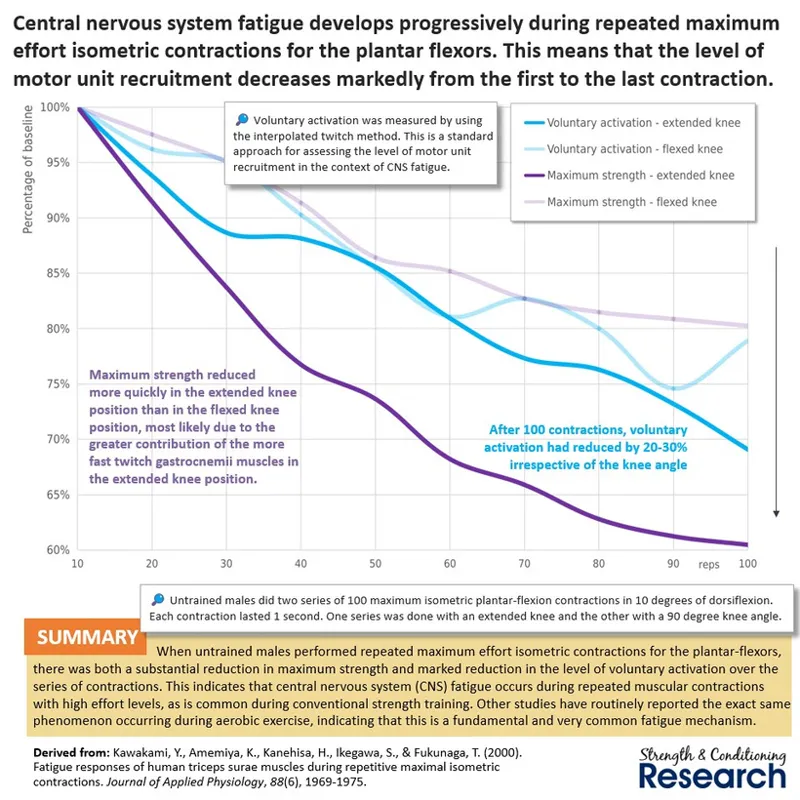
Whenever we perform a set or multiple sets of muscular contractions, CNS fatigue develops progressively. CNS fatigue reduces the level of motor unit recruitment that we can achieve for a given level of effort. Indeed, we can see the presence of CNS fatigue developing progressively over the course of a series of repeated maximal voluntary isometric contractions.
.
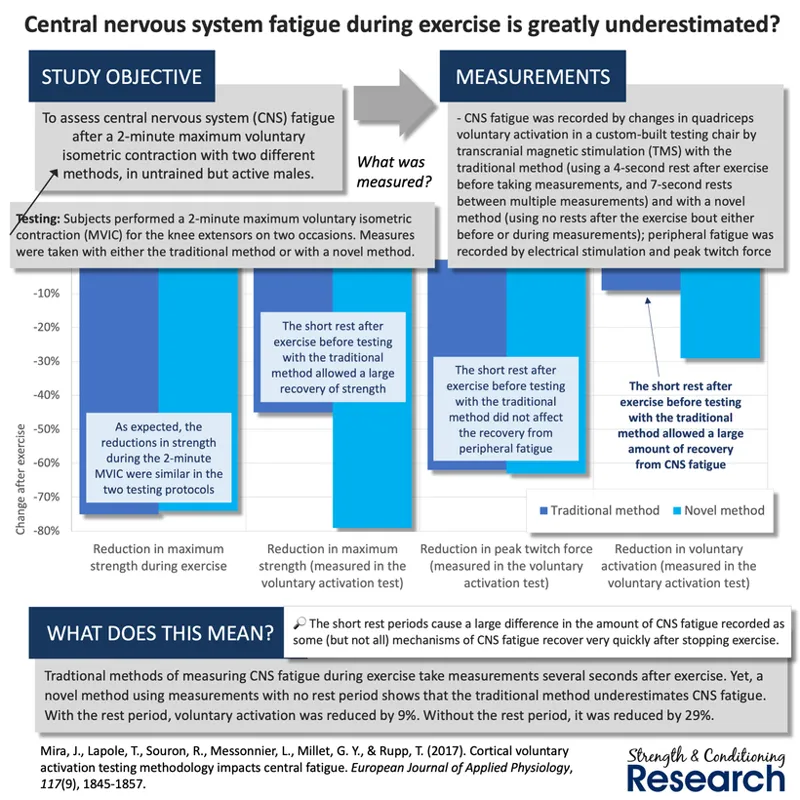
Importantly, much of the CNS fatigue that occurs during strength training sets recovers extremely quickly once the set is finished. This means that taking either no rest between sets or a very short rest between sets will involve a high level of CNS fatigue in subsequent muscular contractions, while taking a longer rest period will remove the large majority of the CNS fatigue.
.
#2. Measuring CNS fatigue
CNS fatigue can be measured in two ways. Firstly, it can be measured directly by reference to changes in voluntary activation. Voluntary activation is a measurement that compares the force generated during maximum voluntary contractions and maximum voluntary contractions with a superimposed electrical twitch. The extent to which the electrical twitch can enhance the force production during a maximum voluntary contraction is an indicator of the proportion of the muscle that is not accessible voluntarily. Changes in this proportion are thus an indicator of CNS fatigue. Measurements using voluntary activation typically greatly underestimate the actual CNS fatigue that occurs during exercise because the equipment takes a long time to set up and this basically replicates the effect of a long rest period. More recent studies have managed to only leave a very short rest period between the exercise bout and the voluntary activation test and have revealed that the magnitude of CNS fatigue is approximately three times greater.
.
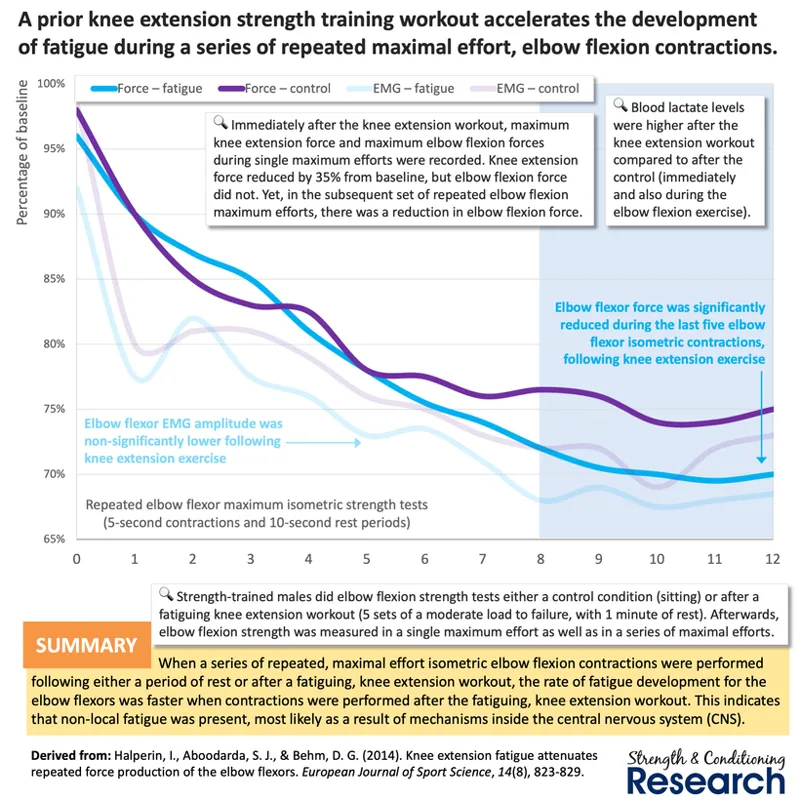
Secondly, CNS fatigue can be measured by reference to reductions in strength or muscular endurance (either the number of reps to failure or the duration of an isometric contraction to failure) in contralateral limbs of the body from those in which the exercise was originally done.
.
The same phenomenon can occur when training the lower body muscles prior to the upper body muscles. It is not actually necessary to produce fatigue in the exact contralateral muscle in order to produce CNS fatigue in the ipsilateral muscle on the opposite side of the body.
.
#3. Supraspinal CNS fatigue
One key element of CNS fatigue is supraspinal CNS fatigue. This type of fatigue mechanism exists in the brain and involves a key interaction between the motor cortex (which produces the central motor command that creates motor unit recruitment) and the sensory part of the brain (which is what generates our perception of effort). Whenever we experience sensations from other parts of the body (like the cardiovascular system or the build-up of metabolites burning in the muscles), we bring our perception of effort closer to the maximum tolerable limit, and this leaves less capacity to generate the central motor command and therefore motor unit recruitment.
.
#4. Spinal CNS fatigue
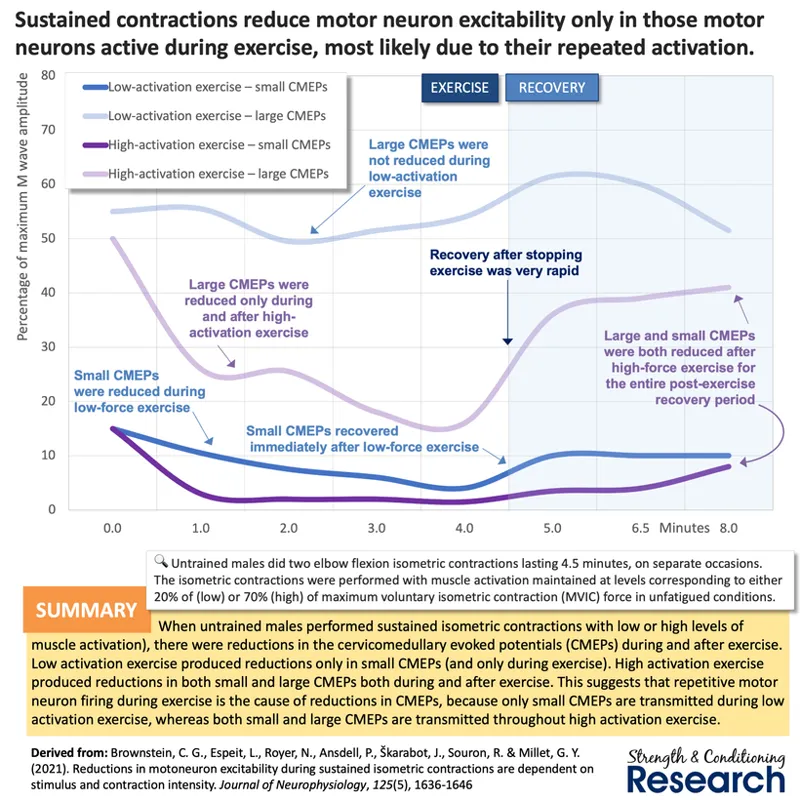
The other key element of CNS fatigue is spinal CNS fatigue. This involves a desensitization of the motor neurons that run down the spinal cord. We known little about exactly how this mechanism operates but it likely develops progressively over time with increasing exercise duration.
.
#5. Short rest periods
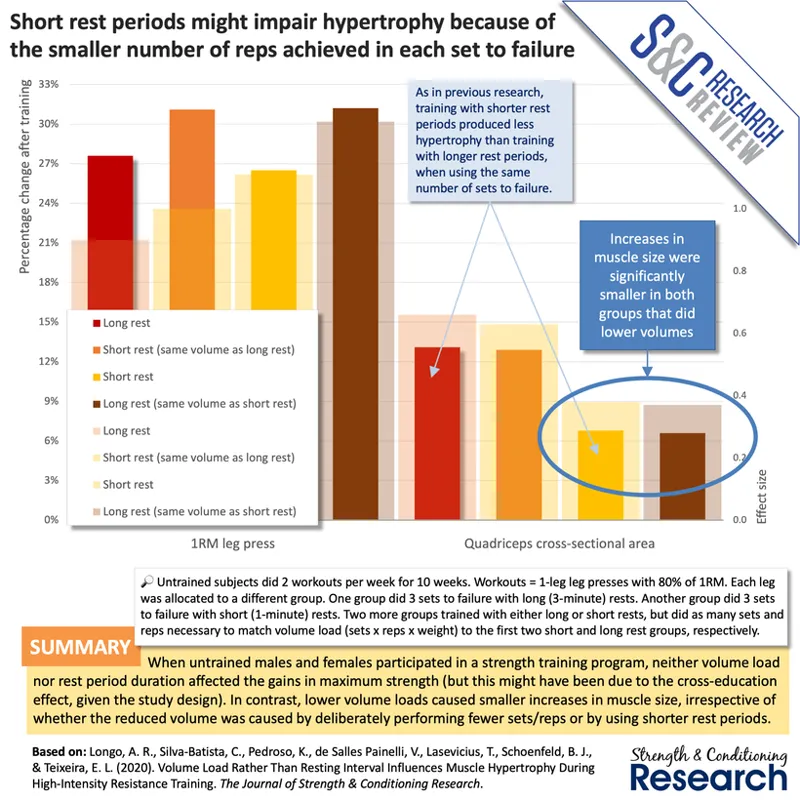
Short rest periods are known to decrease the hypertrophy stimulus and they reduce the number of reps that are achieved in each set to failure. This tells us that the "lost reps" are stimulating reps and this can easily be explained if it is CNS fatigue that has reduced our ability to produce force.
.
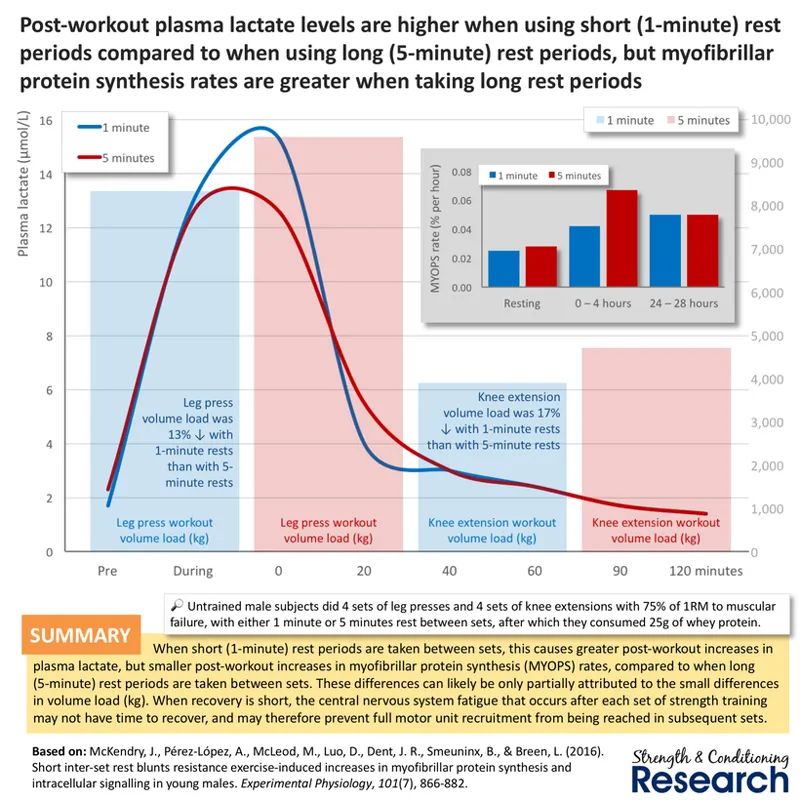
The impaired hypertrophy that results from using short rest periods has been observed in studies measuring post-workout myofibrillar protein synthesis rates and persists even when eight sets are performed in the workout for the same muscle group. Indeed, the presence of CNS fatigue means that there will come a point at which sets to failure cannot produce any hypertrophy stimulus since there are no stimulating reps whatsoever.
.
Here, we can see a representation of the problem caused by CNS fatigue when using short rests.
.
Conclusions
Advanced training techniques include drop sets, agonist super-sets, giant sets, forced reps, rest-pause, and pre-exhaustion. The majority of these techniques involve extra reps immediately or soon after reaching failure with the same muscle group. For example, agonist super-sets, giant sets, and pre-exhaustion involve extra reps with a different exercise with a lighter load. Drop sets and forced reps involve the same exercise with a lighter load. The key assumption behind advanced training techniques is that the fatigue from the preceding set is either neutral or beneficial for stimulating hypertrophy in the subsequent reps. Yet, central nervous system (CNS) fatigue accumulates during all muscular contractions and involves supraspinal and spinal mechanisms. These mechanisms reduce the level of motor unit recruitment at the muscular level, and so reduce the number of activated muscle fibers and hence also reduce the hypertrophy stimulus. If CNS fatigue reaches a sufficiently high level, it can greatly reduce or even eliminate the stimulating reps from the end of a set to failure. Consequently, the assumption made by the proponents of advanced training techniques seems invalid. Indeed, the opposite is more likely to be the case. In support of this contention, research has shown repeatedly that using short rest periods between straight sets during strength training has a negative impact on post-workout myofibrillar protein synthesis rates and on hypertrophy and this likely reflects exactly the same problem as occurs when using advanced training techniques.
Comments (3)
How do Myo-Reps fair here? Myo-Reps guidelines call for keeping 1-2RIR (in both the activation set and subsequent mini sets). Is that sufficient to manage fatigue such that all reps in the mini sets can be considered "effective" reps?
Great article as always! Slightly off-topic question here, is there any research at all on “body types” and hypertrophy development? Just recently I heard someone claim that they required a different training protocol since they were an “ectomorph” … I didn’t know how to respond, but I don’t think it’s legit
No, I have never seen any attempt at creating a valid construct for classifying body types.