




Aerobic exercise and hypertrophy
Historically, the effects of aerobic exercise on muscle size have most commonly been studied in the context of concurrent training programs (training programs incorporating both strength training and aerobic exercise workouts). However, can aerobic exercise increase or maintain muscle mass independently of strength training?
.
#1. Aerobic exercise does not routinely cause hypertrophy in untrained people
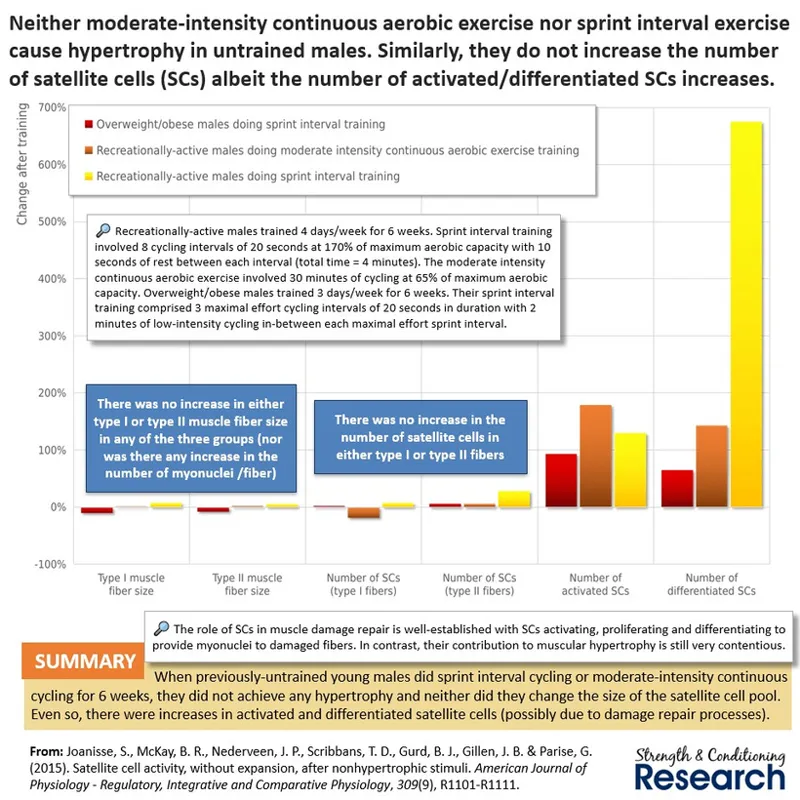
It is a common assumption that any kind of exercise will cause hypertrophy in untrained people. However, while this is probably true of strength training types, it is not true of aerobic exercise, irrespective of whether the exercise is moderate-intensity or very high-intensity (sprint intervals).
.
Indeed, even sedentary and overweight subjects do not regularly display muscle growth after comparatively intense forms of aerobic exercise such as sprint cycling intervals.
.
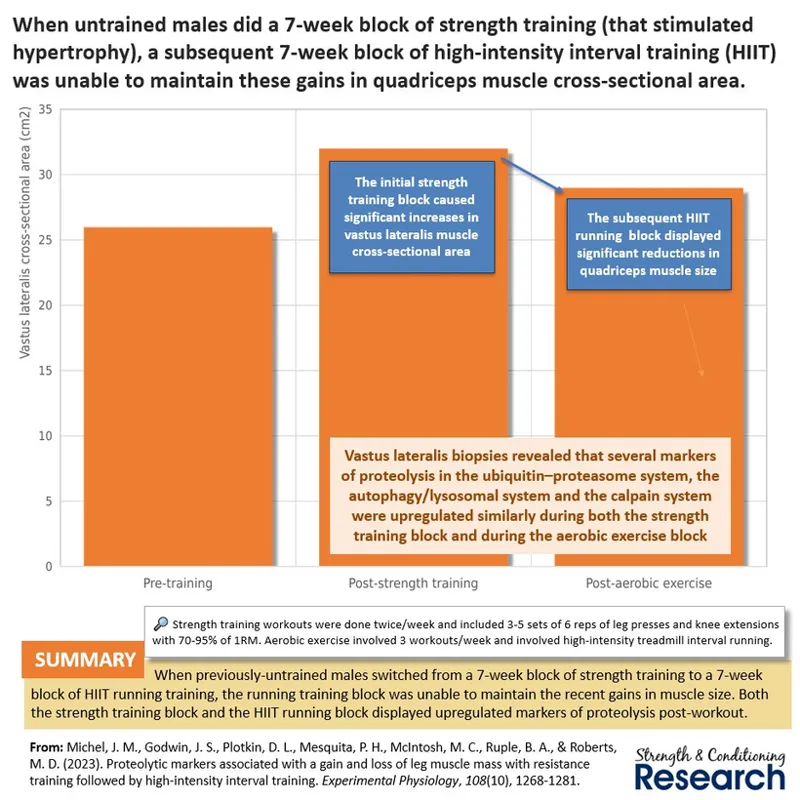
#2. High-intensity running cannot maintain hypertrophy previously caused by a strength training block even in previously-untrained people
When untrained individuals do strength training, they produce rapid increases in muscle size. Yet, a subsequent block of high-intensity interval training cannot maintain these gains in muscle size if this type of exercise replaces the strength training. This shows that even high-intensity aerobic exercise does not replicate the same stimulus that is generated by strength training workouts even though it may involve similar levels of effort.
.
#3. High volume aerobic exercise can reduce muscle fiber size in both untrained and aerobically-trained individuals
When untrained individuals did a long distance running training program in order to prepare for a marathon, they displayed quite large reductions in both type I and type IIA muscle fiber size.
.
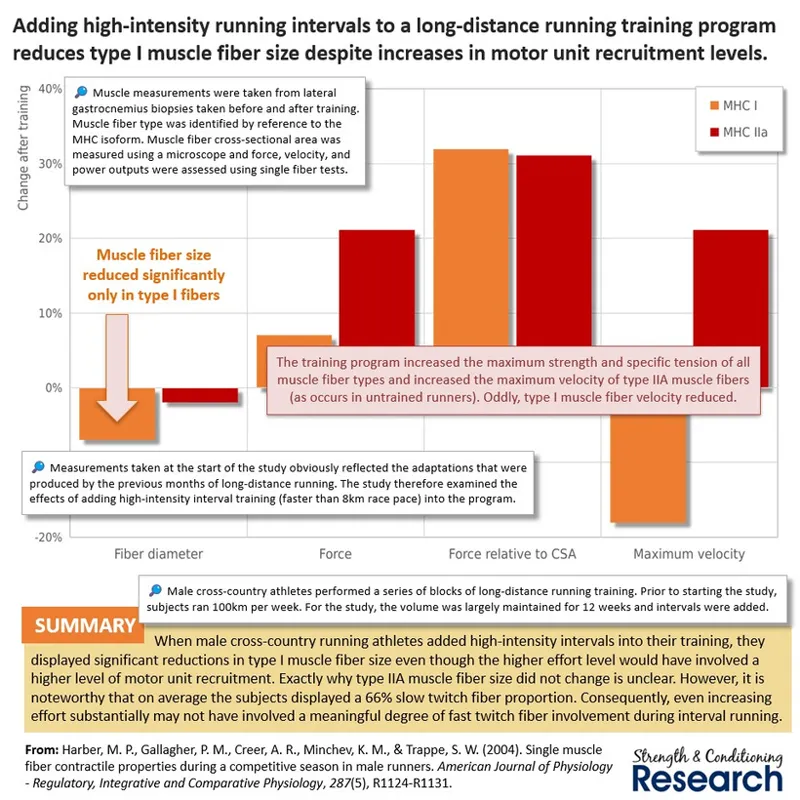
Similar, albeit smaller reductions in slow twitch fiber size occur when more well-trained runners include high-intensity intervals into a training program during a competitive running season. Such findings are important to consider when thinking about the role of motor unit recruitment in the context of bodybuilding. Many researchers have argued that reaching a high level of motor unit recruitment is the only factor necessary to stimulate hypertrophy. These findings demonstrate that a high level of motor unit recruitment is not sufficient to make a muscular contraction stimulating.
.
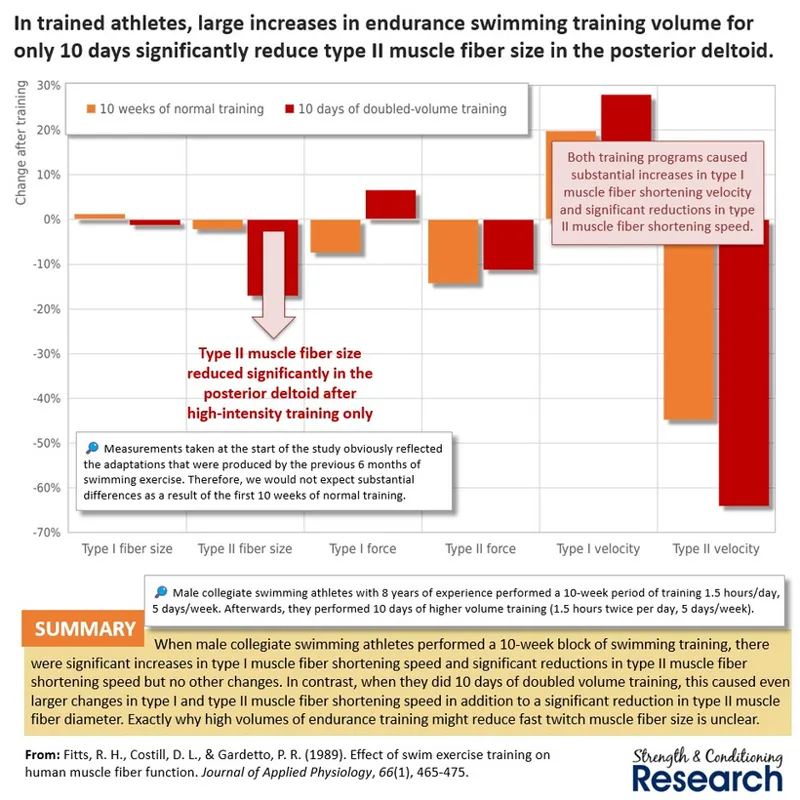
Other types of endurance exercise also cause reductions in muscle fiber size in young athletes. For example, high volumes of endurance swimming training reduce type II muscle fiber diameter.
.
#4. Why might aerobic exercise reduce muscle fiber size?
While it is fairly clear that aerobic exercise fails to stimulate hypertrophy due to the lack of a high level of motor unit recruitment in combination with a slow movement velocity (which is what creates stimulating reps), it is less clear why aerobic exercise might reduce muscle fiber size. It is possible that the muscle damage caused by aerobic exercise causes a reduction in myofibrillar content that is then not replaced by a hypertrophy stimulus. Indeed, similar levels of proteolytic activity have been recorded during strength training and aerobic exercise blocks.
.
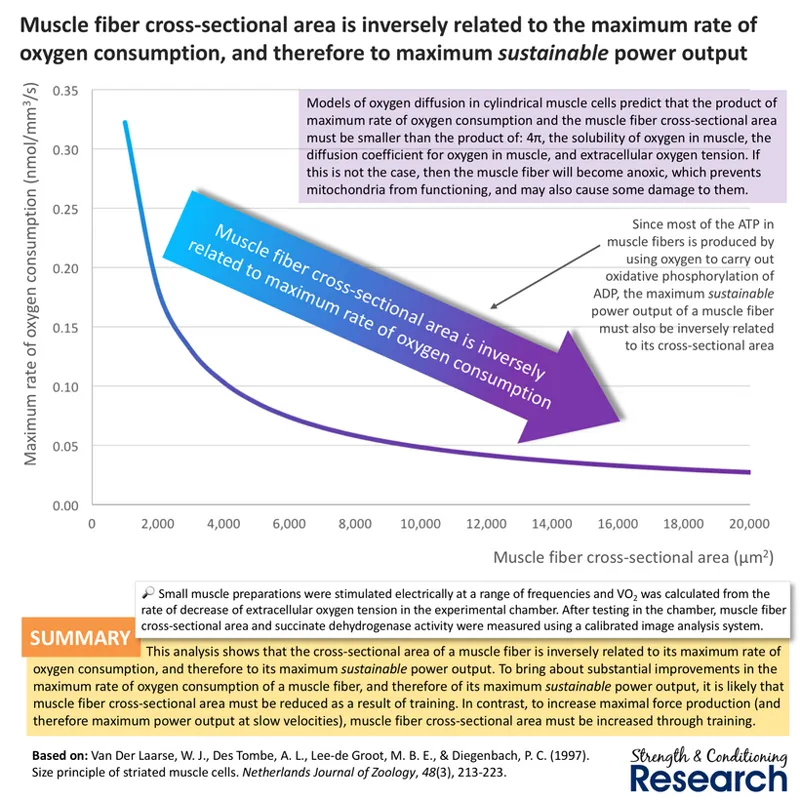
Alternatively, the reduction in muscle fiber size may be adaptive for endurance performance. There is a physiological principle known as "the size principle of striated muscle" and it refers to the fact that more oxidative, slow twitch muscle fibers can use oxygen more quickly than more glycolytic, fast twitch muscle fibers, and this affects the maximum diameter that the muscle fiber can achieve due to the balance between the usage of ATP by the actin-myosin crossbridges and the supply of energy to make ATP by the bloodstream across the perimeter of the muscle fiber. The practical implication of this physiological principle is that more oxidative muscle fibers must stop growing earlier than more glycolytic muscle fibers. For this reason, increasing the oxidative nature of the fibers in a muscle will necessarily make them stop growing and may even make them shrink.
.
#5. Aerobic exercise increases muscle fiber size in older people
When previously-untrained, older women performed a 3-month period of aerobic cycling exercise, they displayed large gains in quadriceps muscle size, which were underpinned by similarly large gains in single muscle fiber size of both slow twitch and fast twitch muscle fibers. Clearly, these results are in direct opposition to those reported for young, trained athletes.
.
#6. Why might aerobic exercise increase muscle fiber size in older people?
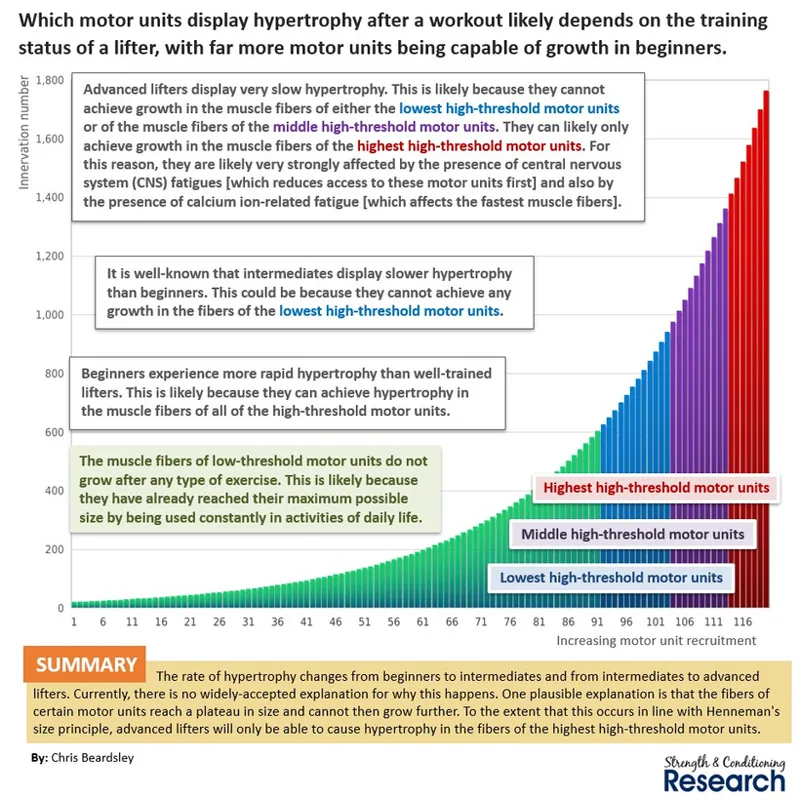
It seems likely that aerobic exercise increases muscle fiber size in older people because they tend to be extremely sedentary and can therefore achieve growth in the very oxidative muscle fibers of some low-threshold motor unit muscle fibers and some very low high-threshold motor unit muscle fibers without suffering from the problems caused by increased oxidative potential. This is the exact opposite situation from the problem faced by advanced bodybuilders, who generally cannot train any muscle fibers except for those at the top end of the high-threshold motor unit pool.
.
Conclusions
While there are some reports of hypertrophy being caused by aerobic exercise in young, untrained people, this is by no means a reliable finding. Moreover, when hypertrophy is produced by a short block of strength training in young, previously-untrained subjects, these beginner gains cannot be maintained by a subsequent block of aerobic exercise for the same muscle group, even when high-intensity interval training is employed (which uses a high level of motor unit recruitment). Furthermore, when higher volumes of aerobic exercise are performed, muscle fiber size tends to reduce in both untrained subjects as well as in aerobically-trained athletes. While it is fairly clear that aerobic exercise fails to stimulate hypertrophy due to the lack of a high level of motor unit recruitment in combination with a slow movement velocity (which is what generates stimulating reps), it is less clear why aerobic exercise might reduce muscle fiber size. It is possible that the muscle damage caused by aerobic exercise causes a reduction in myofibrillar content that is then not replaced by a hypertrophy stimulus. Alternatively, increases in muscle fiber oxidative capacity could necessitate reductions in muscle fiber diameter in order to maintain the balance between energy supply and demand in accordance with the size principle of striated muscle. Finally, it is worth noting that in contrast to the findings in young people, aerobic exercise does seem capable of stimulating hypertrophy in the elderly. This is likely the result of the growth of muscle fibers that are part of lower threshold motor units and which had atrophied owing to disuse atrophy.