







Fiber type shifts
Muscle fibers can shift backwards and forwards between more oxidative (slower) and less oxidative (faster) types over time, depending on the type of exercise that is performed. However, the exact stimuli that cause the shifts in each direction are still unclear. Here is what we currently know about fiber type shifts and why they happen.
.
#1. Denervation
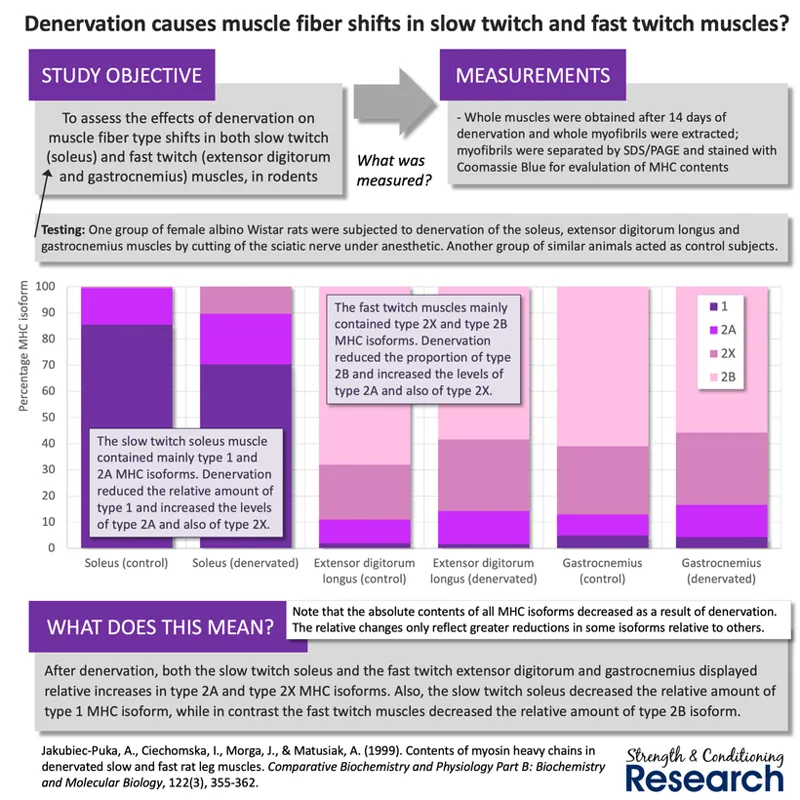
Muscle fiber type is strongly affected by the nature of the nerve impulses that are sent from the central nervous system (CNS). Denervation reduces the relative levels of slow twitch fibers in predominantly slow muscles, and reduces the relative levels of fast twitch fibers in predominantly fast muscles. In each case, there is a reduction in the relative levels of the more extreme isoforms and a relative increase in the proportions of the moderate isoforms. This tells us that continued innervation (and the subsequent motor unit firing rate that is customary for the slow motor neuron or the fast motor neuron) is an important determinant of the prevailing muscle fiber type.
.
#2. Cross-innervation
Muscle fiber type is strongly affected by the nature of the nerve impulses that are sent from the CNS. When muscles are denervated and then re-innervated (also called "cross-innervated" with a nerve from a different muscle), there is a shift in fiber type. The re-innervated muscle adopts characteristics of the muscle that is normally connected to the replacement nerve, whether it is fast twitch, mixed, or slow twitch.
.
#3. Low-frequency electrical stimulation
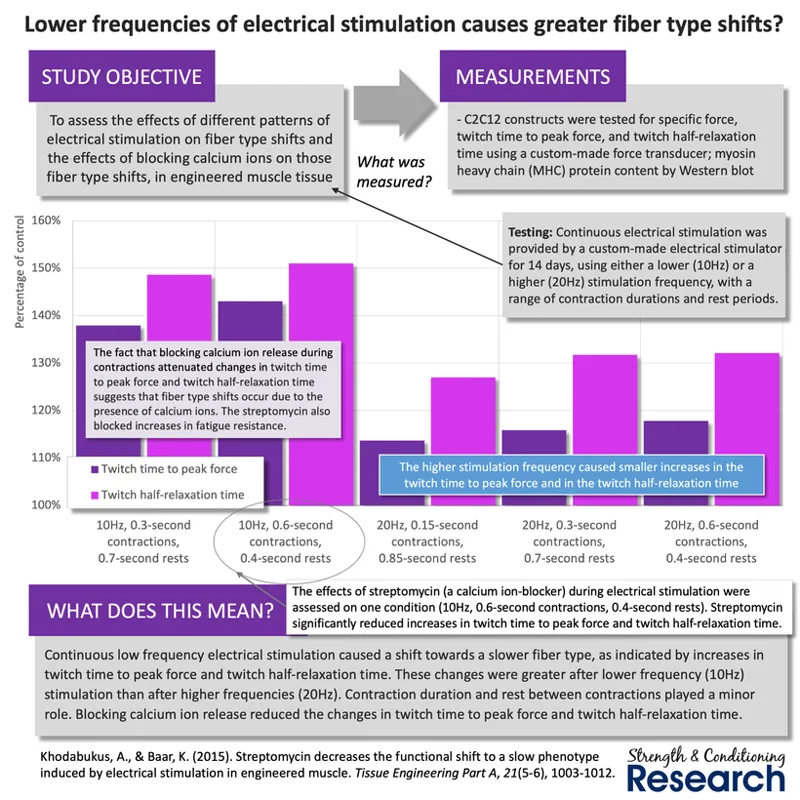
Muscle fiber type is strongly affected by the nature of the nerve impulses that are sent from the CNS. Electrical stimulation can be used to provide a more consistent stimulus (essentially replacing the CNS) because the stimulus frequency can be set to reflect a slow or a fast muscle. A continued supply of low-frequency electrical stimulation causes the muscle to shift towards a greater relative proportion of slow twitch muscle fibers. And, the lower the frequency of stimulation, the larger the shift to a slow twitch fiber type. This suggests that it is the frequency of the motor unit firing rate that determines fiber type shifts.
.
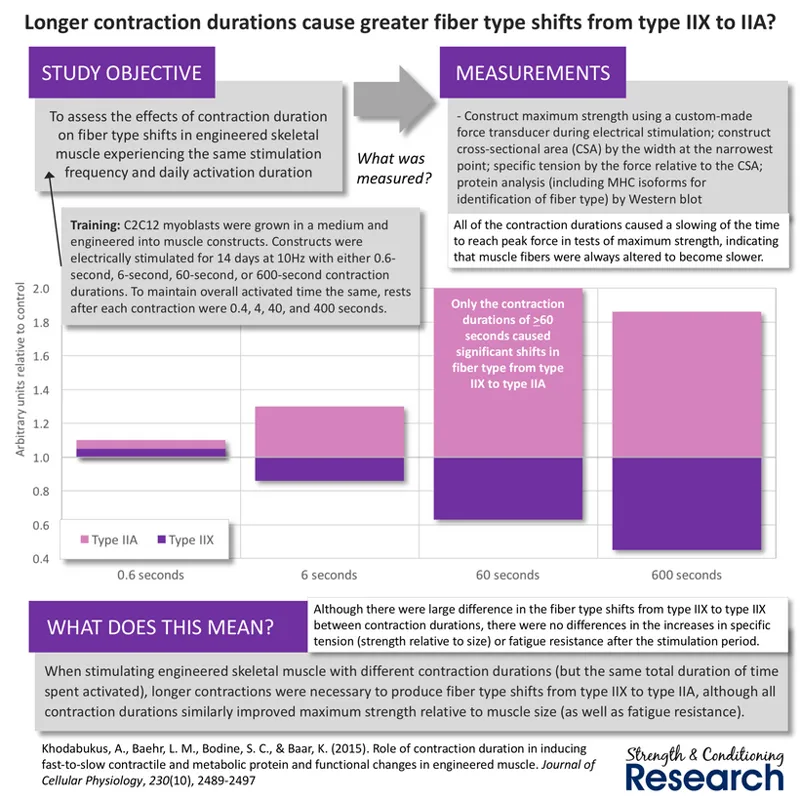
Nevertheless, when each individual electrically-stimulated muscle contraction lasts for a longer period of time, the shift from a faster fiber type to a slower fiber type is increased. This tells us that the motor unit firing frequency alone is not the only factor that influences fiber type shifts. The duration of each individual contraction is also important.
.
#4. High-frequency electrical stimulation
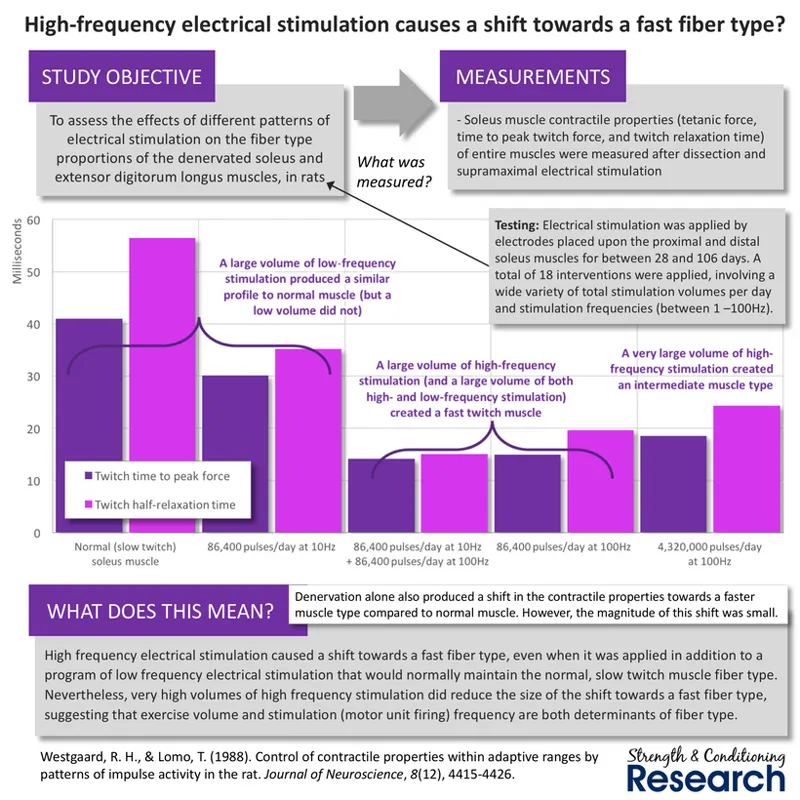
Muscle fiber type is strongly affected by the nature of the nerve impulses that are sent from the CNS. Electrical stimulation can be used to provide a more consistent stimulus (essentially replacing the CNS) because the stimulus frequency can be set to reflect a slow or a fast muscle. High-frequency stimulation causes a muscle to shift towards a greater relative proportion of fast twitch muscle fibers.
.
Nevertheless, the volume of electrically-stimulated contractions has a non-linear effect on the shift towards a fast twitch fiber type during high-frequency electrical stimulation. A low volume causes a shift towards a fast fiber type, but a high volume mitigates this effect and starts to create a more mixed muscle fiber type.
.
#5. Animal models of exercise
Voluntary exercise obviously causes muscle fiber type shifts. When animals perform endurance exercise, their muscles display shifts towards slower, more oxidative muscle fiber type proportions. This occurs in all muscles, regardless of whether they are initially slow twitch, mixed fiber type, or fast twitch. Also, we can see that there is a dose-response to exercise, with greater fiber type shifts occurring after higher volumes of exercise.
.
Nevertheless, the exact nature of the fiber type shifts that occur depend upon the original muscle fiber type of the muscle. Predominantly slow twitch muscles tend to increase the proportion of oxidative fibers and decrease the proportion of fast glycolytic-oxidative fibers. Predominantly fast twitch muscles tend to increase the proportion of fast glycolytic-oxidative types and decrease the proportion of fast glycolytic fibers.
.
#6. Static stretching
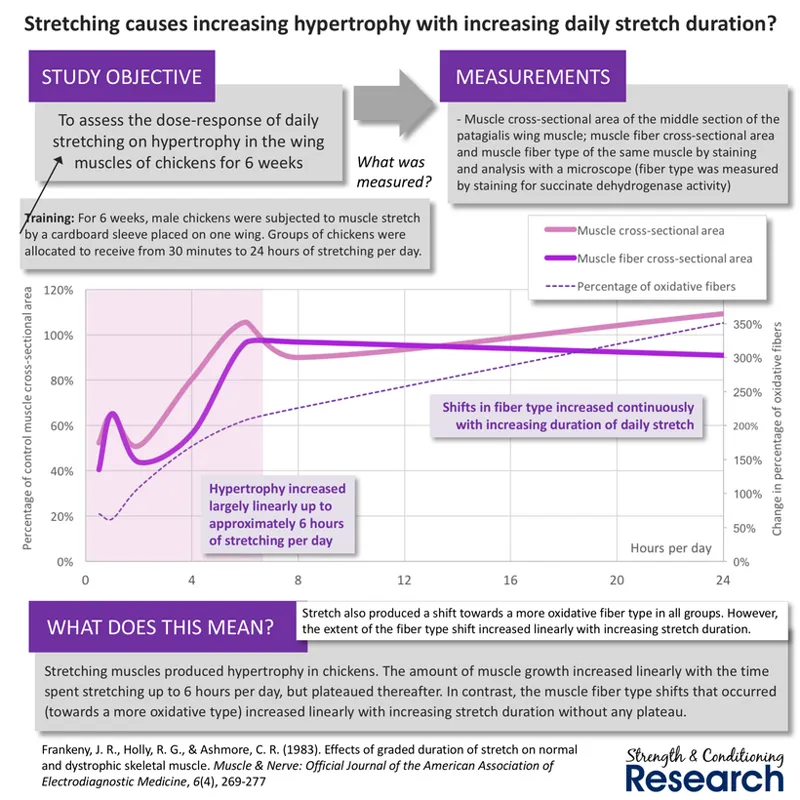
When muscles are stretched daily, this can cause hypertrophy as well as muscle fiber type shifts. Moreover, there is a dose-response of the stretch duration on the hypertrophy as well as on the muscle fiber type shifts (although the dose-response relationship is slightly different in nature). This is surprising, because passive, static stretching does not involve muscle activation and therefore there are no nerve impulses being sent to the muscle to produce these fiber type shifts. This therefore presents a valuable opportunity to gain insight into why muscle fiber types shift.
.
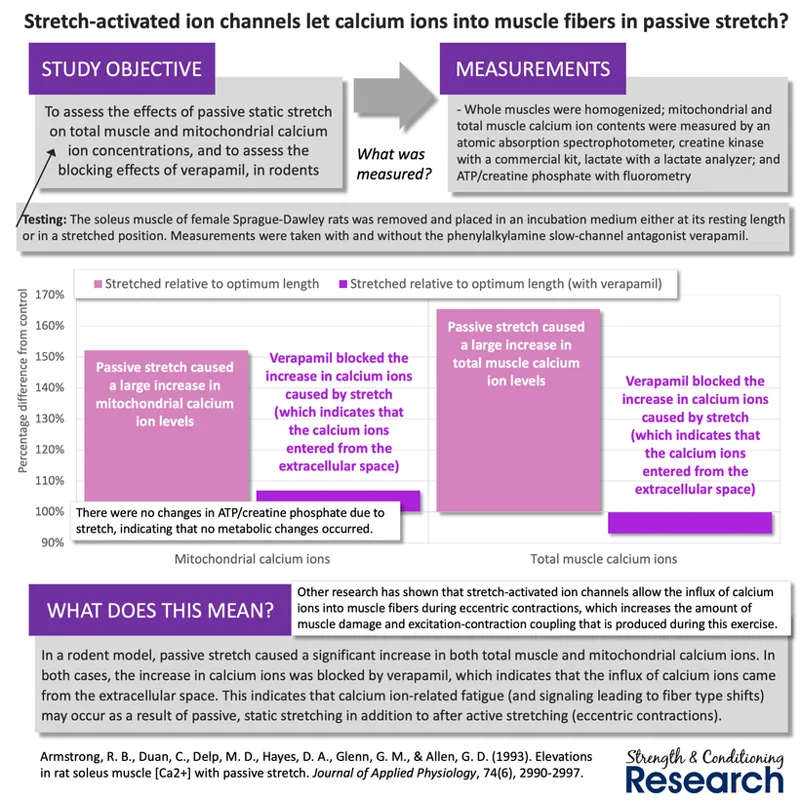
In fact, passive stretching can cause an influx of calcium ions into muscle fibers through stretch-activated ion channels in much the same way as eccentric contractions (albeit to a lesser extent). This suggests that the way in which nerve impulses cause muscle fiber type shifts is through the resulting calcium ion influx that they produce when the electrical signal arrives at the triadic junction to bring about excitation-contraction coupling.
.
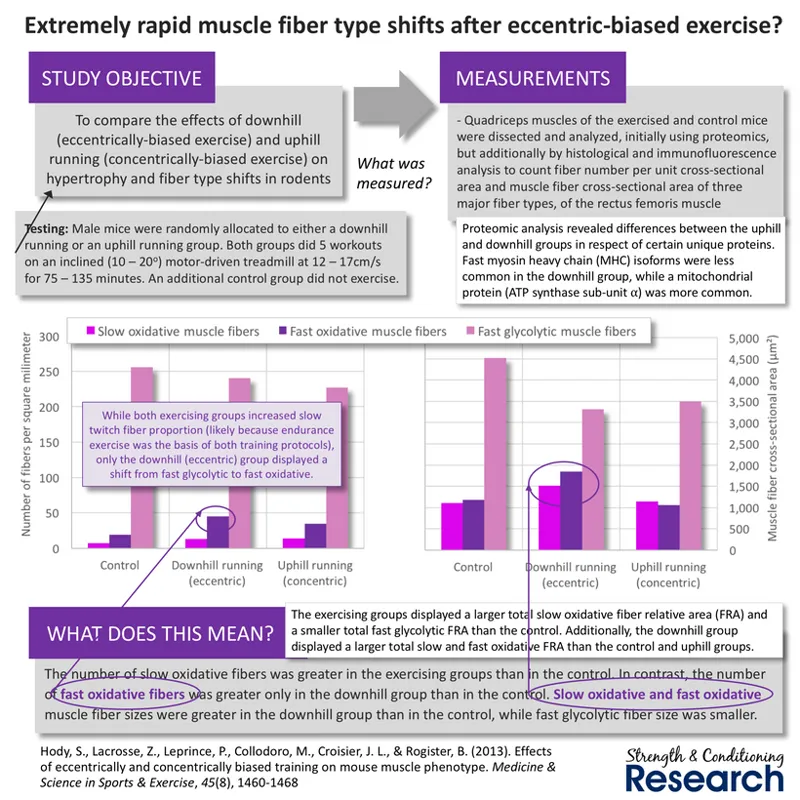
Indeed, this would also explain why eccentric training tends to cause fast muscle fiber type shifts than the same volume of concentric training. The eccentric contractions cause calcium ion influx through both stretch-activated ion channels and the sarcoplasmic reticulum, while the concentric contractions only cause calcium ion influx through the sarcoplasmic reticulum.
.
#7. Mechanisms of fiber type shifts
Across the literature, muscle fiber type seems to shift in response to the electrical signals within motor units (high frequency signals shift fibers towards fast types, while low frequency signals shift fibers towards slow types). The mechanical tension that muscle fibers experience does not seem to be important. Indeed, this was recently shown by an important investigation that varied mechanical tension between conditions (by varying movement velocity) while keeping the total duration and magnitude of the muscle activation constant. The different levels of mechanical tension affected hypertrophy but did not affect muscle fiber type shifts, suggesting that muscle activation is the key factor for causing fiber type shifts.
.
Additionally, researchers have shown that muscle fiber type shifts after strength training are enhanced when the fatigue achieved on each set is greater. This fatigue would likely include more excitation-contraction coupling failure due to greater calcium ion accumulation (as well as more crossbridge impairments due to metabolite accumulation). Therefore, it seems that the calcium ions are responsible for the signaling processes that cause fiber type shifts.
.
Indeed, since research has often shown that the way in which the muscle activation communicates the effects of the nerve impulses to the muscle fiber is likely through the behavior of calcium ions, researchers have investigated the effects of calcium ion-related signaling pathways on muscle fiber type shifts. One possible calcium ion-regulated enzyme that could signal fiber type shifts is calcineurin (and its downstream target NFAT). Calcineurin and NFAT both increase in a dose-response way alongside muscle fiber type shifts during endurance training programs.
.
Further research has shown that regulation of the calcium ion influx is key to the signaling processes that cause muscle fiber type shifts. Blocking the influx of calcium ions by knocking out genes in rodent models has shown that the influx of calcium ions is essential for this adaptation to occur (as well as for the activity within the calcineurin signaling pathway). Without it, muscle fiber type does not shift to a more oxidative type after endurance exercise.
.
Conclusions
Muscle fibers can shift between more oxidative (slower) and less oxidative (faster) types over time, depending on the activities that are done or not done. While the exact stimuli that cause fibers to shift from one type to another are still unclear, research involving denervation, cross-innervation, and electrical stimulation (at low and high frequencies) has shown that the [1] motor unit firing frequency, [2] volume of contractions, and [3] length of each contraction can all influence fiber type shifts, with lower firing frequencies, higher contraction volumes, and longer contraction durations tending to cause more pronounced shifts towards more oxidative (slower) types. Conversely, low volumes of high firing frequencies, as well as the cessation of activity, can cause shifts towards less oxidative (faster) types. Research into the effects of voluntary exercise suggests that shifts towards more oxidative (slower) types may be caused by signaling processes caused by the influx of calcium ions into the cytoplasm due to muscle fiber activation (or stretch). This mechanism can explain why passive stretching causes fiber type shifts, why training with eccentric contractions causes greater-than-expected fiber type shifts (due to the opening of stretch-activated ion channels), and why training closer to failure causes greater fiber type shifts (due to the greater accumulation of calcium ions).