






Supraspinal CNS fatigue
Fatigue is a temporary and reversible reduction in exercise performance as a result of a previous bout of exercise. It is an objective measurement that we can take by applying some sort of exercise test. Fatigue can be caused by various mechanisms inside the central nervous system (CNS) and inside the muscles of the body. CNS fatigue mechanisms can occur inside the brain (where they are called supraspinal CNS fatigue) and inside the spinal cord (where they care called spinal CNS fatigue). In both cases, they involve a reduction in the level of motor unit recruitment, which reduces the number of activated muscle fibers, which reduces the amount of muscle force that can be produced.
.
#1. Does supraspinal CNS fatigue occur during strength training sets?
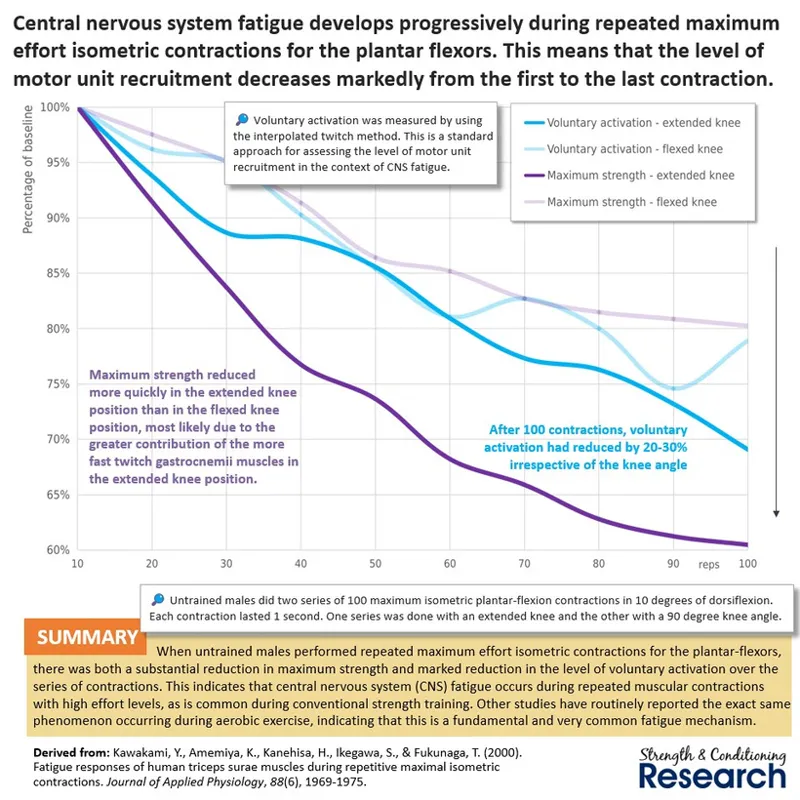
Various studies have shown that CNS fatigue occurs during repeated, forceful muscular contractions, which is analogous to during strength training sets. Therefore, we can be confident that CNS fatigue does occur during conventional strength training.
.
Importantly, the type of CNS fatigue that develops during strength training sets recovers relatively quickly, which makes it an important fatigue mechanism to discuss when programming rest periods.
.
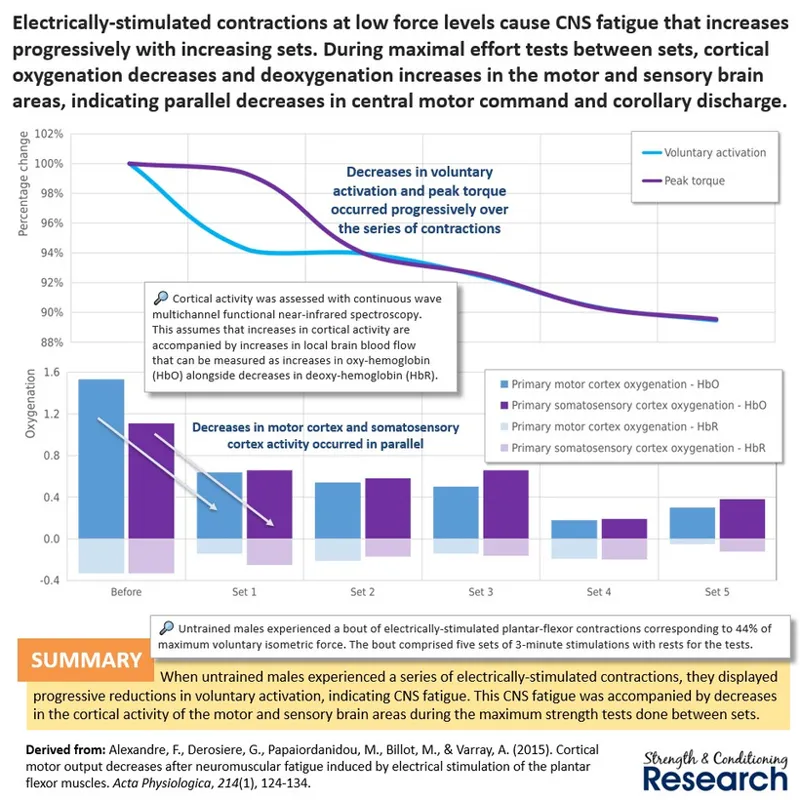
At least part of this CNS fatigue has been linked to supraspinal CNS fatigue mechanisms because of a reduction in cortical activity over the course of a series of fatiguing muscular contractions. Therefore, we can be relatively certain that supraspinal CNS fatigue does happen during strength training sets.
.
#2. How does supraspinal CNS fatigue work?
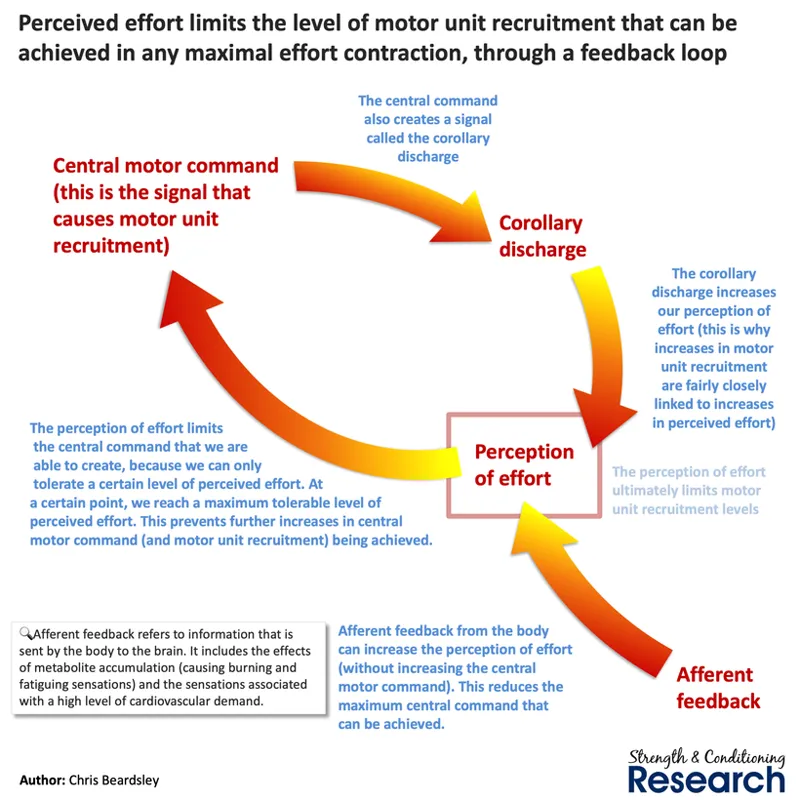
Supraspinal CNS fatigue works through the psychobiological model of fatigue. This model tells us that we always reach failure in any exercise task when we hit our maximum tolerable perception of effort. Producing a central motor command creates an effort perception through the sensation of innervation, called the corollary discharge. Yet, other sources of effort can arise because of afferent feedback from the body activities.
.
Many signals are transmitted through afferent nerves, including those relating to metabolites and cardiorespiratory activity. They all add to our overall perception of effort, causing us to reach our maximum tolerable perception of effort before we can hit our true maximum levels of central motor command. This causes a motor unit recruitment deficit, which we call supraspinal CNS fatigue.
.
#3. Sensory feedback: metabolite accumulation
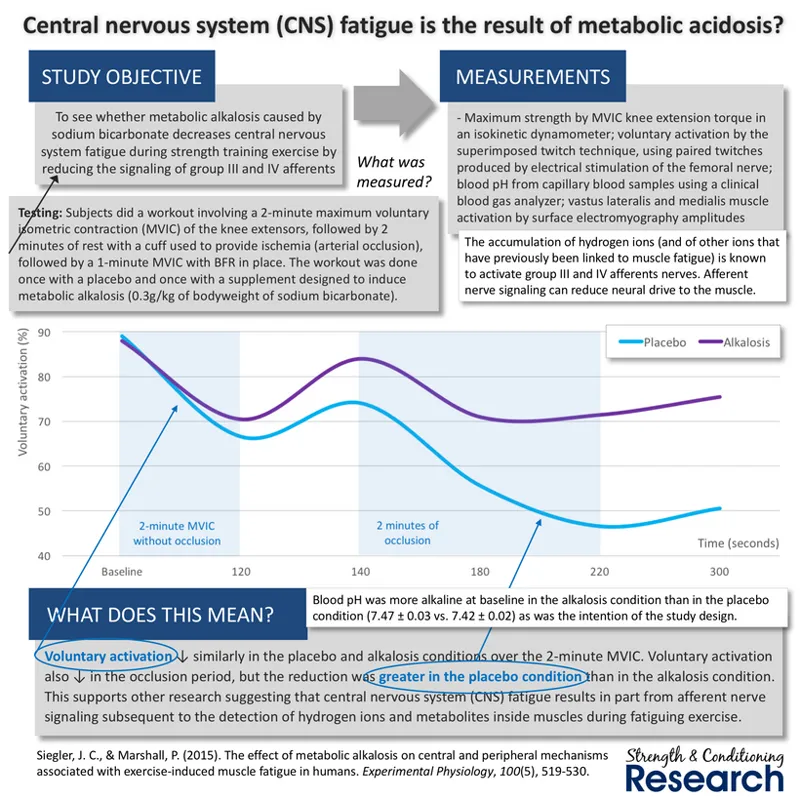
When metabolites accumulate inside a muscle, they are detected by receptors. These receptors then send a signal using afferent nerves to the brain to increase our perception of effort, which then causes supraspinal CNS fatigue. Consequently, contrary to popular belief, supraspinal CNS fatigue is greater during light load strength training to failure than during heavy load strength training.
.
Importantly, because afferent feedback exerts its effects inside the brain, it does not matter where the metabolites are accumulating. They create supraspinal CNS fatigue that affects performance in all of the muscles in the body, for as long as the perceptions of increased effort are present.
.
#4. Sensory feedback: low blood glucose and low muscle glycogen
When we experience low blood glucose (and possibly also low muscle glycogen), this can be detected by receptors. These receptors probably also send a signal to increase our perception of effort, which then causes supraspinal CNS fatigue. This suggests that performing a strength training workout with low reserves of muscle glycogen and/or with low blood glucose will be less effective because of the increased supraspinal CNS fatigue that is present.
.
Indeed, while it is often believed that low muscle glycogen levels cause fatigue by reducing the supply of energy to the muscle, this is almost certainly not the case. Rodent studies have shown that the supply of ATP is not inhibited by low muscle glycogen levels. Also, while voluntary exercise performance is reduced, involuntary strength is not. This makes it very clear that the major fatiguing effect of low muscle glycogen levels is through the CNS.
.
#5. Sensory feedback: cardiorespiratory activity
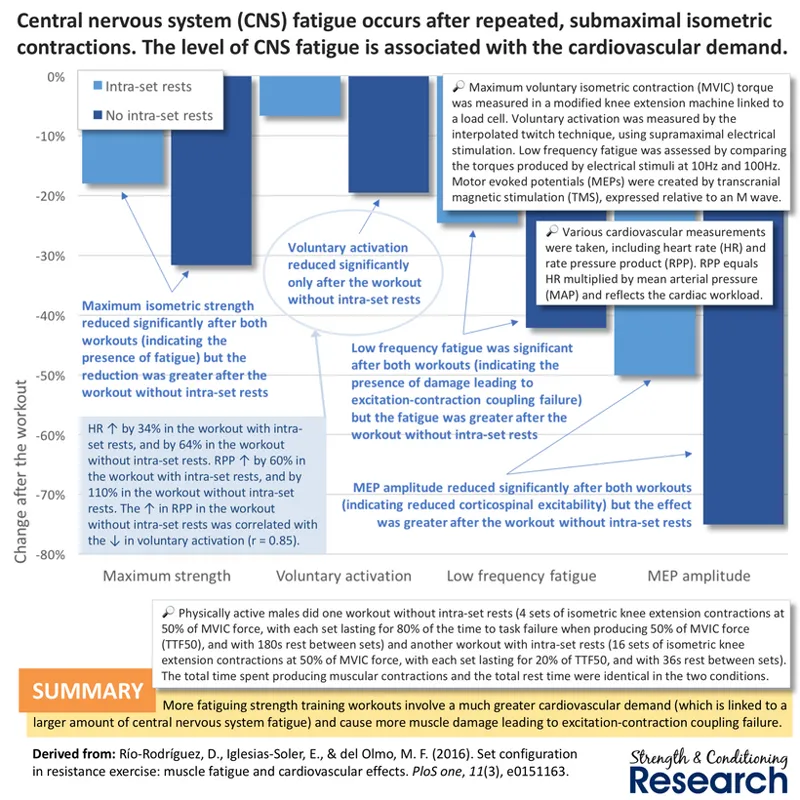
When we experience a high level of cardiorespiratory activity, this causes supraspinal CNS fatigue. This is most likely the result of afferent feedback being sent to the brain, because it is clearly associated with increased perceptions of pain and discomfort in the area of the heart and lungs. This suggests that performing a strength training workout in which cardiorespiratory activity is more pronounced will be less effective because of the increased supraspinal CNS fatigue that is present.
.
#6. Sensory feedback: inflammatory mediators during exercise
When we perform long duration, aerobic exercise, there is a substantial amount of supraspinal CNS fatigue. This seems to occur through the production of inflammatory mediators during exercise by the muscles in the form of myokines. These myokines seem to be able to produce afferent feedback to the brain to increase the level of perceived effort. In addition, they can enter the bloodstream and interact with the brain through another pathway.
.
#7. Sensory feedback: inflammatory mediators from muscle damage
When we perform muscle-damaging exercise, the subsequent inflammatory response to the muscle damage causes a substantial amount of supraspinal CNS fatigue. This likely involves the exact same mechanisms as the inflammatory mediators that are produced during long duration, aerobic exercise.
.
Importantly, the inflammatory response to muscle damage is slightly delayed, and is not immediately present in the first couple of hours after a workout. Thus, the supraspinal CNS fatigue is very likely also slightly delayed. This can give the mistaken impression that CNS fatigue dissipates quickly after a bout of strength training, when in reality it returns quite soon afterwards due to the inflammatory response.
.
Conclusions
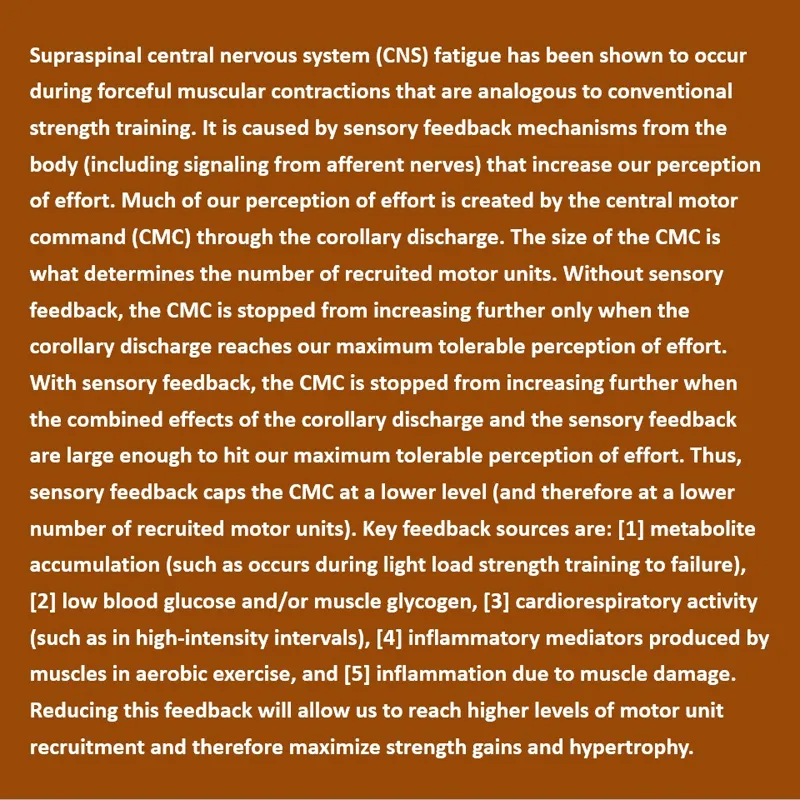
Supraspinal central nervous system (CNS) fatigue has been shown to occur during forceful muscular contractions that are analogous to conventional strength training. It is caused by sensory feedback mechanisms from the body (including signaling from afferent nerves) that increase our perception of effort. Much of our perception of effort is created by the central motor command (CMC) through the corollary discharge. The size of the CMC is what determines the number of recruited motor units. Without sensory feedback, the CMC is stopped from increasing further only when the corollary discharge reaches our maximum tolerable perception of effort. With sensory feedback, the CMC is stopped from increasing further when the combined effects of the corollary discharge and the sensory feedback are large enough to hit our maximum tolerable perception of effort. Thus, sensory feedback caps the CMC at a lower level (and therefore at a lower number of recruited motor units). Key feedback sources are: [1] metabolite accumulation (such as occurs during light load strength training to failure), [2] low blood glucose and/or muscle glycogen, [3] cardiorespiratory activity (such as in high-intensity intervals), [4] inflammatory mediators produced by muscles in aerobic exercise, and [5] inflammation due to muscle damage. Reducing this feedback will allow us to reach higher levels of motor unit recruitment and therefore maximize strength gains and hypertrophy.
Comments (2)
Great article Chris. You spoil your patrons as usual. How can we call the kind of fatigue which increases during heavy load strength training? When the brain could not send impulses to the working muscles? Is it true that the main reason is acetylcholine exhaustion?
During each set of heavy strength training, the main type of fatigue is actually the result of metabolites