







Antagonist supersets
Antagonist supersets are an advanced training technique. While they are often used to increase training density, they can also be used to manage fatigue during a workout by using the same rest periods as during a conventional set configuration.
.
#1. How does fatigue develop over a strength training set?
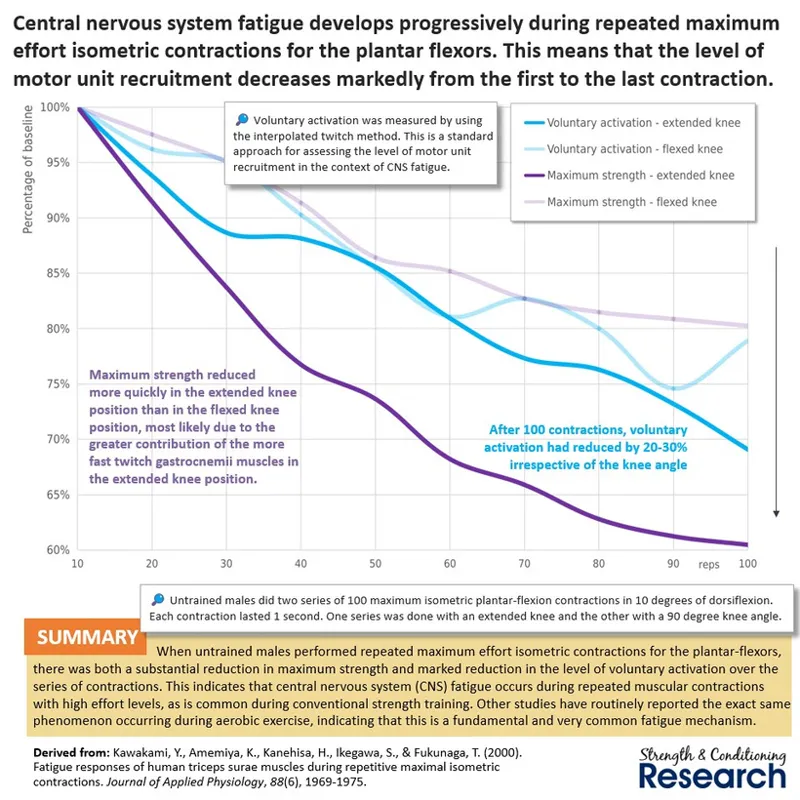
During a strength training set, fatigue accumulates through multiple mechanisms. Some of these mechanisms occur inside the muscle and others occur inside the central nervous system (CNS). Although CNS fatigue is rarely mentioned in the fitness industry, it always occurs during every fatiguing contraction. Some (but not all) peripheral fatigue mechanisms can reduce mechanical tension (and so inhibit the amount of hypertrophy that muscle fibers experience). Similarly, CNS fatigue mechanisms inhibit motor unit recruitment (and so inhibit the number of muscle fibers that experience hypertrophy).
.
#2. How does CNS fatigue develop over a workout?
CNS fatigue mechanisms have been shown to develop over the course of strength training workouts such that later sets cannot achieve the same level of motor unit recruitment as the earlier sets.
.
Multiple studies have reported this same observation and the magnitude of the effect is surprisingly large. Evidently, there is a substantial negative impact on motor unit recruitment levels. Fortunately, there is also a large recovery effect during the inter-set recovery period (which is obviously why we take longer rests between sets).
.
Even so, there is not full recovery from CNS fatigue during a workout between sets. This means that there will always be at least a small negative effect of performing exercises later in a workout.
.
#3. How does supraspinal CNS fatigue develop over a workout?
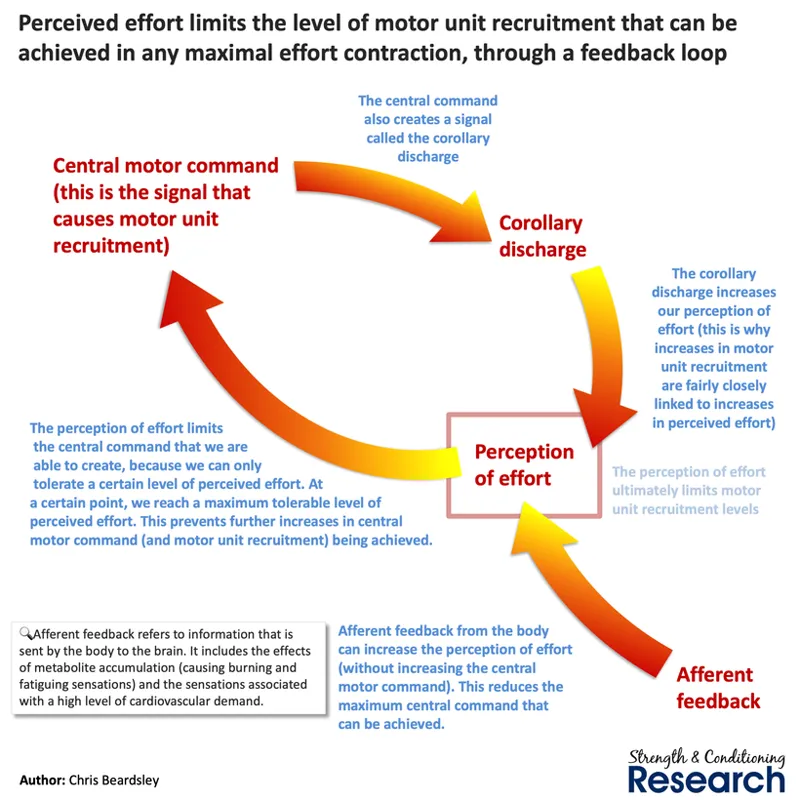
CNS fatigue mechanisms can be sub-categorised as those that occur in the brain (supraspinal CNS fatigue) and those that occur in the spinal cord (spinal CNS fatigue). Supraspinal fatigue happens due to afferent feedback increasing the perception of effort and causing us to reach our maximal tolerable level of effort before very high levels of central motor command can be achieved.
.
Importantly, supraspinal CNS fatigue affects our ability to recruit motor units in other muscles as well as in the muscle that was just exercised. This means that supraspinal CNS fatigue does play a role in antagonist supersets and will impair hypertrophy if the antagonist exercise is performed immediately after the agonist exercise.
.
#4. How does spinal CNS fatigue develop over a workout?
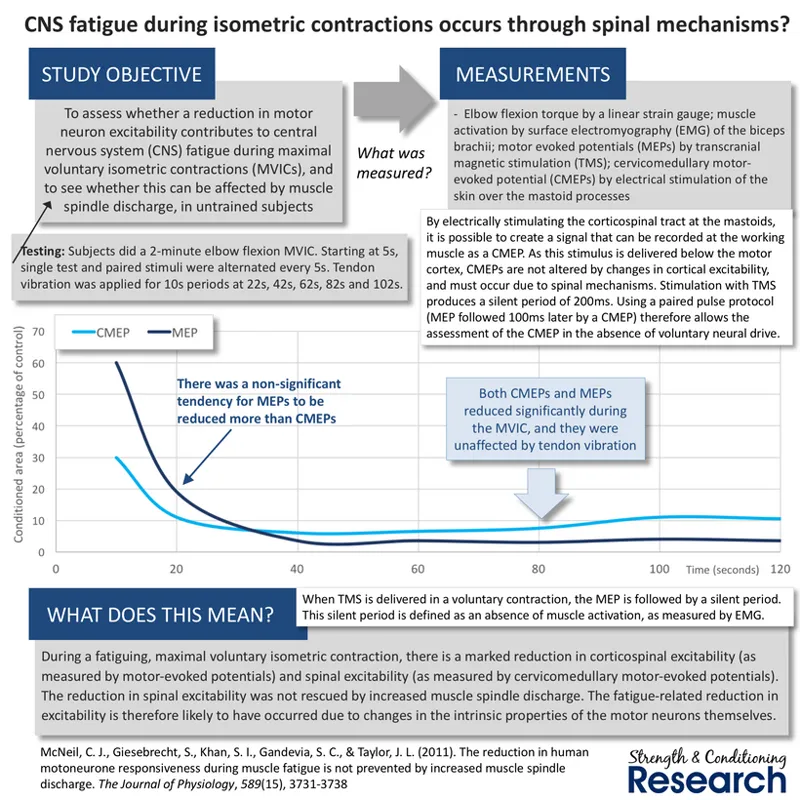
Spinal CNS fatigue can also occur during strength training sets and workouts. It can be relatively sustained in the context of a single workout, such that it can affect performance (and therefore the hypertrophic stimulus) in later sets if sufficient rest is not taken.
.
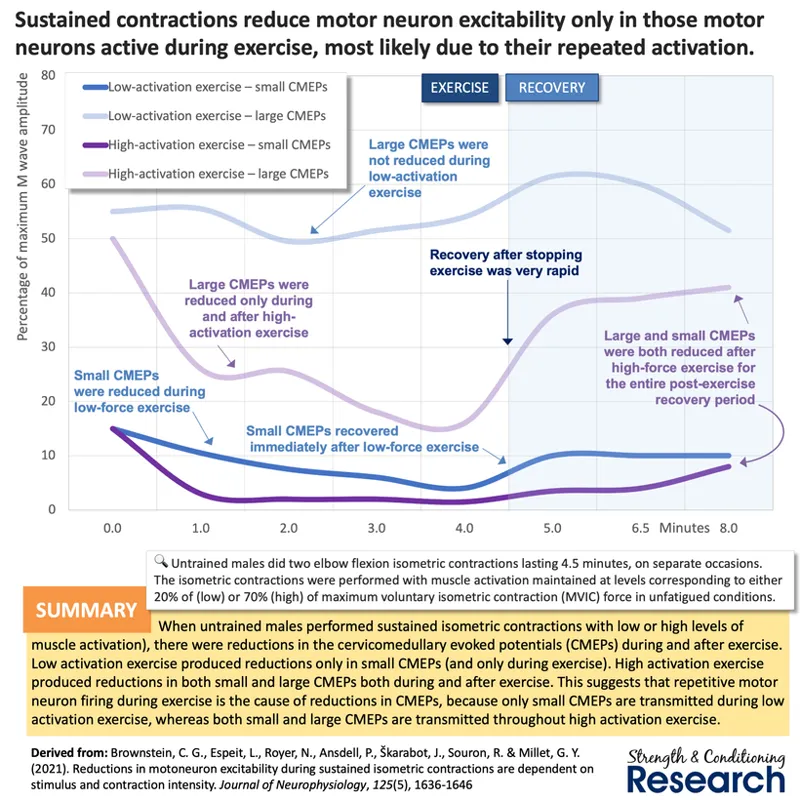
Importantly, however, spinal CNS fatigue has been shown to occur due to repeated motor neuron firing. This means that only those motor neurons that were firing during an exercise will experience spinal CNS fatigue afterwards. Thus, antagonist supersets will not experience negative effects due to this type of CNS fatigue, which suggests that this advanced technique could be a way to enhance the stimulus provided by a workout if rest periods between all sets and all exercises are maintained the same as during conventional strength training.
.
Indeed, the difference between the pathways of supraspinal and spinal CNS fatigues may explain why some researchers have recorded greater non-local fatigue in the corresponding muscles of the contralateral limb than in other muscles of the contralateral limb. It is possible that supraspinal CNS fatigue is triggered in both muscles of the contralateral limb, but spinal CNS fatigue is only triggered in the corresponding muscle.
.
#5. What happens to repetition performances when using antagonist supersets?
Interestingly, despite the fact that we would predict repetition performances in antagonist exercises to be reduced by supraspinal CNS fatigue when being performed in the context of antagonist supersets, this does not happen. Rather, there is an increase in repetition performance (and therefore in volume load) when performing antagonist supersets.
.
Interestingly, this same observation is similarly made when performing inter-set stretching of the antagonist muscle group. It seems likely that there is some impact of the strength training and the static stretching on the antagonist coactivation levels achieved in subsequent agonist exercises. Since this cannot affect the hypertrophy stimulus experienced by the agonist muscle, however, it is not really relevant for bodybuilding.
.
Conclusions
Antagonist supersets are an advanced training technique. Studies have shown that agonist repetition performance (and therefore volume load) is increased when doing antagonist exercises (or stretching of the antagonist muscle) between sets. While the exact mechanism that causes this phenomenon to occur is not yet known, it probably involves a reduction in antagonist coactivation during the agonist exercise, which is not relevant for the hypertrophy stimulus. In contrast, we have good data showing that supraspinal central nervous system (CNS) fatigue mechanisms [1] build up over the course of a strength training workout, and [2] affect all muscles in the body and not just the one that was just trained. Supraspinal CNS fatigue mechanisms reduce motor unit recruitment and hence reduce the hypertrophy stimulus that can be generated. Therefore, we would expect antagonist supersets to produce a smaller stimulus for hypertrophy than conventional set configurations if the rest period between the two exercises that are used in the antagonist pair is relatively short. In contrast, we would NOT expect antagonist supersets to produce a smaller stimulus for hypertrophy than conventional set configurations if the rest period between the two exercises that are used in the antagonist pair is at least as long as would normally be taken between sets when using conventional set configurations. In fact, since greater time is allowed between sets of the same exercise, there might be a positive effect.
Comments (1)
great article Chris - it sounds like this method is not worth the effort. The only benefit would seem to be reducing the duration of the workout - true? Thanks!