



Sleep
Sleep has long been known to be important for athletes and bodybuilders. However, it is likely that its importance remains understated. While it is widely-accepted that sleep has a role to play in recovery from exercise, it actually has several other important effects.
.
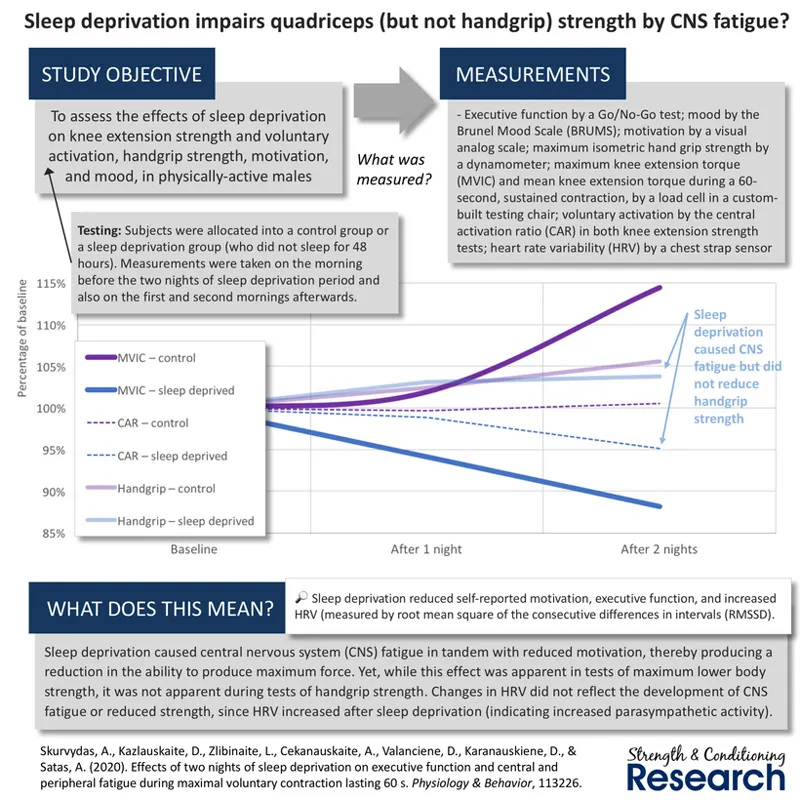
#1. Sleep loss causes central nervous system fatigue
When sleep loss occurs, this causes central nervous system (CNS) fatigue, which reduces the number of high-threshold motor units that can be accessed in maximal efforts. Aside from reducing strength and therefore exercise performance in the workout itself, this has two key effects. Firstly, it reduces the number of muscle fibers that can be activated (and hence stimulated to grow to produce hypertrophy). Secondly, it reduces the likelihood that increases in strength due to increases in voluntary activation will occur, as achieving a high level of central motor command is key to stimulating increases in central motor command in the future.
.
#2. Sleep loss causes reduced coordination
Sleep loss impairs coordination in a workout. Aside from reducing strength and exercise performance during the workout itself, this also reduces the amount of motor learning that can take place in that workout, since achieving a high level of coordination during a workout is key to improving coordination after the workout.
.
Additionally, when fatigue is present from a previous exercise session, this reduces not only the amount of motor learning that can take place in the workout performed in the fatigued state, but also future workouts. This underscores the importance of ensuring that all movement practices are performed in an unfatigued state.
.
#3. Sleep loss reduces the rate of recovery from a workout
It is widely-accepted that sleep is key to recovery. Unfortunately, perhaps due to the obvious nature of this idea, it has only rarely been investigated. Those human studies that have been performed to date do suggest that sleep can help improve the rate of recovery from exercise, although it is not always clear whether the sleep assisted recovery or whether a lack of sleep impaired performance directly.
.
Yet, rodent studies have shown that a lack of sleep impairs the rate of recovery from muscle damage (albeit muscle damage caused by surgical intervention and not muscle damage caused by exercise). Moreover, a lack of sleep seems to impair the process of muscle damage repair itself, leading to increased fibrosis and hence potentially incomplete recovery. Interestingly, the same research also shows that sleep deprivation causes muscle atrophy in both damaged and undamaged muscles.
.
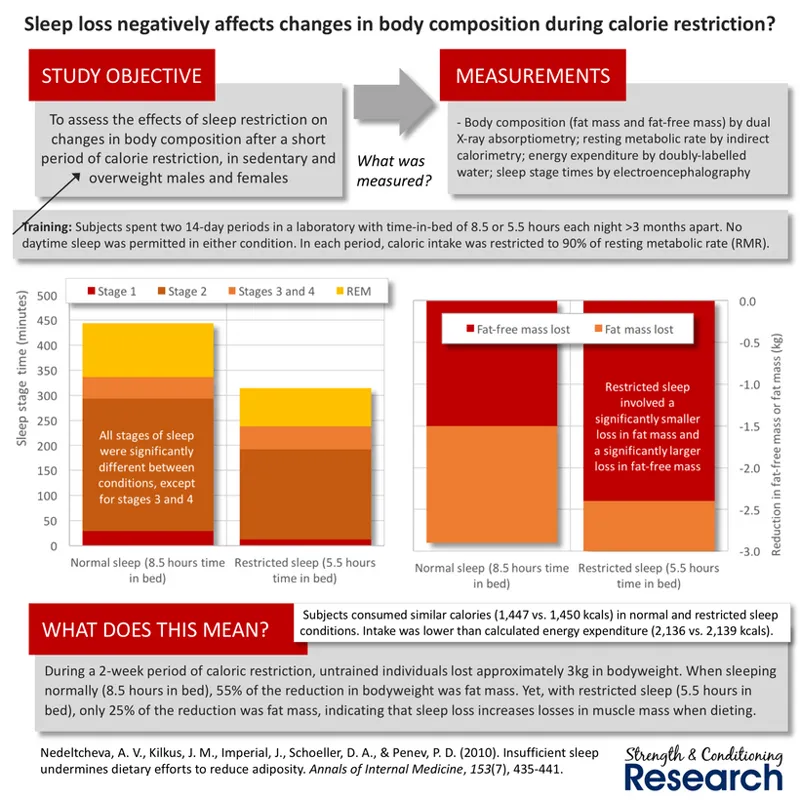
#4. Sleep loss reduces muscle mass during dieting
In agreement with rodent studies exploring the effects of sleep deprivation on muscle mass under conditions where food and water were freely available, researchers have found that sleep loss can cause reduced muscle mass in humans during caloric restriction. Whether the mechanisms of effect are the same in these two situations is still unclear.
.
Conclusions
Sleep has long been known to be important for both athletes and bodybuilders. However, it is likely that even now the importance of sleep remains understated. Four examples serve to make this point: [1] sleep loss can cause central nervous system (CNS) fatigue, which reduces the number of high-threshold motor units that can be accessed during maximal efforts in a workout. This both reduces the number of muscle fibers that can be activated (and hence stimulated to grow to produce hypertrophy), and also reduces the likelihood that increases in voluntary activation will occur; [2] sleep loss can impair coordination, which not only impairs exercise performance during a workout but also reduces the amount of motor learning that can take place in that workout (and likely also in subsequent workouts); [3] in addition to impairing the adaptations that occur during exercise, sleep loss impairs the ability to recover effectively from exercise, thereby reducing the training frequency that we can feasibly use; and [4] sleep loss impairs body composition during caloric restriction by reducing muscle mass, although the underlying mechanisms by which this happens are still unclear.
Comments (2)
Tremendous article Chris - thanks. It would follow then that muscle damaging workouts would make matters worse. Your writings state that muscle damage and metabolic stress are not hypertrophy catalysts. so it appears that again soreness doesn't help and may hurt. True?
Yes, a lack of sleep and muscle-damaging workouts will produce similar negative effects and so stack together to impair recovery and cause CNS fatigue.