





Classification of repetition ranges
Loads can be grouped into various different categories, as follows: [A] heavy loads (1–5RM, or heavier than approximately 85% of 1RM), [B] moderate loads (6–15RM), [C] light loads (16–30RM), and [D] very light loads (lighter than 30RM, or approximately 30% of 1RM). While these four groups exist in part due to tradition, there are also several important physiological reasons for dividing them in this way.
.
#1. Heavy loads vs. lighter loads (moderate, light, and very light)
Heavy loads differ from all other lighter loads (moderate, light, and very light) because a maximal level of motor unit recruitment is typically needed in order to lift them, even when no fatigue is present. Essentially, to produce a force above a certain threshold (typically somewhere above 85% of 1RM), all of the accessible motor units in the muscle must be recruited.
.
When performing several reps with heavy loads, fatigue occurs. This fatigue reduces the ability of working muscle fibers to produce force at a given velocity. To maintain the velocity, we can increase effort even further, and while this does not produce any further increase in motor unit recruitment, it does produce a further increase in motor unit firing rate. Increased firing rates can increase the force produced by individual muscle fibers, although the effect is probably only noticeable in fast twitch muscle fibers, because slow twitch muscle fibers experience tetanus at much lower firing rates than fast twitch muscle fibers (and since they are activated earlier in sequence, they may display faster firing rates than fast twitch muscle fibers).
.
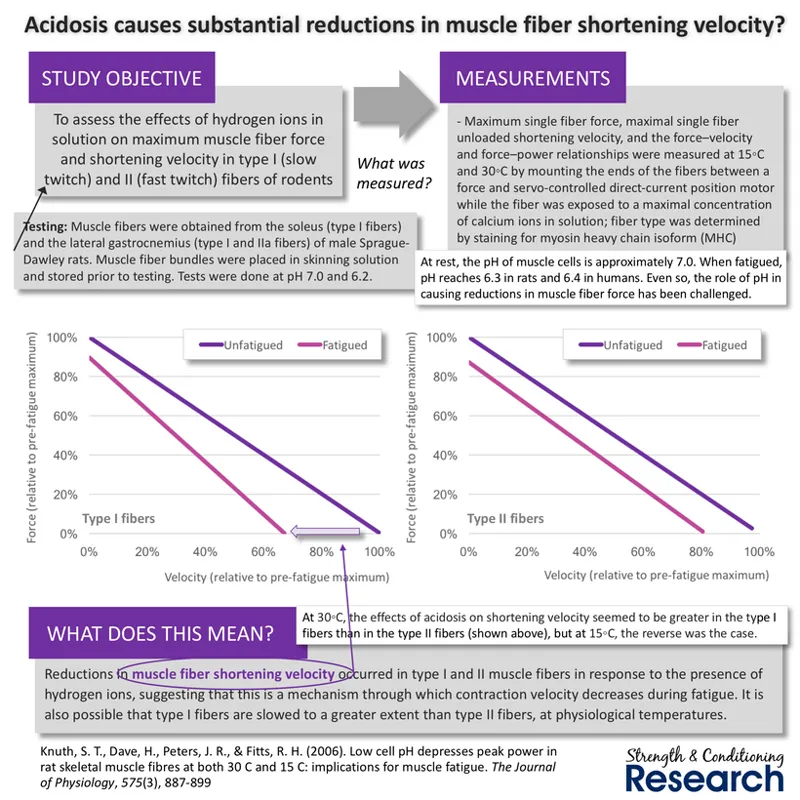
In addition to an increase in motor unit firing rate, (metabolite-related) fatigue also leads to a reduction in muscle fiber shortening velocity, which naturally reduces the movement speed that is achievable during any given rep. This reduction in muscle fiber shortening velocity actually allows the muscle fiber to produce a higher force than we might expect, owing to the force-velocity relationship. Thus, as we continue to perform reps with a heavy load, our ability to continue performing additional reps in a set does not come from increases in motor unit recruitment but rather from [A] increases in motor unit firing rate, and [B] reductions in muscle fiber shortening speed.
.
Heavy loads probably differ from moderate (and light loads) because of the amount of time under tension that the entire group of high-threshold motor units can experience. When lifting heavy loads, failure occurs when only a small number of high-threshold motor units fatigue to the point when the required level of force can no longer be attained. In this way, the dosage of mechanical tension (as measured across the muscle fibers of all high-threshold motor units) is limited compared to when lifting moderate (or light) loads. Consequently, when using heavy loads for hypertrophy, the number of sets must be increased relative to the number of sets that are required when lifting moderate loads.
.
#2. Moderate loads vs. light loads
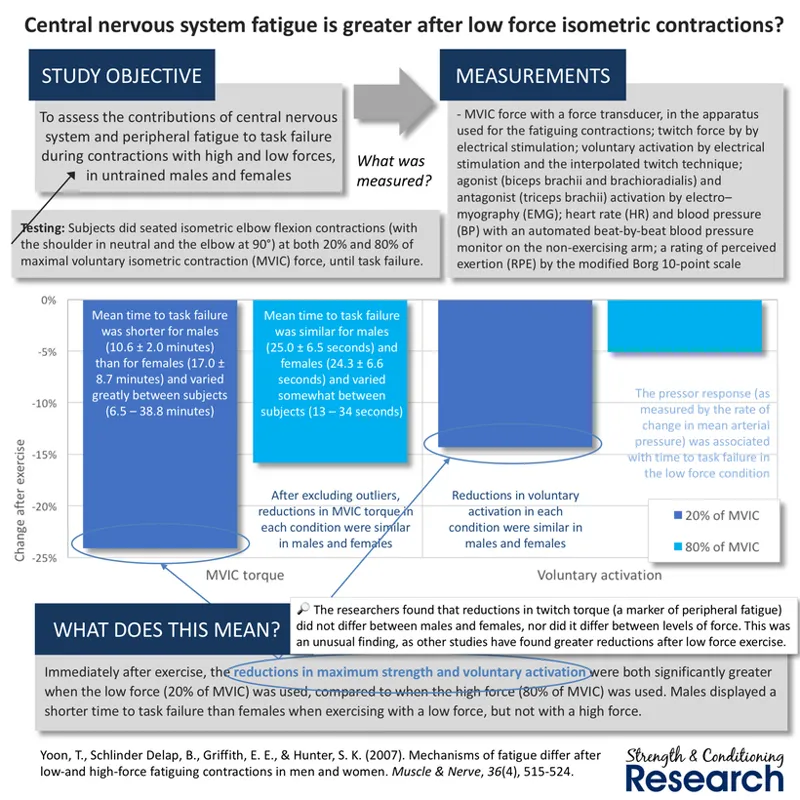
Although moderate loads (6 – 15RM) and light loads (16 – 30RM) produce similar hypertrophy, moderate loads typically cause greater gains in maximum strength. This is likely caused in part by smaller increases in the ability to recruit high-threshold motor units. Light loads cause smaller increases in the ability to recruit high-threshold motor units after training because they involve slightly lower levels of central motor command during each set performed to failure, owing to the greater central nervous system (CNS) fatigue that occurs. While it is often assumed that CNS fatigue occurs in response to lifting heavy loads, the opposite is the case. CNS fatigue is actually greater when lifting light loads compared to when lifting moderate (or heavy) loads.
.
When lifting light loads, a small amount of CNS fatigue occurs in response to increased afferent feedback from metabolite accumulation in muscles. Afferent feedback is the result of metabolites building up and stimulating receptors inside muscles that then send information along afferent nerves back to the brain, which result in the burning and fatiguing sensations that we experience during exercise.
.
This means that when we reach muscular failure at the end of a set, the level of central motor command (and potentially also the level of motor unit recruitment) is slightly lower when we are using light or very light loads, compared to when we are using moderate (or heavy) loads. Consequently, the stimulus for increasing the ability to recruit more high-threshold motor units is smaller. This is why voluntary activation (which is an indicator of the ability to access high-threshold motor units) increases more after training with moderate loads compared to after training with light loads.
.
#3. Light loads vs. even lighter loads (very light)
Light loads (16 – 30RM) differ from very light loads (lighter than 30RM) because they produce more hypertrophy. Research has shown that muscle growth is the same when training with the same number of sets to failure of any light (or moderate) load. The exact rep range and the exact number of reps performed in the set to failure does not matter (so long as it falls between 5RM and 30RM). Nevertheless, training with very light loads does not produce the same amount of hypertrophy, even when training to failure.
.
There is an important physiological reason why this happens. When muscular contractions are performed to lift a very light load, the intramuscular pressure is too low to produce venous occlusion. This means that blood can still flow out of the muscle, even while it is contracting. Consequently, it is not possible for metabolites to build up inside the muscle during exercise, since they exit into the bloodstream once they are produced. As a result, metabolite-related fatigue cannot occur, and other types of fatigue become proportionally more relevant.
.
When metabolite-related fatigue predominates (as it does when lifting heavy loads), this primarily produces a reduction in muscle fiber shortening velocity (rather than a reduction in muscle fiber force). Consequently, there is minimal reduction in the amount of mechanical tension that is experienced by the muscle fibers when this type of fatigue is present, which makes it ideal for stimulating hypertrophy. Other types of fatigue reduce muscle fiber force (excitation-contraction coupling failure), or even prevent muscle fibers from being activated in the first place (central nervous system fatigue). Indeed, research has shown that central nervous system fatigue is greater when contractions are lower in force and longer in duration.
.
Similarly, excitation-contraction coupling failure is also greater when forces are lower and exercise durations are longer. Unlike metabolite-related fatigue (which mainly reduces muscle fiber shortening velocity), excitation-contraction coupling failure predominantly reduces muscle fiber force, which adversely affects the ability of the muscle fibers to produce (and therefore experience) mechanical tension.
.
Conclusions
During strength training, loads can be grouped into four rep range categories according to their physiological differences: [A] heavy (1–5RM), [B] moderate (6–15RM), [C] light (16–30RM), and [D] very light (lighter than 30RM). Heavy loads differ physiologically from the other loads because every rep involves maximum levels of motor unit recruitment even before the onset of fatigue. This also means that a set can involve fewer than the maximum number of stimulating reps, which can reduce the hypertrophy that is stimulated compared to sets to failure with moderate and light loads. Light loads differ from heavy and moderate loads because they involve more central nervous system fatigue due to afferent feedback from metabolite accumulation and cardiovascular activity. This inability to maximize central motor command even at muscular failure is likely why they are unable to increase the ability to recruit high-threshold motor units after training to the same extent. Very light loads are unique insofar as the intramuscular pressure during each contraction is too low to produce venous occlusion, so blood can flow out of the muscle while it is contracting. Thus, it is not possible for metabolites to build up inside the muscle during very light load exercise, since they exit into the bloodstream once they are produced. Hence, metabolite-related fatigue cannot occur, and other fatigue mechanisms become more prominent. These impair the ability of very light loads to stimulate hypertrophy.
Comments (18)
Hello Chris, so my understanding is that the 1-5 rep range does not produce sufficient hypertrophy because failure occurs due to high motor units not being able to continue to produce enough force, therefor the amount of mechanical tension has not met the needed threshold to induce hypertrophy
The main type of fatigue that affects the fast twitch muscle fibers of high-threshold motor units during very short-duration contractions (like 1–5RM efforts) is acidosis. Therefore, it must be a negative effect on shortening velocity and not force.
Very interesting article! Coming from an engineering background, the very detailed explanations hit home! Chris, in the context of accommodating resistance, is there any reason to believe that the rep ranges described above are any different?
Yes, muscle physiology often makes most sense when looked at as a mechanical engineering system. Currently, it is difficult to say whether the rep ranges differ when using accommodating resistance. Since they involve more consistent muscle forces, it might be possible to work in slightly higher rep ranges while still maintaining venous occlusion, but I have not seen anything that would help us identify that happening.
Mathematical prediction of optimal load for hypertrophy: 70% 🤔 obviously very simplified (10sec/rep x 10 reps x 3 sets every 3 days?!) and at the cell level, a LOT of variables will need to be taken into account before they can build a predictive, real-world model to guide individual training programming. https://www.cam.ac.uk/research/news/mathematical-model-predicts-best-way-to-build-muscle
Yes, the full text of the paper is available here: https://www.sciencedirect.com/science/article/pii/S0006349521006093
Craft is indeed a more fitting descriptor, although it can feel more artsy when an intuitive modification yields a better response than what research points to. FWIW, I have found that more conservative volumes (3-4 sets per muscle group) and more rest seems to yield better long-term results - perhaps because I usually work with more gen pop in their 30-40s with jobs and families than 20-year old college students... But I'm also inclined to think that habituation to lower volumes and frequencies also leaves a better error margin, while also keeping the stimulus threshold lower - I.e it only requires another 1-2 sets to provide a better stimulus if progress stalls at any time. Even James Krieger discussed this in a recent podcast, he started with only 1 set when he got back in the gym after the they opened after the lockdowns, and only added sets when gains slowed down. He was able to surpass his previous high-volume bests (15-20 weekly sets) with only 2-3 sets 2x/week after a couple of months of training. Interesting for sure. I believe it was Layne Nortons podcast.
Totally agree. And certainly 3-4 sets per exercise or per muscle group is a sweet spot for many people.
Sounds very reasonable. So the more complicated way would be to have a system of monitoring progress for different muscle groups and adjusting frequency (or volume, or both?) for several muscle groups. We should make an AI app for that 😂😎
Yes, the alternative is to continually change the training program between split variations (such as upper-lower, push-pull-legs, full-body split, etc.) so that each exercise is able to maintain an ideal training frequency. As you have already identified, it can be a lot of work if exercises keep stalling due to insufficient volume. Added to that, sometimes the problem with progress is not actually insufficient volume. Sometimes it is insufficient recovery (perhaps due to stressors outside of the gym), so I think it actually helps to test that first before assuming that extra volume is needed.
Great answer, that makes a lot of sense. So even if another set in that workout requires more rest and thus reduces weekly volume, at a certain minimum it is still worth it to make sure we achieve a robust stimulus for hypertrophy. Then, adjusting the volume and frequency "knobs" for all muscle groups is an iterative process following the same format - caveat being that a split soon becomes complicated if e.g. 3 sets of bench press requires 2 days of rest whereas 3 sets of overhead pressing requires 3 days due to overlap, if done in the same workout - then I guess you could add 1 set to bench rather than reduce OHP by 1 set (replacing 1 set of OHP with 1 set of lateral raises also an option), and continue doing bench+OHP with 3 days between workout...thinking out loud here. Trying to work this out theoretically quickly becomes overwhelming with so many variables to account for. 😅
Yes, there are a couple of ways of managing multiple exercises that train the same muscle group or groups. One easy way (not necessarily the optimal way, but is simple to manage) is to use modified block periodization and focus on one exercise at a time. Thus, the training frequency for that muscle group or groups is determined by a single exercise. The other exercises can be put on maintenance with a low number of sets per workout, so that frequency doesn't really matter for them. I find this to be a useful way of managing training at an advanced level without having to work really hard at altering the training program constantly to adjust to different volumes/frequencies.
Tremendous article - Chris is the metabolite related fatigue associated with moderate and light loads equivalent to the "pump"? What you seem to classify as productive for hypertrophy fatigue. Fatigue that does not reduce muscle fiber force but only muscle fiber shortening velocity. So what I've seen referred to as cellular swelling or the pump. Can I gauge the numbe rof stimulating repetitions in my workout by the level of muscle pump achieved? Thanks!
Metabolite-related fatigue occurs within muscle fibers, so it is actually the main type of fatigue during heavy load strength training, even though we don't notice it happening. Only when it occurs in enough muscle fibers does it become apparent throughout the whole muscle. So the pump is not a good metric of the presence of metabolite-related fatigue in specific muscle fibers or of the presence of a stimulating rep.
Great article. I am wondering, for two lifters working at 20% of 1 rep max, would having a higher proportion of slow twitch fibres be ab advantage in completing more reps?
Exactly, which is the main reason why percentages of 1RM are not as useful as repetition maximums when we discuss hypertrophy.
More evidence in favour of the optimal hypertrophy range being 5-8 reps 👍🏻 You have previously posted how to minimise fatigue in order to enable higher volumes per workout (exercise selection adjusted to the individual muscle groups, ROM, avoiding failure etc), but to determine the best frequency is it simply a matter of trial-and-error? E.g. let’s say you do 5 sets of bench presses, and guesstimating (pecs being slower to recover than other muscle groups) that this workout can be repeated 5 days later, can we just look at performance improvements and assume that we are "close enough" to the supercompensation peak? Or maybe a progressive program of 3 days between workouts (for that muscle group), then 4 days, then 5 days etc? It would be difficult or even impossible to take into account all recovery variables (other muscle groups training, nutrition, sleep, stress etc), but at least it would be a rough estimate. The pendulum has sort of swung in the other direction from higher frequencies to lower frequencies lately, even the "bro-splits" have become in favour again - and recent studies and meta-reviews are probably contributing to this: https://journals.humankinetics.com/view/journals/jsr/29/7/article-p1024.xml Perhaps more days between workouts reduce the stimulus threshold (RBE?) and provide more bang for the proverbial buck. This is only a guess, though, but it just seems logical that erring on the side of more recovery is better. It's just a matter of tuning the volume-frequency knob to a 'just right' position and leave the rest up to genes and hormones...and this is also where art meets science, I guess 😅 Then again, there is probably a workout-to-workout limit to how many hard sets you can do productively (depending on the muscle group and exercise selection, again), where additional sets only add recovery time but not extra hypertrophy - and at this "sweet spot", the average trained lifter should be able to recover from it within 3-5 days (?) and further rest days will only be wasted time.
Yes, I basically work off performance improvements. By way of example, I recently increased the volume of an exercise in a program by one set per workout and immediately the recovery time (as measured by being able to equal or add one rep for that exercise per workout) dropped from being fully recovered on the second day after the workout (training the exercise three days per week) to being fully recovered on the third day. In this example, total weekly volume would have been greater with the original program, but progress was very difficult with the small number of sets for that exercise. Ultimately, I think volume is really about being able to progress, and it is usually easier to progress when there are more sets to work with.