




Stress
Strength training workouts are often described as "stressors" and yet this may not be accurate. Nevertheless, there is clearly a negative effect of life stressors on strength training adaptations.
.
#1. What is the general adaptation syndrome?
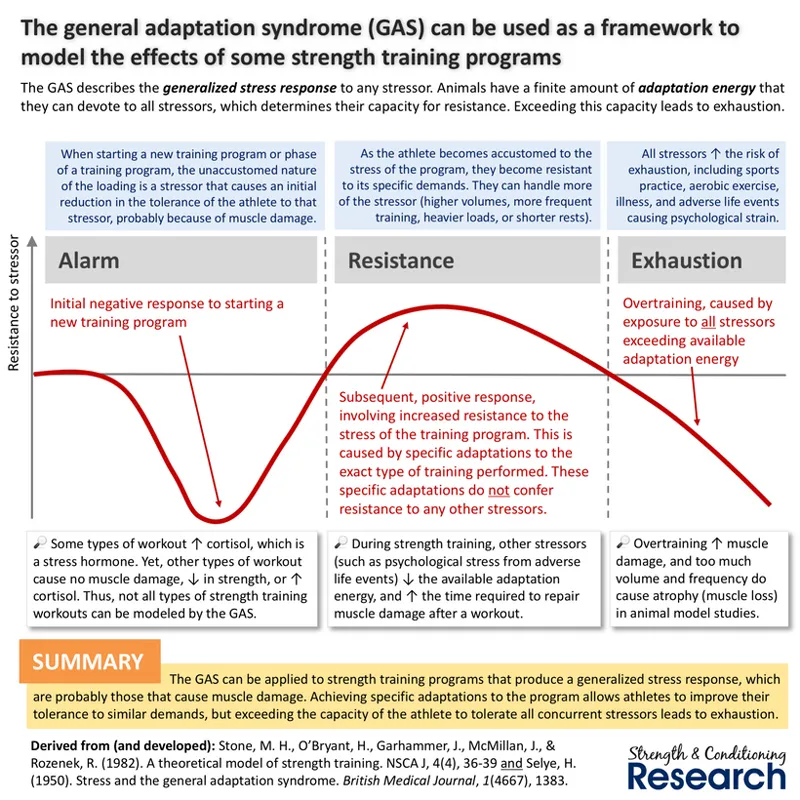
Traditionally, strength training workouts have been treated as stressors in the context of the general adaptation syndrome model. This model is based upon the observation that all stressors produce similar stress responses, which can be acclimatized to over time, so long as they are not excessive. This model allows us to predict that when the total amount of stress that is experienced from all sources is excessive, exhaustion results.
.
It is worth noting that despite the name the "general adaptation syndrome," the general adaptation syndrome model does not actually provide information about adaptations! Rather, it provides information about our ability to recover from the training load that we are experiencing, in the context of all of the stressors that are experiencing as a result of training and in day-to-day life.
.
#2. Do stress responses occur in response to exercise?
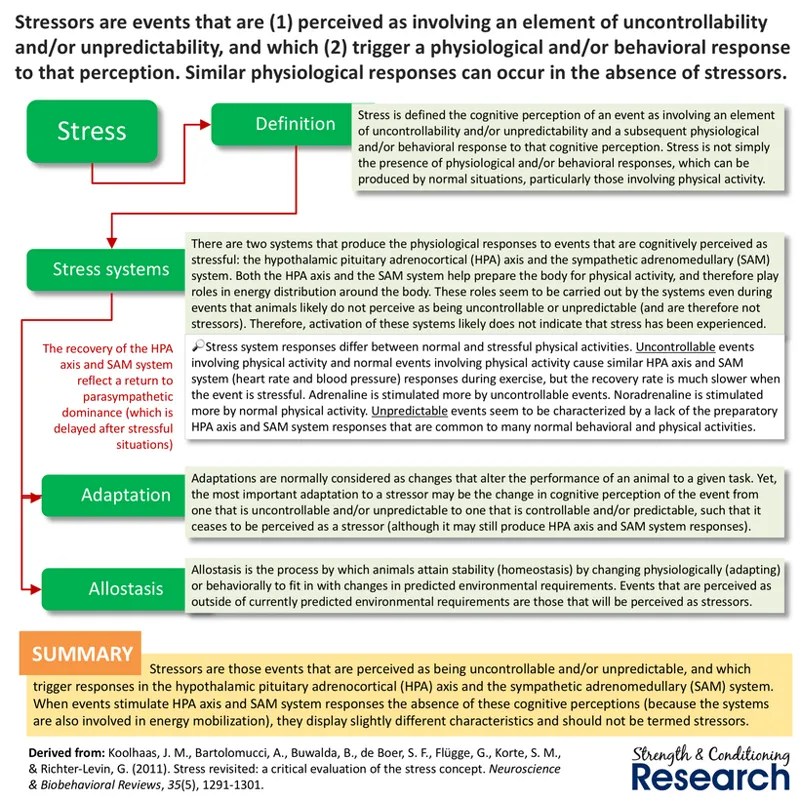
The use of the general adaptation syndrome to inform our understanding of strength training programs has been criticized for several reasons. One key criticism is that not all strength training workouts might be considered as stressors, at least within the formal definition of the term. Strength training workouts have traditionally been classified as stressors because there is clear evidence of responses in the sympathetic adrenomedullary (SAM) system (which can be detected by reference to changes in catecholamines), and in the hypothalamic-pituitary-adrenal (HPA) axis (which can be detected by changes in cortisol). However, the activation of these two systems has been proposed to occur due to their involvement in the mobilization of energy sources for exercise, rather than as a genuine stress response.
.
Interestingly, when psychological stressors are compared with exercise stressors, there is a more pronounced response of the the SAM system and the HPA axis following physical exercise. This may be because the physical exercise requires activation of the SAM system and the HPA axis for its own purposes (including mobilizing energy sources to support the muscles in producing contractions). Unfortunately, it is difficult to ascertain whether these purposes include dealing with a stressful event.
.
#3. Do the stress responses to exercise indicate that exercise is a stressor?
Researchers working in the field of stress have often observed that the SAM system and the HPA axis seem to be activated for other purposes as well as for dealing with a stressor. Consequently, they have proposed that for an event to be defined as a "stressor," it must be associated with an element of unpredictability and/or an element of uncontrollability. Without these elements, it is suggested that a strength training workout cannot really be defined as a stressor. That is not to say that it is impossible for a strength training workout to be defined as a stressor, but it strongly suggests that not all strength training workouts can be defined as stressors.
.
#4. Can stressors from other sources impair recovery from strength training workouts?
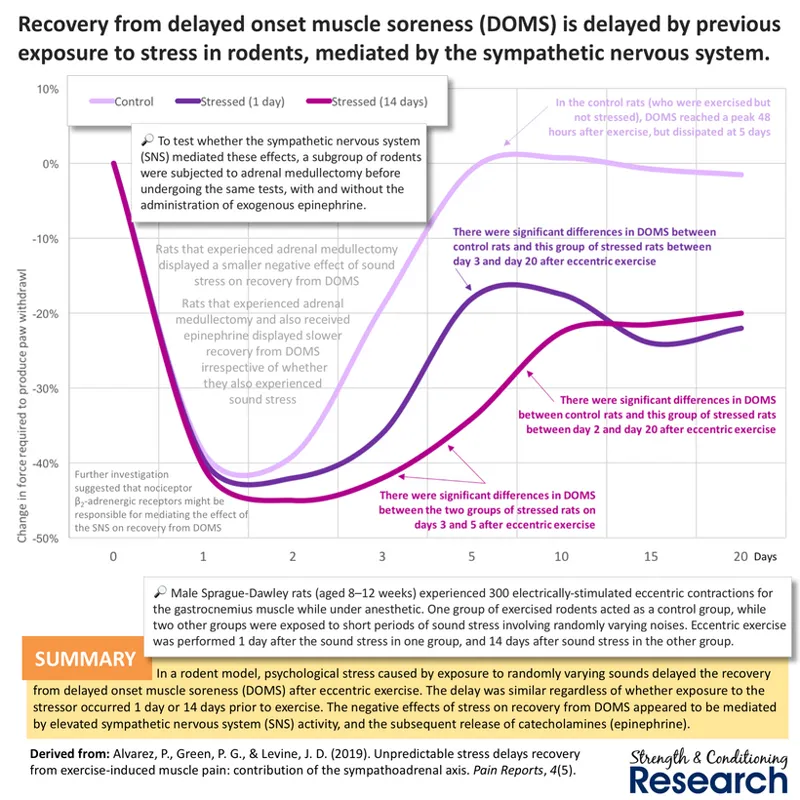
Even if strength training workouts cannot always be classified as stressors, it is known that genuine, psychological stressors impair the rate of recovery after a workout.
.
This effect has been observed in both humans as well as in rodents.
.
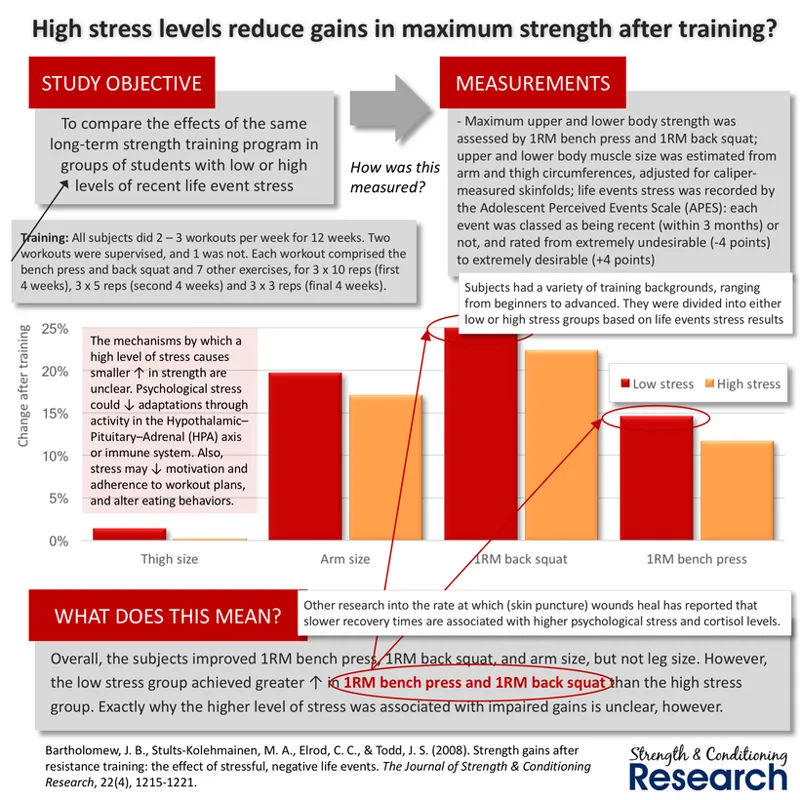
This reduced rate of recovery may be responsible for the smaller strength gains that are achieved by subjects who are experiencing greater stress levels.
.
#5. How might stressors from other sources impair recovery from strength training workouts?
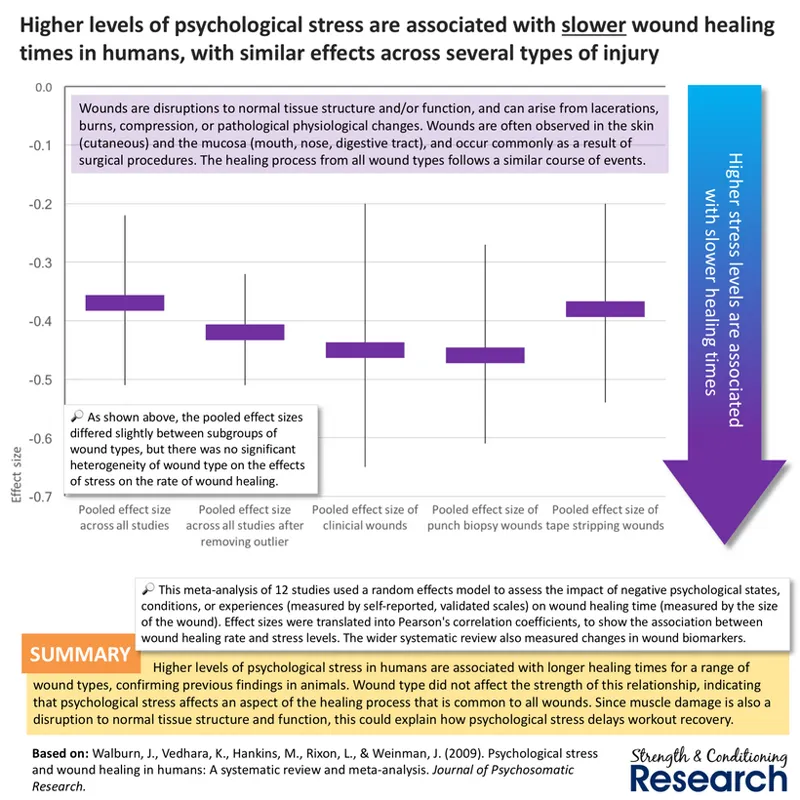
Stress is known to suppress the immune function and slow the rates of wound healing after medical procedures. Therefore, it is possible that the rate of muscle damage repair is reduced by stress, and that this underpins the slower recovery from workouts that is experienced during stressful times.
.
Conclusions
Strength training workouts have traditionally been treated as stressors in the context of the general adaptation syndrome. Indeed, workouts often activate the sympathetic adrenomedullary (SAM) system and the hypothalamic-pituitary-adrenal (HPA) axis. Yet, whether such activity is caused (at least in part) by the need to deal with a stressor or whether it occurs solely for other physiological reasons is unclear. Indeed, researchers have suggested that stressful events must be associated with an element of unpredictability and/or an element of uncontrollability, which suggests that not all strength training workouts can be classified as stressors. Nevertheless, it seems likely that life stress does impair recovery from strength training workouts and reduces strength gains after training, perhaps due to a slower rate of muscle damage repair caused by the effects of stress on the immune system.
Comments (2)
Great article. This does sound like the General Adaptation Syndrome model does not apply to strength training programs. It fits with your muscular hypertrophy mechanism theory based solely on dosage of mechanical tension on the muscle fibers. I believe you have stated that one cannot sense high mechanical tension (low threshold motor unit activities of daily life training). If you cannot necessarily even have an awareness of the catalyst it would seem to not be a stressor as commonly defined. Am I misconstruing? Thanks.
Yes, that makes sense to me