



Pre-workout carbohydrates
Historically, many strength coaches talked about "earning your carbs" and this idea, along with the belief that replenishing glycogen stores post-exercise was a key element of post-workout recovery, caused the fitness industry to think more about post-workout carbs rather than pre-workout carbs. But does that make sense?
.
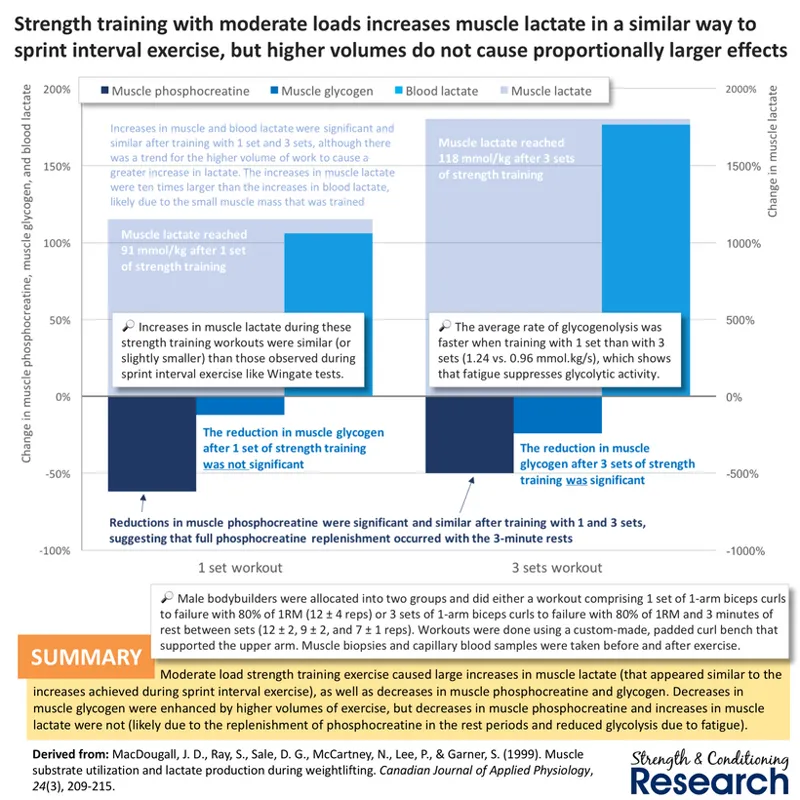
#1. Strength training workouts do use muscle glycogen
Strength training workouts do cause muscle glycogen to reduce, in much the same way as other anaerobic forms of exercise, like high-intensity interval training.
.
Interestingly, slow twitch muscle fiber glycogen reduces less (and in different areas) from fast twitch muscle fiber glycogen. This most likely reflects the greater dependence of those fibers on glycolysis.
.
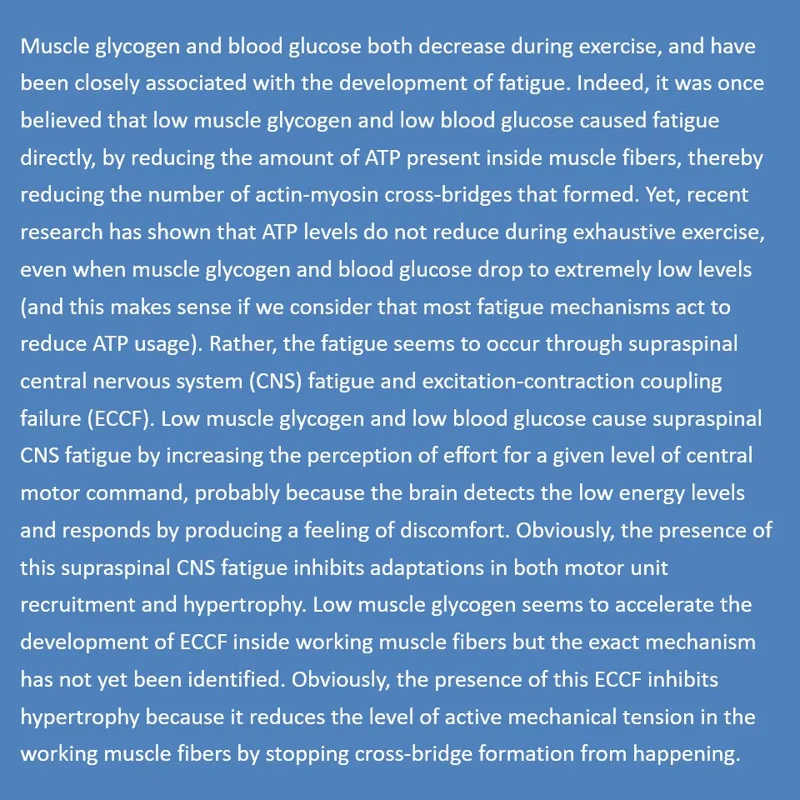
#2. Low muscle glycogen causes supraspinal CNS fatigue and excitation-contraction coupling failure
Low muscle glycogen causes both supraspinal central nervous system (CNS) fatigue (which reduces motor unit recruitment) and also excitation-contraction coupling failure (which reduces single muscle fiber mechanical tension). Therefore, it makes sense to avoid going into a workout with low muscle glycogen (read more).
.
More generally, it makes sense to avoid excessively low carbohydrate diets for maximizing muscle growth (read more).
.
#3. Pre-workout carbohydrate mouth-rinsing
The supraspinal CNS fatigue (which reduces motor unit recruitment) is the larger of the two fatigue mechanisms caused by low muscle glycogen that impair the hypertrophy stimulus. Yet, it can be reversed by carbohydrate mouth-rinsing.
.
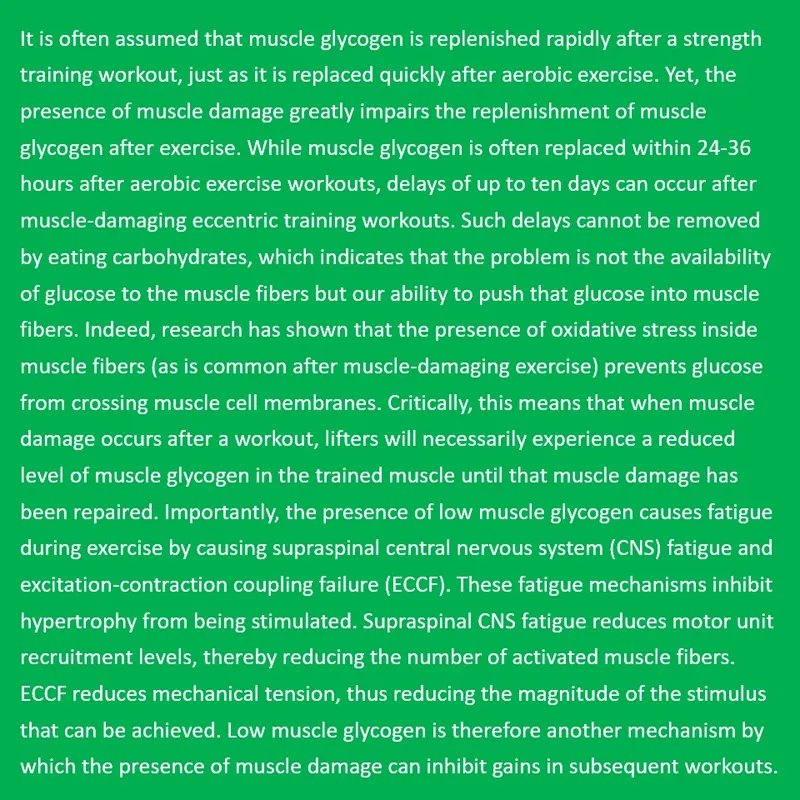
#4. Post-workout carbohydrate consumption does not accelerate glycogen replenishment
After muscle-damaging workouts, muscle glycogen is prevented from being replenished by the presence of inflammation and/or oxidative stress inside the muscle. Therefore, focusing on post-workout carbs makes very little sense because they cannot be used (read more).
.
Conclusions
Historically, many strength coaches talked about "earning your carbs." This idea, along with the widespread belief that replenishing glycogen stores post-exercise contributes to post-workout recovery from fatigue, caused many influencers in the fitness industry to focus more on post-workout carbs than on pre-workout carbs. Yet, this does not make sense. Indeed, we do not want to go into workouts with low muscle glycogen, because this causes supraspinal central nervous system (CNS) fatigue (which reduces motor unit recruitment) and excitation-contraction coupling failure (which reduces single muscle fiber mechanical tension). Moreover, studies show that pre-workout carbohydrate mouth rinsing can alleviate supraspinal CNS fatigue and thereby increase workout performance (by increasing motor unit recruitment), which should logically lead to a superior hypertrophy stimulus. In contrast, there is little point in consuming post-workout carbs after muscle-damaging workouts, because glucose is stopped from entering damaged fibers to replenish glycogen by the presence of inflammation and/or oxidative stress. Since muscle damage should be minimal pre-workout, it makes much more sense to consume pre-workout carbs than to consume post-workout carbs.

Comments (1)
Hi Chris, how would this apply to somebody that’s trains in the evening. IE all macro contribution is distributed across the day -> Majority of carbs to pre workout & then in theory is there any actual benefit to consuming carbs / protein post workout prior to waking the next day (Sleeping within that 1-2 hour post workout window. So for example: All calorie / macro targets met for the day pre workout & appropriate carbohydrates hit pre workout. Train, return home & sleep. Rather than forcing / consuming a moderate protein / high carb post workout meal. Super interested to hear your thoughts, thank you 🙏