





Fatigue resistance is not a hypertrophy bottleneck
Researchers appear desperate to link fatigue mechanisms with hypertrophy. Historically, many of them have argued that muscle damage and metabolite accumulation can directly stimulate the growth of muscle fibers. Recently, they have begun to form a new line of attack, by suggesting that achieving fatigue resistance adaptations in an earlier block of training could facilitate gains in muscle size in later blocks of training.
.
#1. Hypertrophy is NOT stimulated by muscle damage
A long time ago, researchers studying the mechanisms underpinning hypertrophy hypothesized that muscle damage was a requirement for hypertrophy to happen. They suggested that myofibrils would not be added unless the inside of the muscle fiber was torn apart. When this hypothesis was overturned, they produced the ad-hoc hypothesis that muscle damage was just one stimulus for hypertrophy rather than the fundamental requirement. Even so, this hypothesis was also completely incorrect (read more).
.
#2. Hypertrophy is NOT stimulated by metabolic stress
Another very popular idea among hypertrophy researchers (and their supporters in the fitness industry) is that metabolite accumulation can directly stimulate hypertrophy. They have suggested a number of ways in which this could take place but none of the various mechanisms have any real evidence nor any physiological mechanism (read more).
.
#3. Could fatigue resistance adaptations theoretically increase the hypertrophy stimulus?
Some researchers have argued that increasing fatigue resistance might enhance the amount of hypertrophy that can subsequently be generated during strength training. Exercise training typically produces various adaptations that affect fatigue mechanisms that thereby reduces their impact in subsequent workouts. When we analyze the various categories of fatigue mechanisms, we can see that the main group of neuromuscular fatigue mechanisms that is altered by strength training is metabolite-related fatigue (read more).
.
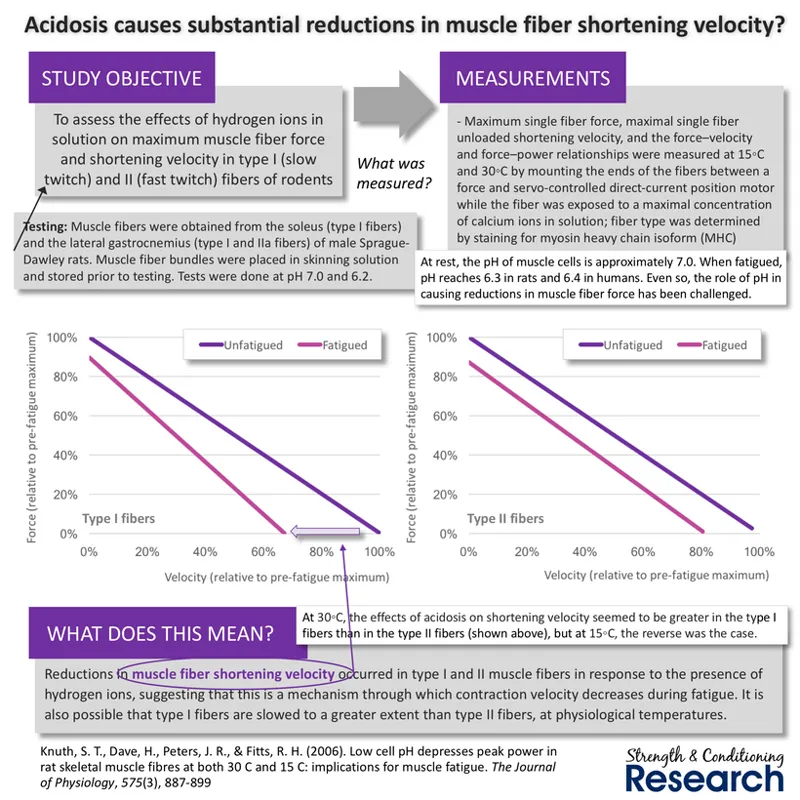
As we already know, metabolite-related fatigue mechanisms do not negatively impact on the hypertrophy stimulus directly because they do not reduce mechanical tension inside the working muscle fibers. Instead, it mainly just affects muscle fiber shortening velocity. Only when lots of metabolites build up to an extreme level and cause supraspinal CNS fatigue (a completely different fatigue mechanism) do they have a negative effect on muscle growth during a workout.
.
#4. If improvements in fatigue resistance facilitated hypertrophy, how would that be reflected in training variables?
If improvements in fatigue resistance were capable of facilitating the hypertrophy stimulus in subsequent workouts, we should see an effect of rep range. Training with lighter loads and higher reps has a much more stimulating effect on improvements in fatigue resistance (and in the underlying adaptations) than training with heavier loads and lower reps (read more).
.
Consequently, if improvements in fatigue resistance were capable of facilitating the hypertrophy stimulus in subsequent workouts, we should see muscle growth increasing over time when training with lighter loads and higher rep ranges. When we compare training programs with lighter and heavier loads, we see much bigger increases in volume load with the lighter load training programs due to the larger improvements in muscular endurance.
.
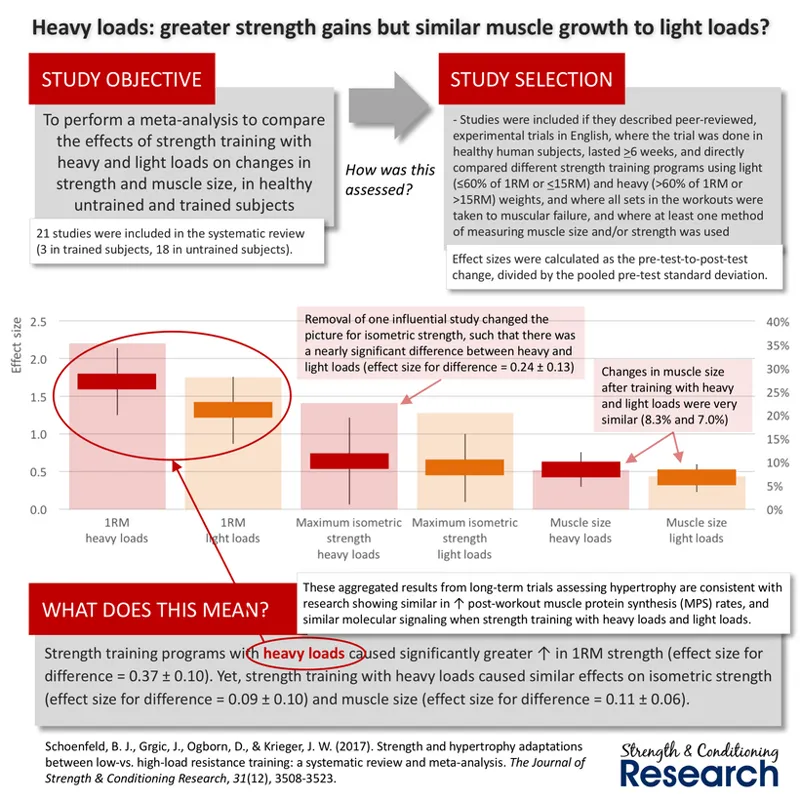
Nevertheless, research has been clear for several years now that the muscle growth stimulated by lighter and heavier loads is relatively similar if not exactly the same.
.
Similarly, while we would expect a potentiating effect of blocks of light load training on subsequent blocks of heavier load training due to the greater adaptations in fatigue resistance achieved by training with lighter loads, there is in fact no evidence for this.
.
In fact, the opposite phenomenon is the case. Blocks of heavy load training are able to potentiate the muscle growth caused by later blocks of moderate load training due to the increased levels of motor unit recruitment that can be achieved after training with heavy loads.
.
#5. Is the ability to stimulate hypertrophy limited by the presence of fatigue resistance adaptations?
Some researchers have argued that certain adaptations (such as capillarization) could be limiting factors for hypertrophy because they might prevent the muscle fiber from growing to its full potential if they are not already present when the hypertrophy stimulus is received. Yet, research has shown that capillarization in particular is neither affected by rep range nor does increasing it help improve the rate of muscle growth (read more).
.
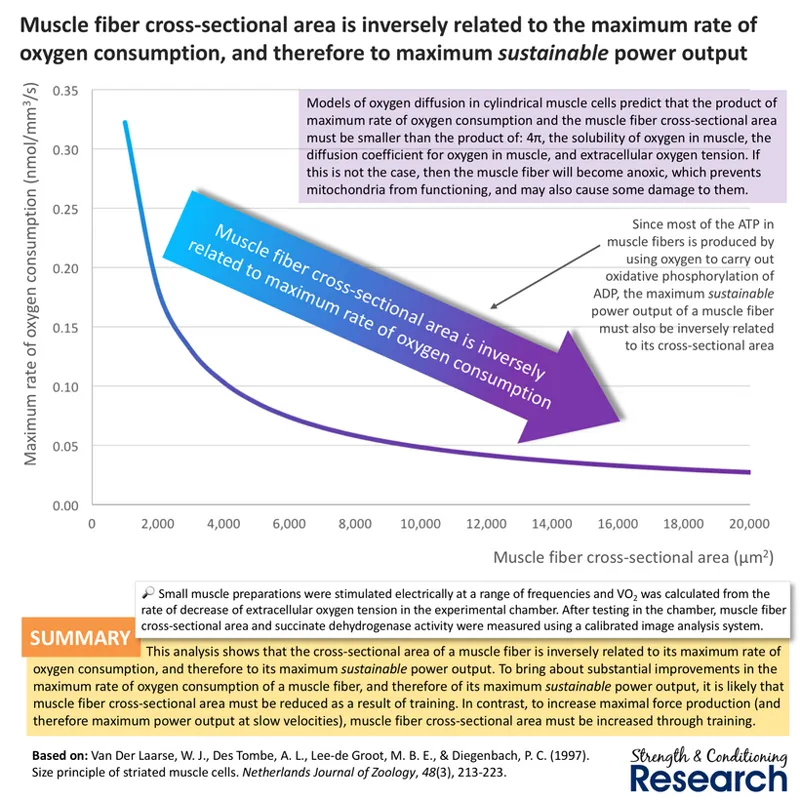
Moreover, many fatigue resistance adaptations are related to the process of increasing the oxidative capacity of a muscle fiber. Indeed, increases in capillarization do occur when the muscle fiber changes its type to become more oxidative. Increases in the oxidative capacity of a muscle fiber are associated with a REDUCED maximum muscle fiber size in accordance with the size principle of striated muscle. For this reason, we would expect that pursuing the development of fatigue resistance could have adverse effects on muscle growth rather than the opposite.
.
Conclusions
Some hypertrophy researchers appear desperate to link fatigue mechanisms with muscle growth in any way possible. Historically, they argued that muscle damage and metabolite accumulation could directly stimulate the growth of muscle fibers. Once these ideas were debunked, they suggested that achieving fatigue resistance adaptations in an earlier block of training could facilitate gains in muscle size in later blocks of training. Yet, the fatigue resistance adaptations that occur during strength training [1] mainly relate to the metabolite-related fatigue mechanisms, and are [2] far greater when we train with lighter loads and higher repetition ranges. So, we can see that there is no theoretical basis for arguing that improved fatigue resistance will affect the hypertrophy stimulus (since metabolite-related fatigue mechanisms do not affect muscle growth). And we can see that there is no evidence from training variables that improved fatigue resistance will affect the hypertrophy stimulus (because lighter load training does not cause greater muscle growth than heavier load training). Finally, it should be noted that increasing fatigue resistance by way of an increase in the oxidative capacity of the muscle fiber(as occurs with fiber type shifting and an accompanying increase in muscle capillarization) will tend to reduce the maximum size of the muscle fiber inline with the size principle of striated muscle. Thus, many adaptations that are often seen as "hypertrophy bottlenecks" are in fact themselves limiters.


Comments (2)
According to this important message, previous metabolic training blocks (high reps, low loads) are not a good option for increase later hypertrophy training. On the contrary, neural training blocks with either heavy loads or high-speed exercises can increase motor unit recruitment as an adaptation for a long time and get a clear benefit for subsequent hypertrophy training. High speed training can also reduce fiber type shift to more oxidative fibers, retaining more effectively type IIx fibers pool with more benefits for hypertrophy.
Thanks Chris for your latest posts about fatigue resistance. Really interesting topic! Thanks for your valuable information and work. Increasing fatigue resistance as an adaptation is not a good option for hypertrophy. Increasing it by way of an increase in the oxidative capacity of the muscle fiber will finally tend to reduce the fiber maximum size. Is fiber type shifting really detrimental for hypertrophy? How could we retain the maximum numbers of type IIx fibers during conventional hypertrophy training?