





Atrophy occurs within a training week
Many people are not able to accept that muscle loss occurs quickly. So let's take a closer look at how we know that muscle does get lost from workout to workout. Fortunately, the rate at which muscle mass is lost is very easy to establish from three sources of information: [1] immobilization studies, [2] detraining studies, and [3] maintenance studies.
.
#1. Atrophy occurs very quickly during periods of disuse
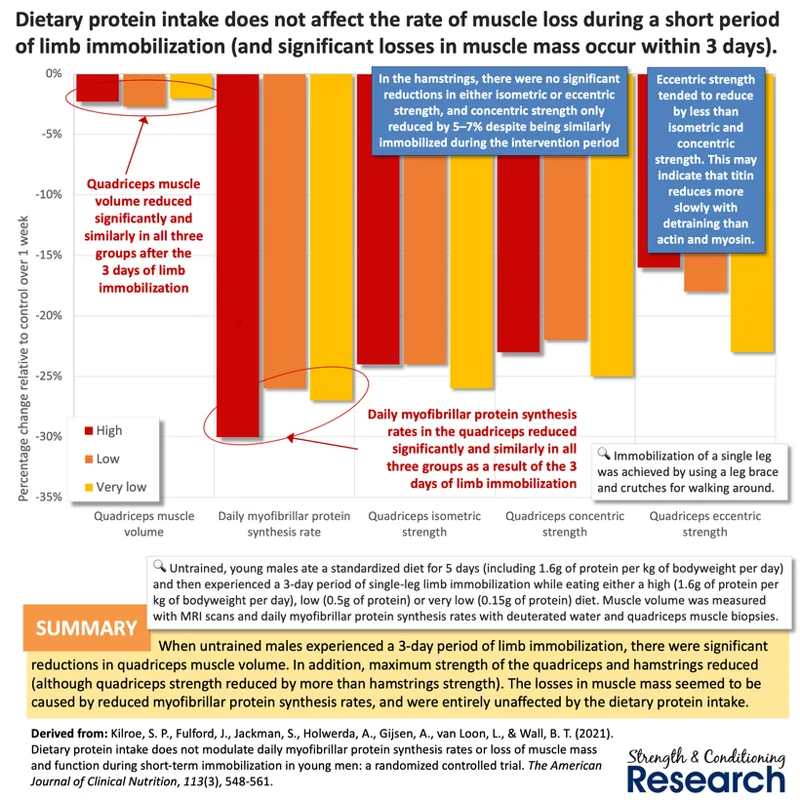
Firstly, it is useful to establish that muscle atrophy happens quickly in periods of disuse. Here, we can see that just three days of immobilization caused significant losses in leg muscle mass.
.
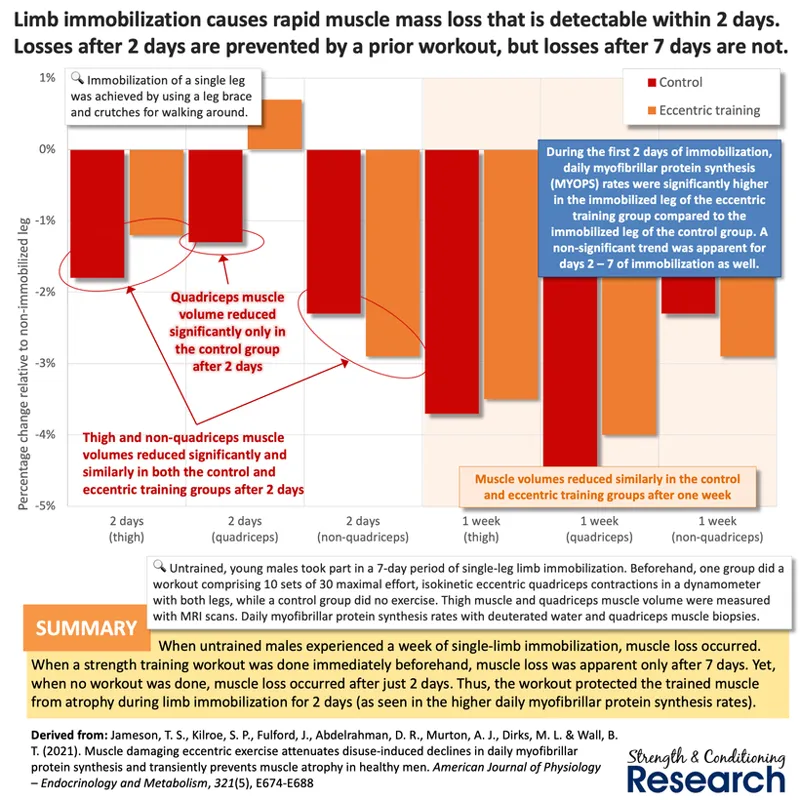
Secondly, it is helpful to recognize that the losses in muscle mass caused by immobilization can be delayed by a strength training workout for a couple of days but not for much longer than that. This tells us that the protective effect provided by a single strength training workout is extremely short-lived and probably only lasts for a couple of days at most.
.
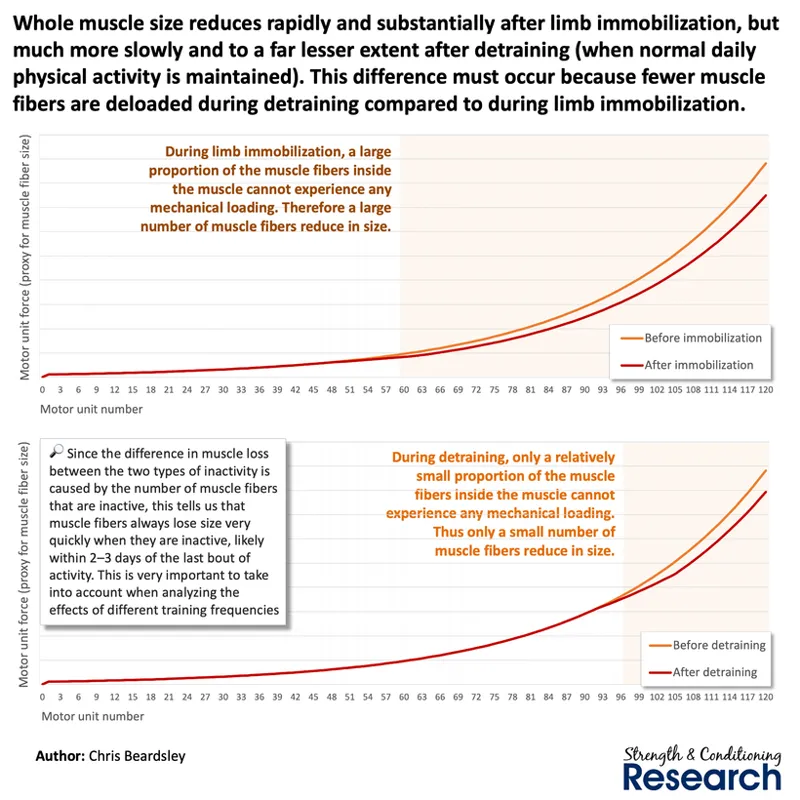
Thirdly, it is helpful to recognize that muscle hypertrophy and muscle atrophy are muscle fiber-specific. Therefore, the primary difference between the rates of atrophy during detraining and immobilization is the number of inactive muscle fibers. Rates of whole muscle loss during detraining are slower because fewer fibers are inactive compared to during immobilization. This tells us that atrophy occurs within a couple of days during detraining as well as during immobilization, albeit in much fewer muscle fibers.
.
#2. Detraining studies show that atrophy occurs within one week
Detraining studies are not the best source of information about the rate at which muscle loss occurs after a previous workout for the same reason that hypertrophy studies tend not to be able to record muscle growth occurring within a few weeks of starting a training program. Even so, we do have clear indications that meaningful amounts of muscle loss happen within one week.
.
Prior to that very recent study showing losses of muscle size within one week, there was also an investigation showing a large numerical loss in size after just 10 days of training cessation.
.
In addition, there is data showing significant losses of muscle fascicle length within one week of stopping an eccentric-only training program. This is actually very useful data because muscle swelling affects architectural measurements like fascicle length much less than it affects muscle cross-sectional area.
.
#3. Maintenance studies occur whenever the weekly hypertrophy equals the atrophy
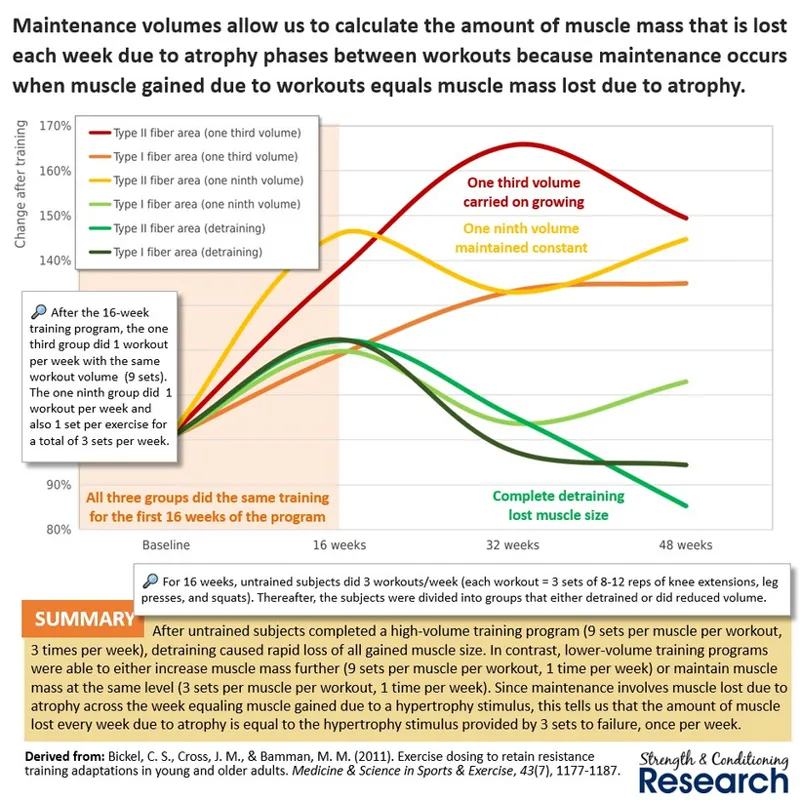
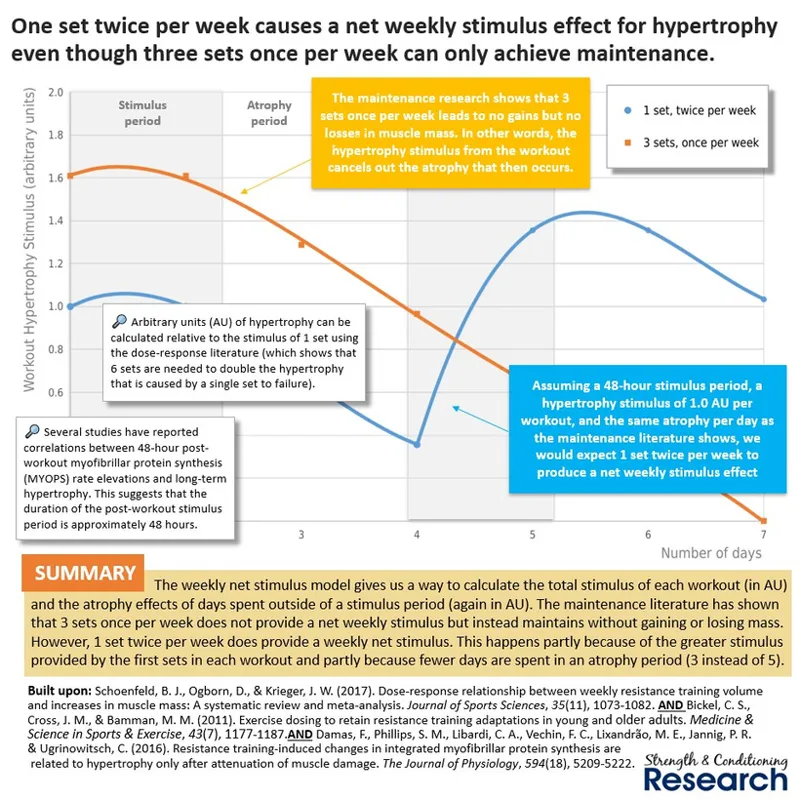
Maintenance studies are the most valuable source of data regarding the occurrence of atrophy during a training week. Such studies have shown that a single weekly workout comprising three sets produces hypertrophy that is then lost by the following week, such that there is no long-term gain in muscle size.
.
Indeed, just to be completely clear: the most obvious way to interpret such maintenance studies is to see that there is a period of time in which hypertrophy happens (the stimulus period) and then a period of time in which atrophy happens (the atrophy period). When maintenance occurs, then the muscle mass gained equals the muscle mass lost over the training week.
.
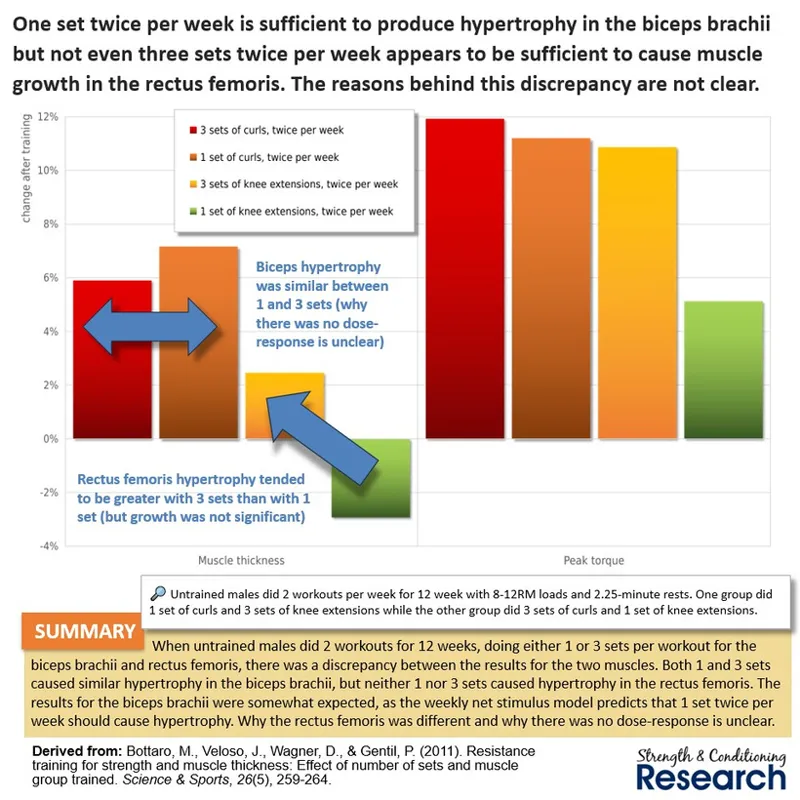
The only other possibility that exists in theory is that a workout comprising three sets to failure is somehow unable to stimulate muscle growth but is enough to tell the muscle to stay the same size. Nevertheless, this is obviously incorrect since only two workouts per week each comprising only one set can stimulate hypertrophy.
.
Expressing this effect in the same diagrammatic format as the maintenance effect, we can see how this bi-weekly, single-set workout outperforms doing a single weekly workout of three sets.
.
#4. How soon after a workout does atrophy start to happen?
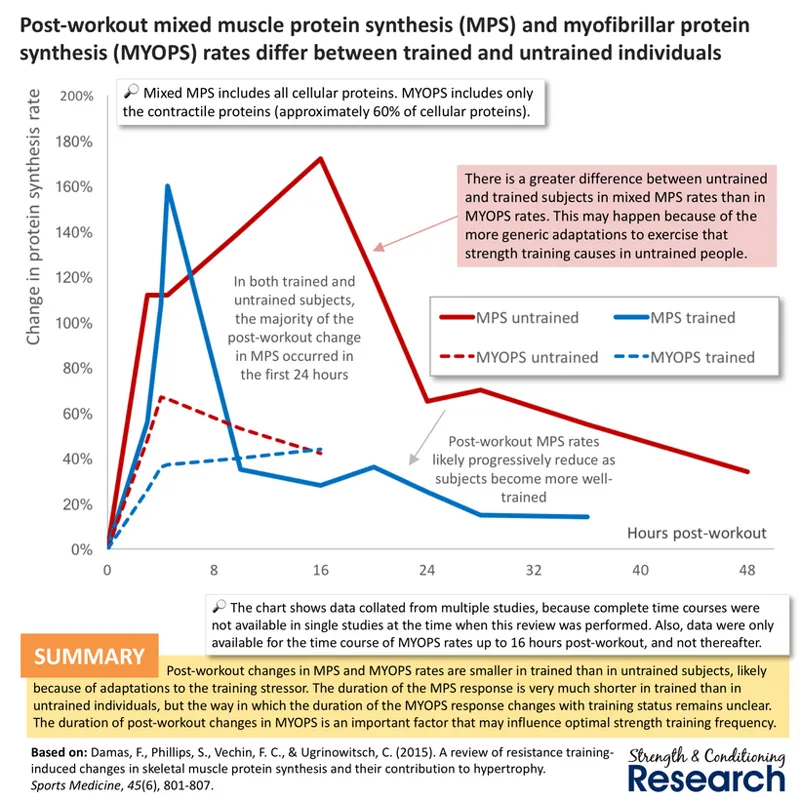
Exactly how long the post-workout stimulus period lasts is uncertain. Researchers have looked at both mixed muscle protein synthesis rate elevations and also myofibrillar protein synthesis rate elevations as a guide to measuring the duration of the stimulus period and therefore for finding the start of the subsequent atrophy period. Nevertheless, there is still relatively little data that can show us how these rates increase throughout the entire post-workout stimulus period.
.
Elevations in myofibrillar protein synthesis rates do not necessarily imply that we are stimulating hypertrophy. You can just have elevations in myofibrillar protein synthesis for the purposes of repairing muscle damage, as occurs after aerobic exercise workouts. Such increases in myofibrillar protein synthesis do not imply that we are in a stimulus period. We could still be experiencing muscle atrophy while these rates are elevated in the post-workout period. Hence, it is useful to note that multiple studies have now correlated the elevations in myofibrillar protein synthesis rates over a 48-hour period post-workout with long-term hypertrophy. This implies that the majority of the stimulus has occurred in that duration of time. Therefore, we can reasonably assume that atrophy occurs afterwards.
.
Conclusions
The rate at which muscle mass is lost is easy to establish from three sources: [1] immobilization studies, [2] detraining studies, and [3] maintenance studies. Immobilization studies have reported that significant muscle loss occurs within 48 hours (this can be delayed by a few days by doing a workout just before immobilizing the limb). Since immobilization studies involve all of the muscle fibers in the muscle losing access to mechanical loading, this causes more rapid losses in whole muscle size than detraining, which still applies a regular stimulus to approximately half of the muscle fibers in activities of daily life. Thus, we should expect detraining to take a week or so to produce the same muscle loss. Indeed, recent detraining studies have reported significant losses in muscle thickness and muscle fascicle length within one week. Older studies tended to report a longer period of time being necessary and probably lacked statistical power. Maintenance studies confirm that muscle loss definitively occurs within a single week without a strength training workout because they show that muscle mass is maintained (neither increasing nor decreasing) with a single workout of 3-4 sets per week. Since training programs of multiple workouts involving 3-4 sets do cause hypertrophy, this indicates that muscle mass increases earlier in the week and is then lost later in the week, leaving us with no changes by the end of the training program. Together, these three sources of information show that muscle mass is lost very quickly and this has a large impact on the way in which training frequency should be analyzed.
Comments (1)
The detraining vs immobilization comparison is interesting. Does the hypertrophy stimulus at the fiber level work in a non-summative or summative fashion? In other words, could 10 sets of 5 reps @ 8 RIR be the equivalent of a couple of stimulating reps?