
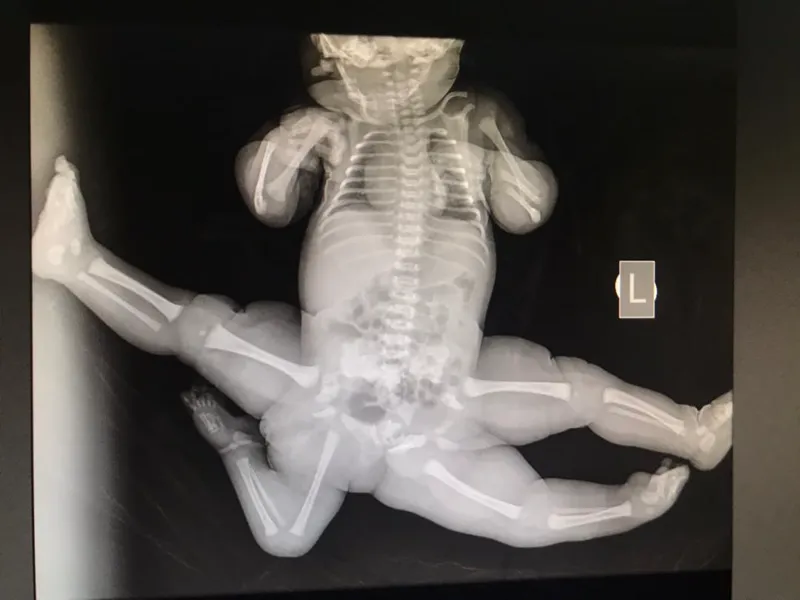


Polymelia - More Limbs Please
Who hasn't wished for an extra helping hand? A third arm could definitely come in handing as a phone holder these days. But how can a human get an extra appendage (or two)? Today we are looking at an example of what happens when development goes wonky. From genetic mishaps to twins that get a little too close to each other, this is gonna be a trip.
Polymelia is a rare condition where a person is born with extra limbs. Usually additional arms or legs, but occasionally something like a head or duplicated thorax. These extra limbs can show up in unusual places, like protruding out of the back, chest, or even attached to another limb.
These limbs usually aren’t fully formed or usable. They may just be soft tissue, or they can have bones, joints, and fingers or toes. Sometimes, the extra limb moves involuntarily if it shares nerves or muscles with the main body. Other times the person may have limited control of it. Unfortunately they don't typically function fully.
Depending on where the limb is attached, it can get in the way of normal movement, cause discomfort, or even interfere with how internal organs develop. Which is not ideal.
What Causes It
There are a few ways polymelia can happen:
One major cause is incomplete twinning. This happens when a developing twin embryo doesn’t fully form and ends up partially absorbed into its sibling. Instead of a full second body, one twin leaves behind an extra limb or two!
these extra limbs can also be caused by genetic mutations or disruptions during early fetal development. Mutations in the HOX genes; the genes that help map out where body parts go, can throw off the body's blueprint and result in extra limbs.
Environmental factors, like exposure to certain drugs or toxins during pregnancy, are also being studied as potential triggers, though they’re less commonly confirmed.
How It Impacts People:
Living with polymelia really depends on how severe the condition is and where the extra limb is located.
In mild cases, surgery can often remove the extra limb with minimal long-term effects, especially if it’s mostly cosmetic or not deeply connected to the body.
In more complex cases, especially when nerves or organs are involved, it might require multiple surgeries or careful medical management over time.
In more complex cases, especially when neves or organs are involved, it might require multiple surgeries or lifetime medical management.
Beyond the physical side, there can also be social and psychological challenges. Children with polymelia may face teasing, curiosity, or isolation, and their families may have to advocate for accommodations in school or public spaces.
In the past, many pursued careers in the circus or freakshows. Frank Lentini being a prominent and successful example of this lifestyle.
Many people with polymelia go on to live full and active lives, especially with support from medical professionals and adaptive care.
Just want to take a minute to thank you all for being part of the classroom. If you have a suggestion for video or something you would like to see explored in a post like this, please drop a comment.
Continue being awesome and as always, thank you for learning with me.
Comments (1)
Is this where AI draws its people references from?