




The Year in Horror 2025: Have You Checked The Children?
At the end of 2024, I came to the realization that because I do not like writing "Best of" lists of any kind, any Best of the Year list I might write wasn't going to be worth a readers time, especially when there are so many people who write them well. Instead, I decided to lean into one of the things I do enjoy and excel at where writing about horror and film are concerned, and try to see if there were the recurring themes in the films released in 2024. I identify deeply with what Ryan Coogler had to say about "picking the best thing."
Part of the motivation to look for trends in a given year comes from the fact that horror is a reliable predictor of what the anxieties and fears the society creating horror on screen is struggling with. Whether it's the Atomic Age horrors of the fifties or the transgressive, norm shattering films of the seventies, the degree class plays a part in so many films of the eighties... horror is where we go to try to pull our fears out of the closet or out from under the bed, and have get a good look at them. It's a central part of how we collectively understand the dimensions and scale of the things we fear, how we take their measure and try to tease out how to deal with them. We can see this in the combination of the films being made, and the films audiences are responding to most enthusiastically during those periods. The filmmaking process, and the time it takes, are a built in buffer against false positives in the shorter term, in a way. If an artist is attempting to express something related to a certain fear, and it's too timely, it may no longer have any pull on the public by the time it makes it to screens. It can take as little as one or as long as ten years for a film to go from script to screen, so if whatever fears a film is expressing grabs the public imagination, there's a good chance it's already been percolating for a little while, if not among the more foundational fears of the society creating and embracing it.
It is fair to ask whether the audience for horror is representative of the population as a whole. We now have a body of research into why people engage with horror and various kinds of entertainment and recreation associated with experiences we otherwise consider negative. As I wrote earlier this year, that research points to an audience looking for a different relationship with fear than the one modeled in the rest of the population, using art, storytelling and recreation as part of that exploration. It doesn't point to an audience that is somehow immune to or separate from the fears the rest of the population are concerned with. It's an audience trying to understand how to deal with those fears more effectively and efficiently. You can find the piece I wrote about this behind this link, if you're so inclined.
Additionally, horror's audience is the movie going audience that most closely resembles the demographic make up of the country, and the genre has demonstrated the ability to create cultural touchstones that fall more evenly across both major studio films and low budget independent films. If there is a bias in what has shaped horror, and the films that have risen to be part of the more mainstream cultural lexicon, in terms of major studio films and independent films, it may even lean slightly toward independents. Of all the audiences existing in today's fractured landscape for film and artistic creations, horror's audience seems to care least about who makes a film or whether it meets the more stringent standards of mass audiences where things like production value (which are often reflections of budgets) are concerned.
Given all of this, I thought it would be interesting to start trying to see if there were trends in each passing year, instead of looking at periods of a decade or longer. As it turns out, there are. If you're interested, you can check out the result of what I saw in last year's films here: 2024: A Banner Year for the Horror of Feminine Rage.
Unfortunately for me, the most recognizable pattern and trend of the year doesn't include the most talked about and most well received horror film of the year. If you read the piece I wrote about about Sinners, you'll know I'm among the chorus who thinks it's a staggering work of skill and thematic ambition. In another seventy-five years, Sinners will still be on the lists of the best horror films of the 21st century, if not the best films more generally. It would have been dishonest to write a piece about the horror on screen in 2025 and not mention it. I am excited about Ryan Coogler's future work, as well as the influence he is bound to have on the industry. We'd all be also be better served if you read what many of the talented Black writers have to say about Sinners.
You may want to start with these, though there are many more:
Seve Chambers, writing in The Tribe.
If like me, you are interested in going deep, deep, on Sinners, the African American Intellectual History Society released a Sinners Movie Syllabus. What I've made it through of this so far is fascinating.
So, now that we've ushered the elephant out of the room and given it a comfy place to rest while we talk about the rest of the year's horror films, what fears have filmmakers have been working on expressing over the last few years, that audiences responded to this year?
You may have some idea based on the title at the top. 2025 has been a year of terror related to children and childhood. Taking it all in, the picture is one of a people who are terrified and unsure what to do about what is happening with, what we are doing to, what future we are leaving for them, and what they might do to us as a result.
Like the looming theme I covered last year, feminine rage, it's not so shocking to see fears related to children, including those of parenting, so forefront in 2025.
I've come to experience disgust at the use of the term culture wars because whether by design or by happenstance it describes the existence of a conflict, and nothing else. In all things related to art, news, journalism, politics and current events, "culture wars" has become a cowards cover, treating objectivity as a passive act of feigned or conditioned ignorance, instead of an active, energetic effort to accurately describe conditions. There is a conflict, and it is a war being waged by people ideologically faithful to Christian white nationalism (whether they consciously realize it or not), against everyone who is not among its faithful. A multi-cultural, racially diverse, pluralistic majority is under assault from an ethno-nationalist minority. It's really that simple.
The contours of that conflict are complicated, certainly. What they all have in common is that they are about the future, even when it comes to how we're talking and teaching about the past, today. Any time there is some sense of unease, discomfort or conflict about the future, one of the ways it presents itself is in stories about children and childhood. There is good reason to have anxiety and fear about the future right now, and it is coming out in the form of narratives about children in this years crop of horror films. This fear about the future is connected to a number of themes, but the fear about the future is the soil, the resulting fears about children and childhood are the stalks, the other themes are the leaves and the films themselves are the fruit, and boy has there been a bountiful garden of fears this year.
Consider this list of films: Weapons, 28 Years Later, Bring Her Back, The Black Phone 2, Frankenstein, Abraham’s Boys, The Ugly Stepsister, Longlegs, The Monkey, I Saw The TV Glow, Drop, Final Destination: Bloodlines, Clown in a Cornfield, The Hand That Rocks The Cradle, It: Welcome to Derry, Alien: Earth and The Long Walk.
All of them, in some way, relate to children and childhood. It's not surprising they are almost all interested in matters of parenthood and legacy. If there's one thing in this year's crop of films that sticks out, it is the question of legacy, because legacy is also always about the future. "What world are we leaving our children?" or "What world will the children we're raising (and how we're raising them) create?" These are different versions of the same question. If you've clocked that I'm including Alien: Earth and It: Welcome to Derry, both television series, not films, you're right. I'm including them because two of the year's most talked about series, derived from extremely popular, pre-existing intellectual property, highlight that our terrors about children and the future in 2025 weren't constrained to the big screen.
Let's start with Weapons because there was a good deal of conversation about what the film was saying when it was released in theaters, it may be the film that puts this year's theme most forward and it is the only film this year that approached the impact of Sinners. Like Sinners, it over performed at the box office, according to all predictions. There was a large portion of this discussion suggesting Weapons is somehow preoccupied with or related to school shootings, and if you only take the first half into account, that would make sense. Taking the whole of the film though, there's something different happening. If we take all the elements of Weapons, and what they symbolize, we get a film which is talking about the failure of our social structure to protect children from exploitation.
All of the institutions in the town of Maybrook PA fail not only to protect these disappeared children, but they're utterly incapable of conceiving of the nature of the threat. Both the police and the representative of school administration become weapons. The other adults, a teacher and a parent, are presented as being pretty broken and self obsessed, and in the end, they are still the only aid the children have, but it's not these adults who ultimately put an end to this nightmare exploitation. It's the one child who best knows the system of power being used for that exploitation. His savior is really his proximity to that power. He in turn, weaponizes the exploited against the exploiter.
That threat, the one exploiting these children, feeding off of them, is both a societal elder and a person who masks their predatory nature in a clownish facade of absurdity. There's a quality to Amy Madigan's performance, and her interactions with everyone else in the film, other than Alex who she shows her true face, suggesting she's putting on this clown costume in part because it helps her hide, but also as a kind of trolling. She puts on the clown costume, because that's how she sees the rest of the people in the world around her. She uses discomfort with conflict, because she knows discomfort reverts to the order of "politeness." That discomfort becomes her weapon against the barrier to her efforts to rejuvenate herself through sucking the life out of the children from Justine's class. Benedict Wong's Marcus is undone, becoming her weapon, because he and his husband are just too polite to tell this weird old woman to take it on the heels.
Gladys doesn't fake being ill when she arrives at Alex's house, but she does manipulate his parent's sense of propriety. Alex's mother doesn't know this woman, but she is letting her into their home, out of a sense of duty to family. Gladys uses that basic decency as her way of gaining a foothold, first in the house, then on the children of the town through Alex.
In the end, the children of Justine's class, the only real innocents in Weapons, go from being exploited by Gladys to being used as weapons by Alex, to empty husks, and this speaks to the fears we're experiencing right now. There's an almost universal fear of social media where children are concerned, even more heightened as AI is being pushed on users, and rightly so. The companies who own these platforms have repeatedly demonstrated they're ill equipped to handle the responsibilities that have grown alongside its inclusion in the fabric of society. This includes the effect they have on children. It is, directly, a fear that people older than they are will manipulate and inculcate children into beliefs and ways of being that will be some combination of exploiting them and turning them into weapons. This is what radicalization is, and we're seeing evidence of it on scales previously unthinkable. It's a fear our children will be husks of the people we hoped they will be, emptied out by the power of social media.
It's not just political extremism we fear either. Depending on your particular cultural background, it can be any number of different things you have these same fears about where children are concerned. It can be a fear of children being indoctrinated into religion. It can be particular religions or religious movements we find offensive, troubling or at odds with our own religious beliefs. It can be a fear your children will lose their religion. There's certainly a portion of the population who is afraid their children are going to be indoctrinated into the "cult of Woke." I'd say they're afraid of children being exposed to cultural forces and institutions that treat curiosity as a positive trait, but it doesn't change that this is how they perceive it.
If we take yet another step back, it's also a story about an elder maintaining an unnatural hold on power, life and comfort through exploitation of the young, at the cost of the lives of those young people. This is not a new story, at all. Centuries of human history have made this a valid fear. In the US alone, it's been a long time since any of the old men who decided it was time for a war were riding off next to the young people dying in those wars. This relates to gun violence more broadly, now the thing most likely to kill young people. It is the elder generations, who can't conceive of the change to their world that would be necessary to address gun violence in any substantive ways, and have treated the fact that guns are the number one killer of children as an acceptable cost to maintain the life and world they feel comfortable with.
There's been a common criticism of Weapons that is both true and valid, and at the same time, misses a reality of our changing world. Gladys, as a character, fits firmly and neatly into the archetype of the hag. The witch and the hag have been examples of men's fears of women having access to power, and their ability to wield it with responsibility, for centuries. The old woman whose power with magic is fueled by predation on children is a feature of some of our oldest legends, myths and fairy tales. It's at least half of the foundation of Disney's power as a cultural force, if not more. For far too long, the ways women were portrayed in fiction of all kinds, were extremely limited. There were very few roles societal norms would allow women to be portrayed in, very few traits and characteristics female characters were allowed to possess. It is, without doubt, one of the ways patriarchy has been reinforced across those centuries, in limiting the imaginative capacity to see women in roles other than those, with traits other than those narrowly prescribed. The crone, the mother and the maiden, as they say.
I wouldn't make the argument this has changed significantly enough, because I don't believe that. Women don't have access to the level of participation in the industries making up the narrative arts for them to have an equal share of the power in shaping our understanding and our imaginative capacity of who and what women can be. Patriarchy hasn't been eradicated, though it should be. In terms of storytelling, as the saying goes, I support women's rights, and women's wrongs. I don't think there is anything mystical about women or womanhood or femininity and all that. The myths about some inherent feminine innocence or purity are ridiculous, and patriarchal tools meant to shape our imaginations about what women can be. We need more women given the ability to reach mass audiences.
The assumption that women are less capable of being responsible with power than men is also ridiculous. It's true there are certainly ways women are more likely to be more responsible, shaping our collective attitudes about gender and power where sex is concerned, as one major example. We have proof that businesses, organizations, any way that humans organize themselves, don't demonstrate the tolerance for sexual harassment, assault and the like when women have roles of significant power in them. This is an overall good, and one we as a society have denied women for too long. We owe it to each other to rectify this.
At the same time, there is something of those myths of inherent innocence and purity at work in assuming women are or would be less susceptible to being corrupted by power than men are and always have been. The susceptibility to being corrupted, especially by power, is human through and through. We have some prominent examples of women engaging in and exemplifying a jaw dropping degree of corruption, right now. Not to say Kristi Noem or Karoline Leavitt are any more corrupt than the men around them, but they are no less corrupt either. There's no doubt the men in power right now require their willingness to participate in patriarchal aims and norms for them to be in trusted with their positions, but it is power that creates the motivation to participate too.
And this is part of why we need more women telling stories. The embrace of the witch as a symbol of feminist power, has lead to many women exploring the lure of power, the processes by which women may be corrupted with more specificity, through that archetype. This is happening more in literature than it is on screen, unfortunately. This is, inevitably, part of the exploration of power in fantasy. Arguments within feminist discussions about what "empowerment" looks like in fiction, often come down to this. There is a sense of empowerment and recognition in being able to engage with storytelling recognizing the ways we struggle against corruption that can speak to us individually. I know I experience it in storytelling where men are the ones corrupted, and I can't believe women would be so different as to not experience it when it's presented in ways that speak specifically to their experiences as women. There are also certain strains of feminist thinking that believe these portrayals are detrimental to the aims of feminism. It has done men little to no good to create distorting illusions about the corruption patriarchy offers and secures our loyalty through, and there is nothing it does so successfully as convince us this corruption is necessary and protective. Confrontation with this, is the crux of the question of privilege, and I don't think the avoidance of this confrontation will, or does, turn out any better for women. What too many of our conversations around privilege don't address, is that corruption always has a cost, even as it appears to give the benefits of access to power we call privilege. There isn't enough money or power in the world for me to switch places with Kristi Noem or Karoline Leavitt or Stephen Miller or any of that gang of ghouls.
Equity, in many ways, means a tolerance for corruption that has no preference, gives no higher or lower level of acceptance based on identity or any of the things which form it. Who can be a generic asshole, who can't, and how we define what makes someone an asshole depending on how their identity is situated in proximity to power, is one of the most potent forms of privilege, when you boil it down. More than anything, what we're facing as a nation, is that power now requires a bottomless tolerance for corruption, and it now decides who can and can't be held accountable for it, and why. If law was ever the deciding factor in what tolerance for corruption existed, it is no longer, and its certainly not the majority deciding what that tolerance should be. It is power and it's conjoined twin, wealth, this corrupting thing itself, deciding what the tolerance will be. In this, there is good reason to fear for the future and for our children. As we're seeing, the corruption that presents that threat may have men at its head, but the ability of power to corrupt does not stop at the borders of gender or age. We need more women telling their stories, in part so they can detail how corruption works specifically on the experience of being a woman, but we all still fear corrupted power, whether it comes from a man or woman.
That brings us to 28 Years Later. Danny Boyle and Alex Garland come back together as director and writer to reinvigorate the series they started their collaboration with, 2002's 28 Days Later. Twenty three years on from that film, which became a surprising success in the aftermath of 9/11, one of the most vital horror films of the 21st century, and it's own cinematic phenomenon, the question Boyle and Garland are most centrally wrestling with now is, "What does it mean for our children to be raised in a society overcome by nostalgia of the most narcissistic kind?"
To their credit, Boyle and Garland realize self obsessed, narcissistic nostalgia is often going to mean a collapse of credibility with the generation who are raised in it. If they develop any capacity for critical thinking skills because they will recognize the difference between the fiction of that nostalgia and reality. If they have the capacity for critical thinking, that collapse of credibility is often going to come with a rebellious curiosity of the kind we often associate with youth, whether we recognize it as curiosity or we flatten it out to call it empty rebellion.
Spike, the fourteen year old protagonist, experiences a number of distressing confrontations with what this narcissistic nostalgia requires, in the short span of twenty-four hours. He realizes the tales of heroism and glory told in the tiny village he calls home are as likely hyperbolic embellishment as anything else, minutes before learning his father is an adulterer. On top of these, is the revelation there is a medical doctor within traveling distance, but because of how deeply insular it is his home of Holy Island is, no one has even considered taking his increasingly ill mother to this doctor and learn if anything can be done about the condition erasing her grasp on time and reality more each day.
This village, on Holy Island, just off the coast of mainland England, is protected by the fact that it only has access to or can be accessed from the mainland, during low tide. At all other times, it's not just surrounded by water, but the currents between it and the mainland are too dangerous to brave. This has protected it from constant onslaught by the infected who've ravaged the mainland, but it's also lead to a completely backward looking culture. To some degree, this makes sense. It would be sensible to look to pre-industrial societies for solutions, considering the industrialized society of England in 2002 was wiped out by the spread of the Rage virus. In other ways though, the inability to relinquish the requirement for glory and a sense of victorious domination are a hindrance to, and a theft from, the youngest generation.
Their meeting hall still centers a picture of Queen Elizabeth, the queen of a monarchy and country that no longer exist. Without any contact with the outside world, they would also have no ability to know she is dead. A coming of age ritual for the boys of the island is to traverse the walkway to the mainland to engage in hunting trips. Boyle uses archival footage to tie these directly to English storytelling traditions of their grand military past, and to their colonial exploits. Spike's father, Jamie, tells him on their expedition, efforts at scavenging for necessary supplies are useless, as any area they can reach on foot before the tide would be too high to make it back, has long been picked clean. It relegates the practice to being nothing but blood sport. Spike learns that night, after a harrowing sequence showing just how dangerous it can be, the point of all this is the production of tales of heroism.
It becomes clear the nostalgia created for an England before the outbreak, with the artificially purified greatness it requires. This in turn demands the risking of life and limb to keep it alive so the people of Holy Island can hold on to some sense of identity as both beneficiaries and guardians of that legacy. Jamie deeply embellishes the story of what's happened on their trek to the mainland, inflating Spike's achievements, for the purpose of both his own ego, and his communities need for stories which uphold the sense of glory they hold for a nation that is no longer. Minutes later, Spike witnesses his father in the midst of a drunken tryst with another women, while Spike's mother is bedridden with an illness of unknown origin that causes her to confuse Spike for her husband and her husband for her father, as if she is in the grip of a memory she can't escape. The following morning, Spike learns the fire seen on the horizon during his trip to the mainland was likely that of a man who was a medical doctor in the time prior to the outbreak, and because of one long ago observation from a distance, the inhabitants of Holy Island have chosen to label him a madman.
Garland is smart to cluster these revelations so close together, as they then create a similar sense of betrayal and loss of confidence that is often part of the coming of age process, realizing your parents are imperfect, sometimes deeply flawed people, and that the narratives you've been given from your culture can result in a deep suspicion. This is usually a much slower process, but pulling them together in so short a time period, and including the sense of advancing illness in Spike's mother, replicates the sense of urgency many of us have felt in our exploration and curiosity as adolescents and young people. Through the narrative, the film presents an alternative to Holy Island's backward looking obsession with the past. It is a clear eyed accepting of the present, as it exists, as one can best understand it.
What Spike finds in Dr. Kelson (maybe Ralph Fiennes greatest performance yet) is a man who hasn't covered over the life and world he knew before with illusions. He's using what he learned from the world before to understand the world as it exists in the present. The film sets up the possibility of a medical doctor driven insane by the loss of the technological world which gave him his trade, but what we get instead is Kelson using his understanding of the natural world, nature itself, human history and the scientific method to procure a sense of peace and contentment. A central part of that peace and contentment is the curiosity to understand how the world has changed, without illusions and delusions for comfort. To Kelson, this is all just new iterations of what has always been, not a corruption of some glorious past from which his deserved legacy was stolen. He's tracked the evolution of the Rage Virus, which means tracking the evolution of what infection means, and he sees the infected as human beings. Sick maybe, but human beings all the same. Where the people of Holy Island treat them as monsters or big game they kill in their quest for glory, Kelson treats them with some sense of empathy. The people of Holy Island kill them for sport. Kelson doesn't kill them, instead using his knowledge of science to temporarily incapacitate them, only if they are a threat. It's all of this which also allows Spike's mother a dignified death of her choosing, in possession of all the facts of her illness. She prefers death to the prison of the past that her illness has relegated her to.
Kelson never lies to Spike either. He meets and treats him as an individual capable of forming his own ideas and opinions when given all the available information. He never tries to shield Spike from that harshness of the reality of illness and death, but instead treats them as undeniable facts of life, and in doing so, presents Spike with an alternative perspective on how to live, and why to live. Between "Know you must die" and "Know you must love" is the acceptance of being human in the constantly depleting amount of time we have to do one, because the other is closer with each day.
It's a stark contrast to what is required to satisfy the narratives driving Spike's father to the behaviors Spike feels are betrayals. 28 Years Later is about the way a delusional nostalgia drives so much of today's culture, both in England and the US, isn't just untenable, but that is also guaranteed to make misery, drive us to cruelty and drive our children away from us.
Because both of these perspectives are portrayed by men older than Spike, it also presents two very different pictures of the transmission of masculinity, and what these two different world views can produce. Kelson is presented as a man who has contentment, despite an isolation that would drive most people mad. Jamie is presented as wrung thin, with an almost frantic need to meet the requirements of the narratives Holy Island's little society has created. Kelson's way of communicating with and talking to Spike is about preparing him for a life, as it is, with the option of engaging the wider world. Jamie is trying to prepare him for the world of Holy Island, at odds with the wider world.
It's hard to miss how these themes in 28 Years Later are relevant to the world the film was released into. Both England and the US are wrapped in a struggle with national identity, whose ultimate battleground is the psyche of the individuals within them. Both are also struggling with elements who've created a fictional mythology as a past to hold up, coming with both a sense of entitlement to its heirlooms and as examples to try to live up to and embody. Both currently seem incapable of assessing and acknowledging reality, as it actually exists, in favor of narratives that create heroes and villains as self soothing protections. Within this, there are questions about what knowledge and understanding we lose in our desperation to look back on a past rendered glorious for our comfort, when using it to understand the world as it exists could better help us find contentment and peace, by better preparing us to contribute to and meet it. Both England and the US are, as part of all this, wrestling with questions of gender and especially, what the future is for masculinity in a world where gender roles are undergoing shifts the previous generations and social systems rendered unthinkable. In all of this, there are questions and conflicts about what to teach children, how to teach children and what is acceptable to teach children they can be. Is the goal to teach them how to be human beings capable of contentment by engaging with the world with openness, curiosity and the lessons the past has to teach us or is the goal to teach them to be members of a society with strict norms, prescribed roles, with the past as a measuring stick that decides reward or punishment within that society and fear of the world beyond their direct proximity? These are, at root, questions about the future, and what the future will or can be, and how we answer those questions about the future define how we answer the questions about what we want or think is best for children.
The next film is also the work of a much younger team, who've only come to the attention of the movie going public in the last few years.
One the most disturbing of this year's horror films Bring Her Back, was brought to us by Australian brothers, Danny and Michael Philippou. Their first feature film, Talk To Me was one of the surprise successes at the box office in 2022. Looking back now, it was one of the early indicators horror films were going to be a reliable draw to theaters in a landscape reshaped by COVID-19 lockdowns. Bring Her Back proved that success wasn't a fluke, financially or critically. The Philippou's are adept at creating exercises in dread and emotional discomfort as vehicles for confrontation. The beauty of both of their films though, is that even as they are so suffused with dread, disturbing imagery and nightmare scenarios, there's something deeply humanistic in their approach to their characters. They understand and are drawing from, how deeply the roots of horror are set in the tradition of the tragedy, and its recognition of how often the monstrousness we bring into the world is the result of the kind of frailty that's an inescapable part of being human.
The power of Bring Her Back is in the way it uses this familiarity, this ability to identify with the frailty of its characters. It's not just a collection of disturbing images, a gallery of the gruesome, but the firm and confident grasp on how far we will go to hide painful truths from our loved ones, ourselves, and like 28 Years Later, refuse to let go of a past if we think it presents us the only possibility for a livable present. Bring Her Back is clear in saying this leads to madness, and like 28 Years Later, both standing in contrast to Weapons, it recognizes this as tragic. In a way, the difference between Amy Madigan's Gladys in Weapons and Sally Hawkins Laura in Bring Her Back, is one decision, made impulsively in one moment.
Laura can't take the final step in accepting the corruption made available by the power she's sought out. Gladys at some point long before Weapons begins, did take that step. Laura accepts the tragic reality of death, where Gladys refuses to. In this, Laura accepts her humanity and Gladys doesn't accepter hers, leading her to bring the monstrous into the world of Weapons and its characters. We understand the allure of that corruption to Laura, because it's a significant part of what the film is about, where Weapons glosses over this in relation to Gladys. It's not exactly a redemption though either. Laura has already gone too far. It's not fate or tragedy that make the present unlivable by the film's ending. It's the corruption she's already succumb to in her grief.
Bring Her Back, like 28 Years Later, deals with the betrayal children feel at the revelation they've been taught a version of the past more interested in comfort than truth. Andy obscures the truth of the history of his relationship to their father, the truth of his past from his sister Piper, through the same combination of love and selfishness leading the people of Holy Island to mislead to Spike. Andy is trying to avoid a confrontation with a past that is painful to him, and would be to Piper too, and he's trying to protect both of them from it. These aren't malignant intentions, but it's still deception, a denial of her ability to decide for herself.
It leaves Piper that much more vulnerable to Laura's manipulations. Spike is fortunate in finding Dr. Kelson to be a person who believes the best thing he can do for Spike is give him all the information he can. Piper, turns to Laura, whose intentions have been malignant from the beginning and who has already been using the distance between reality and the illusory past Andy has been participating in creating, as the fertile ground for manipulating Piper. It's also interesting to note here, in Weapons, it's Alex, the only one in possession of the full truth, that ends Gladys monstrous reign and brings her deceptions and manipulations to an end. He does so by using the knowledge only he and Gladys have about just how she's exerting power over others to make them into weapons. Justine and Archer are part of allowing him the opportunity, and it's interesting to consider Gladys's ability to continuing exploiting the children of Maybrook is only ended, because one of the children who the adults have been sincere in their desire to protect, is included in the effort to free them. Both Weapons and Bring Her Back are concerned with what we allow children to know, and though they come at it from different angles, they are both in agreement that knowledge is empowerment for them.
In a world where there are constant headlines filled with billionaires whose fear of death is driving them to absurd lengths, without concern for the greater cost, Bring Her Back could seem laborious and unnecessary in going to these lengths to portray how deeply banal human frailty can twist human beings into machines whose purpose is the production of justification for their monstrousness. I also can't help but think of how much our obsession with the powerful and wealthy is based in narratives we've accepted and repeated about wealth and power as being achieved by both escaping or harnessing that frailty though, as if there is some way to either be above it or to master it with any kind of finality. This is part of why I find lists ranking films difficult and disagreeable as someone writing about film and storytelling. We need Weapons straightforward acknowledgement of Gladys monstrousness, but we also need Bring Her Back's clear eyed exploration of the human frailty that drives us to it. It's not, for me, a question of better, because they are complimentary. 28 Years Later, in its relationship to these, is revelatory in the way these human frailties create illusory, destructive narratives, even in the beauty of community.
One film this year uses it's positioning as Young Adult (YA) horror to call into stark focus the way adult's penchant for creating illusory, self soothing narratives threatens children. Based on the novel of the same name by Adam Ceasare, Clown In A Cornfield feels like a direct rebuke to the past twenty years of news articles and opinion pieces scapegoating Millenials for just about everything and anything imaginable, as a way to avoid exploring larger structural, systematic failures. The film takes place in the present, featuring a cast who would be more accurately described as Gen Z, but Ceasare, the progenitor of this tale and its characters, is firmly a Millenial at thirty-eight. Gen Z is just beginning to get the time honored experience of being blamed for all manner of different things, in contrast to how long they've had any power to effect or shape the culture and nation they exist in. Give it a few more years of Gen Z getting beat in their heads with that hammer, and I'm sure the appeal of Clown In A Cornfield will expand.
Clown shapes its story around adults inability to accept the reality of the present as a lever for their manipulation, resulting in the murders of teenagers in the town of Kettle Springs, Missouri. Using the slasher genre, and YA sensibility , it's smart in eschewing the sincerity and bruising emotional impact Bring Her Back, Weapons and 28 Years Later have, in favor of some good old fashioned choppy, slashy fun as a vehicle for thinly veiled satire. Because of this, along with director Eli Craig's adept hand at mixing comedy with horror, Clown In A Cornfield rises above the bargain bin, empty headed slashers that filled video store shelves, giving ample evidence to the laziest critics of both the slasher sub genre and horror more broadly.
The use of a corn syrup factory as part of the plot and the source of the ire the adults of Kettle Springs have for their teenaged neighbors is a good piece of meta commentary, as it could be switched in for any number of industries profiting from predatory practices. The Founders Day tradition of hunting down and slaughtering anyone who can be painted as behavioral outsiders to try and freeze Kettle Springs in time, feels barely fictional in 21st century America. The adults of the town would rather burn their future down than except it could be a time and place that doesn't exclusively cater to their sense of identity, needs and wants. Costuming themselves in the smiling iconography created to cover the harms of product associated with childhood and sweetness, in the form of Frendo the Clown would be too on the nose if it weren't for how over the top so much of the film is. All of this, through the manipulation and corruption of a scion of one of the wealthy, founding families.
Additionally, corn syrup was the main ingredient in most recipes for on screen blood for decades, so including this as a story element is a fun nod for those of us invested in the history of horror, and slashers most specifically.
Stepping back to look at Clown In A Cornfield thematically is like looking at a collection of some of the worst consequences of the last few generations inability to accept the present reality and act accordingly, instead choosing to either pass the responsibility onto the next generations or blame them for anything those older generations are uncomfortable with. Instead of focusing on one, part of the films charm is the shotgun style approach to as many of these things as it can hit. What they all have in common is the refusal to acknowledge the present's influence on the future, the inability to acknowledge the effect nostalgia has on how we see the past, and being angry at the generations who've never know a reality but the one they exist in. It's not a mistake the richest guy in town is both the ringleader and a liar, manipulating all of this. It feels like a warning from a Millenial to Gen Z. "They did this to us. They're going to do it to you. You can survive if you stick together. Don't become like them."
Using the slasher genre for all this is a smart choice. It allows it to be fun, with some comedic moments and lines, give the audience what they're looking for, while being emphatic about what the story has to say. I've never understood the criticism that blunt storytelling equals a poor quality of storytelling, though no small number of critics and audiences attempt to raise it to that standard. It was one of the most common criticisms of The Substance last year, but what that criticism couldn't dismiss was that blunt or not, The Substance was a unique, highly charged experience, as a film. Like the themes in The Substance, the themes of Clown In A Cornfield call for a blunt approach. The number of different ways we're collectively responding to or looking at things that have become acts of sacrificing children's lives for adults comfort, is horrifying and absurd. The number of these we seem to be responding to with little more than, "Things were better back in my day," as if anyone at any point in human history was able to magically transport through time as a solution to any problem, is a kind of selfishness which is going to inspire whole new sets familiar real life horrors in the years to come, I'm sure.
This seeming inability to deal directly with the way we're warping and killing our children gets married directly to last year's themes of feminine rage and particularly, The Substance use of body horror as an expression of how depressingly absurd it all is in Emilie Blichfeldt's The Ugly Stepsister. Taking the classic fairy tale formula from Disney's Cinderella, turning on it's head and telling it through the perspective of one of Cinderella's stepsisters, The Ugly Stepsister is an incisive, snarling indictment of what we do to our girl children in service of "traditional" values and gender roles. Like Clown In A Cornfield, it's deeply aware of just how absurd all of this is, but instead of expressing this through comedic dialogue (though there is some of that too), it confronts the audience with the horror of beauty standards through the manipulation of the protagonists body and mind.
Maybe the hardest and saddest thing about The Ugly Stepsister is Elvira's complete and total submission to its catalog of horrors. It's one thing to watch characters put through horrors committed against their bodies against their will. It's a completely different experience to watch the protagonist choose to go through them, to meet social standards and norms that are ultimately about reducing them as human beings. It has in common with The Substance that it evokes a combination of deep sadness and a boiling fury in how well it communicates Elvira, like Elizabeth in The Substance, has been conditioned to choose this. The difference here being, Elvira is a teenager trying to secure a future for herself and her family, not a middle aged woman lamenting the loss of a status she's been experiencing for decades. For Elvira, there's the combination of the sense of self worth she's been conditioned to look for in finding a man to marry her, and her family's financial security and future being on the line.
There's some excellent writing in the way The Ugly Stepsister communicates how Elvira has been conditioned to willfully submit to the horrors we see her experience. The primary force is her mother, and the other men and women her mother brings into her orbit. Her mother's direct intention is seeing Elvira further shaped to fit the standards of matrimony in the films patriarchal society. Using this common fairy tale rubric, and the time period it takes place, allows Blichfeldt to take on "traditional" gender roles and ideas about them head on, without having to do much in explaining why Elvira would be so susceptible, why her mother would be so ferocious in her requirement Elvira meet them and so on.
One of the more genius pieces Blichfeldt includes though, is the degree Elvira's fantasy life is shaped by the media she consumes. Given that the film takes place in some part of Europe's past when monarchy was still the shape societies took, Elvira is consistently reading a book of poems supposedly written by a prince whose family rules the region she lives in. The picture this book paints of this prince is wildly inaccurate, and when we're introduced to him, it takes all of about five seconds to call into question the authorship of those poems. That doesn't matter though, because this fantasy version has already taken such deep root in Elvira's imagination, along with the threat of her family being destitute and Elvira herself being without purpose, the discrepancy between the man she imagines and the man who is become more fodder for her to find fault in herself, not to question how truthful or accurate he's been represented in this book. It's a very sly way of including the idea that the media we consume shapes our understanding of ourselves, and when so much of it is created to sustain and support harmful ideas and attitudes, it becomes part of a larger process of manipulation.
It mirrors, in many ways, the degree to which media, since before that term even existed, in being dominated by mens perspectives, served to create the psychological scaffolding, social norms and beliefs that support not just misogyny as a worldview, but also condition women to accept brutality, and to commit it against themselves to fit into that worldview. Blichfeldt uses this fairy tale form as the opportunity to dispense with subtext. At points, Elvira is literally cutting pieces of herself off, to make herself smaller, so she can fit into the shape of what it is this prince seeks.
All of this horror is being perpetrated on someone we'd recognize as a child by today's standards. By the end of the film, Elvira is no older than sixteen. She's about to enter what we'd now consider womanhood, already broken, disfigured, having achieved none of what she's been chasing through the whole film. None of the women who've pushed her to this are there, and in another excellent piece of writing in the film, all of them are shown at some point to be violating the standards and norms they're trying to force Elvira into becoming the epitome of. In the end, it's her younger sister, the one who both escaped her mother's focus as a mule onto which she placed the family's future, and who has been attempting to tell Elvira how absurd all of it is, who is there for her. Elvira has been broken, and has broken herself, to the point she can't be self sufficient, and it falls on her sister, who even after the events we've seen in the film, that chooses to show her care.
The picture The Ugly Stepsister paints, is one of a world where these gendered norms create young men who are unthinking, uncaring, without much in the way of conscience and young women who willingly feed themselves into the mill that sustains power, to be ground to pulp and gristle.
Blichfeldt, like Coralie Fargeat, uses some bits of humor to highlight the absurdity of it all, but she uses body horror to make plain that this is a horror. The scientific wonder of Ozempic may not come with the visceral disgust of choosing to ingest and be host to a tapeworm, but the reason for its immediate popularity is no different. No one is sewing false eyelashes into their eyelids with a hooked needle and thread these days, but especially in the upper echelons of society, women submit themselves to painful, expensive surgical procedures to meet the standards of beauty. And none of this is possible without starting to communicate all of it to children as "normal," from just about every corner of the environment they are raised in. It's the only way to keep the absurdity and horror of this reality from being recognized.
Like The Substance and Clown In A Cornfield, The Ugly Stepsister chooses confrontation over subtlety, and it's a better film for it.
These films have all been interested in or consumed by questions about what we are doing to our children today. Weapons, 28 Years Later, Bring Her Back, Clown In A Cornfield and The Ugly Stepsister are all presenting the dangers of adults incapable of reckoning with the present as it exists and putting the needs of the young ahead of our need to find comfort wherever we do. Whether its a bottle, work or the promise of immortality (Justine, Archer, and Gladys in Weapons), an illusory past and the traditions growing from those illusions (28 Years Later and Clown In A Cornfield) or the devil's bargain of rewards tomorrow for cutting ourselves to pieces today (The Ugly Stepsister), all of these films depict adults, parents and caregivers failing to meet the needs of or to protect children toward whom they have responsibilities. The combination of the financial success of some of these films, as well as the degree they were all subjects of intense adoration or discussion among the audience for horror, suggest we are deeply, deeply worried about what we're doing to our children, today, through our inability to meet the difficulties the world presents us with.
From there, we have a list of films directly interested in questions of legacy, and how it effects children. Legacy, as a concept is interesting, because it can mean things from the past coming back to impact the present, but it can also mean questions about what the present is going to mean for the future and both of these can and often are expressed through the way children are centered in stories.
Longlegs, The Black Phone 2, Abraham's Boys, The Monkey, Final Destination: Bloodlines and The Hand The Rocks The Cradle remake are all dealing with issues of legacy. In all of them, something from parent's past is presenting a danger to their children in the present. Those who've seen Longlegs might be wondering why I would include it here, because it doesn't directly involve characters who are children, but it is intensely centered on who the protagonist, Maika Monroe's Agent Lee Harker, has become due to events in her past and the decisions her mother has made, how her mother's legacy is effecting and has shaped her. It doesn't center on a child, but it is still intensely interested in childhood, and the consequences of legacy on children.
The rest of these films deal with the consequences or threat of consequences being visited on children because of their parent's pasts. Interestingly, there is no uniformity in the moral perspective the films take on the past events. In the case of Abraham's Boys and The Black Phone 2, the actions of parents are all understood or presented as good, as positives. In The Monkey and Final Destination: Bloodlines, they are either random or fate, unconnected to whether there was any moral component to the actions of the parents. In Longlegs and The Hand That Rocks The Cradle, the actions which bring the threat of legacy into the lives of the children are negative, though in the case of The Hand That Rocks The Cradle, they are presented as being sympathetic in how understandable they are.
Taken in combination with the number of films so directly concerned with what we're doing to children today, the focus on legacy in this many films, the directness of the way legacy is effecting or passed on to children, a few of which were also financially successful and drove a lot of conversation, suggests a simmering loss in confidence about the world we're leaving to the next generations. That they are so varied in whether they find fault in the actions of the previous generations is interesting in its own right. It suggests an anxiety of ambiguity. The lack of a sense of moral clarity suggests feeling out of control. Whether we try to do right by the next generations or not (at least in our understanding), we're afraid of what our actions will bring on them as a result. It's a fear that we can't know, from our context, what to do in order to leave circumstances best suited to be favorable for those generations coming behind us or whether we're making the right decisions in how to prepare them for the future.
These are, in many ways, common concerns in storytelling as a whole, but I do think there is something to all of them coming together in this kind of concentration in the short period of time between production and release. There's also something to the fact that so many of them are showing evidence of syncopation between what the filmmakers are expressing and that audiences are responding to them so strongly in large numbers.
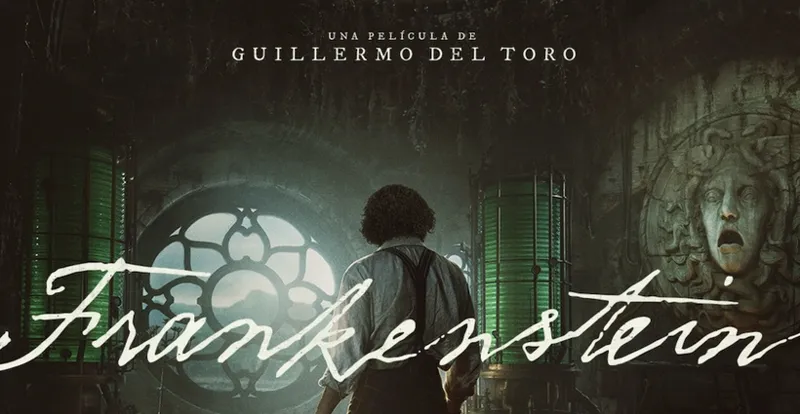
That brings us to two titles I couldn't help but feel need to be discussed in proximity, if not together, because they are so similarly inspired. Guillermo del Toro's Frankenstein and Alien: Earth.
Mary Shelley's Frankenstein is most well known because of it's themes about the dangers of human hubris (most specifically men's hubris) in our quest for achievement. Shelley arguably invents science fiction as a genre, within her gothic horror novel, by making this story of blind hubris' horrifying consequences the result of advances in medical science in her time, and the quest to conquer death. It's a classic, for good reason, and if you haven't read it, I can't recommend it highly enough.
It's also a novel about legacy. I get a little bit of a chuckle every time I see someone refer to today's horror landscape by saying, "I'm tired of all these stories about generational trauma. Can't we move on already? Haven't we done this enough?" The aspect of legacy Shelley's novel is concerned with is generational trauma. If we haven't decided to move on in the last two hundred and seven years, I doubt we're going to decide to any time soon. We can trace the roots of storytelling about the legacy of generational trauma back to the Greeks and Romans in "Western culture." Pretty much every culture that's ever existed has a vein of storytelling concerned with it. Asking for it stop being part of our storytelling is like wishing the sky would turn permanently purple.
In Shelley's novel, both Viktor Frankenstein and his creation are monsters. Part of the beauty of her novel is in the degree she doesn't see The Creature as a monster because of the method of his creation. He becomes a monster, through the legacy Viktor passes on to him, from his own father. Viktor becomes a monster because of the trauma his father subjects him to, and in turn, his creation, his son, becomes a monster because of the trauma Viktor inflicts on him.
Guillermo del Toro's (GDT) film retains most of this, but not all. del Toro being a man who loves his monsters, whose deep identification with them as a child inspired the career that's made him one of the great modern filmmakers, splits the difference between Shelley's original novel and James Whale's 1931 cultural behemoth. GDT brings Shelley's articulate, intelligent, sensitive Creature to the screen, while retaining the sense of innocence Whale's instills through making his Creature incapable of understanding his actions. Whale's Creature commits a murder out of sheer incapacity to understand that's what he's doing. Shelley's Creature commits a murder out of rage and rejection. del Toro's Creature kills in defense of himself and in retribution for horrific injustice to others.
GDT retains Viktor's ambition, his need to accomplish the impossible, his drive to be recognized as better than his peers and be installed in the record of history, as rooted in the rejection he experienced from his own father, and his obsession with conquering death in the experience of childhood loss. He isn't interested in portraying this as an inescapable cycle, doomed to be repeated though. His Frankenstein releases the Creature from this cycle, to a kind of emancipation, a liberation, through forgiveness. This does, to some degree, also redeem Viktor, as it's Viktor the Creature grants this forgiveness, but it's earned through the recognition The Creature has been denied since his inception. Viktor grants to his son the recognition he was denied by his father, The Creature grants Viktor the forgiveness Viktor denied his father, and the cycle is broken, leaving The Creature to pursue a life without the weight of that rejection and the hollow resentment that incubated Viktor's monstrousness. Different as it is from Shelley's original, it's deeply moving, and it's no shock del Toro would end his version of the story with the liberation and emancipation of his Creature, given he's repeatedly stated his how formative his connection with The Creature in both Shelley's novel and Whale's film have been.
del Toro's Frankenstein also strikes me as very much for our time. He's not an artist unaware of the world he exists and creates in. One of the reasons he's reached the level of acclaim he has, is how much resonance his films have today. If I'm honest, I've found so much of the discourse in our era around "what's wrong with men" somewhat comical, considering a nineteen year old woman diagnosed so much of it so well in the eighteen hundreds. Whether it's been the now recurring genre of non-fiction essays and articles about "The Male Loneliness Epidemic" or the expression of frustration from people who aren't men on social media, Shelley's novel lays out a good portion of explanation, and where that lacks there's certainly a gold mine of answers to be found in the arts generally.
GDT understands the diagnosis Shelley laid out, and with his film, is laying out part of a solution. That solution is in coming to an understanding of our shared humanity, part of which is an ill fitting brokenness, as fathers and sons, and if you extend that a bit further, between men more broadly. The rigid expectations that cause Viktor's father to reject and neglect him, which twist Viktor, making him a jealous, covetous creature, create and combine with his inability to see himself honestly, for which he is forgiven by his son, are the source of no small part of the difficulties men face in the modern world. I don't think it's a coincidence GDT's Viktor is appalled, jealous and frightened by the recognition Elizabeth gives his sensitive, kind Creature, when she's rejected Viktor because of the depth to which his ambitions, grown from those insecurities, have corrupted him.
One of the most interesting things about GDT's Frankenstein, is his approach to Elizabeth. In every other iteration of the story that I've seen, including Shelley's, Elizabeth is a shell of a character. She's a plot device, a symbol of something (depending on the iteration) to express something about Viktor. This is true to some degree in this version of the story, but to be fair, this is always what supporting characters are in storytelling. But GDT gives Elizabeth a degree of intellectual and emotional autonomy the other versions of the story haven't, and in many ways, she's almost a reflection of Shelley.
One of the things that makes Shelley's novel such a powerful piece of work is how well it demonstrates her power of as a writer, and an observer. Shelley was a woman, in a period where patriarchal norms had even more power to restrict what was accessible for women. Her novel is the work of an intelligent, educated woman, whose mother was among the earliest of what we'd now describe the feminist movement. She doesn't experience the dynamics of a father/son relationship, but she expertly describes a particular kind of dynamic, and its results, because she is raised in a world where she has to be aware of them. One of the reasons the novel is so compelling and it's lasted two hundred years as not just part of our cultural consciousness, but continued to be embedded in our cultural lexicon, is the depth of her understanding and how sharp her insight is. She writes Viktor with clarity. He is a monstrous character, but that monstrousness grows from a very real, deeply human experience.
GDT imbues this version of Elizabeth with Shelley's qualities. Elizabeth understands and is willing to abide the rules of the world she lives in, because it's the best choice available to her. She's marrying William because he's not a terrible option. He has some semblance of kindness, self awareness, and so on. He's a man, but not a monster. She clocks Viktor for who and what he is, within minutes of meeting him, before she's even discovered The Creature, Viktor's Adam, in the tower basement. She initially responds to Viktor with something like stern pity. She's not willing to entertain his peacocking and his hubris, but there's no meanness in it. She's speaking directly to what she sees in him, and there's some sense she hopes he might find his own way off the path he's set himself on. She does reach a breaking point with his hectoring, faux sensitivity though too. There isn't some kind of saintly, bottomless reservoir of compassion in her either, as is true of every human being.
What she sees in The Creature is someone else whose humanity has been discarded and discredited. Elizabeth has a vital, vibrant, incisive intelligence, but it's not one she's allowed to put to a use befitting it. The way she is portrayed, of all the characters populating GDT's Frankenstein, she has the broadest, deepest and most piercing understanding of the people and events around her, and this makes it hard to argue GDT is simply assigning traits of a fetishized femininity to her in also being the most kind, compassionate character in the film. The way she's written, the logical product of curiosity is her understanding of the world she exists in, and this is what produces her kindness toward The Creature, as well as her pity toward Viktor. All of the men in the film see understanding and knowledge as a means of control, access to power, recognition and wealth. Elizabeth, through a combination of her intelligence, curiosity and position as a woman locked out of access to power, sees that understanding is its own reward, and is clear eyed about what the World of Men, it's obsession with power, control and recognition turns them into.
Elizabeth's death, not by Adam's hand, as it is in the novel, the act which takes him from being a sympathetic character to fulfilling the monstrous legacy passed onto him from his creator, is the tragedy at the center of GDT's version of the story. The cost of this competition between men, rooted in the relationships between father and son, is the lives of the two most genuinely decent characters. Throughout the film, Elizabeth is the smartest person in every room we see her in, and all of those rooms, are shaped by the competitions of men. Even in the relationship between Viktor and William, William is not engaged in competing with his brother, but Viktor is. The fury which compels Viktor to pull the trigger kills Elizabeth, is invoked by his recognition she would choose Adam over him. He hasn't reacted to her rejections with fury or anger previously in the film. There's something like resignation, a begrudging acceptance she is speaking truth to him, even if he hopes he is going to eventually find some facade that will con her into believing he's no longer what she sees him to be. He can see the practicality of her decision to marry William, but to be rejected in favor of Adam, who Viktor can't recognize as equal, much less human, evokes murderous fury, and Elizabeth's choice to protect an Other she recognizes as outside the world which has made Viktor a monster, like she is, is her death. Viktor's lie, that Adam attacked Elizabeth, is what leads to the death of the only person in the film that has actually tried to love and accept him, the only male in the movie who isn't engaged in some kind of competition or judgment of him, his brother William. The most damning assessment of who Viktor is, comes in William's death, when he confesses he's always feared his brother, and with his dying breath says, "You are the monster."
The question at the center of del Toro's film, springs directly from parentage and childhood. Viktor's father believes he is preparing his son for the world he is going to enter as an adult, and to carry the legacy he believes he deserves to have. It's an anxiety about who and what we are teaching our children to be, in this case male children most specifically, but it is an anxiety about children. The root question is, "What is the cost of preparing our children for the competition that we have made the world of men, and our acceptance of this competition as the shape of the world?" The conclusion is, the cost is quite high, and not just to those children who have most embraced the competition itself. It never occurs to Viktor not to engage in this competition. The pain of his father's rejection, and the fury he responds to that pain with, only lead him to deciding to become more than his father was. It's not enough to be one of the world's most prominent surgeons. He has to conquer death. This obsession, rooted in that pain, which is caused by his father's obsession with this competition and his own legacy, means Viktor never considers whether what he's endeavoring to do could lead him to being more of a monster than his father was.
The ending, is the escape, the realization that nothing in this competition is as necessary to us as human beings as embracing each other, in light of the wounds and scars that competition has caused us and required we cause others. It's cost Viktor everything.
There's been a criticism, a reading of the film as being too easy on Viktor, in giving him what can be seen as some degree of redemption, but there's another way to see this too. It is about Adam's liberation. Viktor recognizes the only other living being that can give him what he's spent his life trying to find, acceptance and understanding, and in this, frees Adam from the doom he was consigned to in his father's inability to offer it. Viktor isn't free of the consequences of his life and decisions, they cost him his life. Adam is freed though, in both his forgiveness and his father's acceptance. It's tragic and pitiful to only come to this realization at the doorway to death, which is what Elizabeth saw Viktor to be within moments of meeting him. del Toro is speaking to the freedom in coming to understand what it means to stop believing we are the hero of our own story, that our story is inextricably intertwined with the stories of all of those we share our time with, especially those we love and we hope will or we think should love us. At the film's conclusion, Adam is the eternal man, able to live that eternity, without the burden of the competition of men and the understanding that his story is not only his own. Leave it to del Toro, with his long held and loudly declared love of monsters to give the one that has been most influential to him so beautiful a conclusion.
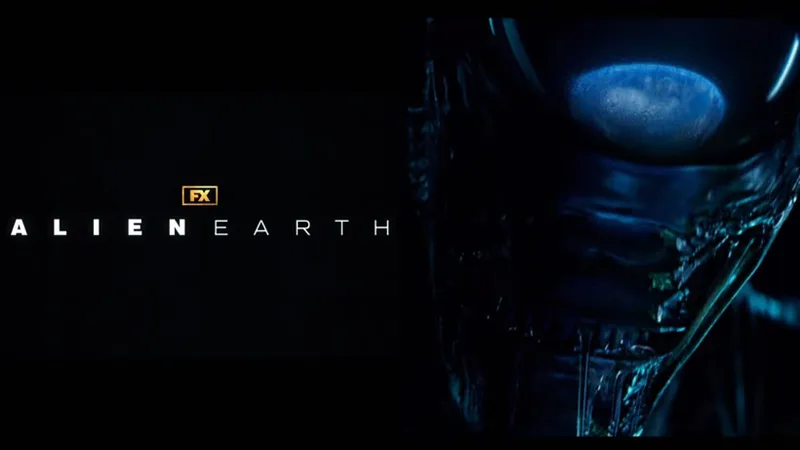
Alien: Earth was also one of the most prominent and talked about horror releases of the year, and I've saved it this long because of just how much Shelley's Frankenstein, and the way we've come to see and understand it, influence Noah Hawley's foray into the Alien universe. Like Frankenstein, it's deeply interested in the question of what our self obsessions, our hubris, mean for our children and who they become. It was also one of the most divisive of this year's horror projects.
The Alien films have been interested in what it means to be human, from their inception. The original film, at the very least, in even the most superficial sense, is concerned with what it means to be human when we are no longer the top of the food chain, the apex predators in the universe. It also includes a direct influence from Frankenstein, in the character of Ash, an android, which the films refer to as synthetics. This automatically leads to the question of what it means to be human when we can create that which is indistinguishable from human? What happens when we can, essentially, create artificial life and intelligence, sufficiently camouflaged to be believed to be human, but isn't?
Ash, in the original Alien, ends up being an extension of the will of the company that owns him. He ends up being little more than the loyal henchmen. Between Ian Holm's incredible performance, Dan O'Bannon and Ronald Shusett's excellent script and Ridley Scott's amazing direction, Ash makes a much more significant impact than the standard, stereotypical henchmen, but in terms of his function in the story, and the actions he takes, it's basically what he is. The sequels use these android/synthetic characters to ask a number of different questions, to different degrees of success.
Noah Hawley throws all of that in the blender of an eight episode series, a run time far exceeding any of the films, with a layer of what can only be described as meta commentary about how power uses narrative, in the form of consistent Peter Pan references, and adds in a few new creatures of his own to create a new iteration which brings Frankenstein's influence on the Alien universe to be equal in importance to the question of how humans react to no longer being the apex predator of their universe. Because this is a story taking place in the future, it has a heaping dollop of sociopolitical commentary, which is inherent to any story told about the future, whether we as an audience, or even the storyteller themselves, wants to accept that.
If there's one of the common criticisms of Alien: Earth I agree with, it's that this first season introduced, touched on or was playing with more ideas than it could bring to a conclusion. There is a degree of personal preference here though. I'd rather any piece of storytelling falter in being more enthusiastic and ambitious about ideas than the opposite, and I don't necessarily buy the belief that every story has to wrap every idea it introduces in a conclusion that's easily discernible to the audience. That idea seems to be have become dominant because of the media environment we exist in today. The incentive systems of social media reward definitive statements. It's easier, and less vulnerable, to be able to approach a piece of storytelling and say, "This is the idea this story introduces, it's conclusion is right/wrong," than it is to be confronted with an idea and have to publicly wrestle with what it suggests, because now the reviewer/critic/commentator is the one in danger of being in conflict with their audience in a way that's revelatory about them. It's also very easy for that exploration to end up being boring for an audience. One person or a group of people meandering through their exploration of an idea, instead of making declarative statements about whether its conclusions are correct or well supported, is much harder to make interesting for an audience. It's evident to me storytelling is more alchemical than this dominant perspective suggests. There is some degree of equation to it, sure, but there's also the ineffable and anarchic to it. It might be boring or insufferable to read or listen to someone else's meandering exploration of an idea, but that doesn't mean the idea isn't worth exploring or that there isn't something to be gained by exploring and wrestling with it privately, as an individual or even with friends. I worry the incentive system of social media and streaming services isn't just on what's being made, but the audience desire/ability to engage with more exploratory, less declarative forms of criticism and study of media.
I hope you, reader, can extend me the grace to accept the meandering I've just engaged in. I have engaged with it, because it is something I feel was particularly true of the criticism and coverage of Alien: Earth. The series is a rich text, but very little of what I read/heard/saw was engaging with it in an exploratory way.
Noah Hawley brings two inventions to Alien: Earth, in setting up his questions about childhood and humanity. The first episode opens with text, explaining there is a competition, by five corporations who own the globe, about which of their technologies will become dominant. There are the synthetics, which have been part of the Alien universe since the beginning. Timothy Olyphant is characteristically interesting and compelling as Kirsh, the resident synthetic. Hawley introduces the concept of the cyborg, a person who has some partial technological upgrade to their biology. Morrow, played by Babou Ceesay (giving the kind of performance that catapults actors to long, esteemed careers), is a cyborg, a man with a robotic/synthetic arm.
The newest of these technologies in the storyline of the show, invented by the Prodigy Corporation, under the direction of its CEO Boy Kavalier, who owns the island the majority of the story takes place on, is the hybrid. The hybrid is a synthetic body, into which human consciousness has been transferred. We're told is that because this technology is in its infancy, only the consciousness of children can be transferred into these bodies. The explanation has to do with the plasticity of a child's consciousness. They haven't reached the kind of rigidity that comes with maturation. The implication is that the process for the transfer, at this stage of its experimentation, would essentially break an adult mind.
There are a number of ways Hawley is clearly influenced by Shelley's Viktor Frankenstein in his creation of Boy Kavalier. There's been less recognition of the degree to which all of the human adult characters in Alien: Earth are iterations of Viktor though. The rigidity of their thinking, the thing which makes it impossible for an adult consciousness to be transferred into a hybrid body, is the exact reason they can't foresee the consequences of doing so with a child's consciousness. There is the most surface example, which is giving a child the level of sheer, brute physical power that comes with a hybrid body, but there's also the inability to imagine how a child, without the limitations on their imaginations that is the rigidity of an adult consciousness, might both interface with and use the rest of the technology necessary for these hybrid bodies to function, work and be controlled. Every adult involved in this project is involved because they are chasing the same legacy Viktor Frankenstein was, with one possible exception.
Shelley located Viktor's ability to generate justification for stepping over moral, ethical and legal concerns in what amounted to grave digging. It was apt for the time the novel was written. Viktor assembles his Creature, from body parts of the dead. Crude and ghoulish as that may have been, Hawley shrewdly finds a modern update that is more insidious, but no less ghoulish. Even when five corporations run the world, there are still laws governing experimentation on human subjects. Boy Kavalier finds his way around this, and meets his necessity for children as subjects, by finding terminally ill children, and promising their families their children will get to live. The catch, is that because of the illegality of this procedure, those children have to be dead within the eyes of the law, which then also means they can't have further contact with their families. He's leveraging these parents love for their children, the desire they might live full lives. All of this is basically just cover for Kavalier and Prodigy Corporation to operate without oversight or intervention of any kind. What he thinks this gives him, is something between a product and a slave. He owns the bodies in which the consciousness is housed.
Boy Kavalier has as much in common with Weapons Gladys though too, as he does Viktor Frankenstein. Viktor abandons and shuns his creation. In Weapons, Gladys is stealing the children's consciousness her own gain. Part of her undoing is her inability to recognize children, Alex specifically, as a thinking being. She believes she has thought through all of the possibilities, that her ability to control him is going to be iron clad. Neither of these turn out to be true, and this is also true of Boy Kavalier.
Kavalier overestimates his ability to participate in the kind of imagination children can. He sees himself as free of the constraints that are impossible to escape as the result of lived experience. He believes himself more than human. His fixation on Peter Pan, as well as his drive to consistently expose the hybrids to it, is part of his attempt to create a sense of identification in them. Hawley's use of Peter Pan in the narrative of the show is borderline diabolical itself, and it's in the meta-textual aspect of it I think we find the meaning.
Statistically, it's likely the majority of the audience watching Alien: Earth are familiar with Peter Pan as a character, from the animated Disney film. What Hawley is doing, using the original J.M. Barrie novel is to highlight the distance between Barrie's character and the Disney character. In Barrie's novel, Peter isn't a hero. He's a monster, preying on the imaginations of children to give himself an endless childhood, a kind of immortality. The children Peter brings to Neverland do age, and if they live long enough, not dying in his continuous pursuit of "adventure," he kills them. Barrie's novel is a kind of cautionary tale about the results of the effort to stop being human, confined by all the things humans are confined by, including aging and maturity, which shape of our consciousness from the experience of aging. Barrie's novel, when broken down to its most simple terms, is saying that trying to escape the experience of being human makes us monsters, and in the case of Peter Pan, a monster who preys on children in that effort. You will, and have to grow up. You can love the child you may have been, value and appreciate the experiences being a child afforded you, but trying to avoid maturation will make you a monster.
Boy Kavalier is no less a monster in Alien: Earth than the xenomorphs or the other creatures Kavalier is trying to exploit for his gain. There's also a parallel to Kavalier's use of Peter Pan, the way Disney sanitized the character, making him the story's hero, that this sanitized version is now the public's dominant understanding of him. Disney has become the multinational mega-conglomerate it is, through its relationship with children and childhood. There isn't a good argument to suggest the degree of corporate consolidation in the industries around the arts and storytelling is good for us, as a public. What does it say that part of the path to getting there was turning a cautionary tale about a child predator into a story of that predator as hero? There is, of course, the argument that Noah Hawley is working for Disney, as they now own the rights to the Alien films, characters and fictional universe, so it was easy to get and Disney executives are perfectly happy to have the "synergy" of one property crossing into another. I'd suggest the degree to which the public, including the critical community, hasn't caught this as part of what Hawley has to say in using Peter Pan, means whoever the executives at Disney were that allowed this version of Alien: Earth to be made didn't see what Hawley was saying either.
If we look at the way Boy Kavalier is presenting himself to the hybrids, who every character other than Timothy Olyphant's Kirsh treats as children, it's similar to the way Disney portrays itself to its audience. There is no veil, no attempt to hide, at all, that the show has a negative opinion about corporate power's ability to shape our lives. It's up front and direct. Boy Kavalier is preying on youth and childhood as an attempt to extend his power. Disney has built the empire it is, on it's relationship to childhood, and it avoids any and all recognition of the consequences of that power in its relationship with its audience. In highlighting the sinister nature of Barrie's original creation, and the distance between the public's understanding of this and the Disney version of the character, and inserting Kavalier's attempt to position himself as the Peter Pan to the hybrids Lost Boys, it seems to me Hawley is calling attention to the degree Disney, as a real world prototype of the mega-corporations at the center of Alien: Earth, is weaving a cautionary tale about the corporate quest for and accrual of power, including Disney's specifically. I can only tip my hat to the fact that he got them to fund an artistic work saying this, to the tune of many millions of dollars.
The way Disney approaches its audience has a certain parallel to "Do as I say, not as I do," which the adult characters of Alien: Earth believe is sufficient in their relationships with the hybrids/children. They all believe what they say to the hybrids is going to be mask or facade enough, but it's not. They're not concerned with the cumulation of what the hybrids/children observe as adult behavior. They believe, "Because I said so," is enough. At the end of this first season, the hybrids have more closely adopted the behaviors of the adults than they have the way the adults have been trying to tell them they should act or who they should be. They do have a moral clarity the adults don't. They haven't spent decades in a world built to create justifications for the kind of behavior the adults are engaging in, but they don't yet have the sophistication to ask what following the behavioral model of the adults means for them, what it is going to make them, and whether that is worth it. As opposed to Adam, The Creature, in Guillermo del Toro's Frankenstein, they are not escaping the competition for power. They have, with the expanded abilities their hybrid bodies afford them, decided they are going to win that competition, something the adults don't seem to have taken into account as a possibility.
This is, I think, the most cogent and insightful thing Alien: Earth has to say. We are living in a world where we are attempting to raise children by telling them the values and ways of being they should adopt that are in direct contrast to what the world around them is exemplifying. There is a an ever widening gulf between what we tell children are ideas, attitudes and behaviors that are acceptable, and what they're seeing rewarded in the world around them. What we're doing and what we're saying don't really match up, as far as teaching children to be decent people. No small part of that is due to how obsessed with power and wealth so many are, and the kind of people who are now in possession of an amount of power that's shaping all of our lives.
In a way, this makes generational narratives we've seen, like the ones Adam Cesare and director Eli Craig were commenting on in Clown In A Cornfield, a kind of rational paranoia. They fit, in a way, with the idea that every accusation is a confession. Part of what Alien: Earth is asking is whether or not we, the older generations, can really be surprised if the younger generations want to eradicate our influence and control over them, because we've afforded them no influence and attempted to do little but control them. How can we be surprised when they adopt the behaviors we've modeled to them? If we can't imagine another way to be, to live, wouldn't we always assume everyone around us is going to be driven by what we are? Isn't the degree to which competition for wealth and power shapes our lives a self fulfilling prophecy in that sense?
This brings us to It: Welcome to Derry, which streamed on HBO Max, and was one of three very high profile titles to come out of Stephen King's novels. Andy and Barbara Muschietti brought Stephen King's door stopper novel, It, to big screens in two chapters in 2017 and 2019. Popular opinion is that the first film is quite good (as well as being the highest grossing horror film of all time), and the second was a disappointment. Welcome to Derry is an exploration of incidents which are referenced in the novel, but not featured or explained. In King's novel and the two films by the Muschietti's, this entity, the IT of the title, emerges every twenty-seven years to feed on the fear of the children of Derry, before it does actually eat them. For anyone who might be unfamiliar, IT is able to do this, in part because IT can take the form of anyone's deepest fear.
The first of the films took place in 1988, so Welcome to Derry goes back to detail the previous cycle of events in 1961, and explain how and why It came to prefer the form of Pennywise the Clown. Overall, I enjoyed the series. There is a bit of lag in the middle, but the story as a whole is satisfying, there are some creative inventions and applications of horror, and though a few of the characters suffer from the size of the cast, the ones it does serve well are compelling, with great performances all around.
One of the subplots of Welcome to Derry surrounds a secretive military program, clearly trying to locate this thing that presents itself as Pennywise the Clown and eats children. The show doesn't make it into this discussion of this year's dominant theme because of Pennywise and his penchant for torturing and devouring children though. From early on, there is clearly some understanding by the military that It feeds on and takes the form of people's fears. Where it goes though, puts Welcome to Derry squarely on the list of horror stories dealing with our fears about children, particularly what we're doing to them as a society.
Over the course of the season, we're told Pennywise doesn't leave Derry because he's essentially been imprisoned. In the time before Europeans came to North America, the native tribe indigenous to the area figured out that they could trap him with shards of the enclosure he crashed to earth in. In the end, it turns out, the military is planning to release him. Given voice by James Remar as Colonel Francis Shaw, the idea is that the only way to preserve the nation in the time of division over matters political, racial, related to gender and so on, is to unite it in fear. The idea is to let Pennywise out, let him gin up fear across the nation as only he can, and use that fear to create some sense of solidarity. As is demonstrated by the fact that Pennywise is trying to march out of Derry with an entire grade from the local school in tow (one of the more haunting images of a series filled with haunting images), this is going to put a lot of kids in danger. Up to this point, Pennywise imprisonment has been terrible for the people of Derry, but he also hasn't been able to roam the country or the globe. The thought of Pennywise loose in New York, Tokyo, London or Singapore is chilling.
To their credit, the Muschietti's and the writers for Welcome to Derry paint Colonel Shaw as genuine and sincere in the fear gripping him about the nation coming apart at the seams. It would have been cliché, though I think less interesting, if he'd been drawn as a military character trying to use fear as a manipulation for more selfish means. Choosing to make him sincere, reveals discussions often had about the sincerity of bad decisions by people with power are moot. They're bad decisions. If someone in power is making bad decisions out of some selfish motive, manipulating fear out of a desire to access and consolidate power, it gives the audience perceiving them the opportunity to feel morally superior, but in the most practical terms, it doesn't matter. The damage done is still going to be the same. The sincerity of those decisions, whether there's a malignant or benign motive, may come into play if there is some attempt to get accountability after, but stopping the decision from being acted on is paramount. If you can stop the decision from being acted on, you can prevent its consequences, and then you try to secure accountability. In Colonel Shaw's case, accountability is also a moot point, as Pennywise relieves him of his life.
At its center though, a significant part of what Welcome to Derry is saying is about the consequences of failing to question power. Throughout the series, Jovan Adepo's Lee Hanlon and Chris Chalk's Dick Halloran have been accepting their orders with few questions. Early in the series we see Shaw is willing to engage in unethical and illegal behavior in pursuit of his goal. He assigns other soldiers to assault Hanlon in the middle of the night in an attempt to find out if he can be forced to divulge what little he does know. Shaw wants to know if there's truth the idea that Hanlon's injury in Korea has left him less vulnerable to fear. When Hanlon figures this out, Shaw's explanation is that it was necessary because of the nature of the mission they're undertaking, and Hanlon accepts this, in part because of how sincere Shaw is in his sense of duty to protect the nation. Halloran doesn't really care much about the what's and why's. He's happy so long as he's receiving the privileges his association with the mission are bringing him, and the people he wants to include in access to those privileges.
It's not incidental that Halloran and Hanlon are both Black, and over the course of the season, they come to discover Shaw and the military are willing to let a Black resident of Derry, Hank Grogan (played by Stephen Rider), take the fall for the murder of a group of children that Pennywise committed. Some residents and police of Derry are willing to resort to extra judicial means to get some form of justice. Grogan's life is in immediate danger, and Shaw is willing to let that continue.
The Muschietti's and company complicate all of this further though, by making Shaw willing to sacrifice children across the nation. Shaw isn't a bigot. His respect for Hanlon and at least for Halloran's psychic abilities is real. The children who are killed in the opening episode are all white. Grogan's daughter, Ronnie (Amanda Christine) the one child of color who is in the same location where the rest of the children are killed, escapes. Shaw is willing to sacrifice any children in order to prevent what he fears is happening to the country as a whole, and he knows this plan is going to sacrifice children.
Welcome to Derry is less overt than other stories on this list, but it is asking about the cost of not interrogating power about its demand for unity, in the face of its lack of concern for who has to be sacrificed to achieve it. Shaw sees the fear Pennywise is going to spread as the way to overcome the divisions he feels are on track to tear the nation apart. That his fear is sincere, and he's not an active, demonstrative bigot, doesn't change that he's both overlooking the very real conditions causing the harms that are the root of those divisions and willing to sacrifice what would likely be many thousands of children to achieve that unity. His fear of the nation tearing itself apart, makes him blind to the example Derry has already given him. Pennywise has only inflamed those existing divisions, in the form of a lynch mob going to find Hank Grogan, burning down the place Black military members and some Derry residence have gathered, killing members of his own military and residents of Derry, one of whom is a child. Derry has already shown the way those existing divisions mix with the fear Pennywise creates, and it's in direct contradiction to Shaw's aims.
It's also not a coincidence that the indigenous people of Derry have the necessary knowledge and experience to prevent Shaw's plan from coming to fruition.
The parallels to the world Welcome to Derry we're experiencing are obvious, even in how artfully the show avoids preaching and forefronts its horror aspects. The United States has long been willing to sacrifice anyone power can paint as Other in its drive to preserve what passes for enough of a unity to be a foundation for that power. It is a relatively new development that it's willing to sacrifice white, middle class children, and there are certainly elements of power in this country willing to see that sacrifice occur so long as it provides a fear it can manipulate to maintain and/or expand that power.
Gun violence is only the most glaring example of this. Thousands of children die annually as a result. School shootings are happening without any regard for racial or economic status. When we strip away the rhetoric, the fear at the heart of our inaction is that the attempt to find an effective solution, the most direct of which is regulation, will cause the nation to tear itself to pieces, in part because of the other existent divisions already at play. In 2024, 44,000 people died by gun.
Welcome to Derry, to it's credit, also doesn't try to avoid the fact that the false unity we have been too afraid to confront means its consequences do not immediately fall equally on all of us. It's very clear that this sense of security and safety are illusion, and that illusion is built from the blood and bodies of the people we can call Other. I, personally, have a deep, sincere appreciation for the way the series also presents the manipulation and Othering of the perception of people who've experienced periods of acute mental illness. In Welcome to Derry, this Othering just ends up meaning the people who are Othered are the most vulnerable, and therefore, are the only ones who understand the threat eating away at any real security or safety. In Derry, what you don't know can kill you, as is true in real life.
When I initially put together the list of films I saw as being evidence of our fears related to children and childhood being the most pervasive themes in horror this year, those I've already discussed were the whole of it. Current events have caused me to reconsider one title I'd struck from the list. I had decided not to include it because I felt that not only has popular culture so thoroughly covered the subject matter, and the majority of the discussion around it had happened within the week it opened in theaters. The combination of it having been a nationwide release and the number of other films covering similar ground that are persistent in pop culture and our storytelling lexicon, it didn't seem to have enough impact to feel it had spoken to our collective imagination. It has, to our collective misfortune, come back into the general consciousness and conversation in the period it's taken me to write this piece.
I don't say it's our collective misfortune because I think The Long Walk is a bad movie. I wrote about my appreciation for it at the beginning of this month. I say it's come back into the collective consciousness and conversation is a misfortune because of why it's come back.
In the spirit of transparency, I should tell you I just laid my head on my desk for about five minutes, trying to wrap my head around the fact that there is need for me to communicate the facts of why I feel I have to include The Long Walk. I have not significantly moved beyond where I was when I recorded the video below:
The Long Walk is the third major release this year to have begun as a Stephen King novel. Released in 1979 under his pseudonym, Richard Bachman, it predates a number of other dystopian fiction stories focusing on authoritarian states that use children in competitions as part of their methods of control. One of King's talents is to take the "high concept" and make it compelling through the use of rich characters and an insightful understanding of the lives, dreams, fears and hopes of ordinary people. The Long Walk slots into this vein of his work, being about an alternate universe United States that fell into an overt authoritarianism and holds an annual competition with one boy from every state, under eighteen, walk a pre-arranged route until there is only one left. The winner is granted some unspecified amount of riches, and one wish, so long as that wish doesn't interfere with or present an open rebellion against the state. It's among the more plainly bleak of King's work, because of how well he draws this cast of young men, and the films succeeds in transmitting this to screen.
Francis Lawrence film is taking the audience on this journey as a metaphor about the way authoritarians (all power really) use spectacle, and what it necessarily means to retain our humanity, our dignity, where a power like willing to use it this way has influence over our lives and the shape of the world we live in. Throughout the film, The Major (played by Mark Hamill), who is in charge of insuring this competition goes forward according to the rules, repeatedly refers to the idea that their competitive spirit, their perseverance is an example to the nation. There are repeated references to the idea that it reminds people of the rewards of hard work and so on. When the film ends, we do see there are crowds gathered along the route where they believe The Long Walk will come to an end. There is some part of the population who receives/witnesses/interprets the competition this way.
That's not all it is though either. There is only one winner, and the other forty-nine are shot by their military escort, when they've reached the point they can't keep walking. There are rules of course, warnings and so on, but this is the other part of what The Long Walk communicates to the population of the United States within the film. Those who are too weak, and who can't follow the rules, die. It's not a coincidence these two aren't separate in the way the competition is designed. Only the strongest, most persistent deserve to live and be rewarded.
Within the world of the film, The Long Walk serves both purposes. For a portion of the population it is a celebration of all the ways the nation wants to see itself, but for the entire population, it's an annual warning of the brutality this government is willing to visit on those who break the rules, those it deems as not contributing sufficiently and those who choose to try to evade or avoid the order it has decreed.
The beauty of The Long Walk isn't in the imaginative nature of its view of this dystopia. Other versions of this story are more concerned with those, and that's part of the appeal of each of those particular stories. "Are we heading toward Brave New World or 1984?" is a common question where dystopian fiction is concerned, but that misses something. What we're seeing as we march toward authoritarianism is some odd, almost indefinable amalgamation of those two, and others, because even the dystopia of real life authoritarianism is a group project, never the product just one person's imagination, which is what most novels and stories about dystopias are.
The Long Walk is compact and simple in this way. We don't get much of a view of what the world outside of this competition is really like. What we do get, beyond the cliché that sticking together despite the way we're forced to compete is how we survive, is in it's understanding that retaining our humanity in the face of those conditions is in the ways we change and are changed by each other. The design of this competition means there is only one survivor. The point of the story though, is that our meeting changes us, we are carried forward by the people we meet, the people who make us better, and in this, we carry them forward. It's the recognition that the stasis for human beings, is to be changed by each other, no matter what other conditions power might decree and what status quo it might use all its force to maintain.
In this, there is some combination of choice, but it's also just a reflection of human nature. The participants of this competition are chosen by lottery, at random, and it's made clear in the process of the story, none of the participants knows a boy whose reached the age of eligibility, who hasn't entered the lottery. This is a random selection, bound to include people of a variety of different traits, and as a result, they approach the competition differently. It is this random assemblage that produces necessary mixture for The Long Walk to be what it is, and the truth of it is in the degree it recognizes not all of us are capable of seeing each other through the lens of cutthroat competition, even if we try to.
One of the most common criticisms I've read and heard about The Long Walk is the degree to which the boys at the center of the story so quickly and easily develop some degree of friendship or camaraderie. It's the kind of criticism suggesting this is unrealistic. It says that there's no way this would happen in these circumstances. They'd all be so focused on being the survivor, there's no way they'd be willing to develop those kinds of bonds.
Human history suggests otherwise. Authoritarian regimes create an atmosphere of competition. It's part of what they do. It's how they manage to get some people to do things like report their neighbors for subversive behaviors. It's also true that even in the most repressive of these, Franco's Spain, Hitler's Germany, Mussolini's Italy, Mao's China, people still develop the kinds of bonds that lead to their participation in the end of these regimes. Not all of them do so because they're dedicated partisans. No small number of them do so simply because they keep feeding or not informing on someone they love or respect, who is a dedicated partisan. They might think these people are fools and resent them for the risk these partisans bring into their lives, but they do it anyway. They're not always family members. Sometimes, they're coworkers. Sometimes, they're neighbors. The people who do these things, do it because they can't see not doing it. The stories of Holocaust survivors are full of people who had been strangers, making decisions that meant or contributed to the end of their lives, because something in them decided this person, who'd been a stranger until they were interned together, had to live.
The beauty of The Long Walk is in its understanding of what real human diversity is. Today, we're mired in a media ecosystem which suggests things like race, sexual orientation and gender are the contours of human diversity. I don't really buy this. I don't buy because within every population we categorize, there's still a very different variety of diversity. In the end, the biggest difference in human beings isn't in all these things our cultures have taught us are categories of difference. It's in the drive for domination, the lust for power and the willingness to harm and dehumanize to achieve it. The majority of us show only the amount of preference for it that is essentially culturally required, and it is required, because it gives power to those who can't conceive of any other point to life. All they can see is whether or not there is victory at the finish line, not what the experience of the journey, the value of changing and being changed by the other's who are participating in it is worth. Death comes for us all, and it doesn't care what we have defined as victory. The people we leave behind will know though, how they were changed by us, and how they changed us, how we came to be part of each other, and this is why they grieve us and we grieve them.
The Long Walk puts children in the center of its narrative, and this is the real competition we live with now. Which of these narratives will be passed on to them? Which of these will we allow to be the defining context in the lives of our children as they grow into adults? What does it mean this competition even exists for our children to be put through? What does it mean that we are willing to let our children be used for the spectacle of this venal, short sighted, small class of people? What does it mean that we are still so willing to see our children sacrificed because it serves the narratives of power?
All of this is why following the Trump's announcement, The Long Walk was back in conversation, and I felt like I had to include it in this year's list.
I think I've pretty thoroughly detailed, at this point, why I chose "Have You Checked the Children?" It seems like we're experiencing some deep, broad, and expansive anxieties about children. I wish I could say this was paranoia, but it's not. Today, a new piece of evidence was released connecting Donald Trump to Jeffrey Epstein child sex trafficking ring, as a customer at the least. That we've now spent years being inundated with the question of whether or not some of the most powerful people in the world are knee deep in this, would be enough to create a substantial anxiety about children's well being. But the list of things contributing to this anxiety is long. Gun violence, as I mentioned, is another very sensible reason to be worried about our children. The intransigence of our tech overlords where the effects of their products on children is concerned is also a reasonable thing to respond to with some level of anxiety.
If anything, this year's crop of horror films and fears about children and their childhoods being so prominent a theme, is some good news. At the least, it says none of us is alone in these fears. It means, that to one degree or another, many millions of people are recognizing something is off about a nation, a world, willing to be so cavalier about the well being of children. This means, by extension, there are many millions of people who can potentially be motivated to do something about it too.
With that friends, I leave you with the hope that between now and the turn from December 31 to January 1, you've gotten something from this and if so, you carry it to those who are close enough to be part of you.

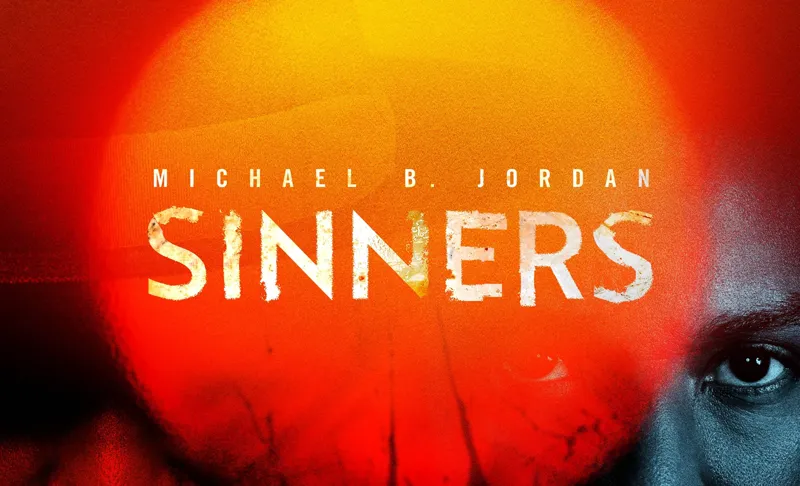
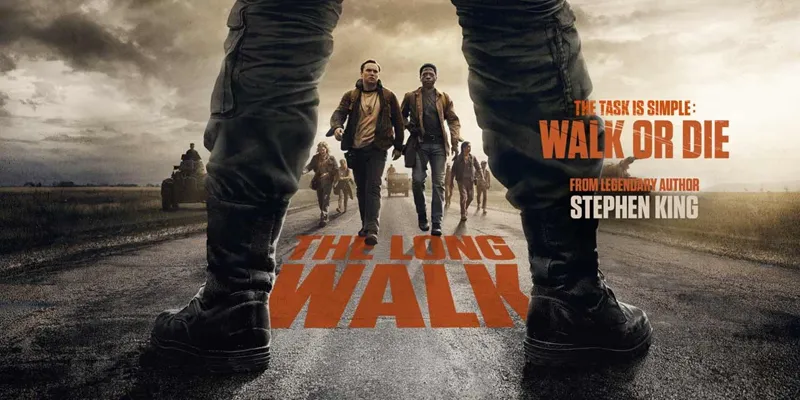
Comments (2)
havent finished this (partly bc I havent watched them all) but I wanted to go ahead anyway and say wow I enjoy your thoughts. I am a big fan of Weapons in particular and I appreciated your insights. I also enjoyed Frankenstein recently. After seeing Bring Her Back my girlfriend, a horror fan who loves to tease and joke, asked me why I keep taking her to movies where horrible things happen to children. Well, that does indeed seem to have been the theme of the year to me as well! Appreciate you. Keep writing!
Thank you!