







Maximizing motor unit recruitment
Maximizing motor unit recruitment is key to maximizing hypertrophy. Producing a maximal effort is essential, but we should not ignore that some factors can still greatly alter the level of motor unit recruitment during maximal efforts.
.
#1. Avoid causing supraspinal central nervous system (CNS) fatigue
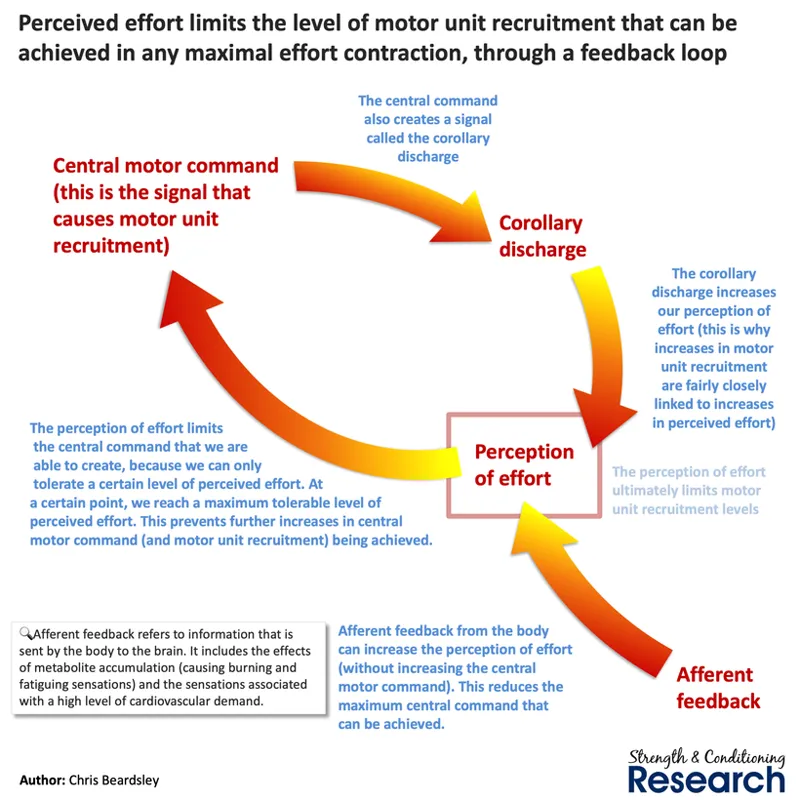
Various types of strength training cause supraspinal CNS fatigue, which involves feelings of pain or discomfort increase the perception of effort that we experience without increasing the level of central motor command that recruits motor units. This means that we reach our maximum tolerable perception of effort before we reach our maximum possible level of motor unit recruitment.
.
For example, light load strength training to failure (like using short rest periods) causes a lower level of motor unit recruitment during exercise because of the greater accumulation of metabolites causing afferent feedback to the brain.
.
Similarly, any strength training exercise that involves a higher cardiorespiratory demand will also involve greater supraspinal CNS fatigue due to the feelings that are associated the elevated breathing rate and the increased heart rate.
.
#2. Avoid increasing mental effort due to instability or coordination demands
Strength training using unstable surfaces or unstable implements increases mental effort, which also increases the perception of effort that we experience without simultaneously increasing the level of central motor command that causes motor unit recruitment. This again means that we reach our maximum tolerable perception of effort before we reach our maximum possible level of motor unit recruitment.
.
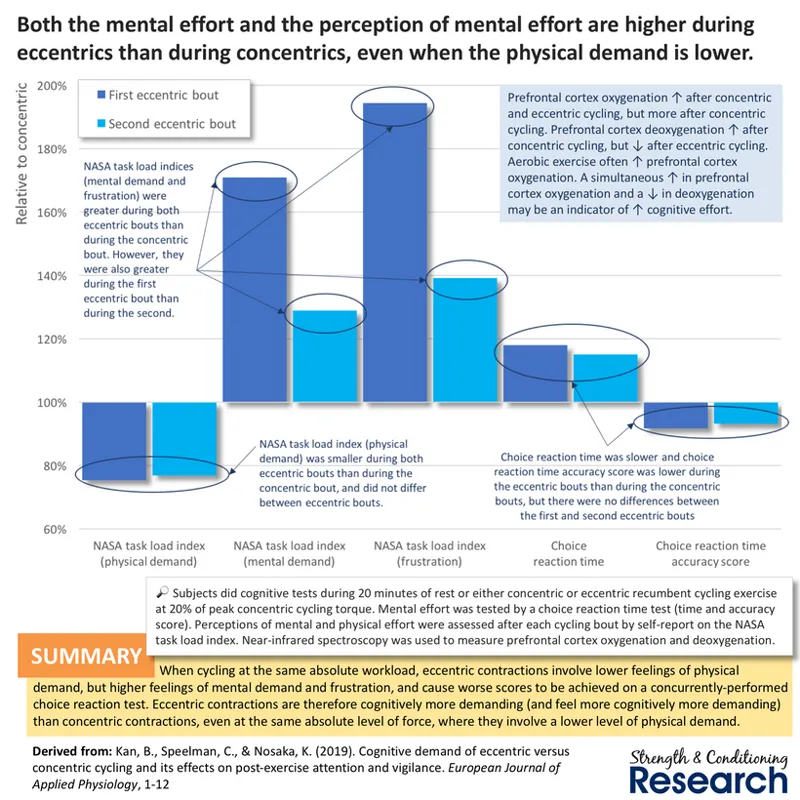
Similarly, training using more complex exercises (such as multi-joint free weights or eccentric-only contractions) increases mental effort, which also increases the perception of effort that we experience without simultaneously increasing the level of central motor command that causes motor unit recruitment. This again means that we reach our maximum tolerable perception of effort before we reach our maximum possible level of motor unit recruitment.
.
#3. Use exercises with a smaller total amount of muscle mass
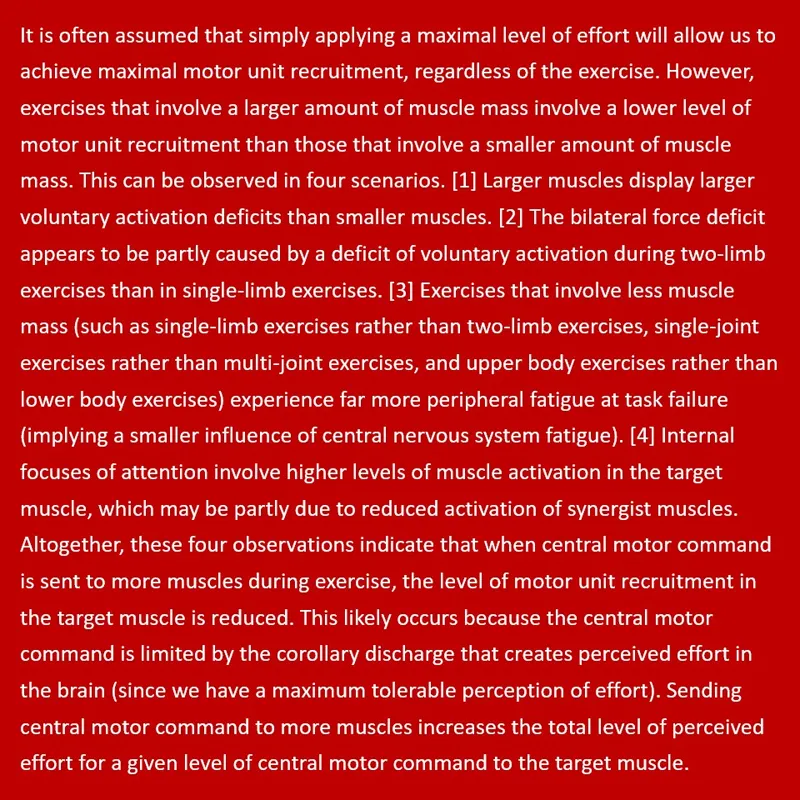
Various observations have shown that exercises that involve more muscle mass involve lower levels of motor unit recruitment in the target muscle (read more).
.
#4. Increase motivation levels using psychological techniques
A. Verbal encouragement
Verbal encouragement is well-known to improve exercise performance by increasing our motivation levels and is therefore usually the gold standard against which all other motivational techniques are assessed in the research literature.
.
B. Listening to music
Listening to music is also very well-known to improve exercise performance by increasing our motivation levels. Even so, it is important that the music is upbeat and fits the preferences of the individual lifter who is performing the workout.
.
C. Competitive environment (or just the presence of other people)
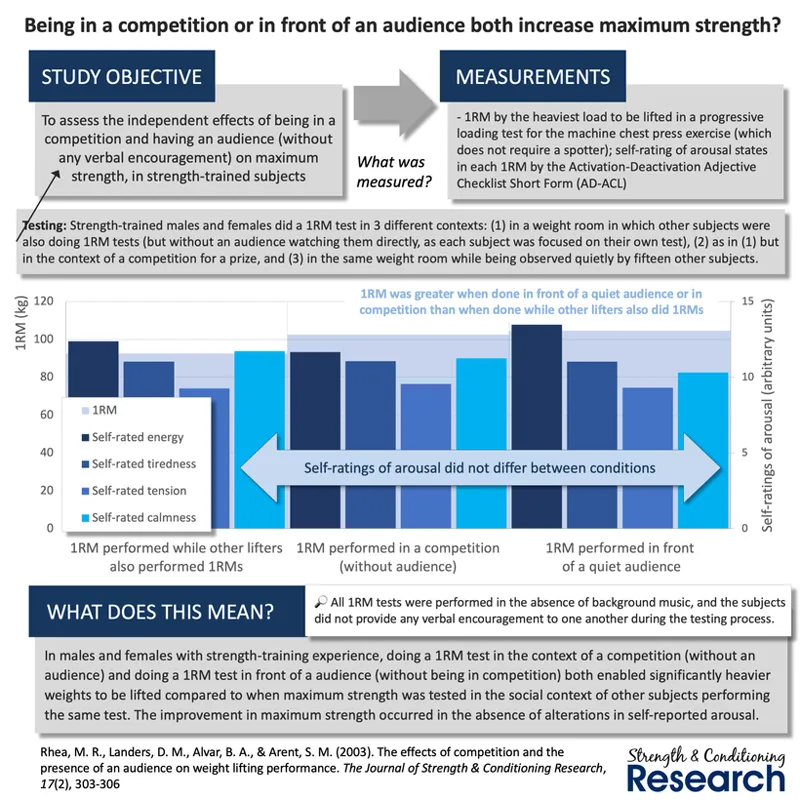
Exercising in a competitive environment (or even just in the presence of other people) has frequently been shown to increase motivation levels and strength, and is part of a wider concept known in the research as social facilitation.
.
D. Receiving autonomy support
Generally, when individual lifters are provided with some autonomy over their workouts by being given choices to make, they experience an increase in their motivation levels that increases strength by increasing motor unit recruitment. This has been confirmed to increase strength gains during long-term training.
.
E. Receiving numerical performance feedback
Generally, when individual lifters are provided with some numerical feedback about their performance during workouts, they experience an increase in their motivation levels that increases strength by increasing motor unit recruitment.
.
F. Receiving numerical performance targets
Generally, when individual lifters are provided with some numerical targets to aim for during their workouts, they experience an increase in their motivation levels that increases strength most likely by increasing motor unit recruitment.
.
Conclusions
Maximizing motor unit recruitment is key to maximizing hypertrophy. Exerting a maximal effort is essential, but some factors can still alter the level of motor unit recruitment (MUR) in maximal efforts, as follows: [1] Supraspinal central nervous system (CNS) fatigue, which is caused by feelings of pain or discomfort (like burning sensations in muscles or heightened cardiorespiratory demand), reduces MUR by increasing our perceived level of effort for any given level of central motor command. Training methods that create such feelings (like light loads and short rest periods) should be avoided if we want to maximize MUR. [2] Mental effort reduces MUR in exactly the same way, since mental effort is a feeling that contributes to increased perceived effort. Less stable and more complex exercises should also be avoided if we want to maximize MUR. [3] Exercises that involve more muscle mass reduce MUR compared to those that use less muscle mass, likely because of the greater corollary discharges that are generated when more central motor command is sent to more parts of the body. Indeed, single-limb exercises cause higher MUR compared to two-limb exercises, and this contributes to the well-known bilateral force deficit. [4] Increasing motivation increases MUR because a higher level of motivation increases our maximum tolerable perception of effort, which is the limiting factor for central motor command. Thus, psychological techniques that increase motivation (such as listening to upbeat music, training in a competitive environment, using numerical feedback or targets in the workout, and receiving verbal encouragement and autonomy support) can all increase MUR.
Comments (5)
Based on the effective reps model, it is the last 5 reps that matter when taken sets to failure, and that is when ww get full motor unit recruitment, so if your taking an unstable movement to failure and a stable movement to failure, are you still going to get the same amount of growth ?
I'm trying to do more chest supported rowing as opposed to barbell rows to increase stability but I'm noticing a lot of discomfort in the chest/sternum area after performing heavy sets. I work out at home so can only do chest supported on incline bench. You ever experience that discomfort/pain? If so, any tips?
No, sorry, I have never experienced that discomfort and these days I only ever do heavy chest-supported rows.
Hello Chris - thank you! So you have repeatedly pointed out that unilateral exercise will allow for a greater level of motor u it recruitment than bilateral - however on the essential exercise 13 exercise recommendation the exercises are bilateral - you are always consistent with the science - for example directing me towards machines - so do I take this to mean that someone should start bilateral and then move to unilateral? So eventually all exercises performed in a unilateral fashion? Thanks
Yes, exactly, the essentials exercises book is intended for beginner/intermediate and maximizing motor unit recruitment is a factor that becomes much more important for advanced lifters