



Muscle memory
Gains in muscle size are often easier to achieve when the muscle is being trained for a second time, (such that lost muscle size is being regained), compared to when the muscle is being trained for the first time. This phenomenon has been called "muscle memory" but the mechanisms are unclear.
.
#1. Muscle memory has been attributed to the retention of myonuclei
The “muscle memory” effect is the observation that increases in strength and muscle size occur at a faster rate during retraining (after detraining) compared to during an initial training period. This has traditionally been explained by way of the retention of myonuclei (that were gained as a result of training) throughout the detraining period. Myonuclei support myofibrillar protein synthesis. When a muscle fiber contains more myonuclei, it can achieve higher myofibrillar protein synthesis rates in the post-workout period and therefore can stimulate more hypertrophy.
.
#2. Muscle memory occurs even without the retention of myonuclei
Nevertheless, recent research has shown that a "muscle memory" effect can be observed even when there are no changes in the number of myonuclei within muscle fibers. This suggests that the superior hypertrophy that occurs during retraining periods (compared to in the original training periods) is not solely the result of the retention of myonuclei throughout detraining.
.
#3. Increases in the ability to recruit high-threshold motor units are very long-lived
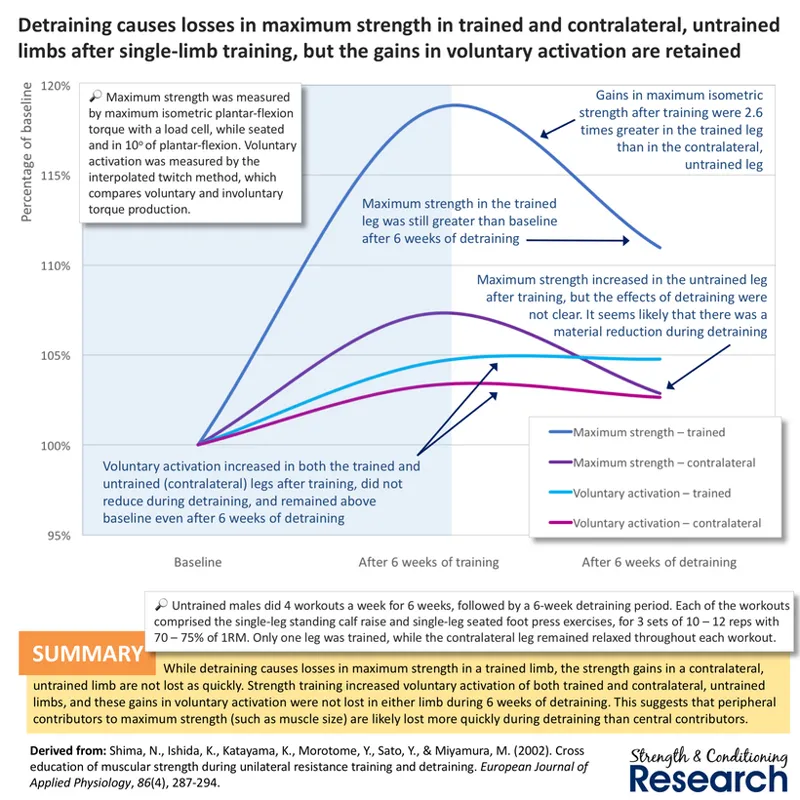
A key mechanism that contributes to increased strength after strength training is an increase in the ability to recruit high-threshold motor units. Before strength training, novice lifters are unable to access all of their high-threshold motor units. After strength training, the number of high-threshold motor units that can be accessed increases. During detraining, this adaptation does not dissipate very quickly, and can even remain present for many months.
.
Indeed, the rate at which muscle mass is lost is many times faster than the rate at which the ability to access high-threshold motor units decreases. This suggests that a key feature of bodybuilders who start strength training again after a long period of time without training is that they are able to access far more high-threshold motor units than they could when they originally started strength training. This means that lifters stimulate far more muscle fibers in each workout during retraining compared to during the original training period, and this is what then causes more muscle growth during retraining.
.
Conclusions
Hypertrophy occurs more quickly when a muscle is trained for a second time (such that lost muscle size is regained) compared to when the same muscle is trained for the first time. This phenomenon has been called "muscle memory" but the mechanisms that cause it to happen are unclear. Researchers have often attributed the phenomenon to the retention of myonuclei (that were gained as a result of training) during detraining periods, such that these myonuclei are available to support elevations in myofibrillar protein synthesis rates after workouts during retraining. However, the muscle memory phenomenon has been observed even when myonuclear number does not increase after an original training period. An alternative explanation is that the original training period increases the ability to access high-threshold motor units (and that this adaptation is maintained during detraining). Indeed, studies have confirmed that increases in the ability to access high-threshold motor units are kept throughout long periods of detraining. Maintaining a higher level of motor unit recruitment means that when retraining commences, a larger number of muscle fibers are available to be trained, compared to at the start of the original training program, and this causes a faster rate of whole muscle growth.
Comments (2)
Hello Chris - tremendous article - thanks - I've heard that women on average have lower voluntary activation than men and therefore less ability to access high threshold motor units. Is this true? Thanks.
There are not actually very many studies that have measured voluntary activation, since the interpolated twitch technique is quite complex and difficult to set up. I can't remember seeing studies that have measured differences in voluntary activation between populations, except in one case where athletes and sedentary people were compared (and obviously the athletes had higher levels of voluntary activation, albeit more so in eccentric contractions).