




Characteristics of coordination improvements
Improvements in coordination are a key adaptation that contributes to strength gains. Importantly, improvements in coordination display unique features that differ from many other adaptations, including other neural adaptations like increases in the ability to recruit high-threshold motor units.
.
#1. How fast are strength gains as a result of coordination?
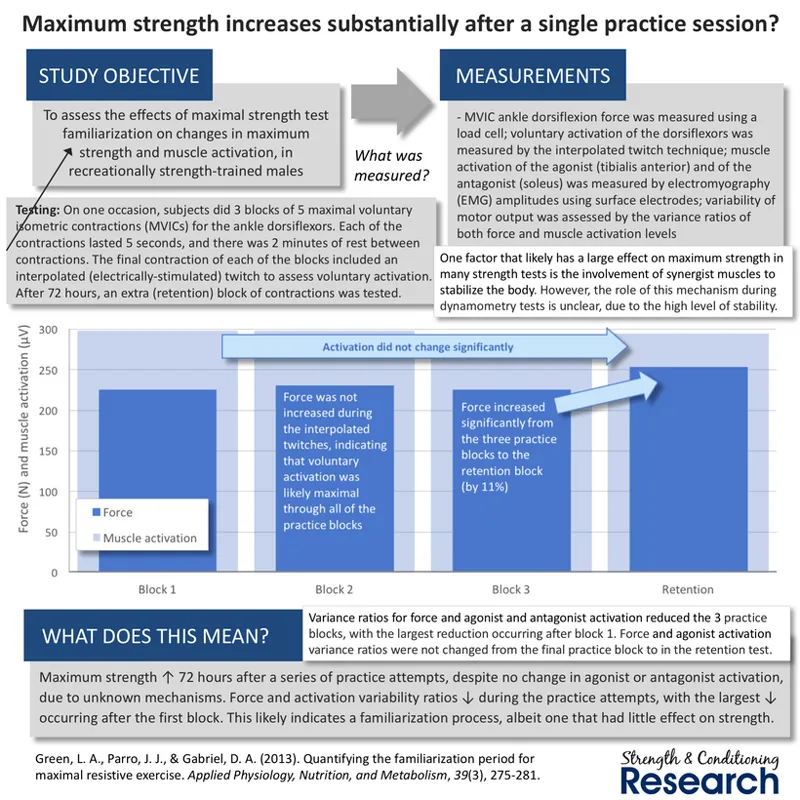
Increases in coordination are extremely fast. They can occur after just one or two practice sessions. In contrast, strength gains caused by other mechanisms are much slower by comparison.
.
#2. How specific are coordination improvements to the movement pattern?
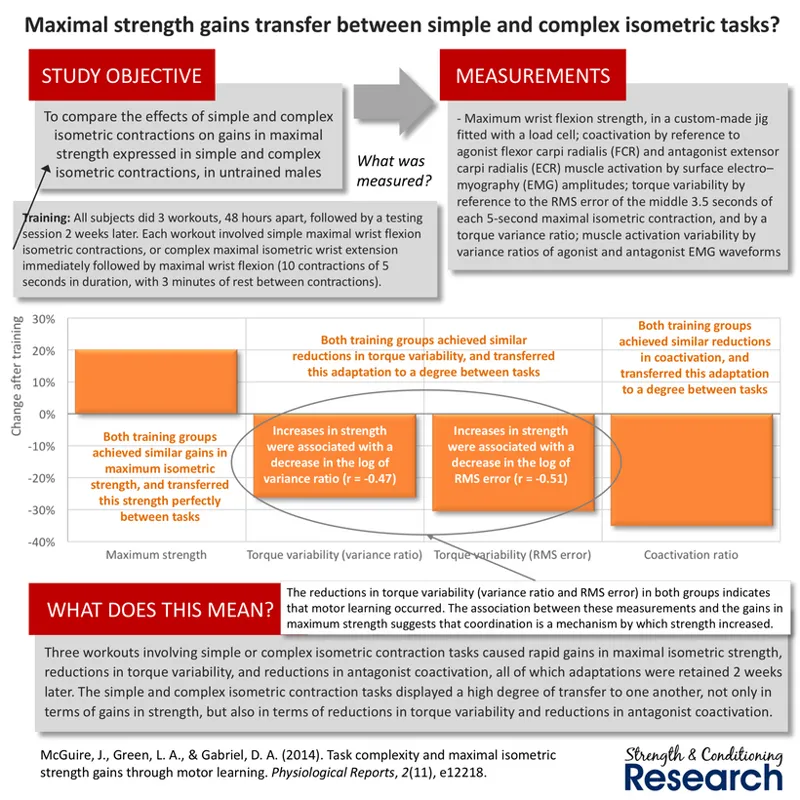
The strength gains that are produced by improvements in coordination are extremely specific to the movement pattern that is used during the practice session. However, there can be transfers to other movements so long as the trained and untrained movements are very similar.
.
In contrast, there are no improvements in strength as a result of coordination improvements when testing strength in very different movements, such as when measuring strength gains during a knee extension exercise after a short period of squat training.
.
In this respect, improvements in coordination are completely different from improvements in the ability to recruit motor units. Increases in voluntary activation are not remotely specific to the movement pattern or even the joint that is used during training.
.
#3. How specific are coordination improvements to the movement velocity?
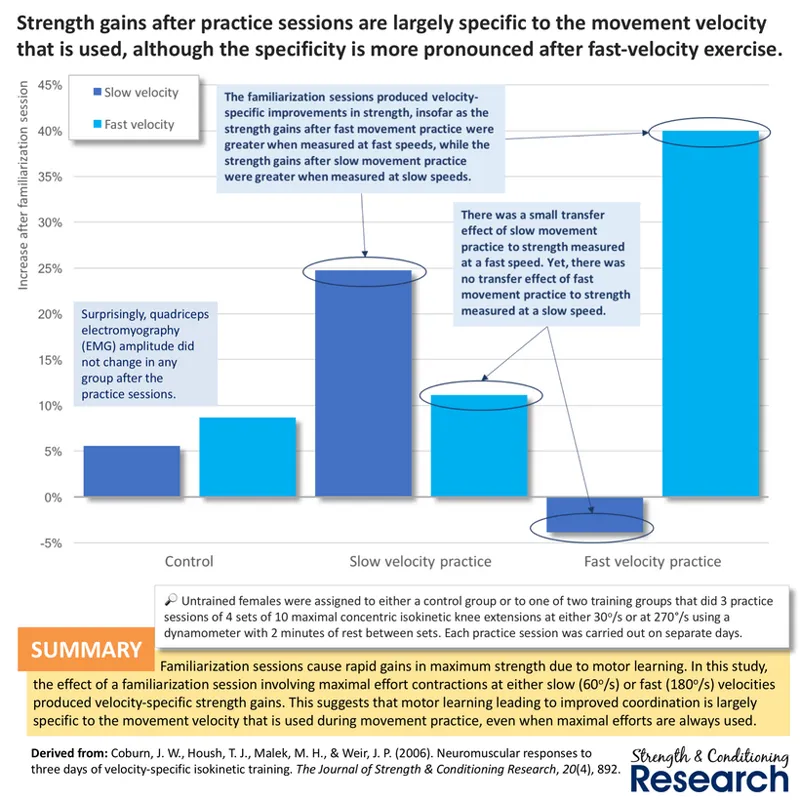
Strength gains that are produced by improvements in coordination are also specific to the velocity that is used during the practice session. Strength gains are greater after fast movement practice when they are tested at fast velocities (instead of at slow velocities), while strength gains are greater after slow movement practice when they are tested at slow velocities (instead of at fast velocities).
.
Again, however, improvements in coordination are completely different from improvements in the ability to recruit motor units. Increases in voluntary activation are not remotely specific to the movement velocity that is used during training (although increases in motor unit firing rate are much more specific, which is a separate issue).
.
#4. How specific are coordination improvements to the contraction mode?
Improvements in coordination are also specific to the contraction mode that is used during the practice sessions. The coordination of eccentric contractions improves to a much greater extent after eccentric-only training is performed, compared to when normal strength training is performed.
.
This is once again different from the effects of eccentric training on changes in the ability to recruit high-threshold motor units. Eccentric overload training increases voluntary activation during isometric contractions, even though no isometric contractions were used during training.
.
#5. Do coordination improvements occur at different rates after different types of training?
Improvements in coordination seem to occur more slowly after fast movement training involving low forces than after slow movement training involving high forces. Exactly why this should be the case is unclear, but suggests that greater time may need to be spent practising with fast movements in order to achieve a given level of coordination.
.
Similarly, there are indications that improvements in coordination occur more slowly after eccentric training than after concentric training or conventional strength training. This is most likely because eccentric contractions involve greater force and muscle activation variability at baseline before training, and they seem to be more difficult for the central nervous system to control.
.
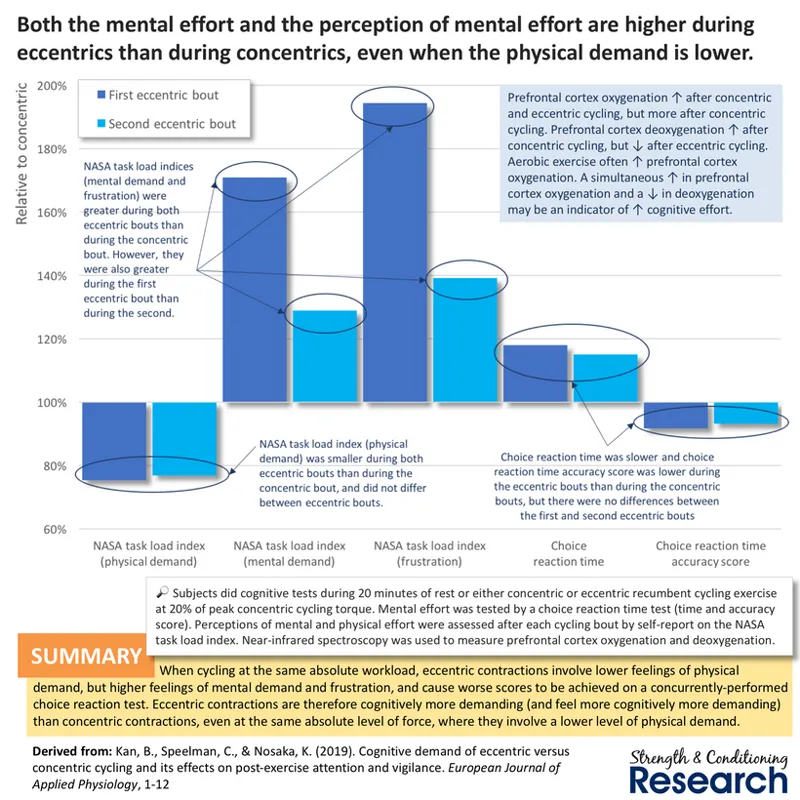
Indeed, research has shown that eccentric contractions produce a higher level of effort for the same percentage of maximum force output, indicating that they involve a cognitive load associated with the difficulty of coordinating the movement pattern itself.
.
Conclusions
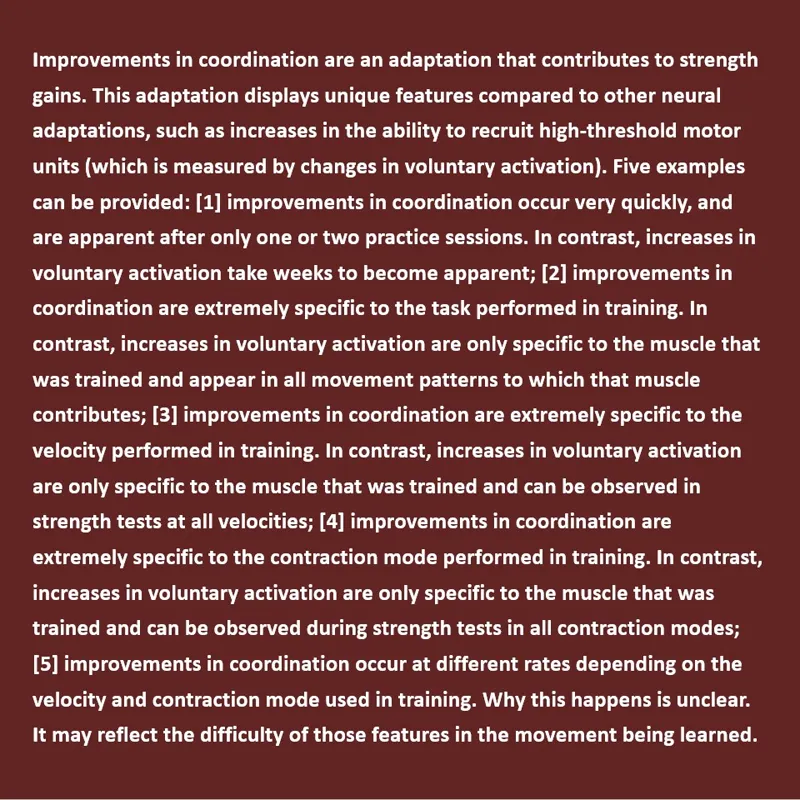
Improvements in coordination are an adaptation that contributes to strength gains. This adaptation displays unique features compared to other neural adaptations, such as increases in the ability to recruit high-threshold motor units (which is measured by changes in voluntary activation). Five examples can be provided: [1] improvements in coordination occur very quickly, and are apparent after only one or two practice sessions. In contrast, increases in voluntary activation take weeks to become apparent; [2] improvements in coordination are extremely specific to the task performed in training. In contrast, increases in voluntary activation are only specific to the muscle that was trained and appear in all movement patterns to which that muscle contributes; [3] improvements in coordination are extremely specific to the velocity performed in training. In contrast, increases in voluntary activation are only specific to the muscle that was trained and can be observed in strength tests at all velocities; [4] improvements in coordination are extremely specific to the contraction mode performed in training. In contrast, increases in voluntary activation are only specific to the muscle that was trained and can be observed during strength tests in all contraction modes; [5] improvements in coordination occur at different rates depending on the velocity and contraction mode used in training. Why this happens is unclear. It may reflect the difficulty of those features in the movement being learned.
Comments (1)
Hi mr. Beardsley, hope you are doing great. Regarding the study of Ansdell and brownstein, 2020. There is an increase in MVC and 1 RM back squat, but no changes in corticospinal excitability and SICI. I always thought that an increased in coordination will also reflecte an increased in the CSE and also a reduction in CSP and SICI since the motor cortex is better at activating motor units . Is it because coordination is in reality improved by differents mechanisms that im not aware of? Sorry if im missing something, im starting to dig deeper on this topic. Hope you can enlight me on this, and thank you as always.