




Caloric restriction slows recovery
Many bodybuilders instinctively know that they recover from a workout more slowly when they are in a calorie restricted state compared to when they are in calorie balance. Yet, relatively little research has been devoted to this observation and to the underlying physiological mechanisms.
.
#1. Higher protein consumption accelerates recovery from post-workout fatigue and muscle damage
Even in caloric balance, research has shown that post-workout fatigue reduces more quickly when more dietary protein is provided, likely for the purposes of repair and regeneration.
.
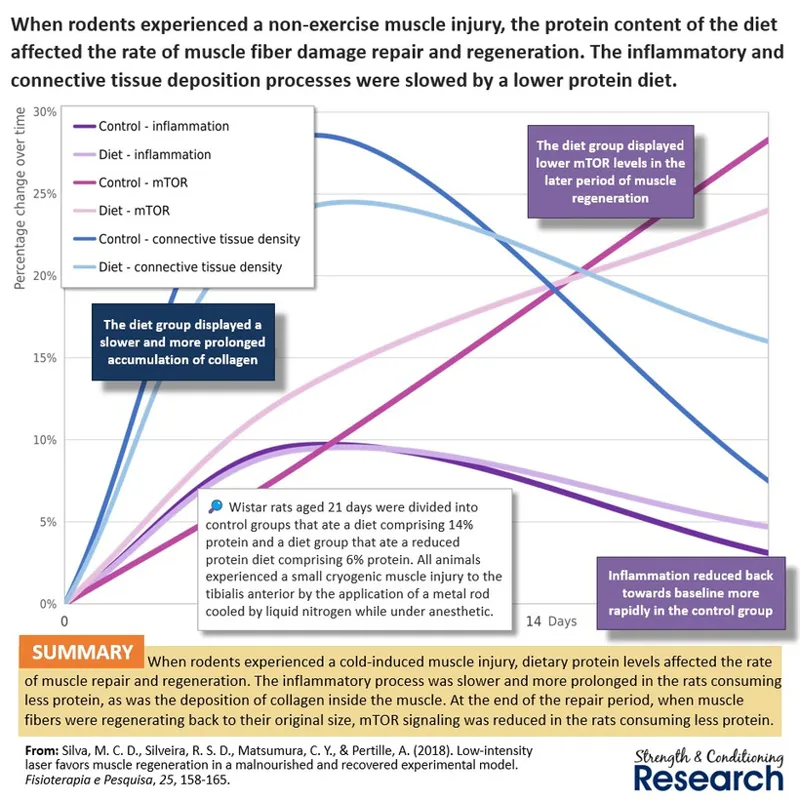
We can draw the inference that muscle damage repair is accelerated by a high dietary protein intake by the observation that non-exercise muscle damage repair also occurs more quickly when more dietary protein is provided as raw materials for repair and regeneration.
.
#2. Higher protein consumption accelerates muscle glycogen replenishment after exercise
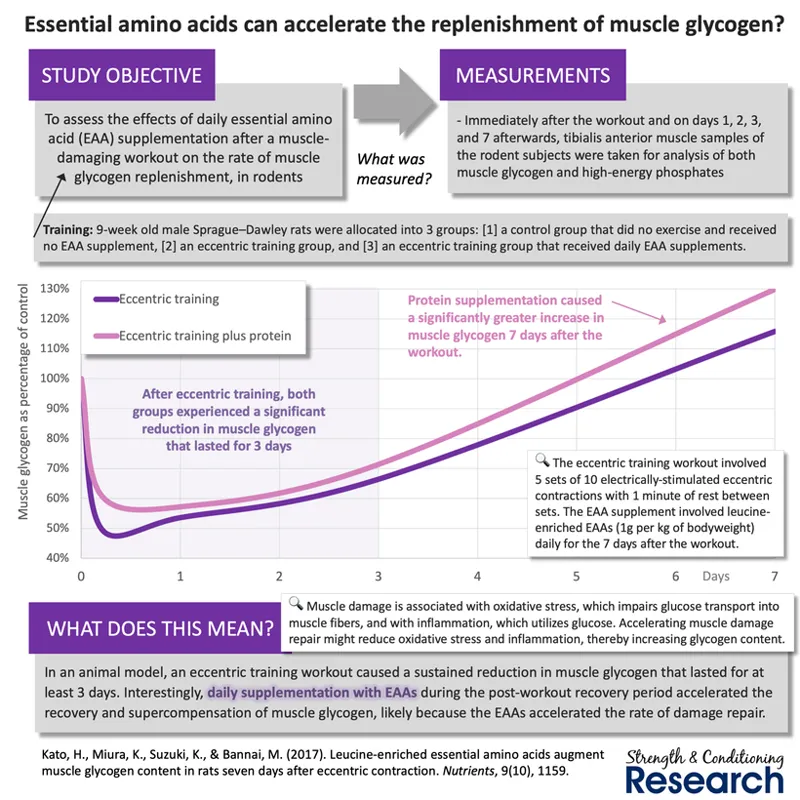
Importantly, the repair processes of the muscle fiber must occur before that same muscle fiber can be replenished with glucose. Therefore, we see a similarly beneficial effect on the post-workout glycogen replenishment process when consuming sufficient dietary protein.
.
#3. Caloric restriction reduces basal muscle protein synthesis rates as well as mTOR signaling
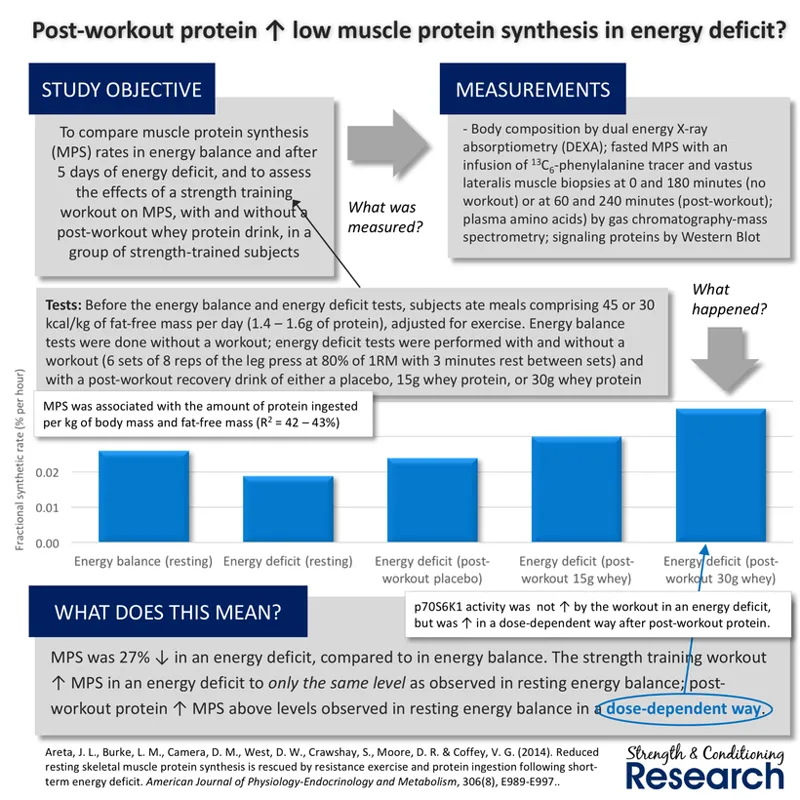
As we might expect based on the slower rate of muscle damage repair that occurs while in caloric restriction (in addition to the suppressed levels of mTOR signaling), caloric restriction reduces basal muscle protein synthesis (MPS) rates.
.
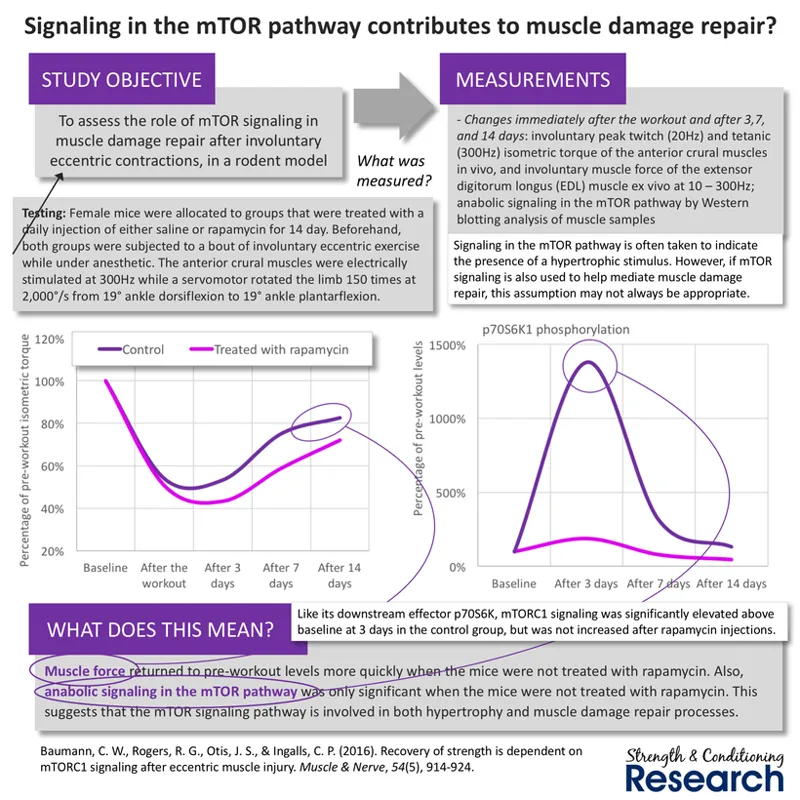
Indeed, while both MPS and mTOR are more commonly associated with muscle hypertrophy, they are also both documented in contributing to the muscle damage repair processes in the post-workout period. Hence, we should expect that a reduction in MPS and mTOR signaling caused by caloric restriction would reduce the rate of post-workout recovery.
.
#4. Severe caloric restriction reduces sensitivity to dietary protein consumption
Periods of severe caloric restriction reduce the sensitivity of muscle fibers to the availability of amino acids that support hypertrophy. The amount of lean body mass spared during a diet is not affected the the amount of dietary protein consumed, if the caloric deficit is very large.
.
In line with this observation, the protein content of a diet does not affect the anabolic signals that govern muscle protein synthesis. Severe caloric restriction suppresses mTOR signaling regardless of the dietary protein content.
.
#5. Caloric restriction impairs muscle glycogen content, likely prolonging other fatigue mechanisms
Caloric restriction typically reduces blood glucose and muscle glycogen, both of which have been linked to the development of supraspinal central nervous system (CNS) fatigue. Thus, the presence of supraspinal CNS fatigue in the post-workout period is likely exacerbated by caloric restriction, especially if dietary carbohydrate levels are low. Additionally, low muscle glycogen has been linked to the development of excitation-contraction coupling failure.
.
Indeed, the research linking low blood glucose and low muscle glycogen with these fatigue mechanisms is relatively well-developed albeit still unknown to most of the fitness industry (read more).
.
Conclusions
Many bodybuilders notice that they recover more slowly from their workouts when they dieting. Yet, little research has been devoted to this observation. Even so, several insights point to a reduced rate of muscle damage repair when in a caloric deficit, especially when dietary protein levels are also reduced. Indeed, a higher level of dietary protein accelerates the rate of recovery after both [1] exercise-induced muscle damage, and [2] non-exercise muscle damage. Therefore, consuming insufficient dietary protein while in calorie balance (and likely also mild caloric restriction) will certainly slow the rate of post-workout recovery. Nevertheless, severe caloric restriction reduces basal muscle protein synthesis (MPS) rates, attenuates the signaling processes in the mTOR pathway, and causes a loss of lean body mass independently of dietary protein consumption. While MPS rates and mTOR signaling are typically associated with the hypertrophy process, they are also essential elements of muscle damage repair. Therefore, we should expect severe caloric restriction to slow down the rate of recovery from both exercise and non-exercise injury even when dietary protein intakes are sufficient. On top of this, low muscle glycogen and low blood glucose promote supraspinal central nervous system fatigue and low muscle glycogen promotes excitation-contraction coupling failure. The presence of these fatigue mechanisms in the post-workout period would also be expected to reduce the rate of strength recovery.
Comments (2)
Hi Chris, would a 30–40% calorie deficit overnight cause any muscle atrophy, or would it mainly just reduce muscle glycogen? Thanks!
Practically speaking what should be the target daily protein intake when in a net caloric balance, and should that amount change when in a moderate caloric deficit?