




Neuromechanical matching criticisms
Since I introduced the principle of neuromechanical matching to the fitness industry a couple of years ago, some influencers have accepted it as a useful too, while others have attacked it since it undermines their ability to make whatever arguments they like for whatever exercises they prefer to program. Here is a summary of the popular criticisms and their rebuttals.
.
What is the principle of neuromechanical matching?
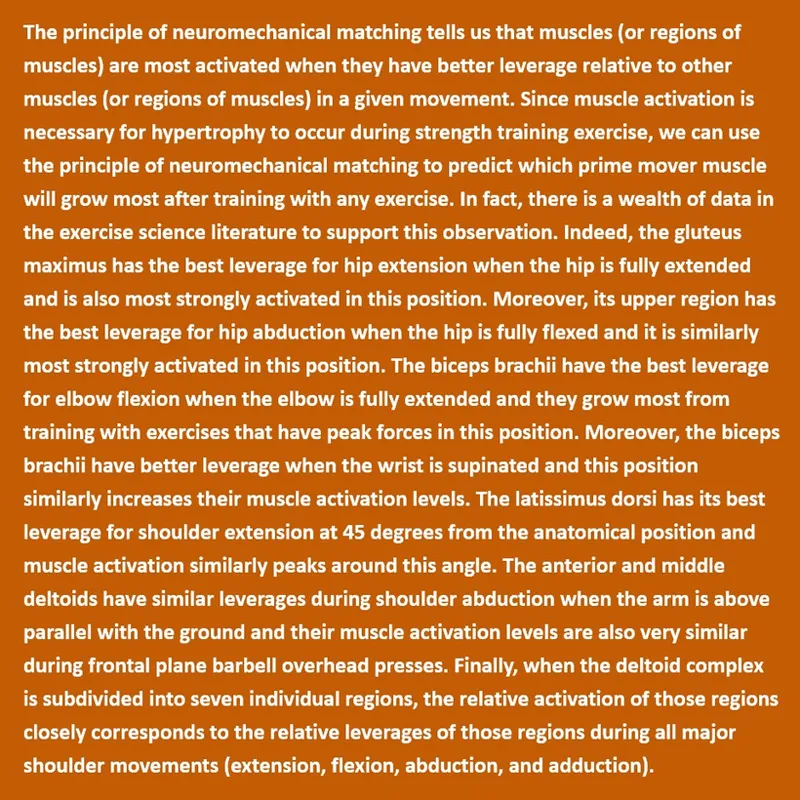
The principle of neuromechanical matching describes how the central nervous system (CNS) decides where to send central motor command during a movement. The hypothesis states that the CNS sends neural drive preferentially to those muscles or muscle regions that have the best leverage for the movement (read more).
.
Criticism #1. The principle of neuromechanical matching is a very new idea (and therefore unreliable?)
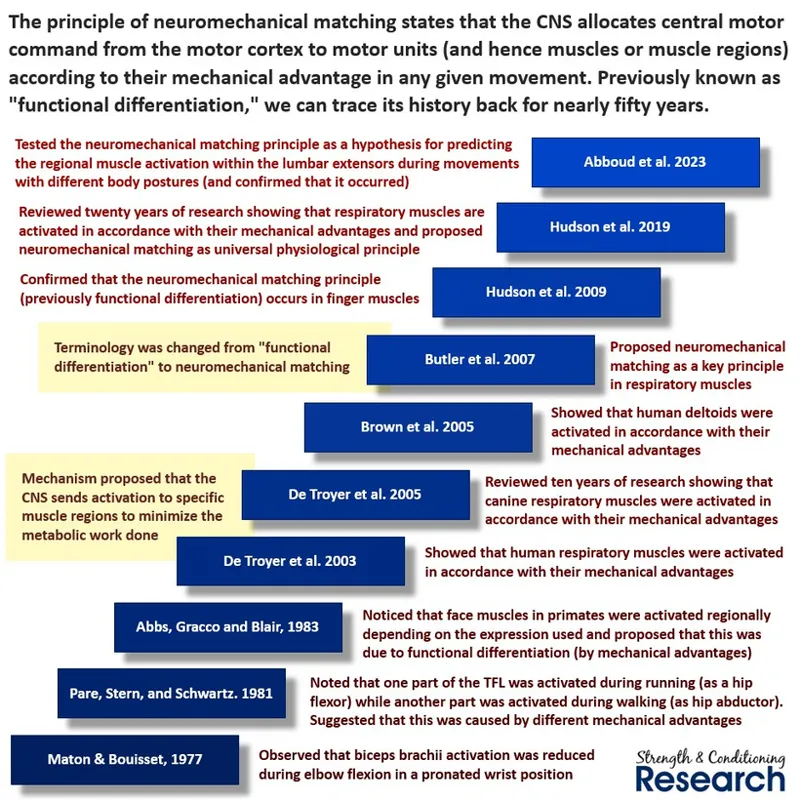
This is not correct. Yes, the terminology "principle of neuromechanical matching" was coined in 2007 and the first review paper was written in 2019. At first glance, this makes it a fairly recent idea. However, we can trace its existence back to 1977 if we simply realize that the same concept has been described under a number of different headings over the decades. For a more complete history, see this article (read more).
.
Criticism #2. The principle of neuromechanical matching is either [1] incompatible with the size principle, or [2] is unnecessary as we already have the size principle
This is not correct. Henneman's size principle determines the recruitment order of motor units in a muscle region, not the muscle region to which central motor command is sent. Therefore, we can imagine the size principle operating within the confines of the region to which muscle activation is sent in accordance with the principle of neuromechanical matching.
.
Criticism #3. There is no mechanism by which the CNS can detect muscle leverage
This is not correct. The CNS can perceive the magnitude of central motor command that is used for a given movement by means of the sensation of innervation. The central motor command creates a corollary discharge that we perceive as effort. Therefore, if we perform a movement by using a muscle with poor leverage, we will need to generate a lot of neural drive (and therefore perceive a high effort). In contrast, if we do the exact same movement but using a muscle with good leverage, we will only need to generate a small amount of neural drive (and therefore perceive a low effort).
.
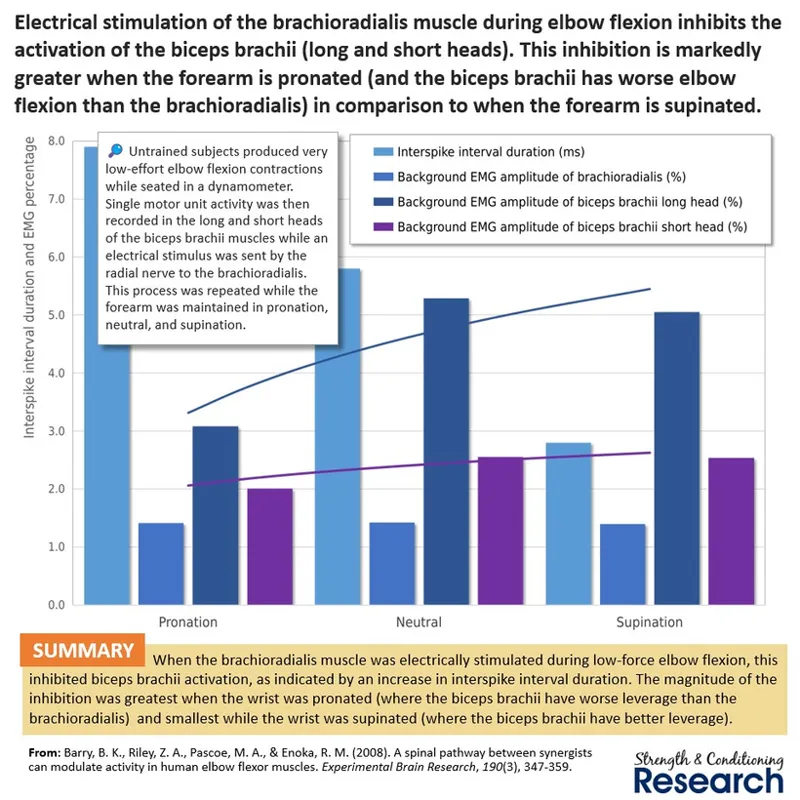
Additionally, some information may be stored at the spinal level, as research has shown that when one muscle within a group is electrically stimulated (and the stimulated muscle also has good leverage), other muscles in the same group are inhibited.
.
Criticism #4. The principle of neuromechanical matching has not been studied in human skeletal muscles
This is not correct and the error is very easy to demonstrate. Neuromechanical matching has been studied in human finger muscles, human trunk muscles, and human deltoid muscles. If you want to criticise the hypothesis, at least get your facts straight.
.
Criticism #5. The principle of neuromechanical matching has not been studied in high-effort movements
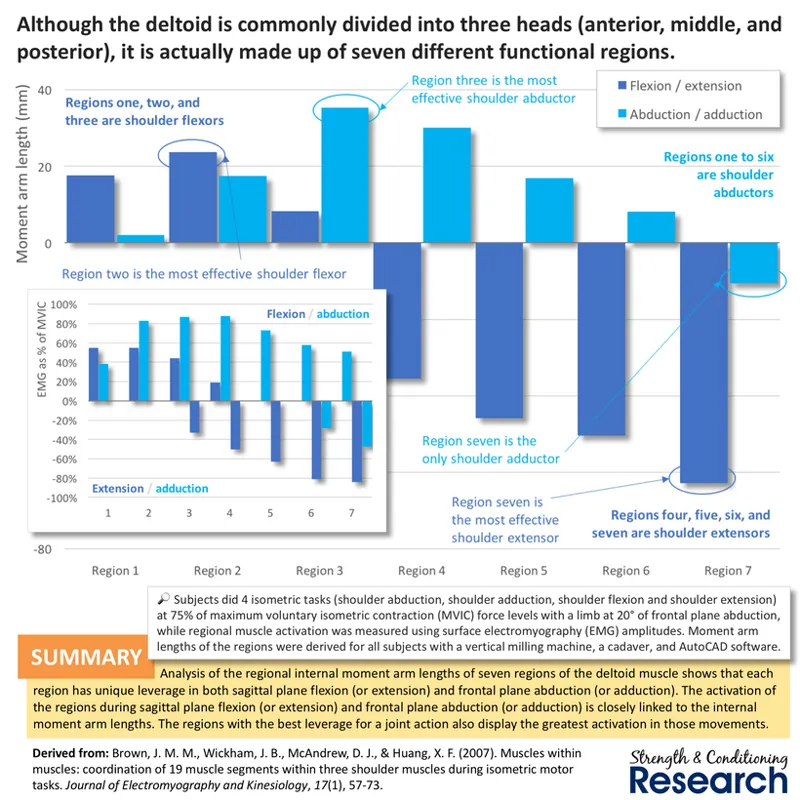
This is not correct. Even before the terminology "principle of neuromechanical matching" was coined, several studies had examined the relationship between the activation of small muscle regions in high-effort isometric contractions and the internal moment arm lengths of those same regions. In this example, 75% of maximum effort was used, which corresponds to loads typically used during bodybuilding training.
.
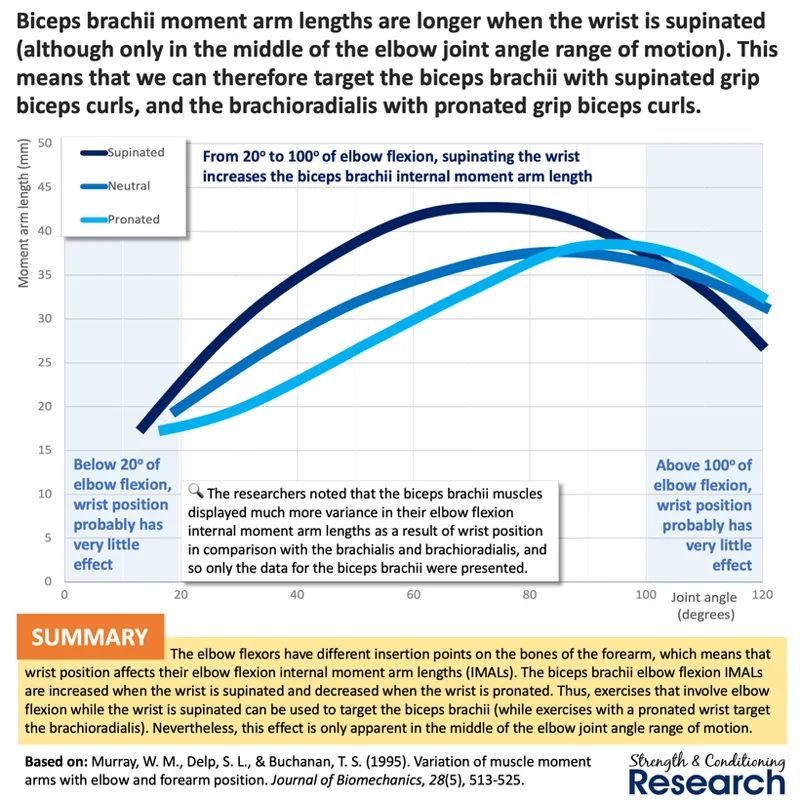
Additionally, many individual studies have tested leverages and muscle activation during maximal efforts separately and found close correspondence. For example, supination of the wrist increases [1] biceps brachii activation in maximal voluntary elbow flexion contractions, and also increases [2] the elbow flexion leverage of the biceps brachii.
.
The really valuable feature of this study is that it involved a voluntary activation measurement and not simply a muscle activation measurement. That makes it many times more reliable than simply recording electromyography.
.
Conclusions
The principle of neuromechanical matching (NMM) describes how the central nervous system (CNS) decides where to send central motor command during a movement. The hypothesis states that the CNS sends neural drive preferentially to muscle regions having the best leverage for a movement, because this makes the movement as efficient as possible. Opponents propose the following criticisms: [1] NMM is a new and hence unreliable hypothesis. Incorrect. The terminology was coined in 2007 but we can trace the original idea back to 1977. [2] NMM is either (A) incompatible with the size principle, or (B) is unnecessary because of the existence of the size principle. Both incorrect. Henneman's size principle determines the recruitment order of motor units in a muscle region, not the muscle region to which central motor command is sent. [3] The CNS cannot detect muscle leverage. Incorrect. The CNS can easily detect leverage because it can perceive the effort generated by central motor command. The lower the effort for a given movement, the better the leverages of the involved muscles. [4] NMM has not been studied in human skeletal muscle. Incorrect. It has been studied in a variety of human skeletal muscles. [5] NMM has not been studied in high-effort movements. Incorrect. It has been directly tested at 75% of maximum effort and indirectly tested in maximal efforts.
