






Supraspinal CNS fatigue during exercise
Historically, central nervous system (CNS) fatigue during exercise has been very poorly explained by fitness influencers and experts. Fortunately, we now have a very simple model that explains one of the two types of CNS fatigue mechanisms that happens during exercise, which is supraspinal (brain) CNS fatigue.
.
#1. Supraspinal CNS fatigue is explained by the psychobiological model of fatigue
The psychobiological model of fatigue is the explanatory model that shows how supraspinal CNS fatigue works both during and after exercise. The model states that we have a maximum tolerable perception of effort that we cannot exceed. Motor unit recruitment contributes to effort perception levels but so do other discomforting feelings, like being out-of-breath. So the more discomforting feelings we experience during exercise, the lower the level of motor unit recruitment at task failure and the more supraspinal CNS fatigue (read more).
.
#2. Supraspinal CNS fatigue is produced by any painful, discomforting, or otherwise disagreeable sensations
As we might predict from the psychobiological model of fatigue, experimentally-induced pain causes an increase in supraspinal CNS fatigue during exercise.
.
#3. Supraspinal CNS fatigue is produced by afferent feedback from metabolite accumulation
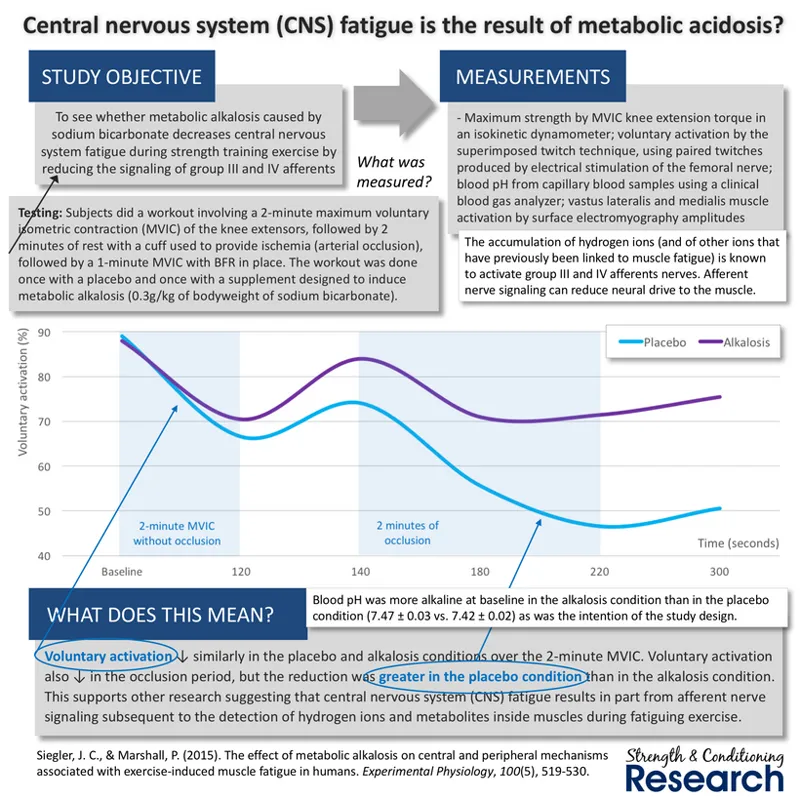
Pain produced by metabolites accumulating leading to burning sensations inside the working muscles also causes an increase in supraspinal CNS fatigue during exercise.
.
We can see that the pain caused by metabolites accumulating and producing burning sensations in the working muscles causes supraspinal CNS fatigue in other muscles in completely different parts of the body, which confirms that the location of the fatigue mechanism is inside the brain.
.
Interestingly, the signal inside the muscle that produces the burning sensation is not a single metabolite. Rather, it is the combination of multiple metabolites together that creates a signal.
.
#4. Supraspinal CNS fatigue is produced by cardiovascular sensations
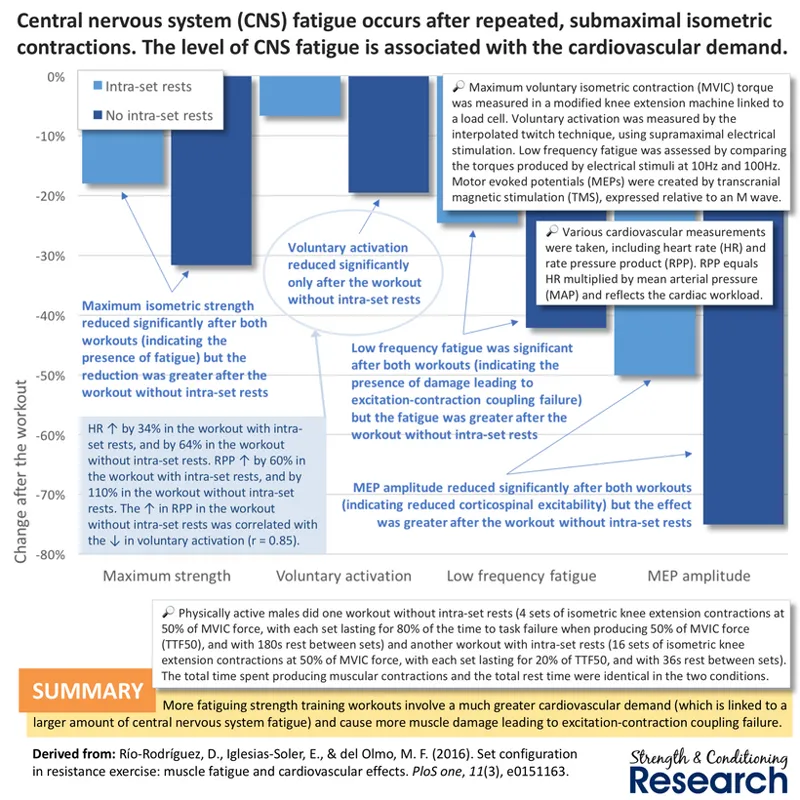
Discomfort associated with an increased level of cardiovascular demand (including feelings of being out-of-breath) also causes an increase in supraspinal CNS fatigue during exercise.
.
#5. Supraspinal CNS fatigue is produced by inflammation, which may be stimulated by lactate
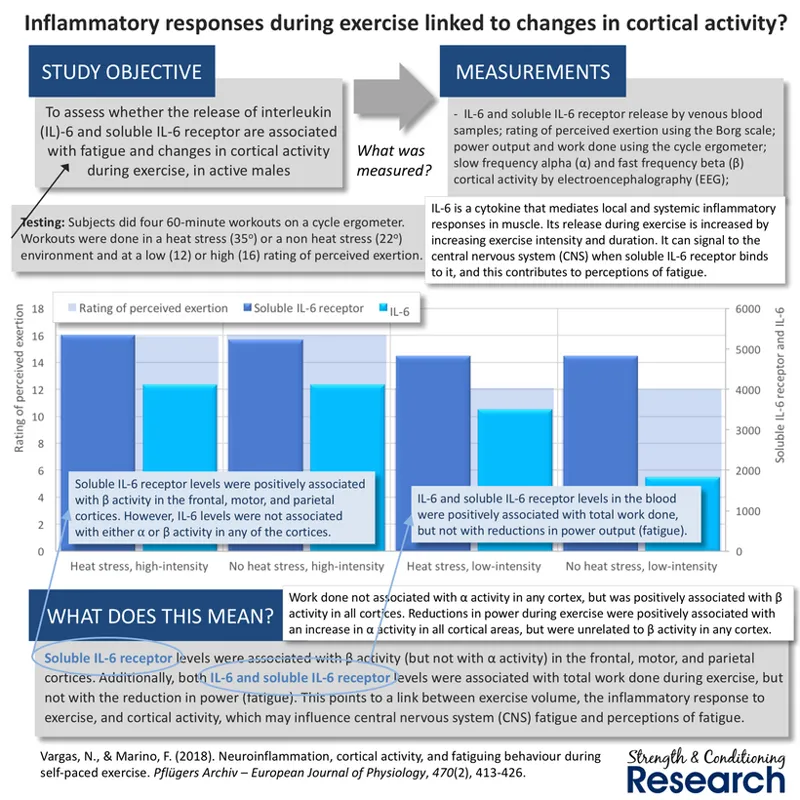
Feelings of fatigue and tiredness occur in response to an increased level of exercise-induced inflammatory signaling in the bloodstream during exercise. These discomforting feelings cause supraspinal CNS fatigue during exercise. Here, we can see changes in brain activity associated with the inflammatory signals in the bloodstream.
.
The exercise-induced inflammatory signaling in the bloodstream develops relatively quickly during aerobic exercise but may develop even more quickly if the exercise is more intense.
.
Although the primary pathway for the inflammatory signaling (which originates in muscles) to reach the brain is via the bloodstream, researchers have identified two possible routes.
.
Interestingly, since lactate is known to stimulate similar inflammatory mediators inside the working muscles, it may be the initiating factor. If so, it would predict a more rapid onset of this sources of supraspinal CNS fatigue during more intense exercise.
.
#6. Supraspinal CNS fatigue is produced when the brain detects the presence of low glycogen
Discomfort associated with a decreased level of muscle glycogen and/or blood glucose also causes an increase in supraspinal CNS fatigue during exercise. This was originally observed in rodent studies.
.
However, the same finding has been replicated in humans (and the dozens of carbohydrate mouth-rinsing studies are also evidence in this regard).
.
#7. Supraspinal CNS fatigue is produced by higher cognitive load
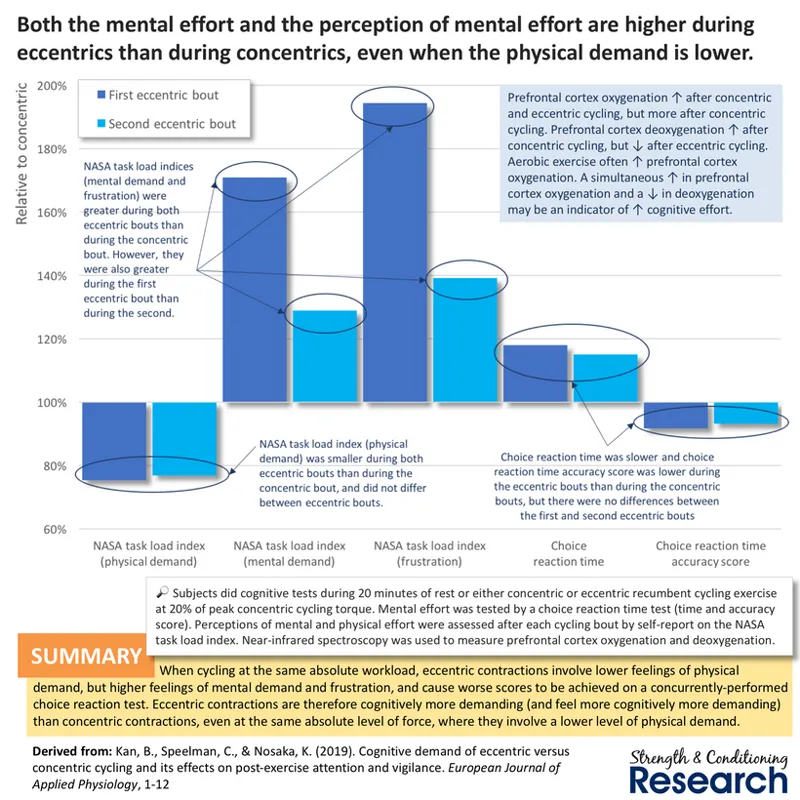
Discomfort associated with a movement that is more challenging to coordinate has also been linked to an increased perception of effort for a given level of muscle activation, indicating the presence of supraspinal CNS fatigue.
.
Conclusions
The psychobiological model of fatigue tells us how supraspinal central nervous system (CNS) fatigue works during and after exercise. The model states that we have a maximum tolerable perception of effort that we cannot exceed. Motor unit recruitment contributes to effort perception but so do other discomforting feelings. Thus, the more other discomforting feelings we experience during exercise, the higher the level of supraspinal CNS fatigue, and the lower the level of motor unit recruitment at task failure. Discomforting feelings during exercise include: [1] pain of any kind, [2] burning feelings in the muscle caused by metabolite accumulation, [3] feeling out-of-breath due to a high cardiovascular demand, [4] feelings of fatigue or tiredness caused by exercise-induced inflammatory signaling that starts in the muscles and enters the bloodstream (which may be caused by lactate accumulation), [5] feeling low on energy when the brain detects low muscle glycogen or blood glucose (or other carbohydrate store), and [6] struggling to perform complex exercises that are inherently hard to coordinate. We can minimize supraspinal CNS fatigue and maximize the level of motor unit recruitment associated with our maximal efforts by structuring our training to avoid or reduce these discomforting feelings.
Comments (2)
Is early cluster work in the session a good method to reduce the build up of supra spinal fatigue during the first exercises? On the contrary, could late clusters get significant stimulus despite the accumulated fatigue at the end of a 20+ exercises FB session?
Hi Chris, I've DM'd you regarding something a bit more advanced than fatigue. Please could take a look? Cheers