





The psychobiological model of fatigue
The psychobiological model of fatigue (PBMOF) is an essential physiological concept that helps us understand how motor unit recruitment, effort perception, and fatigue are related to each other during a bout of exercise.
.
#1. What is the psychobiological model of fatigue?
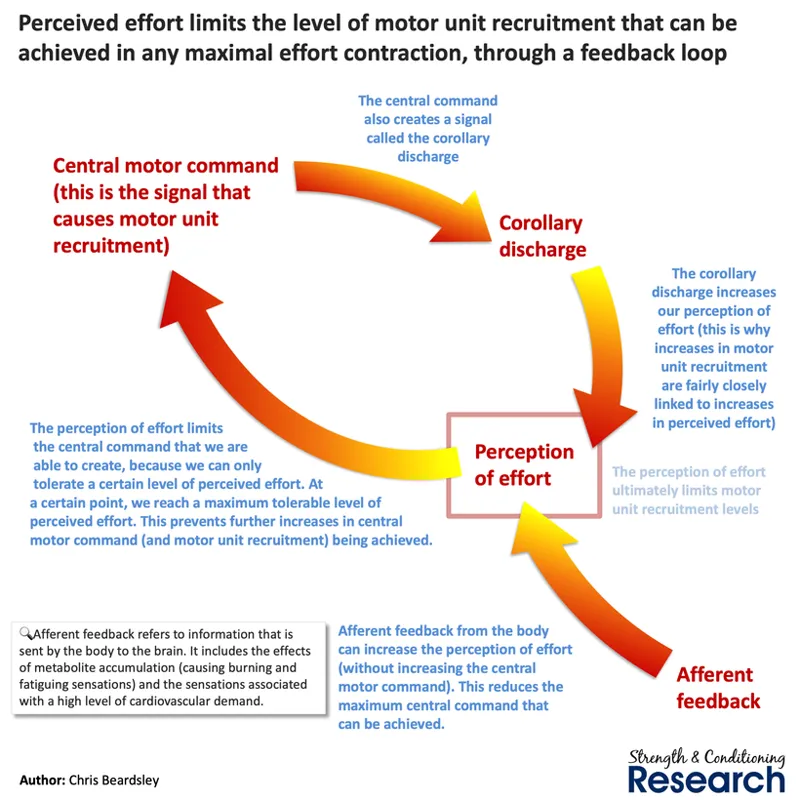
The PBMOF starts with the observation that the neural drive (called "central motor command") sent to the muscle to recruit motor units additionally creates a perception of effort by means of the corollary discharge. This means that we feel more effort when we produce higher levels of motor unit recruitment.
.
Yet, other things can also contribute to effort perception, such as those feelings that arrive through afferent feedback from the body. So multiple things can contribute to effort feelings while only neural drive contributes to motor unit recruitment.
.
The PBMOF identifies that we fail in any exercise task because we reach our maximum tolerable perception of effort. Therefore, all of the sources of effort perception (including from the corollary discharge, from afferent feedback, etc.) add together until we hit our upper limit for the effort we can tolerate. This is how muscular failure works during strength training and also how failure occurs in any other exercise task.
.
#2. Why is the psychobiological model of fatigue important? (motor unit recruitment and training variables)
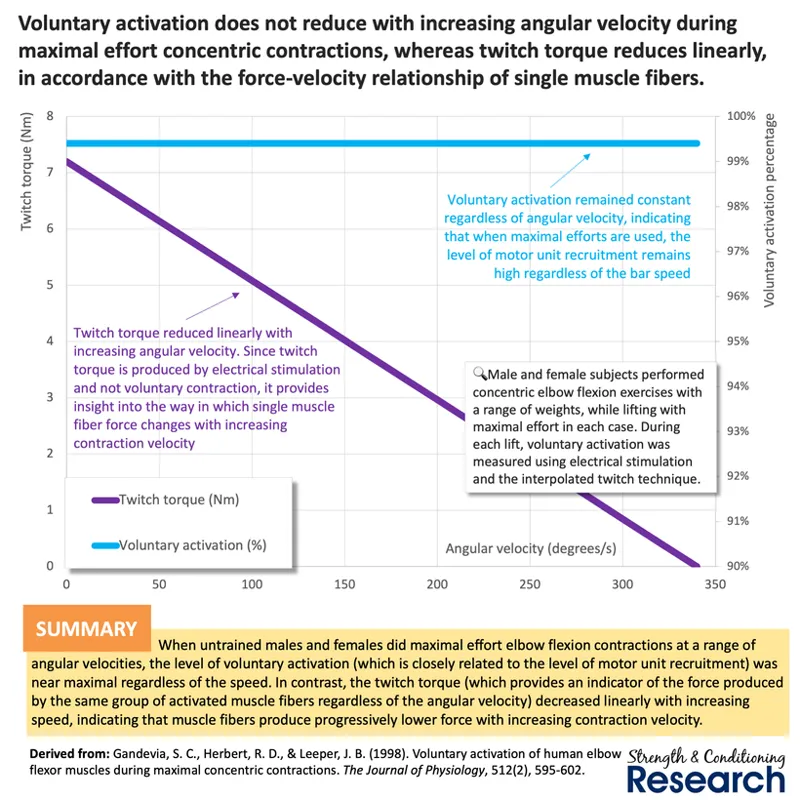
The PBMOF shows us why load, velocity, and fatigue all produce increases in motor unit recruitment alongside concomitant increases in the perception of effort. They all involve an increase in motor unit recruitment.
.
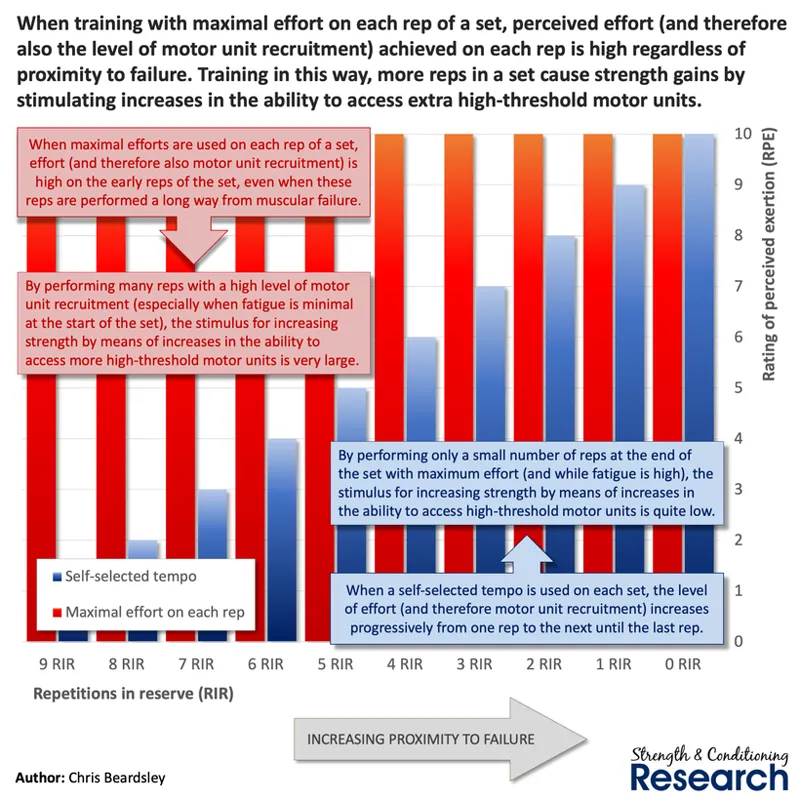
Indeed, S&C coaches would do well to recall that maximal levels of motor unit recruitment can be achieved with any load and without fatigue, simply by using a maximal effort against a light load to produce a maximal velocity.
.
This is also why the repetitions in reserve system is NOT the same thing as effort perception even though some researchers have tried to confound the two concepts. We can produce a maximal effort on any repetition regardless of the number of remaining reps in reserve.
.
#3. Why is the psychobiological model of fatigue important? (motor unit recruitment and motivation)
The PBMOF also explains why motivation can increase motor unit recruitment temporarily. Quite simply, it allows us to tolerate a higher level of effort perception.
.
#4. Why is the psychobiological model of fatigue important? (supraspinal central nervous system fatigue)
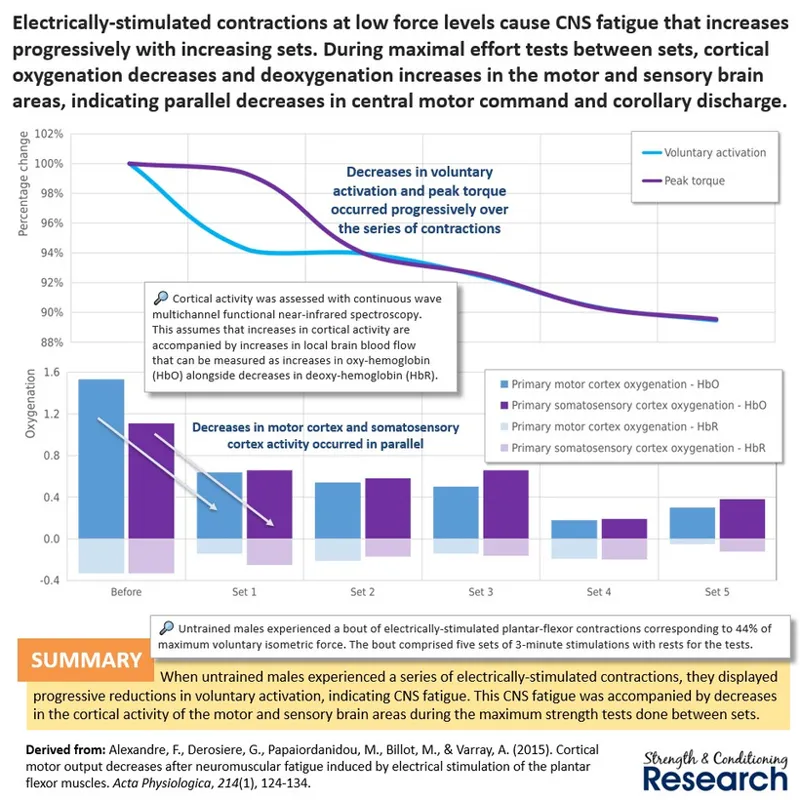
The PBMOF gives us the model for understanding how supraspinal central nervous system (CNS) fatigue works during (and after) exercise. Any discomforting sensation that is not the corollary discharge will increase effort perception without increasing motor unit recruitment. Thus, with those discomforting sensations present, we hit maximum tolerable level of effort at a lower level of motor unit recruitment.
.
This observation has been experimentally validated. Repeated, low-force isometric muscular contractions gradually produce reductions in the maximum level of motor unit recruitment that can be obtained (here measured by the gold-standard voluntary activation test) alongside changes in the brain indicating parallel decreases in both the central motor command and the corollary discharge to the sensory part of the brain.
.
Conclusions
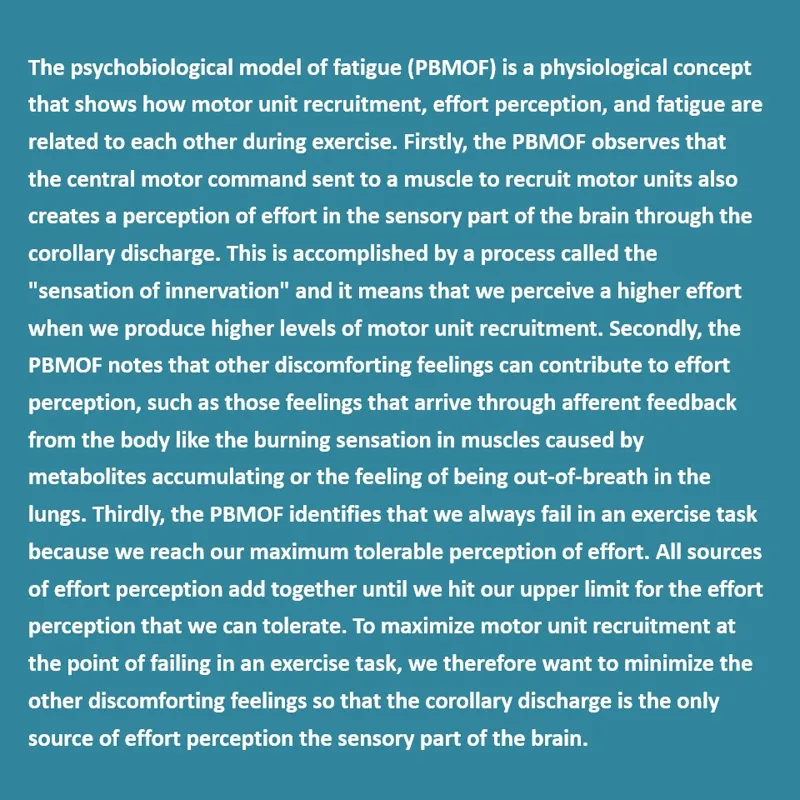
The psychobiological model of fatigue (PBMOF) is a physiological concept that helps us understand how motor unit recruitment, effort perception, and fatigue are related to each other during exercise. Firstly, the PBMOF observes that the central motor command sent to a muscle to recruit motor units additionally creates a perception of effort in the sensory part of the brain by means of the corollary discharge. This is accomplished by a process called the "sensation of innervation" and it means that we perceive a higher effort when we produce higher levels of motor unit recruitment. Secondly, the PBMOF notes that other discomforting feelings can contribute to effort perception, such as those feelings that arrive through afferent feedback from the body like the burning sensation in muscles caused by metabolites accumulating or the feeling of being out-of-breath in the lungs. Thirdly, the PBMOF identifies that we always fail in an exercise task because we reach our maximum tolerable perception of effort. All sources of effort perception add together until we hit our upper limit for the effort perception that we can tolerate. To maximize motor unit recruitment at the point of failing in an exercise task, we therefore want to minimize the other discomforting feelings so that the corollary discharge is the only source of effort perception the sensory part of the brain.