




Capillarization
After both strength training programs and aerobic exercise training programs, we see increases in measures of capillarization. This has given rise to many speculations, including the idea that it might be possible to enhance muscle growth if capillarization is increased before we start a training block.
.
#1. What determines the number of capillaries around a muscle fiber?
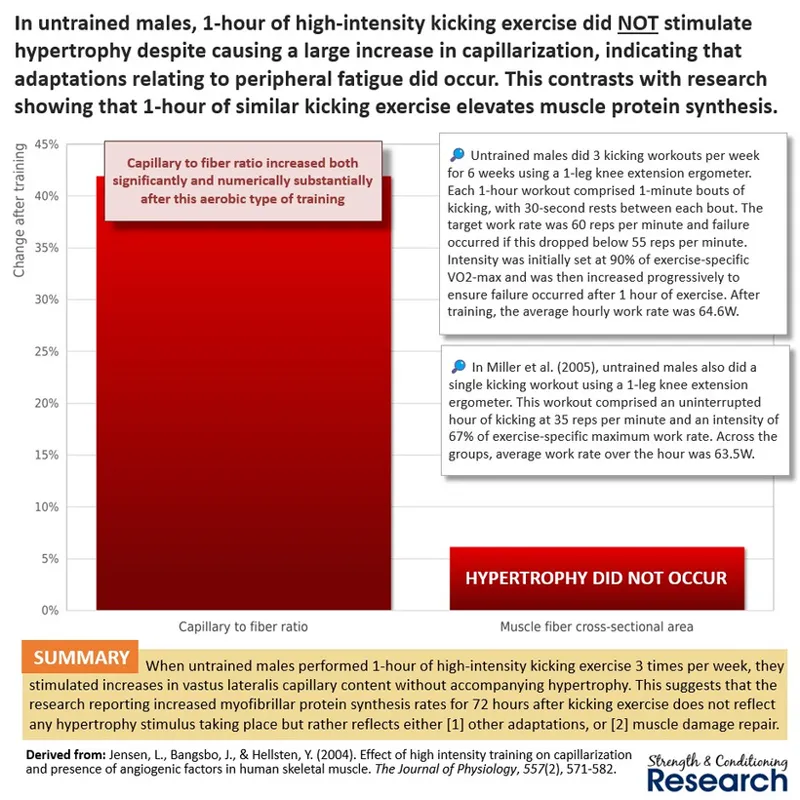
The number of capillaries around a muscle fiber seems to be determined by how much oxygen the muscle fiber wants. This can be seen by reference to two main determinants of capillary number: muscle fiber size and muscle fiber mitochondrial content. When fibers are larger, they require more oxygen to fuel the greater amount of metabolic activity. When fibers are more oxidative, they similarly require more oxygen.
.
#2. What happens to the number of capillaries around a muscle fiber when hypertrophy happens?
During strength training programs in humans leading to hypertrophy, there are similar increases in muscle fiber cross-sectional area and in muscle fiber capillary number. Yet, this does not lead to an increase in the capillaries per unit muscle area. This suggests that there is a relatively tight relationship between muscle fiber oxygen demand per unit area and the number of capillaries inside the muscle.
.
#3. What happens to the number of capillaries around a muscle fiber when it is severely damaged and regenerates?
When muscle fibers are severely damaged such that they need to regenerate, the process initially involves very severe shrinkage of the muscle fiber. We might expect that given the close relationship between muscle fiber size and capillary number that capillaries might also reduce in number while this shrinkage is present. Yet, it does not. The number of capillaries stays the same and therefore does not require modification as the muscle fiber grows back to its original pre-damaged size.
.
#4. Do higher rep ranges cause greater increases in capillary number during strength training?
Endurance training stimulates very large increases in capillarization without any changes in muscle fiber size. This is most likely due to the increases in muscle fiber oxidative capacity that this type of training stimulates.
.
Nevertheless, the effect of rep range on changes in capillarization seems to be minimal. When studies have compared the effects of different rep ranges on changes in capillary number, they have found no meaningful differences between the effects of moderate and light loads (albeit heavy loads might be less effective). It seems that the only factor driving the increases in capillarization after any type of strength training is the fiber hypertrophy.
.
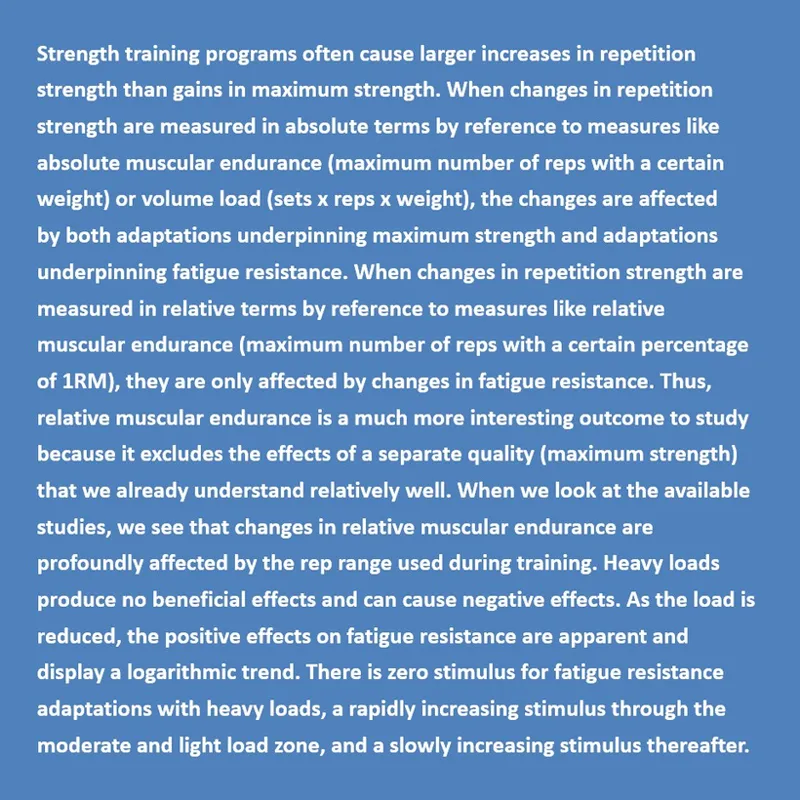
This is very interesting because rep range has a profound effect on changes in relative muscular endurance. This suggests that increases in capillarization do NOT underpin the increases in fatigue resistance that are observed with high rep training (read more).
.
#5. Does increasing capillarization increase hypertrophy?
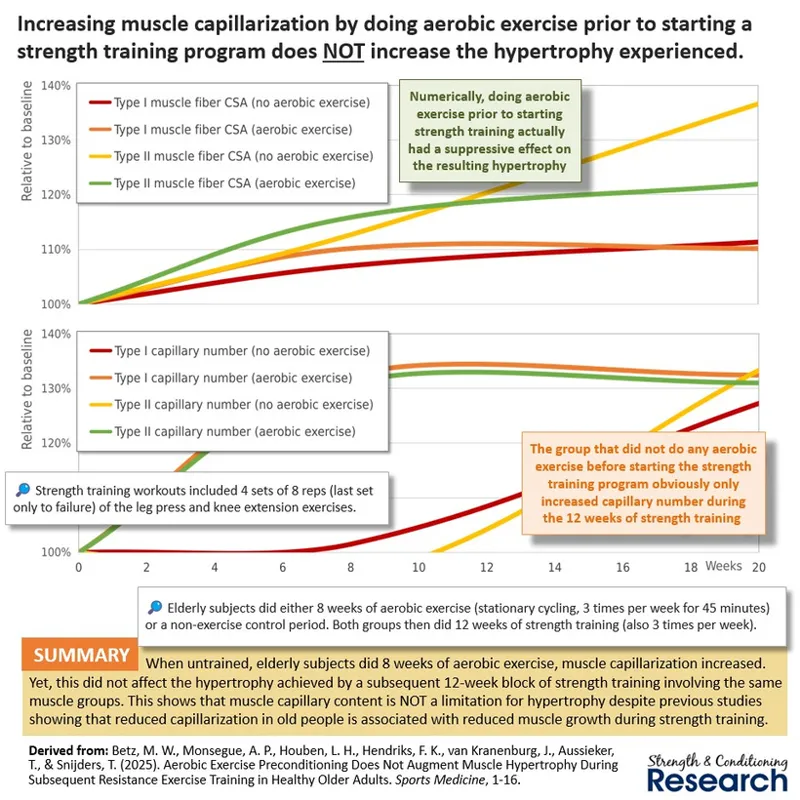
Some fitness influencers have argued that increasing the number of capillaries to which a muscle fiber has access could enhance the hypertrophy that is subsequently experienced during a strength training program. This idea is based on the observation that when older males have lower pre-training capillary numbers, they experience less hypertrophy during a strength training program.
.
Yet, direct investigations into this question have found no beneficial effects of increasing the amount of capillarization by doing a block of aerobic exercise before commencing a strength training program.
.
Conclusions
Capillaries inside muscles bring oxygen and nutrients to muscle fibers and remove waste products and metabolites. Each muscle fiber has several capillaries around it. We can measure the capillarization of the muscle by counting them. The number of capillaries around a muscle fiber seems to be determined by how much oxygen the muscle fiber needs. This can be seen by reference to two main determinants of capillary number: muscle fiber size and mitochondrial content. When fibers are larger and/or more oxidative, they require more oxygen and have more capillaries. Hence, it is unsurprising that endurance training (which increases muscle fiber oxidative capacity) increases capillary number even without increasing muscle fiber size. Similarly, strength training increases capillary number in tandem with muscle fiber hypertrophy. During strength training, increases in capillaries per muscle fiber unit area do not change very much, suggesting that the hypertrophy is the sole reason for the increased capillary number. In line with this observation, rep range does not seem to affect changes in capillarization during strength training, which suggests that this adaptation does NOT contribute to the greater increases in relative muscular endurance achieved when lifting lighter loads. Finally, while reduced capillary content does appear to be associated with reduced hypertrophy in older populations, enhancing capillary content using aerobic exercise prior to strength training does not fix the problem, suggesting that the lack of capillaries is not the root cause of the impaired muscle growth.
