




Muscle protein synthesis rates
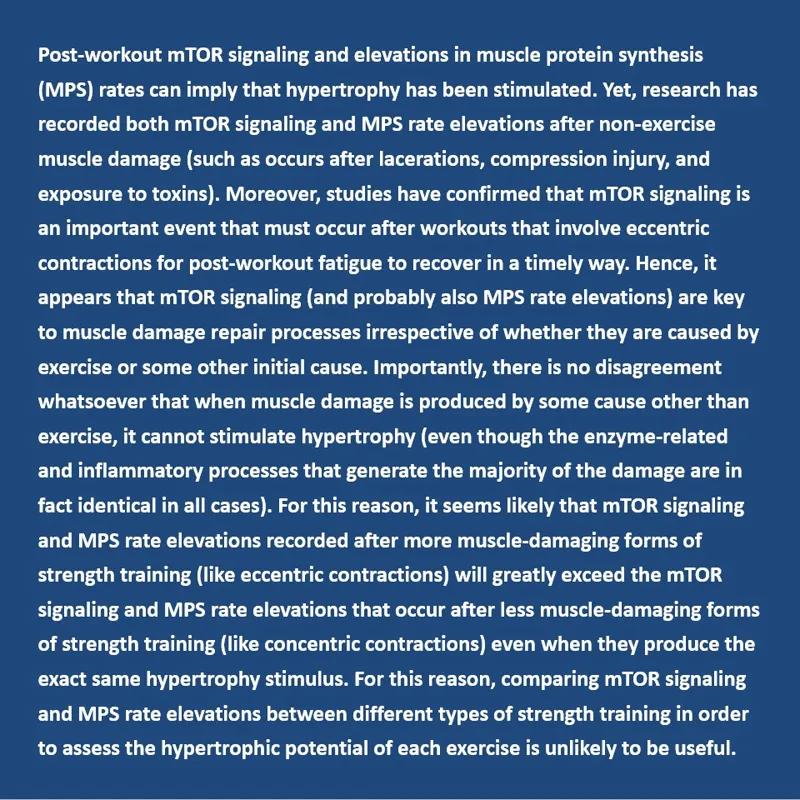
Muscle protein synthesis (MPS) rates are elevated after: [1] non-exercise muscle injury (such as lacerations and contusions); [2] strength training workouts, [3] aerobic exercise workouts, and [4] passive static stretching workouts. So how should we interpret MPS rate elevations after exercise when this is the case?
.
#1. MPS rates are elevated to repair muscle damage even when no hypertrophy has been stimulated
MPS rates are elevated by non-exercise muscle injury in the same way as after bouts of strength training exercise. Evidently, this means that muscles can be in a state of elevated MPS rates without stimulating hypertrophy, especially given that muscle atrophy is often a problem after surgery and injury (read more).
.
#2. MPS rate elevations occur after strength training workouts
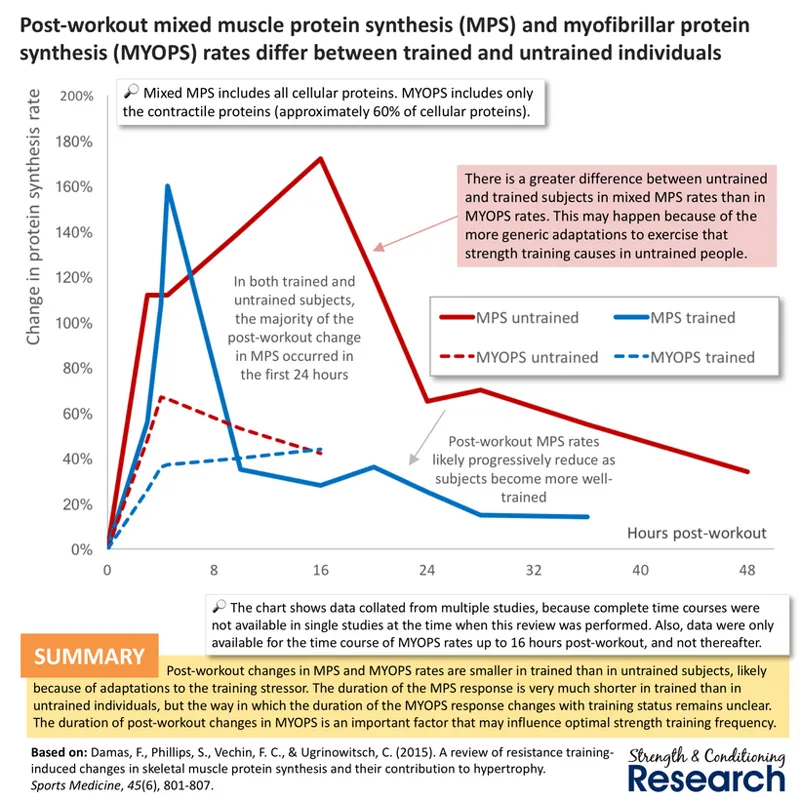
After strength training exercise, MPS rate elevations peak relatively quickly, such that they are highest within the first 24 hours and then reduce afterwards.
.
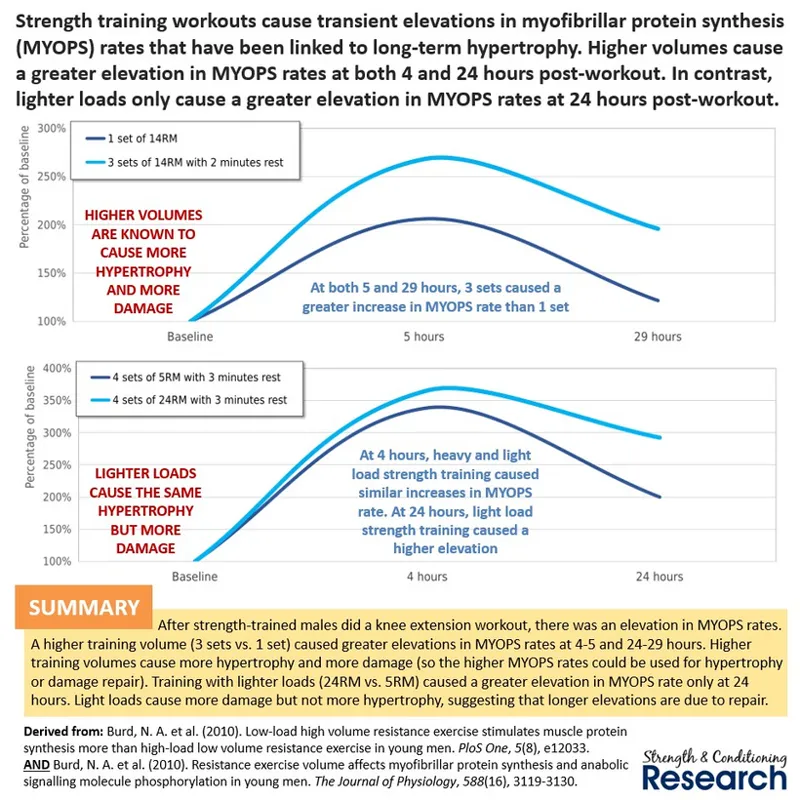
MPS rate elevations are greater when the exercise is more muscle-damaging, such as when the workout involves either higher volumes (rather than lower volumes) or when the workout involves lifting lighter loads to failure (instead of heavier loads). Since there is no difference in hypertrophy between workouts using the same number of sets to failure of lighter and heavier loads, the greater MPS rate elevation must be caused by the greater muscle damage.
.
#3. Post-workout MPS rate elevations also occur after aerobic exercise
After unaccustomed aerobic exercise, MPS rate elevations are surprisingly prolonged, and have been recorded as lasting for up to 72 hours post-workout. Hopefully, nobody is going to claim that this long MPS rate elevation represents a long hypertrophy stimulus duration!
.
Aerobic exercise causes greater and more prolonged MPS rate elevations when the exercise was higher intensity (which is a key factor that is known to contribute to muscle damage).
.
Various studies have reported muscle swelling in the week following long-distance running forms of aerobic exercise, as indicated by T2-shifts on MRI scans. Muscle swelling is relatively well-accepted to be caused by the inflammatory response to muscle damage.
.
Just to be completely clear, aerobic exercise definitely does cause muscle damage even in endurance-trained individuals doing long-distance exercise, and this is observable for days in the post-workout recovery period.
.
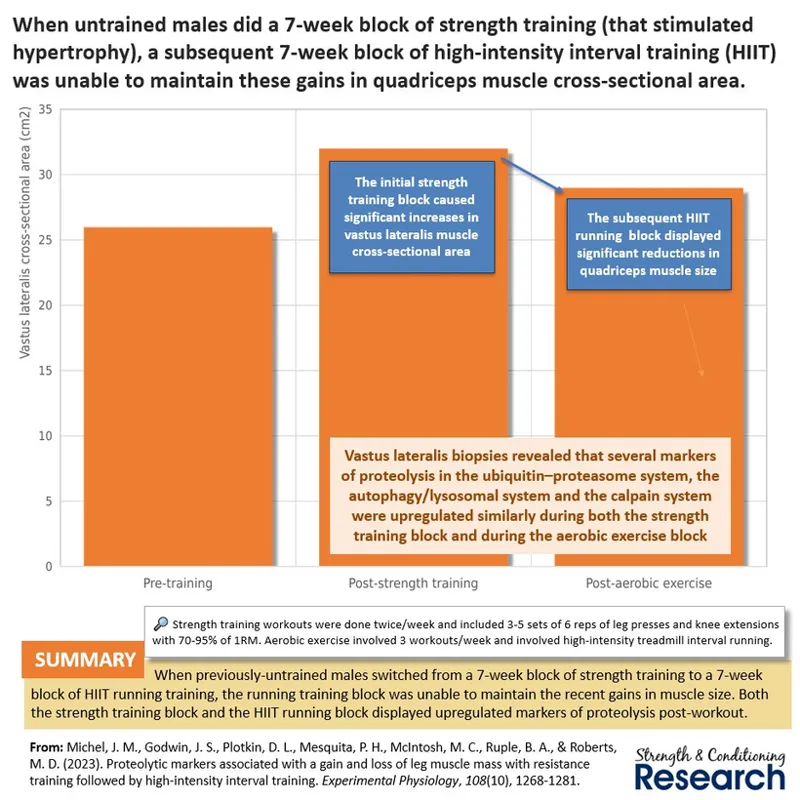
Recently, research found that when young males did a lower body strength training program and then switched to aerobic (treadmill) exercise, the aerobic exercise was insufficient to maintain the hypertrophy achieved by the previous block of strength training for the same muscle groups, even though it was high-intensity and presumably involved post-workout elevations in MPS rates. This shows that aerobic exercise presents minimal hypertrophy stimulus, despite claims that "anything" will cause muscle growth in untrained lifters.
.
#4. Post-stretching MPS rate elevations
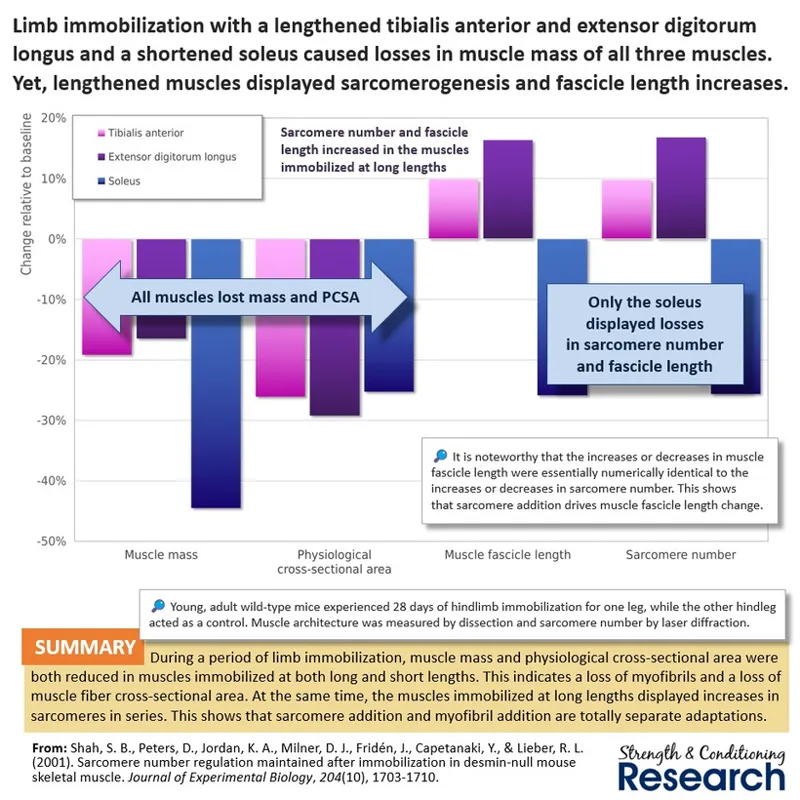
Substantial MPS rate elevations have been recorded after static stretching interventions in animal models such as limb immobilization. This is not surprising because there is a lot of data reporting increases in muscle mass (by means of sarcomerogenesis) in a number of different animals and also in humans.
.
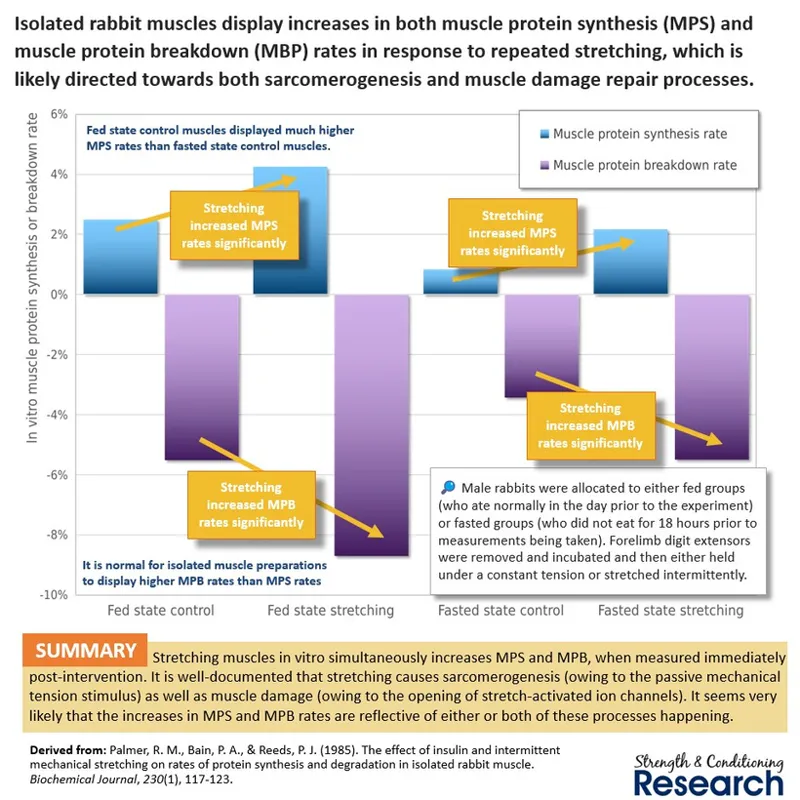
Similar findings have been observed through a range of different models, including static stretching of isolated muscle preparations in which both muscle protein synthesis rates and muscle protein breakdown rates can be measured.
.
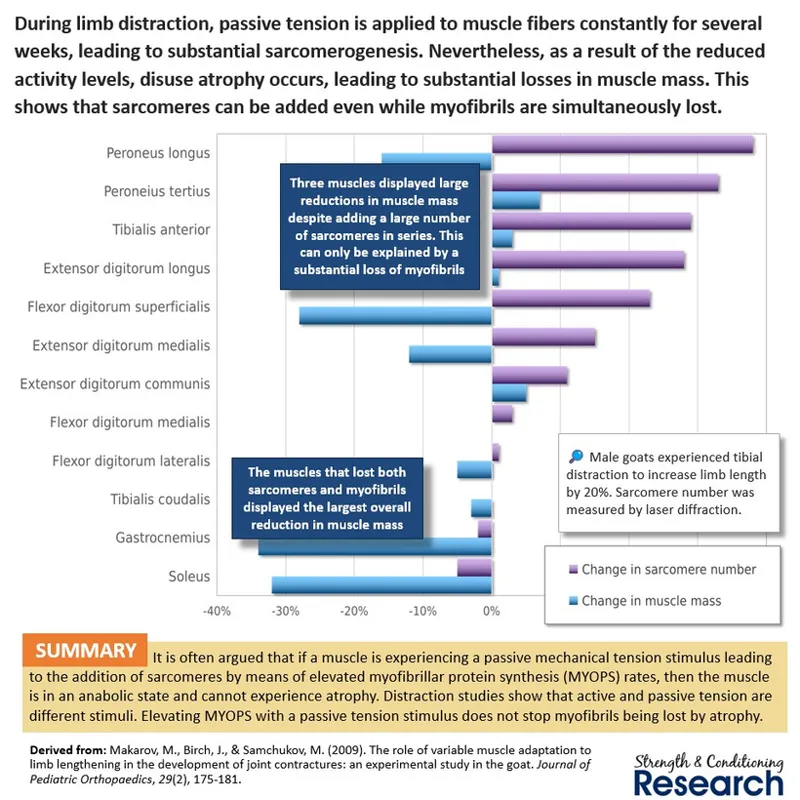
Nevertheless, muscle atrophy by means of decreases in muscle fiber cross-sectional area has been recorded while sarcomerogenesis is happening simultaneously. This shows that we can have elevated muscle protein synthesis rates (which obviously must include elevations in myofibrillar protein synthesis rates because sarcomeres contain myofibrils) without any kind of protection from disuse atrophy.
.
This observation has been made multiple times in a variety of different models that involve producing passive mechanical tension, including the most well-controlled model for the investigation of sarcomerogenesis, limb distraction. Here, we can see sarcomeres being added in large numbers while myofibrils are being lost, leading to a net loss of muscle mass. Based on these observations, it is literally impossible to claim that elevations in either muscle or myofibrillar protein synthesis always protect a muscle from atrophy.
.
Conclusions
Muscle protein synthesis (MPS) rates are elevated after: [1] non-exercise muscle injury (such as lacerations and contusions); [2] strength training workouts, [3] aerobic exercise workouts, and [4] passive static stretching workouts. Strength training workouts and passive static stretching both stimulate an increase in muscle mass (one by the addition of myofibrils and the other by the addition of sarcomeres in series). Yet, non-exercise muscle injury and aerobic exercise do not. Even so, all four of these situations involve the production of muscle damage, which necessitates repair processes that rely upon MPS rate elevations. Importantly, muscle atrophy can (and often does) occur during the recovery process from non-exercise muscle injury as a result of immobilization. Similarly, atrophy has been observed whenever blocks of aerobic exercise are performed after blocks of strength training that stimulated hypertrophy. Moreover, the loss of myofibrils can occur during immobilization while sarcomerogenesis is stimulated by the limb being immobilized at a long muscle length. These examples serve to demonstrate that an elevation in MPS rates does not guarantee that muscle size is being increased or is even being maintained. It is entirely possible to lose muscle mass while MPS rates are being regularly elevated.
Comments (2)
Hi Chris, I would like to see something about meal frequency. I've been eating two meals a day and I would like to know if having more meals spread out would be benefitial for hypertrophy. Thank you
I don't cover nutrition