







Concentric-only training
Concentric-only training is rarely discussed and yet there is a reasonable amount of information available to characterise it. In this article, I am going to detail the most important differences between concentric-only training and eccentric-only training.
.
#1. Concentric-only training may cause SLIGHTLY less hypertrophy
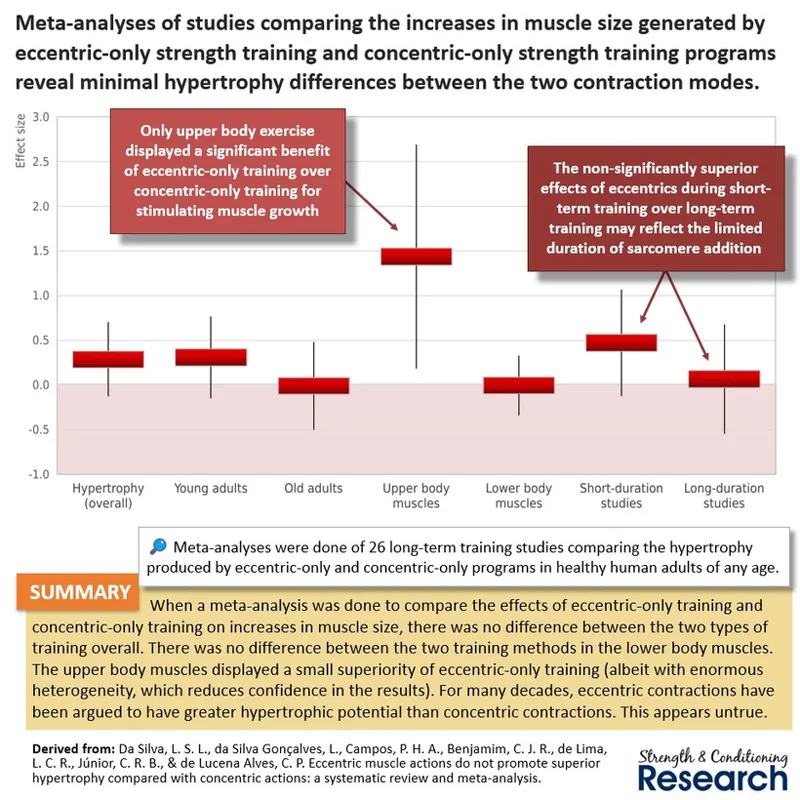
When comparing maximal effort concentric-only training with maximal effort eccentric-only training, the most recent meta-analyses have reported that concentric-only training and eccentric-only training are basically identical in their capacity for stimulating muscle growth.
Older meta-analyses concluded that concentric-only training causes slightly less hypertrophy. Either way, there is not really very much difference between the two training methods.
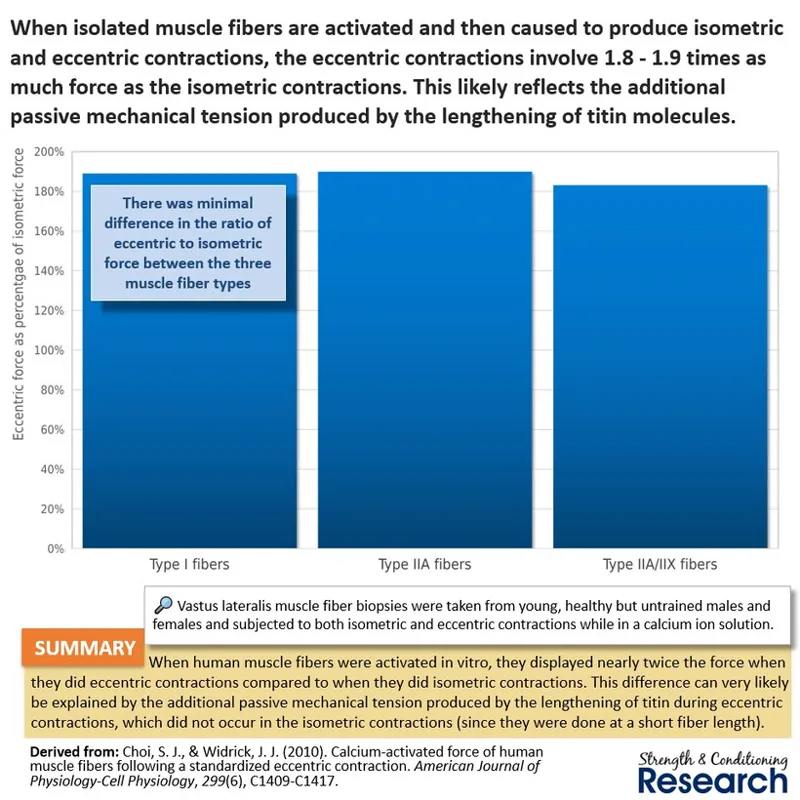
Why is this? Well, muscle growth depends on [1] mechanical tension and [2] motor unit recruitment. The magnitude of muscle fiber mechanical tension is approximately two times higher in eccentric contractions, which means that we should expect double the muscle growth.
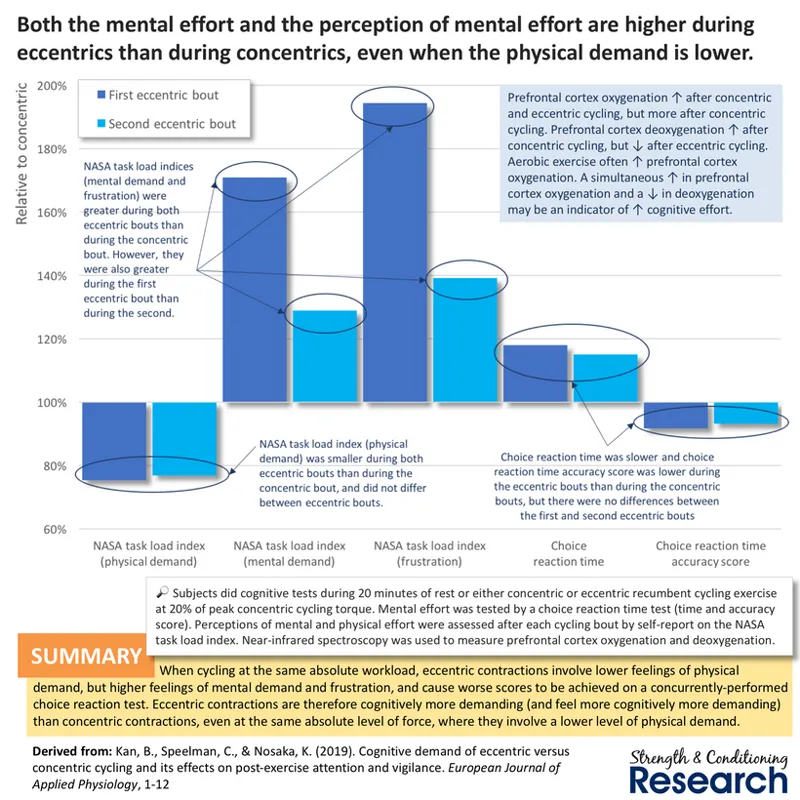
Yet, the level of motor unit recruitment is substantially lower in maximal effort eccentric contractions, which means that far fewer muscle fibers can experience this mechanical tension, which means that the expected level of muscle growth must be reduced substantially.
Various reasons have been proposed for the reduced level of voluntary activation in the eccentric contraction mode. However, the most likely explanation is that the brain experiences an increased level of cognitive load in eccentric contractions, which increases effort perception for a given level of motor unit recruitment, essentially creating supraspinal central nervous system fatigue.
#2. Concentric-only training only increases muscle fiber cross-sectional area
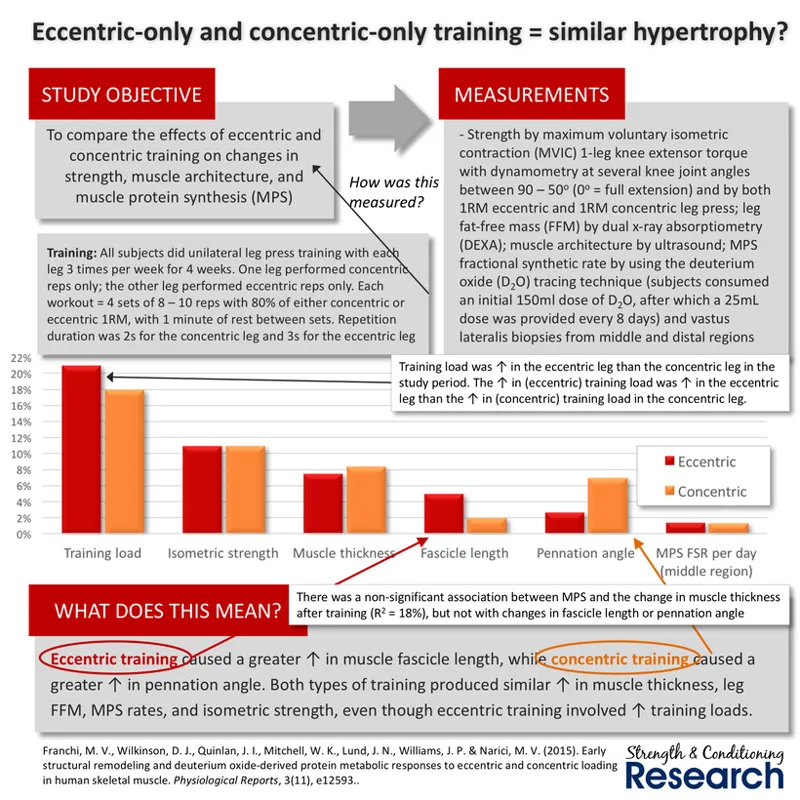
When comparing maximal effort concentric-only training with maximal effort eccentric-only training, concentric-only training causes only increases in muscle fiber cross-sectional area (as indicated by the large increases in pennation angle without increases in muscle fascicle length). The lack of any increase in muscle fascicle length can be attributed to a lack of sarcomerogenesis. That makes sense because sarcomerogenesis is stimulated by passive mechanical tension and there is obviously none of that in concentric contractions.
In tandem with the observation that concentric-only training does not increase muscle fascicle length (which is a good proxy for sarcomerogenesis), we can also see that concentric-only training does not cause a shift in the angle of peak torque towards long muscle lengths (which is yet another proxy for sarcomerogenesis).
#3. Concentric-only training increases middle region muscle size
When comparing maximal effort concentric-only training with maximal effort eccentric-only training, concentric-only training causes hypertrophy in the middle region of a muscle while eccentric-only training causes hypertrophy in the distal region.
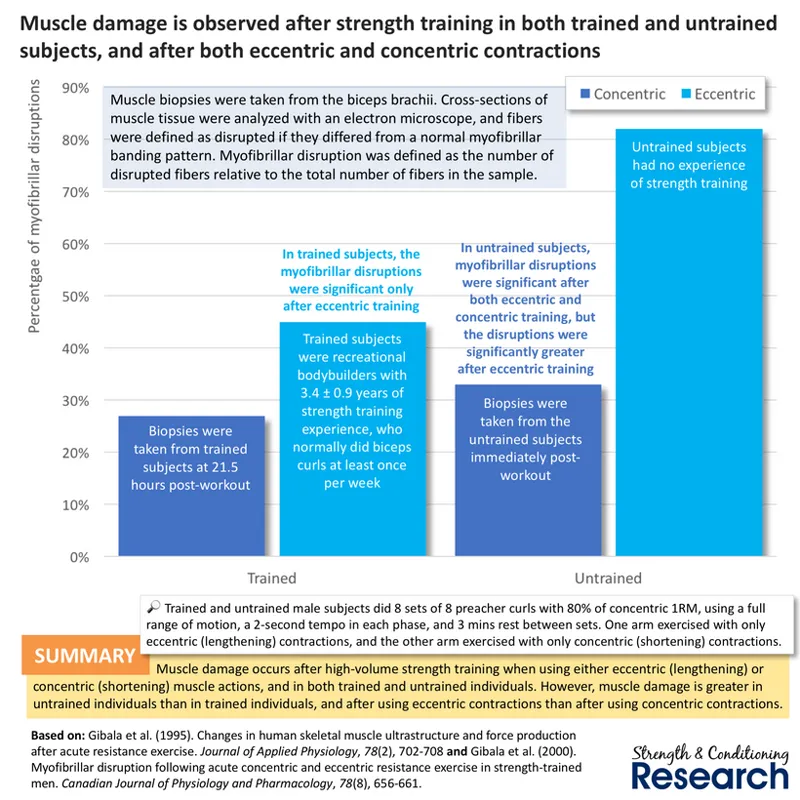
#4. Concentric-only training causes LESS muscle damage
When comparing maximal effort concentric-only workouts with maximal effort eccentric-only workouts, concentric-only training causes much less muscle damage (but it still does cause some muscle damage because there is still calcium ion accumulation).
#5. Concentric-only training removes the repeated bout effect (RBE)
The repeated bout effect (RBE) is the name given to the observation that post-workout fatigue is much less after a second workout for a muscle (that involves some sort of eccentric contractions) compared to after the first workout (read more).
Concentric-only training reverses the repeated bout effect that was caused by a preceding block of eccentric-only training, indicating that it does not produce enough of the stimuli necessary to generate the adaptations in calcium ion-related fatigue resistance. Since it definitely does produce muscle damage, it is most likely that the missing adaptation is sarcomerogenesis.
Conclusions
Concentric-only training causes both strength gains and hypertrophy. When comparing concentric-only training with eccentric-only training, there are five key differences: [1] concentric-only training seems to stimulate only slightly less hypertrophy than eccentric-only training (while eccentric contractions do involve more mechanical tension, they typically involve lower levels of motor unit recruitment, which means that fewer muscle fibers experience that greater mechanical tension); [2] concentric-only training predominantly causes an increase in muscle fiber diameter (as indicated by substantial pennation angle changes), while eccentric-only training mainly causes increases in muscle fiber length (as indicated by extremely large muscle fascicle length changes); [3] concentric-only training mainly causes an increase in middle region muscle size, while eccentric-only training mainly causes increases in distal region muscle size; [4] concentric-only training causes much less muscle damage than eccentric-only training, albeit it does cause some muscle damage by means of calcium ion accumulation subsequent to muscle activation; and [5] concentric-only training reverses repeated bout effects produced by previous eccentric-only training blocks, likely because it reverses gains in the number of sarcomeres in series.

Comments (1)
Hi Chris, first I would like to say that I love your work and try to read all the papers you summarize and I often get sidetracked and dive deeper in the literature as expected. You cite and call multiple times in your podcasts that eccentric strength is around 1.8 times higher than isometric strength, based on the in vitro studie you cite. Why do you choose that one above the in vivo meta analysis of Nuzzo (2023): PMID: 37129779? Their average is 1.41 (ecc:con)? I would even expect a slightly higher number than 1.8 based on ecc:iso studie. Curious about your thoughts.