

Warp & Weft: Afghan War Rugs
We explore the cultural history of rug-weaving in Afghanistan, and how decades of war caused that country’s craft and conditions to enter into a morbid reciprocity.
If you enjoyed this episode:
– Support Blood Work via Patreon
– Leave a rating or review on your podcast app
– Follow us on Bluesky / Instagram / Twitter
Blood Work is a Scam Goldin Production
This episode was produced by Thomas O’Mahony
Our theme song is ‘Dream Weapon’ by Genghis Tron
Our artwork is provided courtesy of KT Kobel
THIS WEEK IN VIOLENCE: Super Smash TV
ALSO AVAILABLE IN AUDIO
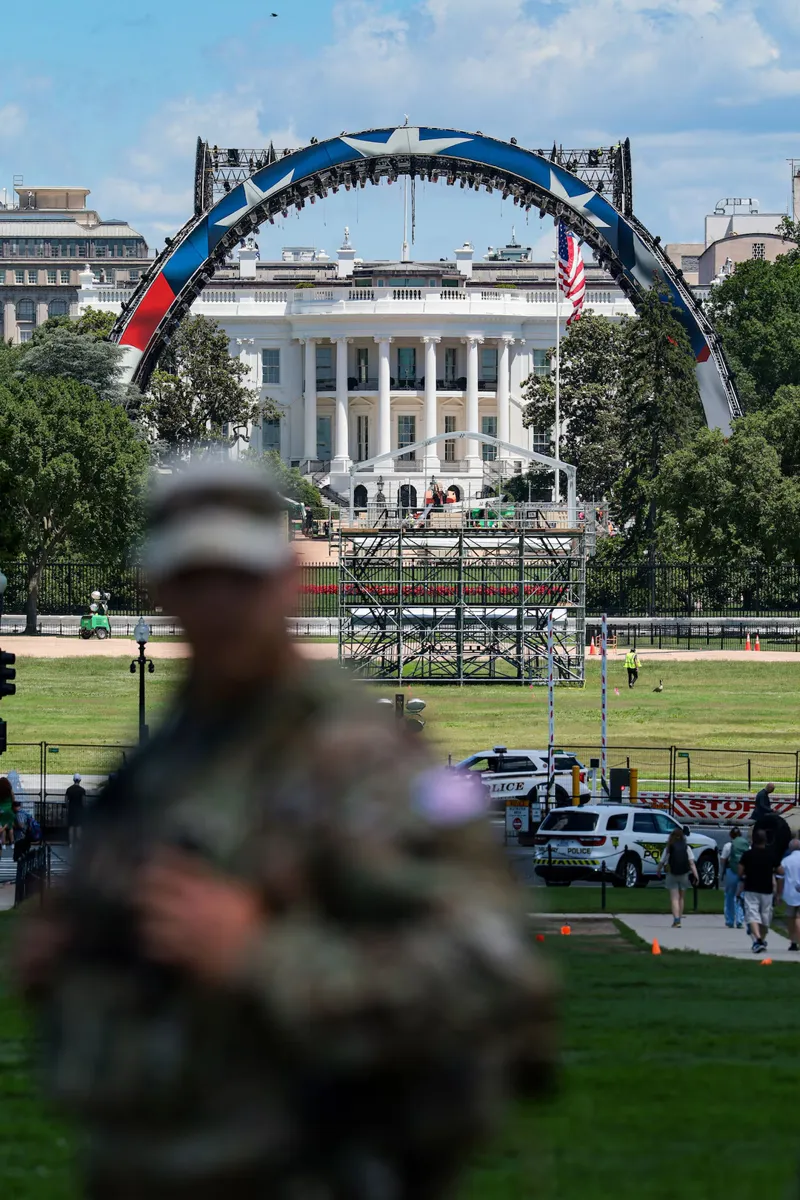
This week, some light entertainment for you, in the form of recent developments surrounding the Trump administration’s planned UFC fight on the White House lawn as part of America’s 250th anniversary celebrations.
Sources:
Afghan Rug Shop, ‘80cm x 60cm Fall of Afghanistan War Rug’, Afghan Rug Shop
Naman P. Ahuja (2019), ‘War Rugs’, Marg Publications, available via academia.edu
Max Allen (2008), ‘Battleground: War Rugs from Afghanistan’, Textile Museum of Canada, available via archive.org
Rachel Edman (2020), ‘An introduction to War Rugs’, MacGuffin Magazine, available via Rachel Edman
Bettina Gräf (2023), ‘Drone Rugs: Knotted Images as a Reminder of the Cruel Global Present’, Suzanna in the Bath. Essays on Middle East Studies and Public Discourse, available via academia.edu
Impart (2025), ‘Afghan War Rugs’, Impart
Nigel Lendon and Tim Bonyhady, Rugs of War (Wordpress)
RespectableLawyer (2018), ‘THREAD: Afghan War Rugs and the Lossy Compression of Cultural Coding’, Twitter/X, available via Threadreader and archive.today
Ron O’Callaghan (2003), ‘Afghan War Rugs: A Sub-group With Iranian Influence’, Rug Review, available via archive.today
Kevin Sudeith, WarRug.com
Brian Spooner (2011), ‘Afghan Wars, Oriental Carpets, and Globalization’, Expedition (53:1), available at Penn Museum
Pamela D. Toler (2021), ‘How Afghanistan’s “Rugs of War” Helped Its Citizens Tell the Story of Conflict’, Historynet
Kelly Wilson (2014), ‘Afghan War Rugs’, Art Amongst War: Visual Culture in Afghanistan, 1979-2014 (Exhibition Booklet), The College of New Jersey (TCNJ) Art Gallery, available via academia.edu
Image: A high quality example of a typical 9/11 war rug, woven and knotted by hand in the aftermath of the 2002 US invasion of Afghanistan

Comments (15)
Judging from the popularity of Chechen islamist bard Mutsuraev in Russia and between Russian soldiers I wouldn't be surprised that some Afganets brought home a rug
Incredible as always.
Beautiful and haunting. Cheers.
Tender and meticulous bit of ethnography that gives insights into cultural fetishes and iconography over time and events. 10/10
Fascinating. Thanks again. Slainte.🖤
Thank you for telling this story. As one of dozens of left-wing Kommandostore shoppers these have always struck me as deeply perverse.
The intro gives me similar vibes to when I look at the vintage imported gun parts kit market in the US. There's a lot of erzatz "history" going on there, especially when an Arizona-based gunsmith takes a surplus Belgian gendarmarie FAL kit, slaps in a US made barrel and receiver, and ships it to a customer in Ohio who paints it in fake Rhodesian camo to post racist memes on Discord
The other thing I'm reminded of is a lovely short story I once heard called Assembly Line, by B. Traven
Re: semiotic degradation I’ve kinda watched that happen in real time! I grew up in northern Mississippi, and my parents still live there. As he got older my dad transitioned from carpentry to handyman stuff and then to folk art. He makes birdhouses commemorating the local blues music scene and sells them at farmers markets, arts and crafts fairs, etc. The earliest birdhouses were relatively intricate as he figured out what people would buy and how much they’d pay for it. They were made with reclaimed lumber and roofing tin, decorated with natural stuff, and had little wood-burned signs saying stuff like “Junior Kimbrough’s Juke Joint” or “Blues for bluebirds.” But he can sell more $25 birdhouses than $45 ones, so he’s gradually shifted to houses made mostly from cheap new lumber, decorated with colorful junk like plastic guitars and silk flowers, with one-word signs saying “blues” or “Mississippi.” I was like, Dad, these new ones are not nearly as cool as the old ones, and he replied, yeah but they sell. He’s got me there, folk art that sells is always better than piles of inventory. So i think that at any given time in Afghanistan, there’s a small group of actual rug artisans making art that has meaning, like the delightful camel warrior scene you described early on. And there are a lot of other people who really just need something to sell, and sell reliably. They’re the ones making the copy-of-a-copy designs.
Can you drop a source for the background music? It's lovely this episode.
https://youtu.be/6Ed9A0nyBOo?si=2dKKpEVvc20W5L2a
For War Rugs from 1989 one can recognize that some of them were used in trade between Pashtun clans, including transactions for boy-slaves. Other rugs were likely traded with Pakistani intelligence services, CIA sponsors, Iran sponsors and other sources south of the border. Kalashnikov was popular exactly because it was a global symbol - recognizable and relatable for the wide spectrum of individuals. Good, universal currency in a region in which authorities were found to be lacking capacity to issue one that can last. Rug weaving -> currency emission. Pro-USA propaganda => tying this currency to USD.
They are selling them on Mil Surp websites in the states and they are pretty proud of it. I think they are fascinating as a subject but anytime I see indigenous impoverished peoples goods and wares for sale other than the country they are situated in; I have severe doubts. I had a job that sold antiques years ago and the amount of folks willing to look the other way when a sale of animal hides or heads or ivory or bones are wild. Sometimes you gotta ask yourself just how evil can we be?
Excited to listen to this as I noticed several handsome Afghan war rugs for sale at the Afghan rug shop I go to in Islington
blood work is on a hot streak. This is gonna be good listening