


THIS WEEK IN VIOLENCE: Lather, Rinse, Repeat
2026, Week 23
This week, the UK was rocked by the fallout of a legal case concerning the murder of a white teenage boy named Henry Nowak by Vickrum Digwa, a 23-year-old Sikh man, in the town of Southampton in December last year.
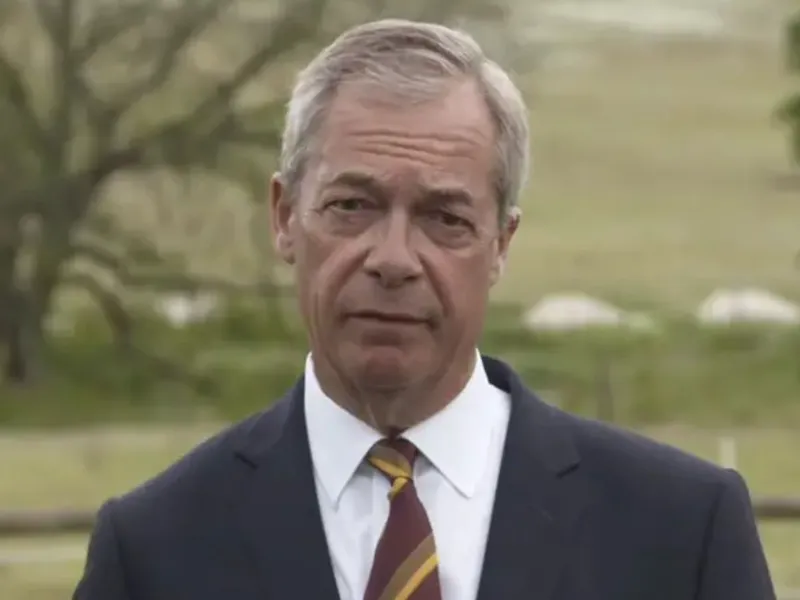
For this week’s newsletter, we take a look at Nigel Farage’s cynical, exploitative response to Digwa’s conviction and sentencing this week, and the shameful role our political, media and civic elites play in legitimising and affirming right-wing outrage with the hopes of shoring up their own power.
Farage demands ‘pure cold rage’ in response to murder of Henry Nowak
Reform UK leader Nigel Farage said there had to be a recognition that ‘white lives matter’ or society would be ‘ripped apart’.
The Standard – Jun 2, 2026
Reported by David Hughes
Reform UK leader Nigel Farage said people should respond with “pure cold rage” to the treatment of Henry Nowak.
The 18-year-old student was handcuffed as he lay dying after being fatally stabbed by a Sikh man.
The killer of finance student Mr Nowak, 23-year-old Vickrum Digwa, told police attending the scene of the stabbing on December 3 2025, that he had been the victim of a racist attack.
On Monday, Digwa was jailed for life to serve a minimum of 21 years for stabbing Mr Nowak with a ceremonial knife with a 21cm blade prosecutors said was a kirpan, which he carried as part of his religion.
[...]
Body-worn camera footage from the incident appeared to show Mr Nowak, who had received two stab wounds on the back his legs and a fatal wound to his heart, pleading, “I’ve been stabbed” while being handcuffed.
In the footage released by the Hampshire and Isle of Wight Constabulary on Monday night, a police officer arriving at the scene can be heard asking: “What’s your name, mate?” before Mr Nowak, who is lying on his back on the ground, faintly replies: “Henry.”
Digwa then steps into the frame claiming Mr Nowak had taken his turban off and grabbed him by the hair.
The officer asks Digwa: “Are you injured?” to which Digwa replies: “Yeah, yeah, I’ve got a swollen eye here, a little bruise here.”
Officers then turn to Mr Nowak who can be heard grunting and repeating “I’ve been stabbed” and then “I can’t breathe” while he is made to sit up to be handcuffed.
The officer can be heard asking: “You’ve been stabbed, whereabouts?” before adding: “Don’t think you have, mate.”
While being handcuffed, Mr Nowak says “I can’t breathe” another three times.
[...]
At the end of the footage, a light appears to be shone in Mr Nowak’s face, and a female voice says: “His pupils aren’t even reacting.”
In a video statement, Mr Farage said the treatment of Mr Nowak was evidence of a “two-tier culture”.
Mr Nowak was “actually treated in a way that meant an accusation of a racial slur was treated more seriously than an act of murder”.
He said he had asked the attorney general to review the life sentence with a minimum of 21 years given to Digwa as being unduly lenient.
Mr Farage said: “Henry’s family have responded to this in just the most extraordinarily dignified way.
“But I suggest the rest of us respond to this with pure cold rage.
“This is wrong. All the values and standards of living in a free country where everybody is judged equally before the law have been trashed and thrown away.”
He said there needed to be an end to “anti-white prejudice” and a recognition that “white lives matter just as much as black lives”.
For the benefit of listeners overseas who may not be apprised of the Henry Nowak murder case, we’ve included as much detail as seems necessary to understand the broad strokes above. The linked article contains a more detailed breakdown of the event and its fallout, including a description of the body-cam footage described.
During ongoing criminal investigations and legal proceedings, media and members of the public are discouraged from commenting on criminal cases for risk of prejudicing the case. In 2024, the far-right activist Stephen Yaxley-Lennon, better known as Tommy Robinson, received an eighteen-month prison sentence for engaging in such behaviour relating to a different case.
Following the trial and conviction of Nowak’s murderer, Vickrum Digwa, on May 28, and his subsequent sentencing for life imprisonment with a minimum sentence of 21 years on June 1, such restrictions were then loosened, and Hampshire police made the decision to release the bodycam footage that is described above.
Never one to miss an opportunity for shameless self-promotion, that same day, Nigel Farage, the perennial political gadfly and leader of the right-wing party Reform UK — formerly The Brexit Party, formerly the UK Independence Party or UKIP — announced an ‘emergency address’ to the nation, broadcast on YouTube and subsequently disseminated over social media.
In the address, which goes on for roughly eight minutes, Farage effectively plays the hits of the bugbears, grievances and conspiracy theories which have underpinned right-wing political discourse in the UK and other western countries over the past decade, which has taken an increasingly ethnonationalist tenor.
Black Lives Matter; ‘taking the knee’; anti-white racism; DEI; positive discrimination; Churchill’s statue on Westminster’s Parliament Square and the Cenotaph war memorial on Whitehall; immigration and failed integration of minority groups; two-tier policing; and so on. The revanchist posture Farage strikes in his address is captured by the invocation of the police killing of George Floyd in May 2020 (whom Farage conspicuously refers to as a ‘career criminal’), and the mass protest movements that event catalysed.
Farage then notes the ‘extraordinarily dignified’ manner with which Nowak’s family responded to Henry’s murder. In a statement given outside the court following Digwa’s conviction, Nowak’s father stated, “We do not want his death to be used to create further division, hatred, or tension. We want his story to make our streets safer for everyone. [...] As the KC for the prosecution summed up in court: This is not a case about Sikhism. This is not a case about racism. This is a case about murder.”
As attuned as Farage may have been to the spirit of Mark Nowak’s address, he apparently did not much care for the letter, immediately pivoting to suggesting that the British public respond with “pure, cold rage.”
That call was quickly heeded, and that same evening, hundreds of protestors gathered in Southampton town centre to hear an address by Tommy Robinson, followed by a march toward the home of the family of Nowak’s killer, which quickly descended into destructive violence and rioting, with bricks being thrown at riot police and car windows being smashed.
Exploitation of tragedy and public outrage for cynical political gain is a boilerplate tactic of far-right political movements throughout history. Over the past half-decade, numerous incidents such as what occurred in Southampton this week have been stirred up by cynical actors following high-profile offences committed (or simply alleged to have been committed) by non-white actors.
Indeed, this week’s newsletter is in some senses a prelude to the final instalment of our series on the history of Combat 18, which concludes in a similar way: With a local criminal offence being exploited first by far-right street thugs seeking to stoke and exacerbate division over ethnic lines, followed by established political parties who then ride the wave of discord that follows to electoral successes.
In the post-COVID era, however, Farage has endeavoured to turn this procedure from a periodic tactic to an annual tradition. In the USA during the 1960s, summer heatwaves corresponded with the outbreak of uprisings related to the Civil Rights movement. This culminated in the so-called ‘Long, hot summer’ of 1967, during which uprisings and riots erupted in dozens of cities between April and September of that year.
Sociologically speaking, there is a wealth of literature indicating that higher temperatures do correspond with higher chances of social unrest. In the case of the George Floyd Uprisings of 2020, it has been posited that the combination of high temperatures and the collective claustrophobia of COVID stay-at-home restrictions contributed to a ‘perfect storm’ which catalysed public outrage to Floyd’s murder.
This phenomenon has since been co-opted by far-right agitators like Alex Jones, who annually predict with the regularity of cuckoo clocks (and the accuracy of weather correspondents) that this year, surely, will be the mythical Summer of Rage – either apocalyptic uprisings by minorities and other members of the right’s perceived underclass, or the unfortunate but necessary violent response of the downtrodden moral majority on whose behalf they speak.
Farage, in this sense, is nothing special. He is simply engaging in a familiar tactic of far-right agitators which places the cart before the horse: First the heat, the cause can come later. With the UK having endured significant heatwaves over the past few weeks, Farage et al probably sensed an opportunity to instigate a re-run of the riots and attempted pogroms which erupted across the country in July of 2024. Again, that was a case in which a genuine public tragedy was then exploited and exacerbated by the dissemination of racist misinformation, culminating in attempted arson attacks on hotels housing refugees.
Unfortunately for Nigel, however, the weather was not quite on his side this go-around. For most of this past week, the UK has endured cooler, cloudy weather with episodic downpours of rain, which likely discouraged all but the most fervent of outraged citizens from taking to the streets. What occurred in Southampton on Tuesday night was shocking, nonetheless, but it could have been much worse.
To better understand the roots of Farage’s cynical ‘emergency address’, however, it is probably worth situating it in its proper context. Exoterically, the video is clearly intended to bolster his ministerial image, presented as a fugazi version of the types of addresses occasionally performed by actual prime ministers and other heads of government. In other words, the intent was probably to project strength, and solidify the increasingly popular perception that Farage is now the UK’s prime minister-in-waiting.
The reality, however, is not so simple. Though Farage was at one time the darling of the growing right-wing international, forming allegiances with the likes of Hungary’s Viktor Orban, Trump strategist Steve Bannon, and the increasingly interventionist techno-right of the Silicon Valley set, the man is now on less sturdy ground.
At one time, Elon Musk was a prominent admirer of Farage’s. But as the Tesla and SpaceX CEO has continued to self-radicalise via the social media platform he owns, and which he reconstituted to perform precisely such a function, he has, like Andy from Toy Story and his beloved doll Woody, gotten bored and moved onto a flashy new plaything.
In early 2025, a Reform UK MP named Rupert Lowe was suspended from Farage’s party following allegations of bullying and was expelled from the party. Months later, he launched a right-wing party of his own, Restore Britain.
Musk quickly became infatuated with the renegade Lowe, and in recent months has made conspicuous efforts to use his X social media platform to put his thumb on the scale in their favour, amplifying Lowe’s posts to a degree which appears wildly disproportionate to his actual following and profile.
Caught between his desire for respectability and electoral credibility, and the demands of a larger far-right ecosystem in which authenticity is best conveyed through radicalism, Farage is now panicking. As he once did to both the Conservatives and Labour with his UKIP, Brexit and Reform parties, Lowe is now doing to him: carving off the most extreme fringe of his natural electoral base, and appealing to the big money foreign backers without whom such a minoritarian political project would not be financially viable.
This is surely at least part of the context in which Farage’s desperate media stunt should be understood: An attempt to both reclaim the initiative from Lowe by burnishing his institutionalist credos — his ‘electability’ — while not-so-subtly demonstrating his capacity to follow the hordes and indulge in outright race baiting and conspiracism while retaining the slither of plausible deniability mainstream news outlets like the BBC will require to continue legitimising him, as they have done for the better part of two decades.
Farage is far from alone in this shameless exploitation of personal tragedy to push the Overton window, however; nor is Lowe the only other runner in this race. Whether through wit or witlessness, the British press have too seen fit to both dance to the right-wing tune, and even up the tempo.
The past week has seen a reignition of debates over the reality of so-called ‘two-tier policing’, a right-wing conspiracy which alleges that white Britons are victimised by a more punitive and less protective legal system than their non-white counterparts.
A cursory engagement with empirical reality and easily-found statistics disproves the theory: Yesterday The Guardian reported on data which showed that Hampshire Police, the force responsible for Nowak’s tragic death in custody, was on average five times more likely to submit black people to stop & search procedures than white people.
No matter. Farage had invoked the spectre of anti-white bias in Britain’s institutions, and so the British media, balanced as ever, were duty bound to humour his claim and spend several days stroking their chins, pondering the enigma of white oppression in a country whose population is 76% white, even after decades of unrelenting mass migration.
Indeed, there was little reason for Farage to have couched his inflammatory rhetoric on Tuesday with unconvincing gestures to the feelings of Nowak’s family. Over the past few days, the right-wing commentary magazine The Spectator has published pieces with headlines including: “Henry Nowak and the problem with ‘anti-racism’”; “Henry Nowak and the dangers of ‘anti-racist’ dogma”; “Why can we rage against George Floyd’s death but not Henry Nowak’s?”; "Why won't you take a knee for Nowak?"; and, “Henry Nowak and the evil of ‘anti-racism’”.
On June 3, the day after Digwa’s conviction, the author of that last article, David Shipley, appeared on the Breakfast show of The Times newspaper’s digital radio broadcast to discuss the case. His appearance has since been uploaded to The Times’ YouTube page with the title, “Henry Nowak’s Dad 'Doesn’t Get To Decide' The Political Response”. It is not clear whether Shipley needed to belabour this point. After all, the list of articles just mentioned, published in The Spectator alone, make that clear.
There is one other dimension to this story worth dwelling on. One would think, following the release of bodycam footage such as seen this week, in which an individual was wilfully neglected by police as he bled out on the floor, that a primary focus of discussions might be police misconduct and the pursuit of accountability for both the officers involved and the institutions responsible for them.
Instead, a concerted effort has been rolled out by the police, politicians and the media to deflect from the obvious fact that this tragedy was, in part, the consequence of flagrant misconduct on the part of the police officers involved. Instead, so is being argued and reported, Henry Nowak’s death was a consequence of the same things Farage rails against in his stump speech: wokeness, DEI, anti-racism training, and so on.
The solution to this systemic disempowerment of the police, as it happens, is greater empowerment. If only the police had been granted greater unilateralism to act as they see fit in an incident such as Nowak’s murder, so the argument goes, this tragedy could have been averted.
How, exactly, the termination of anti-racism training or DEI initiatives would have disincentivised the officer who dismissed Nowak’s cries for help from ignoring him is unclear. While racial and religious minorities certainly bear the brunt of unprofessional policing in this country, contempt for young people, particularly teenagers, is a feature of that institution’s operation, not a bug, as it is for most of British society and culture.
Nonetheless, this viewpoint, too, has been instantly indulged and affirmed by political commentators in the media and politicians alike. It should not be difficult to infer why. Over the past few years, successive governments in the UK have pursued a relentless agenda to curtail public rights to assembly, protest, expression and dissent in general. Since October 2023, this has localised around regular demonstrations in London and elsewhere in the country against the Israeli government’s genocide in Gaza, in which the British government has been complicit through provision of arms to the Israeli military, and legitimation of Israel’s actions on the global stage.
Such efforts have not been without setbacks and embarrassments. The proscription of the group Palestine Action, famous for breaking into and sabotaging facilities operated by Elbit Systems, Israel’s largest arms manufacturer, resulted in embarrassment for the British government when scores of pensioners were arrested, ostensibly under terrorism charges, for expressing support for the group.
This heavy-handed approach has then stood in stark contrast to police handling of civic actions by far-right groups such as Tommy Robinson’s regular Unite the Kingdom rallies, which predictably devolve into outright attacks on police, as well as the disparity revealed by politicians’ and the media’s treatment of Israel’s ongoing occupation and displacement of Palestinians in the West Bank, and now Lebanon, and their forceful condemnations of Russia’s invasion, occupation, and planned annexation of the Donbas as part of its ongoing war against Ukraine.
Faced with the crisis of credibility that such an incoherence provokes, the Labour government has chosen to repeatedly smash the ‘Force’ button in the hopes of cudgeling popular opinion into submission. The British press, notoriously reactionary and right-wing even by the standards of American onlookers, has been all too happy to cheerlead a systematic backsliding of democratic rights if it means the British ruling class’s historic enemies on the left get a good kicking.
And now, entering the fray, once more, you have the armed violence workers of the state, the police. And wouldn’t you know it, they agree wholeheartedly. They, too, have been cowed into subservience to the woke mob by political correctness. They, too, have been hamstrung by the diktats of hashtags and Twitter threads which meant their otherwise upstanding officers were forced to ignore the desperate pleas of an individual reporting his own stabbing to their faces. They, too, agree that the solution is as clear as it is comprehensive: Unbind us. Remove the velvet glove from the iron fist, and all will be made well.
Political power in the United Kingdom is borne from a triumvirate, formed of three arms of the elite: The political, their armed agents, and the corporate, which includes the press.
Three arms, locked in an ironclad triangle.
And at times like these, it becomes painfully clear how each hand washes the other.
Comments (1)
No pressure, (audio recording and editing takes time, i get it) but is there an eta on the audio version this week?