





ISAF 2009-2013 - ACO Building - AEW and Tactical C2 (5/x)
Now that we've seen the airborne part of the Tactical C2 structure, we can turn to the ground-based elements.
If you're not fully familiar with the Air Component Command’s C2 architecture, I recommend reading the earlier 3-part series explaining “who’s in charge” in Afghanistan and comparable ground-centric theaters.
I. Actors and Roles
As noted earlier, during OEF the aircrews communicated directly with the CRC (Control and Reporting Center), which relayed orders from the ASOC or CAOC primarily through voice radios. Coordination between the CRC and ASOC/CAOC relied largely on tactical internet relay chat (IRC) using simple software such as mIRC.
Relaying C2 orders was only part of the CRC’s mission. Its other essential role was airspace traffic management to ensure flight safety. Although the theater’s primary deconfliction rule was “See and Avoid,” having controllers equipped with surveillance tools significantly improved overall situational awareness.
Afghanistan had virtually no functioning radar infrastructure before 2001, forcing coalition forces to deploy an entirely new network from scratch. Doing so required a reasonably secure environment to protect costly sensors and the supporting infrastructure: power generation, shelters, communication systems, and control facilities.
Once the radar network was operational, it became part of the Link-16 community. By the mid-2000s, Link-16 had become common equipment, allowing aircraft to benefit from a shared air picture. Ground stations acted as Link-16 C2 relays, distributing surveillance tracks to all network participants.
With these elements in place, the overall command structure becomes clearer:
CAOC: at the top of the air C2 hierarchy, the CAOC for OEF was located in Qatar. If you want to represent it on your theater, keep in mind that it is a large, heavily protected facility and should be placed within a major, well-defended airbase.
ASOC: responsible for coordinating air–land operations, the ASOC was located at the Army HQ in Kabul. Since this area is not fully modeled in DCS, you can place it anywhere appropriate within central Kabul, or alternatively at a major compound such as Camp Warehouse or within Kabul International Airport’s perimeter.
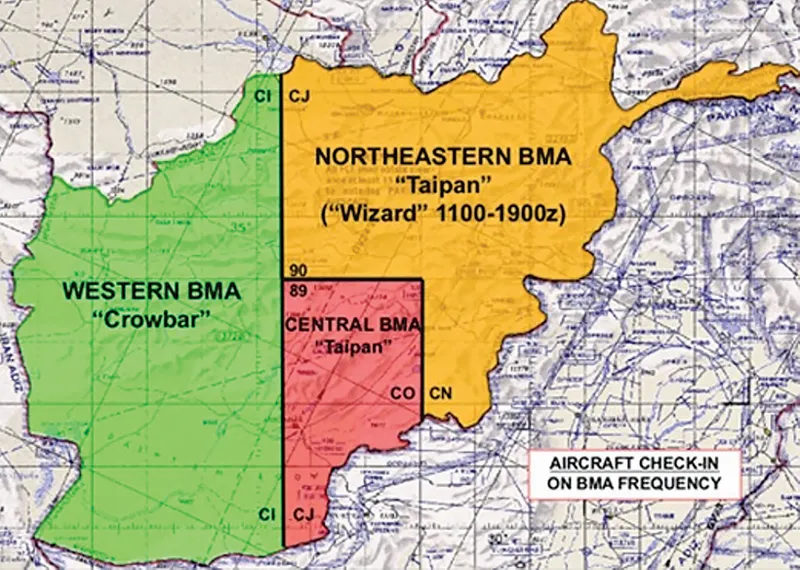
CRCs: each CRC managed a designated BMA (Battle Management Area). BMA size and shape depended on factors such as the number of CRCs that could be manned, the availability of surveillance radars or the distribution of operational hotspots.
Once these factors are defined, you can divide the airspace accordingly and position your ground elements.
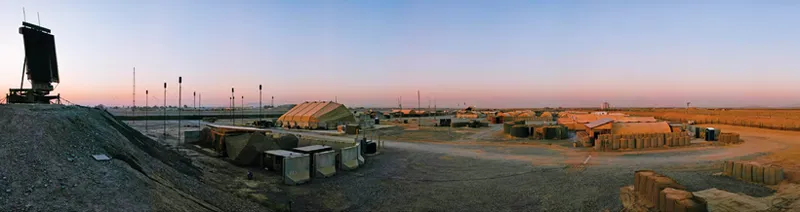
each CRC operates from one large building or several smaller shelters with radio and satellite communications. For early-deployment scenarios, tents are appropriate;
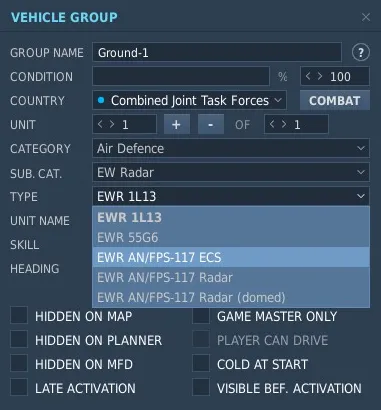
each CRC requires an AN/FPS-117 ECS station to appear as a ground C2 node in the Link-16 network;
each CRC controls one or more surveillance radars within its BMA, and due to limited ground communication infrastructure, radar data was often shared via SATCOM;
each CRC uses a unique callsign and several dedicated radio frequencies. For example: Crowbar (UK), Taipan (Australia) and Wizard (US AWACS). When the AWACS was absent, Taipan assumed responsibility for the area.
II. Examples
In order to give you a more precise idea of how ground control unit could work, here are several example of real units detached in Afghanistan during OEF.
II.1 - US Armed Force
Both the US Air Force and US Marine Corps field deployable air control squadrons: the USAF’s (E)ACS and the USMC’s MACS.
The 606th ACS, for example, deployed repeatedly to Afghanistan:
January 2006 – Kandahar Airfield;
May 2009 – Kandahar Airfield;
May 2010 – Kandahar Airfield and Al Udeid;
July 2013 – Kandahar Airfield and Al Udeid...
In 2012, a USMC MACS assumed responsibility for Southwest Afghanistan from Camp Leatherneck, adjacent to Camp Bastion: it's a typical USMC approach in which a complete air/surface C2 package is deployed to support operations in a defined battlespace.
II.2 - Royal Air Force
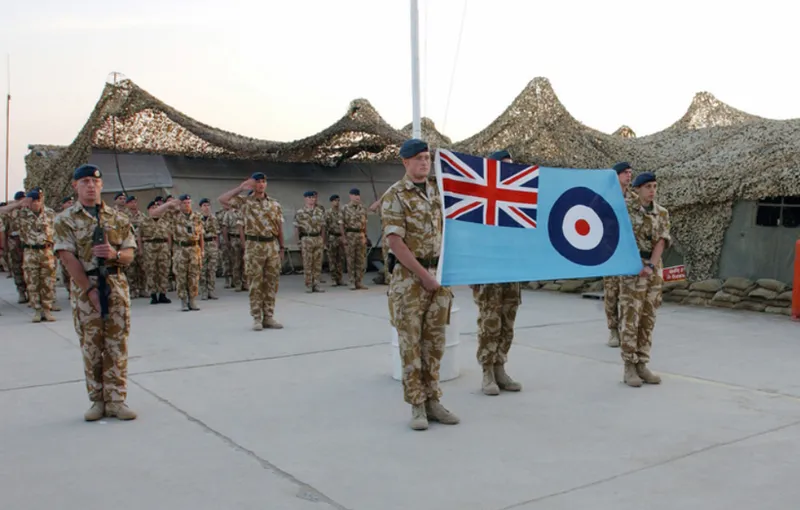
The RAF’s No. 1 Air Control Centre (1 ACC), a deployable mobile C2 unit, operated from Camp Bastion during Operation Herrick.
II.3 - Australian Air Force
In 2007, the Royal Australian Air Force deployed a 75-person detachment to Kandahar Airfield. They brought their own AN/TPS-77 radar and provided 24/7 airspace management for more than two years.
Conclusion
You now have all the essential elements to build both the air and ground layers of a realistic C2 structure in your theater. Tools such as Skynet IADS can help you create a coherent and reactive air-defense network by linking radar sites, command centers, and airborne or naval assets into a unified system.

