




Pattern History - The Dr. Josephine Baker Layette
Would you like to see something really cute?
This amazing little infant-sized layette sewing pattern McCall 2057 from 1921 came to me from a rather large estate collection.
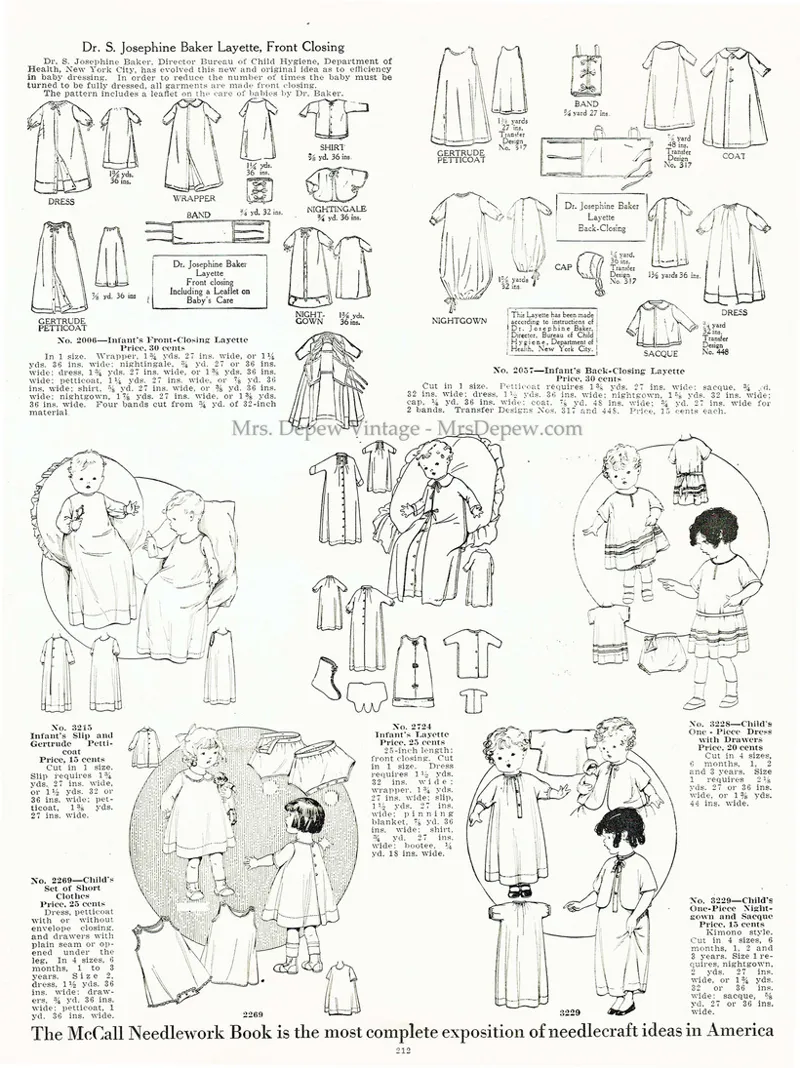
The Dr. Josephine Baker Layette Back-Closing pattern was first printed in 1921 and was one of the very first printed patterns ever manufactured by McCall's.
(Layette and infant's clothing sewing patterns as advertised in a December 1926 McCall's Counter Catalog.)
You can tell this pattern is from the early 1920s by a few details including the small size of the envelope ( just 5 1/4 x 6 1/4 inches!), the framed illustration on the cover, and of course, the fact that it appears in a LOT of 1920s catalogs and quarterlies.
The envelope states that "This Layette has been made according to instructions of Dr. Josephine Baker, Director, Bureau of Child Hygiene, Department of Health, New York City".
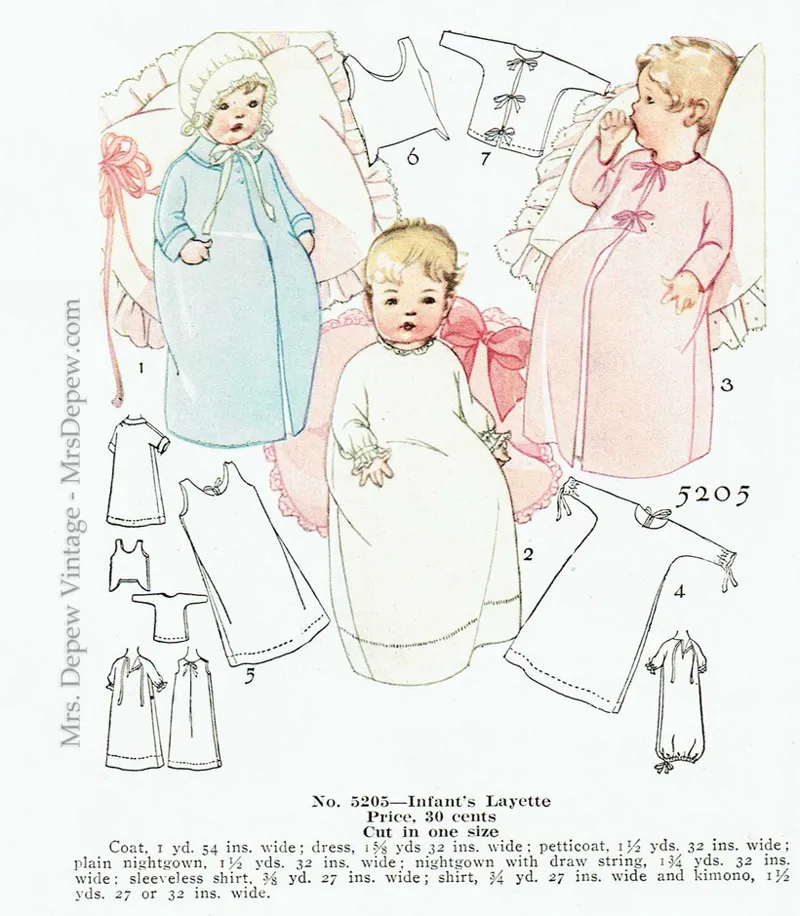
In later years, it was reissued with a color illustration, as shown from my 1930 counter catalog.
The pattern includes a Gertrude Petticoat, a long Coat, Dress, Sacque, Nightgown (also known as a barrow coat), Cap/ Bonnet, and a Band (which looks to be a supportive sort of under layer).
I had to look up what purpose the "Band" served and was able to find an interesting blog post citing the book Household Discoveries and Mrs. Curtis’s Cookbook. In the chapter “The Care of Babies.” there is some advice regarding clothing:
"The clothing of infants should be simple, warm, light in weight and not too tight fitting. For the first four or five months provide an abdominal band of thin, soft wool or flannel about six inches wide and twenty inches long. This will prevent serious effects from sudden changes of temperature... It should only be wide enough to cover the belly and should be wound two or three times around the body, according to the season of the year. This bellyband, or pinning blanket, should be wound smooth and free from creases or folds, and fastened with safety pins, or preferably with a few stitches of soft darning cotton."
So that is a strange vintage clothing thing I learned today...
McCall 2057 was a popular pattern, staying print for about a decade, featured in the Summer 1921 McCall Quarterly as well as my 1926, 1928, 1929, and 1930 McCall Counter Catalogs.
If you have this pattern and you're wondering if it is complete, you're not alone! McCall neglected to list the number of pieces on the envelope this time around. It is complete if it has 22 pieces, as puzzled out from the envelope back cutting layouts, which are the sole original instructions for the entire pattern.
I thought you might also like to see a few other patterns that were featured in my 1930 catalog.
This marvelous little American Red Cross Layette pattern McCall 3676 included a marvelous selection of garments including Binder, Diaper, Dress, Blanket, Jacket, Shirt, Petticoat, Nightgown, Cap, Booties, and a Sundry Bag!
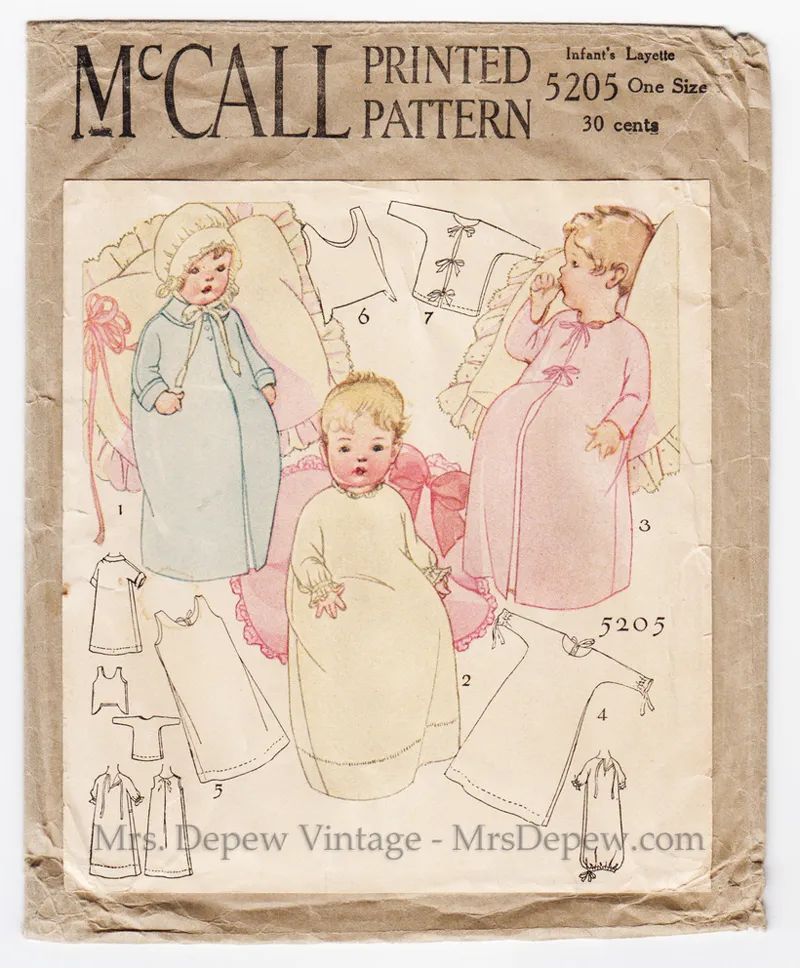
This later 1920s pattern McCall 5205 Infant's Layette included a Coat, Dress, Petticoat, Plain Nightgown, Nightgown with Drawstring, Sleeveless Shirt, Shirt, and Kimono. Here is the actual pattern, which I was lucky enough to have in my shop for a short time.
In our next post, I'll tell you a bit about the marvelous Dr. Josephine Baker and why she designed layette sewing patterns in the first place!