








The Language of Fashion: B Part 5
<figure>
Well, darn it, no matter how I do it, Patreon can't seem to embed pictures into blog posts the way they should. So if you'd like to read this post in full, you can see it on my blog here:
https://mrsdepew.com/f/the-language-of-fashion-b-part-5
---
After a bit of a rest from blogging about lingerie so much that I got burnt out on writing altogether, I finally present for your latest dose of vintage fashion nerdiness, the continuation of our blog series, The Language of Fashion.
Today we continue with B. In our last post, we covered binding through bonnaz, which brings us to...
BONNETS - Types of Bonnets:
bonnet. A head covering, with or without front brim; typically worn on top and back of the head, leaving the forehead uncovered, and tied under the chin. So-called from coarse medieval cloth, bonnet, derived from Hindu banat, of which hats or hoods were made in the 14th century.
auto bonnet. A bonnet worn while riding in or driving an automobile without a cab. It was also called a motoring bonnet.
baby bonnet. A lacy or daintily trimmed fabric covering for an infant's head, extending from the nape of the neck to the forehead, and covering ears; tied with fabric strings or ribbons under the chin.
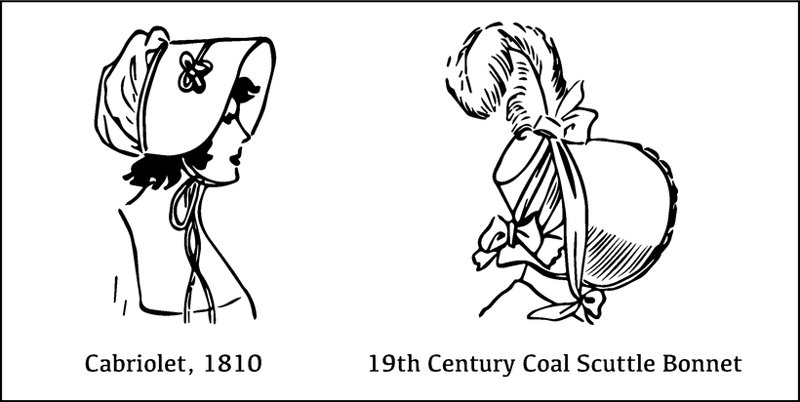
cabriolet bonnet. A bonnet suggesting the shape of a carriage top or cab's hood; sometimes tied under the chin; similar to a Kate Greenaway bonnet. Named for cabriolet or cab with forward or poke top.
capote. Mid-Victorian type of bonnet having tie strings. Worn by women and children.
coal scuttle bonnet. A bonnet with a stiffened brim and flat back, resembling a coal scuttle. Popular in the mid-19th century.
cottage bonnet. A bonnet of a particular shape that was fashionable in England during the early 19th century.
Easter bonnet. Any type of new spring hat; usually worn for the first time on Easter Sunday. Now seldom a bonnet and often any kind of hat.
hive bonnet. Kind of bonnet, usually of straw, shaped to resemble a beehive.
Indian bonnet. An old term used to describe an ornamental headdress, usually of long feathers, as worn by North American Native Americans. Not a bonnet in the usual fashion sense. They are more correctly known (in English at least) as War bonnets. War bonnets (also called warbonnets or headdresses) are feathered headgear traditionally worn by male leaders of the American Plains Indians Nations who have earned a place of great respect in their tribe. Originally they were sometimes worn into battle, but they are now primarily used for ceremonial occasions. In the Native American and First Nations communities that traditionally have these items of regalia, they are seen as items of great spiritual and political importance, only to be worn by those who have earned the right and honor through formal recognition by their people.
Kate Greenaway bonnet. Children's bonnet of the type illustrated by Kate Greenaway; in the style of the Empire period, with a ribbon band, and a frill around the face.
poke bonnet. Bonnet with a small crown at the back, having wide, rounded front brim projecting from the top of the head beyond the face. Worn as a hat.
Quaker bonnet. Small, close-fitting, plain bonnet of prescribed characteristics; made of the fabric of the dress, and worn by women of the Quaker faith.
Salvation Army bonnet. Black, straw, off-the-face bonnet trimmed with midnight blue ribbed silk. The brim is lined with blue silk, either plain or shirred. Has a chin tie, which fastens with a bow at the side. A blue band around the bonnet is lettered with the Salvation Army name. The uniform bonnet of the Salvation Army often adapted by fashion for women's hats, similar in silhouette but made in all hat materials and colors.
scoop bonnet. Woman's bonnet, long and narrow in front like a scoop.
slat bonnet. Bonnet with brim reinforced with slats of cardboard or lightweight wood.
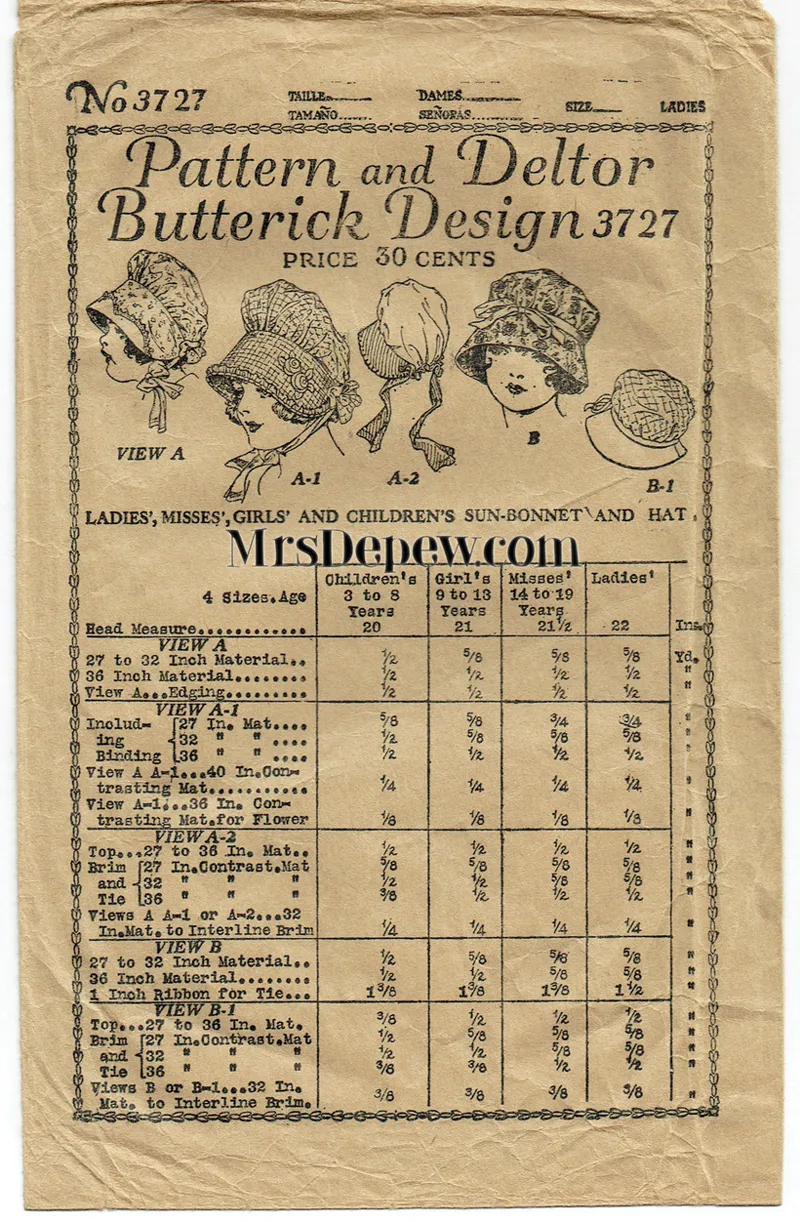
sunbonnet. A bonnet of fabric or straw having a wide brim, generally stiffened, often with a ruffle around the front and sides as protection from the sun; usually having a short cape-like portion in the back to protect the neck. Worn informally outdoors.
bon ton. French phrase for fashionable style; the elite of society. The name of a fashion and sewing pattern magazine published in the United States by S.T. Taylor in the 1860s to 1910s.
book cloth. Any of several fabrics, usually cotton, specially woven for book coverings. It was also as stiffening and interlining in collars, etc.
book linen. Firm linen or cotton fabric, often with sizing.
BOOTS - Types of Boots
boot. 1. Footwear extending above ankle. In America, boot usually means top boot, extending well up calf of leg or higher. In England, boot means high-cut shoe, as distinguished from slipper, pump, and oxford. Properly, a boot means a high-cut shoe of any height. 2. Part of stocking between foot and top.
alaska boot. Overshoe with a rubberized cloth top and rubber sole.
ankle boot. Boot extending to ankle.
arctic boot. High, waterproof overshoe, usually of cloth and rubber, fastened with one or more buckles.
blucher. Mid-leg boot or shoe distinguished by type of quarters, or side part from heel to vamp.
bootee. A boot having short leg. For men, usually made with an elastic gore over the ankle or with a laced front. For infants, usually knitted and tiny or half-leg length. For women, usually, a boot stops just below the ankle bone.
bootikin. Small boot.
bottekin. Small boot, variously decorated, usually fancy.
bottine. 1. Small boot of fine quality for women. 2. Half or low boot. Type of buskin or legging.
brodequin or brodekin. Type of half boot or buskin once worn by women.
bucket top boot. French fall ( crushed top) boot with top fulness greatly exaggerated.
buskin. Boot extending halfway to the knees, laced with a cord or ribbon. Worn in ancient Greece, chiefly by actors.
carriage boot. A lined boot, usually of fabric, often fur-trimmed. Worn by women in winter over ordinary shoes or slippers as protection against weather. Originally worn only in carriages to keep the feet warm; later, in automobiles; and more recently (as of 1939, that is), on the street. Some carriage boots are made large enough for both feet to slip into when in an automobile.
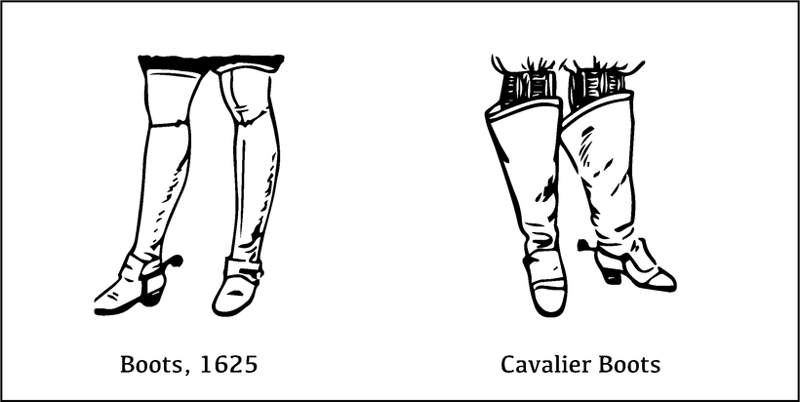
cavalier boot. High, soft leather boot with flaring top, as worn with the 17th-century cavalier costume.
cothurnus. Buskin or half boot, especially one with thick soles. Worn by ancient Greeks and Romans as part of theatrical costume.
cowboy boot. Boot with a high, fancy top, usually decorated with stitching; high, Cuban heel to prevent the foot slipping from stirrup when riding horseback. This type of boot was originally worn by cowboys and is now worn quite a bit throughout the United States.
finnesko or finnsko. Boots made from the tanned skin of reindeer and worn with fur side out. Worn by Arctic travelers.
French fall boot. Leather boot with a high top wide enough to crush down. Worn in colonial America.
gamashes. High boots worn in the late 17th century. Also spelled gamoshes and gramashes.
gum boot. High, protecting, rubber boot.
half boot. Boot extending short way above ankle.
Hessian. A knee-high boot, usually decorated at the top with a tassel. Worn in the 19th century after being introduced into England by Hessians.
high-low. Boot reaching just over ankle, laced to top.
hip boot. Extra-high boot, usually of rubber, extending almost to hips. Used in fishing, etc.
hunting boot. Laced boot with waterproof sole, usually blucher-cut and having a bellows tongue. Used when hunting and for general rough outdoor wear.
jack boot. Large, heavy, all-leather boot, reaching above the knee. First worn by cavalry during the 17th and 18th centuries. A jackboot is usually a military boot such as the cavalry jackboot or the hobnailed jackboot. The hobnailed jackboot has a different design and function from the former type. It is a combat boot designed for marching. It rises to mid-calf or higher without laces and sometimes has a leather sole with hobnails. Jackboots have been associated popularly with totalitarianism, since they were worn by German military and paramilitary forces in the run-up to and during the Second World War. However, they have been used officially by other nations as well, including the United Kingdom, and had some civilian uses.
jockey boot. Type of top boot with cuff and often tassel at top, worn by children.
kamik. Sealskin boot worn by Eskimos.
larrigan. Knee-high boot with moccasin foot. Used by lumbermen, and trappers.
leg boot. Boot, without lacing, reaching some distance above the ankle.
lumberman's overs. Combination felt boots over which rubber arctics are worn.
napoleon boot. Top boot, designed by Napoleon. Popular in the mid-19th century.
pac or pack. Above-the-ankle shoe or half boot of moccasin type, worn by lumbermen.
Polish. Women's front-laced shoe or boot, five or more inches high from heel seat to top. Said to have originated in Poland.
Russian boot. Calf-high boot with leather top or cuff, sometimes having a tassel in front.
skitty boot. British dialect term for a heavy half boot that laces up front.
startup or startop. Kind of buskin worn by country people in the 16th and 17th centuries.
storm boot. Leather shoe, often waterproofed, cut extra high, well above the ankle. Designed for women's use in bad weather.
thigh boot. Boot with upper part extending over the thigh.
top boot. High, solid-legged or laced boot, usually of leather or rubber. Used for riding, hunting, fishing, and other sports.
water boot. Watertight, high boot. Worn in deep water, chiefly by fishermen.
Wellington (or Wellies). 1. Loose, square-topped boot reaching above the knee in front. First worn by men for riding and later by women for sport and outdoor wear. 2. Similar boots, shorter, sometimes worn by men under trousers. Properly called half Wellington.
bootee. A boot having a short leg.
bootery. Retail shop selling shoes.
boot hook. Long, metal hook with T handle across top to enable one to pull on riding boots by bootstraps.
boot-hose. 1. Long, heavy hose, leggings, or spatterdashes. Formerly worn in place of boots. 2. Hose made to wear with boots.
bootikin. Small boot, gaiter, or legging.
boot jack. V-shaped board or frame. Used in pulling off boots.
bootlace. Fabric tape or leather string is used to fasten a boot.
bootstrap. The loop attached inside the top of the boot at the back or side; is used in pulling the boot on.
boot top. 1. Top or upper part of the boot, especially if flared and decorative. 2. Formerly, a lace ruffle worn to hide the top of the boot.
boot tree. A device put inside a boot or shoe when not in use, to keep its shape.
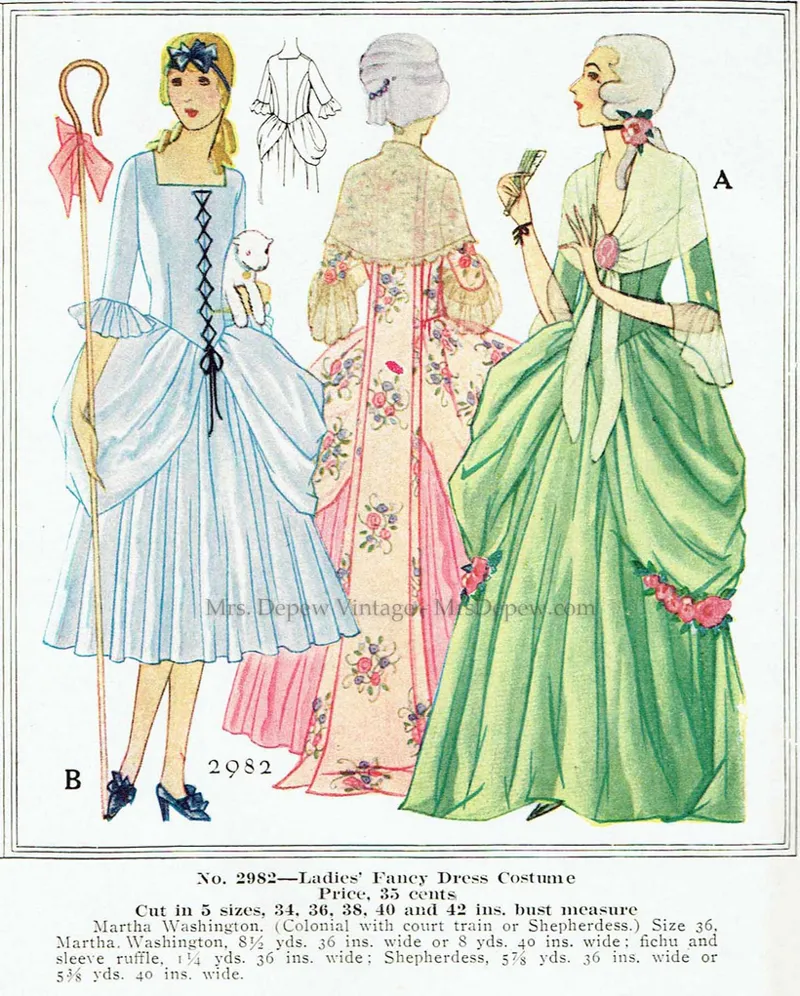
Bo Peep costume. Shepherdess costume for a character in a nursery rhyme.
bordé. French word meaning edged or bordered.
bordeaux. Claret color; clear, deep, ruby-red shade of wine made from Bordeaux grapes.
border. Outer part or outside edge, usually ornamental; strip or stripe around or near edge; also, to make such a border.
bordered fabric. Fabric woven or printed with a border that is used as trimming or finish in making a garment.
bordure. Edging, edge, or border of cloth; also, selvage.
boroso leather. Kind of sharkskin.
bosom. The front part of a garment a covering the breast.
bosom knot. Bow of colored ribbon. Also known as a breast knot.
bosom shirt. A shirt having a starched, plaited, or tucked bosom, often of different fabric from that of the shirt. Also, a small partial shirt, as a vestee, gilet, or the like.
boss. Any protuberant part, usually ornamental, of the same or different material, such as a knob, stud, or pad. Also, to ornament with bosses; to stuff out, emboss, stud.
Note: Occasionally when the French word for pattern "Patron" (as in sewing pattern) is translated into English, it is incorrectly translated as boss, a word meaning employer or patron.
Boston bag. A small piece of luggage, usually of soft leather, pouch-like in shape, having a handle at each side of the top opening. Carried by hand.
Botany wool. 1. A fine merino wool. 2. The brand name of a wool company that published knitting and crochet pattern books in addition to manufacturing yarns.
bottekin. A small boot.
bottier. One who deals in shoes or boots, especially of fine quality. The French word for shoemaker.
bottine. A small boot of fine quality.
bottu. An ornamental or sectarian mark (such as a dot on the forehead). The word originates in India.
bouchette. Large breastplate buckle.
bouclé. Woven or knitted so that the surface has a looped or knotted appearance. Applied to fabric used extensively for sports suits. The French word for curled or, literally, buckled.
boudoir. Lady's private room to which only intimates are admitted.
boudoir cap. Cap to cover the hair; worn by women in the boudoir.
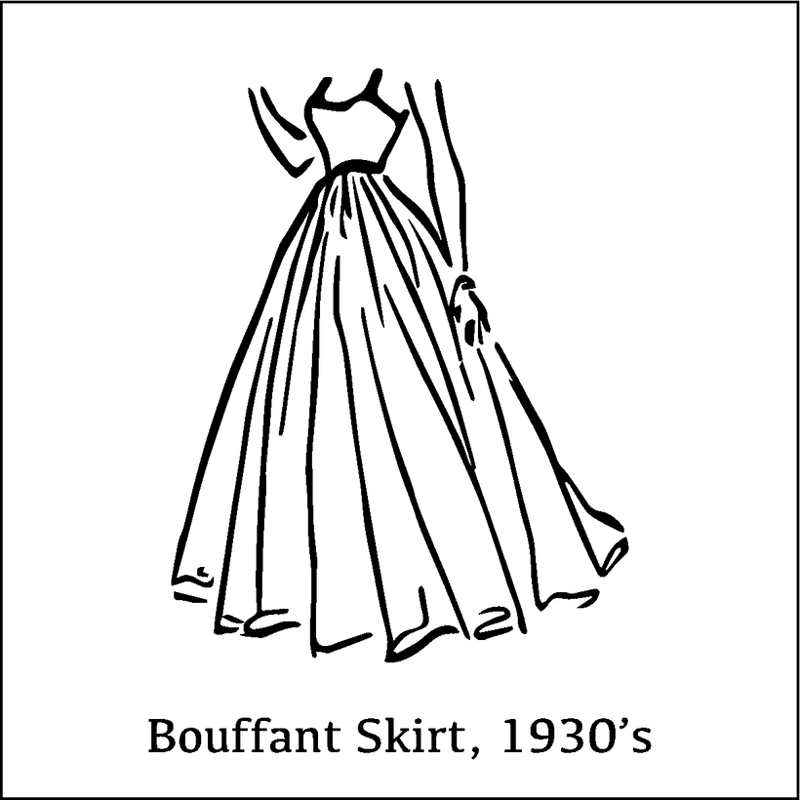
bouffant. Puffed-out, full, flaring, as in bulging drape of skirt or sleeve. From the French word
bouffer, meaning to swell.
bouffette. French word for bow made of ribbon or other material; also, a tassel.
boughten. Purchased; bought at a store as distinguished from made at home. Not a propper word usage but still used..
bouillon. French word meaning flounce or puff on a dress.
boulevard heel. The high, covered heel of Cuban type but lighter.
bound buttonhole. Buttonhole with fabric- or braid-bound edges.
bound seam. A seam that is finished with bias binding.
bouquet. Bunch of flowers or clusters similar in appearance, to precious stones.
Bourbon cotton. A fine quality of cotton.
bourdon lace. Net lace having a corded edge.
bourette or bourrette. Yarn of various fibers having unevenly spaced nubs or knots; also, fabric with uneven surfaces woven from such yarn. Originally, a method of weaving in which loops were thrown to the surface of the cloth.
bourré. Stuffed or wadded. Frequently used of quilted articles; also, of padded embroidery.
bourrelet or bourlet. Wreath-like rounded cloth pad or thick twisted scarf formerly worn on helmets or as turban; similar padded roll as part of coif, worn by women in the 14th century.
boutonnière. Flower or small bouquet worn in buttonhole; also, any small bouquet of real or artificial flowers. Sometimes given as a gift before a special occasion to be worn pinned to one's clothes, or sometimes tied to the wrist. It is the French word for buttonhole.
Sources:
Tailored Buttonholes and Buttons by Mary Brooks Picken, 1922.
The Language of Fashion by Mary Brooks Picken, 1939.
Le Robert & Collins Dictionaire Francais-Anglais English French Dictionary, 1980.
The Mrs. Depew Vintage LLC. private research pattern archive.
Encyclopédie des Ouvrages de Dames by Thérèse de Dillmont.