
[Interview+] Going Beyond Hubble and Roman to Find Planets With Atmospheres
BONUS PART STARST AT 21:45
Watch here (with no ads) or on YouTube: https://youtu.be/sx-qjgeslfQ
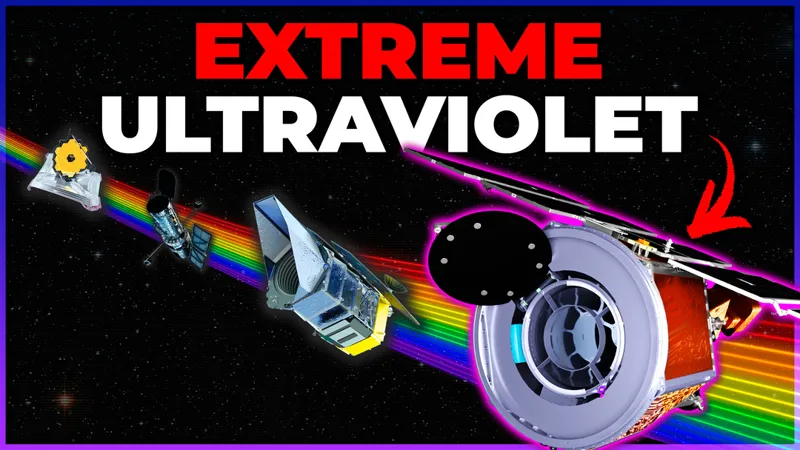
A new mission that was just proposed to NASA is an extreme UV telescope that will observe hundreds of stars to find the conditions for planets with atmospheres. How exactly will it work? Finding out in this interview.
Interview with Lee Feinberg about the HWO https://youtu.be/0R3ykUkxH5M?si=DhJxA32PyHr3ypUh
Huge interview about TRAPPIST-1 system https://youtu.be/B8H4EnbKkgU?si=_mGhpuR5w2G0bCtX
🟣 Guest: Dr. Allison Youngblood https://science.gsfc.nasa.gov/sci/bio/allison.a.youngblood
📜 ESCAPE: a small explorer mission to study the stellar drivers of exoplanet evolution https://arxiv.org/pdf/2608.00683
00:00 Intro
02:19 M-dwarf stars and their planets
07:10 ESCAPE mission
17:27 Next steps
21:45 TESS
30:40 Current obsessions
35:46 Final thoughts
Comments (3)
Wonderful interview. Great guest. Amazing topics. Nowhere else can we get this. Thank you for all of this from one of your proud supporters!
The reference to M Dwarf as opposed to red dwarf confused me. Are they the same Google implies that they are
According to Wikipedia, the term Red Dwarf is loosely defined with most being M class while some can be K class. I would assume if an astronomer/astrophysicist uses the term M dwarf, they are being more specific than the term Red Dwarf.