








CRY HAVOC, AND UNLEASH THE BLOGS OF WAR: PART ONE
I’ve been working on the Havoc Toolkit for two and a half years.
It’s out, and you can download it here, and there’s a game jam that kicks off next week that you can join up to if you’d like. Much thanks to Maz and Chant for repeatedly drop-kicking my ramshackle drafts back at me and carving the resultant theorising into something useful.
But, actually, I’ve been writing Havoc since 2013, when I made what was then called ORK HIJINKS YES.
But, actually actually, I’ve been writing Havoc since my first year at University when I GMed my first proper roleplaying game as an adult.
So let’s talk about that for three and a half thousand words.
THE YEAR IS 2006.
Not content with her huge takings from Mas Que Nada and Pump It released with the Black Eyed Peas, Stacy Ann “Fergie” Ferguson is topping the UK charts with her debut solo track London Bridge which I believe - but am not going to check - is about oral sex. Ten years away from Brexit, the nation is still running out the clock on Tony Blair, and I have not yet voted in the election that would see the Lib Dems form a traitorous coalition with the Conservatives and turn me off the idea of politics for life.
I spend my days in a musty haze shuffling back and forth across the University of East Anglia campus trying desperately, fruitlessly, hopelessly to get my end away, saving up to afford the good kind of sandwich spread, and playing as many roleplaying games as I could.
I have adored the concept of roleplaying games ever since I first witnessed them in practice one fateful night in the summer of 2000 - a pick-up game of Sabbat run above a Games Workshop the night before Games Day - but, to start with, I struggled to actually do them. We had webcams and VOIP, sure, but the technology was a long way off reliable, and instead we had to play in person, which came with all sorts of organisational issues.
(I say “we.” I barely played at all. My friends were all too cool for that, and looking back on it, good for them - while my obsession with imaginary worlds has paid off, they seemed to do a lot better playing sports and talking to girls and getting into FIFA 2003 - so I struggled to get a game together. Before I reached University, I had run only a handful of sessions for largely unenthusiastic young men.)
So: fascinated and finally permitted by the presence of other nearby dorks, I played a bunch of games.
I played a floppy-hatted gunslinger in 7th Sea and was determined to invent the revolver. I played a half-elf ranger in Dragonmech underneath a GM who hated players more than he hated having to make NPCs, and he hated having to make NPCs. I played a Saturday morning roleplay-heavy adaptation of GW’s narrative Inquisitor wargame where I, of course, was a secret vampire, because that’s what 40k needed.
I dabbled in Call of Cthulhu (I was a monied layabout with the skills Catch Drink As It Slides Down Bar 30% and Find Keys 25%), I turned up to D&D 3.5 every week for a year and still never learned how to level up without Chris’ help, and I even I went off-campus every Wednesday night to smoke weed and play an ineffectual goth in SLA Industries.
But! But but but. I didn’t know what I didn’t know, back then. I was fumbling blindly into the world of games after a half-decade of downloading whatever free supplements I could through my dial-up connection and trying to retroengineer what the hobby was by sifting through, say, 130 pages of post-Gibsonesque Cyberpunk or the GURPS Quickstart or someone’s fan World of Darkness project that put actual Christian angels in the game. I didn’t know what I liked, I didn’t know what good looked like, and I sure as hell wasn’t ready to form an opinion on what mattered to me.
But then, like a bolt from the blue, came Wushu. It lit my mind up technicolour. THIS was what mattered.
WHAT IF WE GOT RID OF THE BORING BITS
Wushu was written in 2005 by Dan Bayn. I found it through reading some of his RPG.net columns on setting up interesting fights, and shelled out actual money for PDFs to print at the University library for 3p a page. I showed it to Chris in my shared kitchen while we ate defrosted bolognaise and drank cheap cider. I paid extra for the setting packs, and the Gun Fu and Car Fu and Cut Fu and Wyrd Fu sourcebooks. Unlike every roleplaying game I’d read up to that point, it focused on the bit that I cared about.
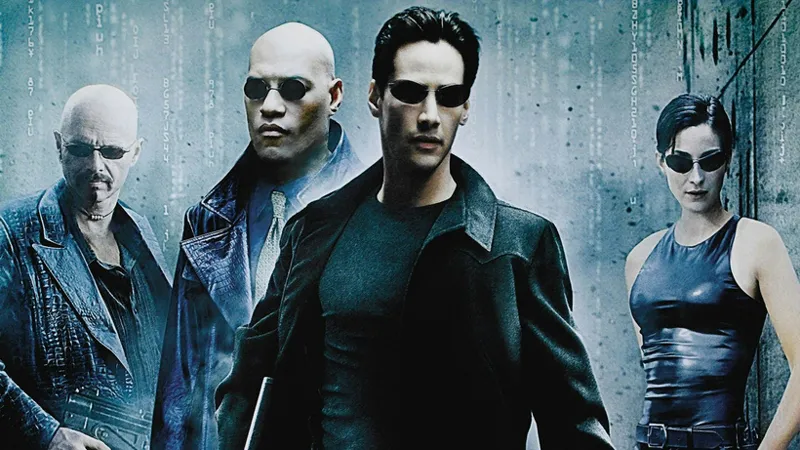
Bayn, like me, clearly saw The Matrix and couldn’t quite contend with the mark it left on him. I tried to make a roleplaying game about it, bounced off, and instead paddled around in the shallows of ignorance - he made a roleplaying game about it and got it one hundred per cent right the first time.
I can draw a parallel, I think, between his work and Alex Roberts’ - she made For The Queen, realised it was broadly perfect, and gave up games design to get a proper job as a professional therapist instead. If Alex did that for zero-prep zero-mechanic tragic romantic one-shot pick-up games, Bayne did it for games where you jump sideways and shoot two guns at once.
Every other roleplaying game that I had played - even the rules-lite, supposedly anarchic and freewheeling ones - had a rhythm to play. The player, in charge of the character, described their actions freely until the GM said “nah, don’t think so” and forced them into a roll to see if the thing they were doing in fact worked. The GM was maintaining a semicoherent world in their minds, and the players were allowed to bump up against the side of it and maybe interact with it a little bit, but the odds were stacked against them doing anything out of the ordinary.
(I’m exaggerating. Most people know when to roll dice without being told when to - when they roll to hit, roll to hide, roll to convince, etc. But, in practice, most roleplaying games break down to taking it in turns talking until the guy at the top of the table says you’re taking the piss and have to roll a six to continue.)
In every other roleplaying game, if you draw two guns and jump sideways whilst firing them, you’re - oh - probably at -2 on the first attack for splitting your action, -6 on the second attack coz again splitting your action and there’s an off-hand penalty, maybe you need to roll something to draw a weapon (wait - two weapons!) on the same turn you use them, and you can’t shoot more than once with each in a turn unless you have the talent for that, DC 10 Athletics check to jump cleanly, and you’re laying on the floor regardless when the enemies take their turn so watch out!
Probably best you don’t do any of that. You should stick behind cover and just shoot once with the gun in your dominant hand.
Wushu didn’t have any of that. In Wushu, whatever you say happens, happens - unless someone at the table vetoes it. In Wushu, you say “I start running, bullets smashing into the wall behind me - then I pull out both my guns, leap over the bar and spin in mid-air - and bang bang bang I blow away two of the goons who thought they’d got the drop on me.” And you do! Away they go! What’s next?
Positioning doesn’t matter in Wushu. The laws of physics don’t matter. Range and accuracy doesn’t matter. Cover doesn’t matter. Skill checks and abilities barely matter. What matters is phrases or details. I’ve separated them out with hyphens in the above example for clarity; it would give you three dice because you said three things.
When you roll those dice, it doesn’t determine whether or not what you wanted to happen happened - it did happen, we’ve already established that, you’re a cool gunslinger and these mooks are nothin’ to you - you’re just looking to roll under your skill, and every dice that does so knocks a point off a big pool of enemy health.
There’s some more details about attack and defence, and named characters, but that’s everything you need to know. The dice are a pacing mechanic, intended to make a scene last a certain length of time and play out a certain way. They’re not an attempt to simulate anything other than narrative or thematic concerns, and even then, only barely. They’re something you do whilst the fun part of the game happens above.
ABSOLUTELY RUINOUS
Every other roleplaying game had been telling me “no” - you can’t do that, or you can’t do that yet, or I’m going to punish you for that or even worse you shouldn’t do that, in my opinion.
Perhaps the GMs I played with, themselves relative youngsters, didn’t line up with my style. Perhaps it was 2006 and the Forge, and the principles of postmodern game design that it would proliferate, didn’t really exist yet. Perhaps I was a difficult nineteen-year-old who was (and is!) scared of having an honest conversation about expectations with those around me, and I was determined to magically intuit how to be alive through luck and raw gumption.
Wushu said yes. Wushu wasn’t interested in keeping anything away from you, or in the tricky relationship between the struggling players and the GM-as-demiurge acting as custodian of a system strung through accepted norms and social complexities. You all have equal authority; make it up. If it doesn’t sound right, talk about it until it does.
Thrilled to bits and unable to manage my excitement, I ran a game of Wushu in my room in halls for just Chris. I find duet games so wretchedly uncomfortable now that I’d rather chew a finger off than be trapped in one for longer than five minutes, but the pair of us gamely stuck at it for a couple of hours. I had read Lords and Ladies the summer before, so I was stuck on the idea of nasty fey, and he made a honking great fridge of a character who got into fights with them. I distinctly remember throwing a wall at him with a huge telekinetic burst only for him to jump through the window in the middle of it and bean my elf in the noggin with a cold iron revolver bullet.
It was everything I wanted. It was everything now now now. It occupied every spare corner of my head. I started writing fluff for it - the invasion of the fey through the upper echelons of society, what their corrupting influence looked like, what magics you could steal from them. I tried writing rules for it, and I couldn’t, because Wushu is finished. It’s all there. It does anything you want it to. (More on that later.)
It was then I made the mistake of playing D&D again, and it would be the nail in 3.5’s coffin as far as my opinion of it was concerned. It was a mid-evening session as part of our 24-hour continuous game event - an ongoing experiment in what nerds smell like when you trap them in a badly-ventilated room for a full day and feed them nothing but Ginsters’ pasties - and, this time, 3.5 had been harangued into 2000AD’s Slaine setting. (Slaine is Conan the Barbarian but set in what would become Great Britain, basically, and everyone involved has a face like a sack of knees.)
We were playing Celtic warriors sneaking into a Roman (Trojan? Saxon? Norman? I haven’t a clue) camp and mess up their preparations for tomorrow’s battle. Because of the tense situation, we were operating with turns - like combat - rather than freeform roleplay. I think I waited ten minutes for my turn.
“I want to get into cover behind the tent in the centre of the clearing.”
“Okay,” said the GM. (It was the same lad who ran Dragonmech.) “Roll Move Silently.”
“Sure... I get a 17.”
“That’s a pass. Now roll Hide.”
“I got a.... 3.”
“Ha! Okay. So you’re very quiet but standing stock still in a bright patch of moonlight. They see you.”
(The Dragonmech GM was a strange fellow who very much enjoyed it when players rolled badly, and would often come up with creative interpretations of the rules to make sure the situation was set against us. This one time, someone wanted to scrape some moss off a stone with an arrow-head to examine it, and he made the poor guy roll to hit without a proficiency bonus because “he wasn’t proficient with arrows, just bows” and honestly Graeme I hope you’ve grown out of it because what you were doing was negative fun. Broadly: he wasn’t a great GM, but I don’t believe my frustration was entirely due to the game mechanics.)
I was furious. I would go on to be furious and bored as I waited another fifteen minutes for my turn in combat, whereupon I rolled a 7 to attack with my bronze axe and missed.
Imagine if we were doing this in Wushu, I thought. I wouldn’t have failed the sneak check. I wouldn’t have fucking rolled! Would have just described sneaking in and doing the thing and then skip to the battle the day after. This fight would have been over an hour ago, if we’d decided to have it. We might have got to do some roleplaying instead of each describing the same fur-clad barbarian with a slight variation in haircut get spotted (or heard, I guess) and bum-rushed by better-equipped enemies.
Why would anyone dream of running a game using anything else?
I grew frustrated at the divide between what I was imagining - something high-flying, energetic, dynamic and perhaps a bit unpredictable - and what the GM was imagining, which was often an attempt to simulate a slightly more exciting than normal version of reality. Rather than discuss this like a grown-up - which I wasn’t! I was twenty at the absolute most, and a dolt with it - I figured that it was the rules’ fault.
Why should I wait to be told yes? Why should I spend six months, four levels, an ability point and three feats powering up my Fighter’s Great Cleave attack when there was a game over here where I could just describe beheading three motherfuckers with a single swing of my axe right out the gate?
SOMETIMES IT’S NICE TO BE TOLD NO
Because it’s boring.
The first time, it’s exciting, sure. Maybe even the fourth or fifth time you can get something out of it, especially if the motherfuckers in question are crucial or unusual. But if no-one’s trying to stop you from doing it, it loses something. You’re not pushing against anything, you’re not triumphing over anything, and it has all the inherent difficulty of writing out a list of your favourite imaginary things to do with an axe.
So you need to do more, different things with the axe. And use the environment in interesting ways. And start dictating what mooks do to set up attacks. And pass play back and forth between players in the middle of actions. But even then you run out of stuff to do with regards to the intersection of an axe and the necks of motherfuckers, and you realise that the character’s done. The campaign’s done. The game is done. You’ve solved it.
I remember reading a post - oh, about a decade and change ago now - which was complaining about storygamers, and how they cheapened the whole hobby because they hadn’t earned their achievements. “These kids say that they managed to charm the king into giving them a magic item! But they just say they charmed him and they do it. We had to put the work in, levels and levels, and when we did something cool it wasn’t because the GM just decided that it happened.”
Terrible news, guy whose name I can’t remember - the GM did decide that it happened. But they put a lot of stuff in the way before they got there: faffing around with courtiers and ceremony, perhaps thanks to a more dedicated understanding of pseudomedieval intrigue; a big fat skill check, which players were for the most part unable to push much in their favour; a quest, perhaps, or just the good sense to introduce the King as a background character first and then slowly foreground him as the players show more interest.
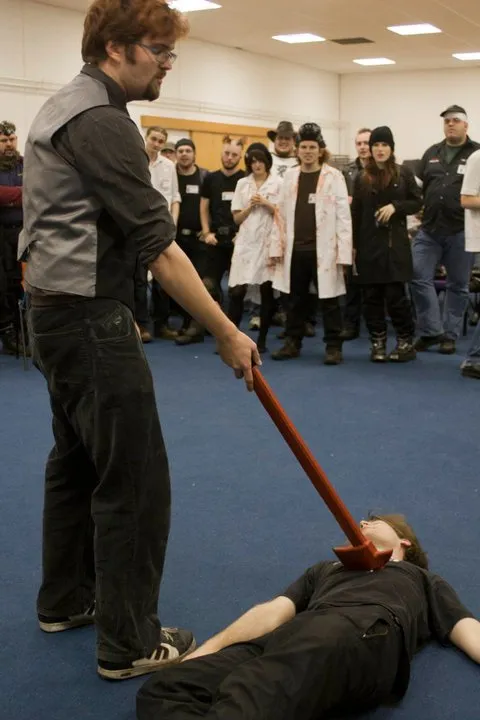
Another example: I used to run live-action zombie games for anywhere between forty and a hundred and twenty-five people at a time. We operated on a mix of careful planning and scenario design coupled with ad-hoc adjustments to the environment done live by GMs on the ground. If players were having a hard time, we’d pull back the zoms and let them regroup and talk to each other for a bit. If they were getting off easy, we’d pull a special monster out of the ref room - the feral White Knight, the tripwires-in-their-mouth Screamer, the fun-loving Nightmares - and send it in to even the odds.
I thought this was common knowledge to the players, but then one team found out and they were upset. They thought they were up against a set scenario - could they beat it and escape? How far could they get before dying, if not? What sort of stories would they uncover and tell along the way? The thought that we were pulling our punches disgusted them. We were just doing a puppet show for them, rather than giving them a dangerous sandbox in which to experiment and play.
We would go on to stop telling people that we were adjusting the game, and hide it as much as we could. It ruined the magic. It was like seeing Mickey take his head off at Disneyworld and light up a cigarette.
All of which is to say that: it is nice to have a boundary, sometimes. It is nice to inhabit a world with predetermined rules that you can understand, and perhaps even master, as part of a group. It is nice to see “at Fourth Level you get an additional 1st and 0th level spell” and to work out what spells are most advantageous to have given the sort of things that you expect your character to do. It is nice to read three books to find the most effective combination of feats and plot your way out towards them.
(I do not think this is nice, personally, please understand. I think it is draining and turns a gentle hobby into dick-waving metagame nonsense when taken to its worst extremes. But I can appreciate the joy of making an engine out of game mechanics and seeing it work in practice; I just do it from the other side.)
Wushu has no boundaries aside from a) how many dice you can roll in a single go and b) whatever other fictional boundaries the table determines. It’s done. There’s mystery or mastery, no levelling up, no magic weapon that gives you +10% to hit and an extra point of damage, nothing incremental or small, no edge cases, no synergies, no exploits. Nothing to work towards that’s being kept beyond your reach. No-one says you can’t jump across that gap. No-one says you can’t resist that poison. No-one says your character dies. Just do the thing. No-one’s stopping you.
There’s no curtain and no man behind it.
Which is a problem. That mastery is part of the appeal of playing games - it feels good to roll a big number, to affect the world, to make a great impression when the odds are stacked against you (especially if you’ve agreed beforehand, consciously or not, to have them stacked against you to a predetermined degree). It’s the game part of roleplaying game.
If you make a game too brisk, you can’t really sell it. Not because it’s not long enough to enjoy - I’ve made plenty of money off Honey Heist, for example, and that’s about six hundred words - but because a game that has all of its inputs and outputs considered leaves no room for expansion. No room for exploration. You can play it once and get the whole thing. No matter how free you are with regards to fiction, if you don’t put enough grit in there for players to catch on and struggle against, it doesn’t feel right. In addition to the imaginary monsters we’re fighting in the fiction of the game, we want a challenge at a mechanical level. We want things to be difficult but not too difficult. We want the right amount of pain and pleasure to make it feel worthwhile.
We want, to put it in blunt and perhaps reductive terms, for daddy to hurt us in the right way.
Wushu doesn’t hurt you in the right way. Wushu doesn’t hurt at all. Wushu’s ushering you into the special no-pain room full of hot fudge sundaes and Nintendos. So I’m not surprised to see that no-one’s heard of it, and it hasn’t made the huge impact on game design that equally creative or inventive games like Apocalypse World or Blades in the Dark made, because it’s done.
---
That's all for now. More next week, in which I promise will actually discuss the Havoc Engine.
Stay beautiful,
Grant "Havoc" Howitt