
















GETTING SALTY ABOUT IT: PART 2
You can read part one of this blog here.
To sum up the first part: we've been writing the sequel to Heart for about five years and we're only now reaching playtest. It's called Salt and it's about a big Atlantis analogue. (But: read it, if you've not!)
I'll break down my changes and gambits into one half about fluff and one half about mechanics.
THE FLUFF
IT’S ABOUT THE CITY
That’s the nug. You can sail around, aye, but the game is about the cyberpunk Atlantis that’s crested out of the middle of the ocean and the vast treasures and dooms that lay within.
I want Salt to predate the mountains. Salt is immeasurably ancient, and it underpins everything that came after it. It’s a Prokatakos megalopolis - the Prokatakos being the forerunner race who built the arcologies, and maybe Spire and Heart themselves - and it give me a chance to describe a culture that’s so alien, and the glimpses that you get of it so scant and awkward, that you don’t have a hope of making sense of it.
Salt is built on the backs of fallen gods. Salt stained reality around it, punching corruption into the genes of the people and animals around it. The adventurers who come to Salt are touched by it - it’s in their blood and the minerals in their body resonate with it - in a way they cannot escape.
HEY: WHY HASN’T ANYONE MENTIONED SALT BEFORE?
Because we just made it up, obviously.
But obviously in the fiction of the world, there must at least be legends. I mean we’ve got legends of Ys and Atlantis and neither of those places are real, so the impact of an actual wet forerunner megacity that exists ought to have left a mark.
I’m reminded of the challenges that Games Workshop faced when they released Primaris Marines: for the uninitiated, about a decade ago GW decided that they wanted their poster boys to be a bit taller, a bit more sleek, and to make their name a bit more copyrightable. (They tried to get “space marine” as a copyright term, but apparently nicking it from Starship Troopers and shuffling it with a set of Frank Herbert flashcards wasn’t enough to make it legally distinct.)
Now the fluff of 40k, and the Imperium as a fragmented empire clinging blindly to whatever shreds of technology they can find from the ancient past - probably as a pisstake of Thatcher’s military policy, as was the style at the time - means that you can’t have new things. New things are heresy and Space Marines are the opposite of heresy. There’s an entire planet devoted to making sure no-one invents AI again. Everything that can be made has already been made and we can only hope to emulate the efforts of our perfect forebears.
But Daddy Workshop’s shareholders NEED new space marines. The toy soldier industry in the UK outperforms our entire fishing output, and most of Britain is coastline. So when the time came to overhaul the line, they were met with a difficult problem: maintaining the beloved, convoluted lore vs making it so that every space marine wasn’t stood in a “just cacked himself” squat because that was how miniature casting worked in 1998.
Enter: Belisarius Cawl.
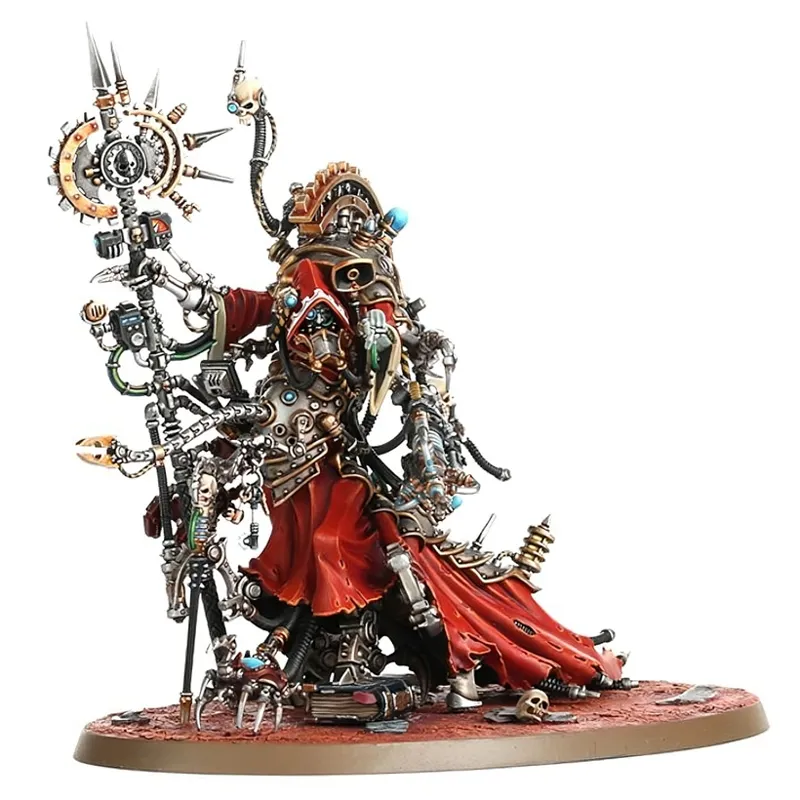
Belisarius Cawl is a cool sort of centaur, except instead of a horse his back bit is about five different robots, and he invented a new type of space marine called the Primaris Space Marine: taller, better-looking, bigger guns, good teeth, standing up straight, etc. But don’t worry about new things being heretical, because Cawl started making them ten thousand years ago in a secret space station in the middle of nowhere and didn’t tell anyone and he’s only just now finished. Then once they were done he shipped out new, sexier space marines to every chapter ever, including the ones that are in the arse end of nowhere undertaking perpetual doomed centuries-long crusades, and that was that. Old-style marines are called Firstborn marines, now, and no-one uses them. Poor buggers. Conquered the galaxy twice for nothin’.
Everyone broadly agreed that this was a daft move, but we were also excited to have space marines - sorry, adeptus astartes, you can trademark that - that felt appropriately beefy. Future size increases of miniatures received zero fluff justification, so every Cadian is six inches taller now ever since their planet got destroyed (must be a gravity thing) and every Chaos Space Marine is now about Primaris height because it wouldn’t be fair otherwise, despite the fact that they’re made out of nasty firstborn marines, and broadly I don’t think people care.
But 40k is a wargame, and there’s a limited amount of poking at the edges of the fiction that you can do within the boundaries of a wargame, and roleplaying games get much stickier. You can ask questions, like “why has no-one mentioned digital Atlantis at all in any of the games, even as a myth” and the GM has to come up with answers. (I am reminded of writing the Sunless Skies RPG, Skyfarer, where we quickly realised that a lot of the fiction in the source material was being shown something weird, asking it a single question, and then not being allowed to examine it further in case the mystery died.)
That’s all part of the problem of having an established setting with truths and a fanbase and expectations - as nice as it is to work within established boundaries and refer back to a coherent fiction, sometimes you write yourself into a corner.
Now: a lot of those corners are nice! And roomy, too. The Heart is an especially roomy corner considering how in Spire it was a weirdo backwater basement and in the sequel it’s roughly three times the size of the rest of the world and contains every heaven you can think of.
Here is my answer for why no-one mentioned Salt before now: it didn’t want them to. It manifested a Someone Else’s Problem Field around itself. Part of its existence, and its ancientness, and the way that it’s endured is that it’s been hiding from sight - part physically, in that it’s under the ocean, and part mentally in that it’s not ready to be seen yet. And now, all of a sudden, it’s a) risen and b) become comprehensible by mortal minds.
Which asks another question, which is: why that then Grant, and fine, fair question, good point. And I have an answer. But I’m actually going to keep that close to my chest for a bit, because firstly it’s the ultimate mystery behind the game and secondly I might change it and I don’t want to have to walk it back.
IT’S ABOUT TECHNOLOGY
One time, back when I lived in London, we ended up at a drinks event in King’s Cross held by an interactive fiction publisher and met an Egyptologist. (I do not end up at that sort of thing any more. Sometimes I end up in the bath, and on occasion I meet a cat that isn’t mine.) Maz asked the Egyptologist what the most interesting thing they’d found during their studies was, and without hesitation she said: bags.
See all the books are about the Kings and Queens and noble marriages and wars and development of social and legal codes, but the bags? The women on one side of the river learned how to make bags out of reeds, and they were good bags, so they traded them with people on the other side of the river, and suddenly the cultures were mixing and people were having kids together, and those bags did more for social change than any prick in a big gold hat.
The idea of bag as technology feels strange - it’s a bag, they’re basically naturally occurring, I bet crows’ll have bags by this time next year - but it got me thinking about what we wanted to do with technology.
What are the basic things we need help with?
Keep these things safe for me. Keep these things away from me.
Help me find my friends. Help me understand the world.
And then! Take those desires and add to them. What happens when you go post-scarcity? What do we find to occupy ourselves? What can we find to pick fights about? When a culture has eliminated the idea of dying of natural causes, when you can bring someone back from the dead, what role does death play in society? Is it a punishment? A penance? A reward?
So: Relics. Relics are vestiges of the incredibly advanced and honestly pretty weird technology that the Prokatakos pioneered before they... left. Or melted. Or travelled a couple million years into the future to see how things shake out. Or transcended to another plane of existence. (They’re not here any more, anyway.)
Relics are expressions of malformed desire which just so happen to confer often-beneficial gameplay effects, and the more you push towards them, the less you’ll be able to find in common with other people.
Update: I received an email from a friend half an hour after I put this post online saying "Oh, have you heard of Ursula K Le Guin's Carrier Bag Theory of Science Fiction?" and, reader, I had. But I only half-remembered it, and I searched "Margaret Atwood Bag Tech?" and when that didn't work I gave up trying to find the reference. So: this bit is derived from that, which was derived in turn from Elizabeth Fisher's Women's Creation (1975), which suggests that the first technologies were things to put other things in. The essay is less than six pages long and it's beautiful and you should read it.
IT DOESN'T CARE ABOUT YOU
This was, perhaps, another nug. On occasion, I will start a new document in an effort to have bright fresh new ideas, or maybe just to get around the haphazard disorganisation of the current document, and it's kind of like when you buy a new notebook and a new fineline black pen and now, surely, this will be the notebook that fixes it. This what what you needed all along.
It's refreshing, even if it doesn't always work. But this time it did! I think it's the eighth time I've done it for Salt, and it finally paid off. Here is the sentence that helped it slot into place:
The Heart loves you. Spire, or more accurately the people in it, will take you for everything you've got. Salt barely understands that you exist.
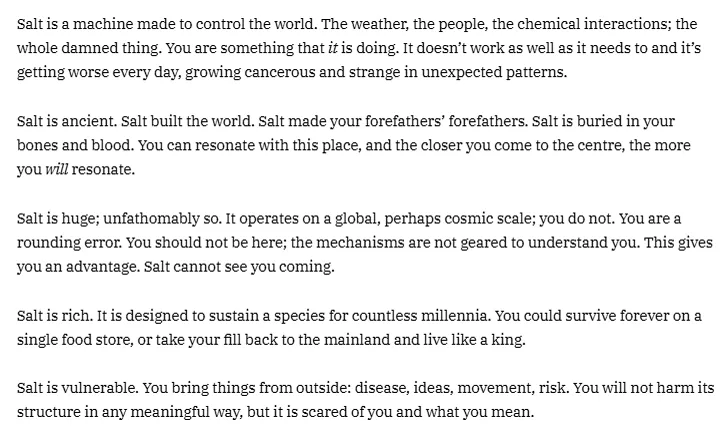
Salt has a coherent truth to it. Salt has a reason for existing, and a plan, even if that plan isn't going very well, and you can't comprehend it. It's too big. You're an ant on a circuit board. You are, as the document continues to say in a useful way that will never be communicated to a final reader, "a rat in a particularly large shopping mall."
I wanted to evoke some cosmic horror, and not cosmic as in "big god from space" but cosmic as "you are so much smaller than you realised." There's a bit in Mountains of Madness (more on that later actually) where the lads uncover the ancient city and it predates all human civilisation, and there's a great sensation of flipping from being on the cutting edge of science into barely comprehending the scale of what's possible in your universe.
IT HAS RULES
Heart has no rules. Salt has exact rules that you can't hope to learn completely.
I fell briefly in love with the idea of Babylonian Me, and the Code of Hammurabi, and in general with the concept of civilisation existing as a set of magic truths that could change the world - that once you establish something as factual, and you have the weight of authority to back it up, it is.
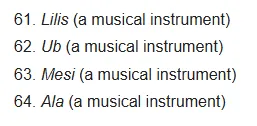
Me are close to spells, but also gifts, but also concepts, but also summoning rites for gods, but also a What's Hot And What's Not list in Mesopotamia circa 3000 BCE. They start off pretty much as you'd expect, making sure the folks in charge are allowed to be in charge:
Then it almost immediately picks up a broader scope:
Before turning into more of a list of Proper Jobs You Can Have:
And the last four are just musical instruments:
Which is cool, right? To have something so true it exists by default. I love the idea of certain things being more or less real than other things and humans not really having the equipment to perceive it directly, so something feels heavier or sharper or higher contrast. It's uncanny.
I wanted to push it further with Salt. I wanted to take the idea of rules overriding reality, brute-forcing new truths into existence, and throw lawyers into the mix. If there's a law of thermodynamics, then there should be a lawyer good enough to get you off on a technicality, right? Especially if we've already got wizards on the go.
So Salt magic - the city stuff, not the rotting corpses of gods in the foundations stuff which I'm not even going to mention in this blog, works on laws. The law against illegally building an extension on your veranda is as real and enforceable as the laws of gravity, which is to say: not very, if you know how to get around it.
IT’S ABOUT EXPLORATION
I play Arkham Horror every week. It’s a good game, in as much as it’s a punishing experiment in how much permanent damage my poor investigator can take before the campaign ends, and I have fun making goofy decks and being carried by my significantly more competent, and sober, friends.
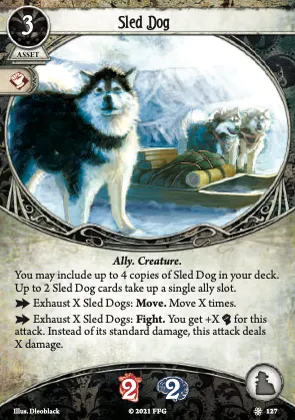
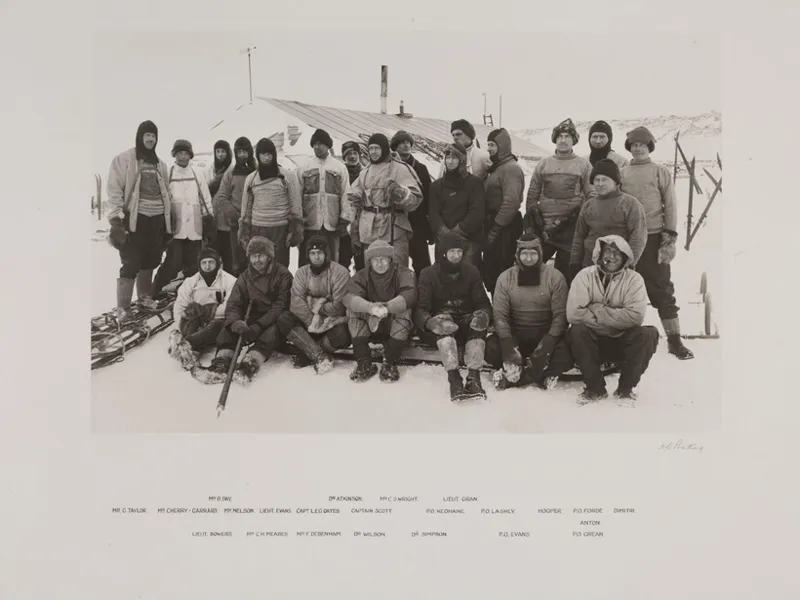
During the last campaign we played, our brave band of pulp heroes travelled to the (newly-risen) city of Ryleh (I’m told it’s pronounced “Rely-uh,” which I do not believe; I’ll say “Rill-yuh” until the day I die in Cthulhu’s big mouth along with 1D6-1 other Investigators) - we’ve done snakemen in the jungle, too, and we even re-enacted the Mountains of Madness with dog sleds and the like. I like the ones where you do an explore. It feels old-timey, and you can get around a lot of the essentially colonial aspects of classical exploration because it inevitably goes wrong and you always manage to just escape with your life and it was a terrible idea to go there in the first place.
I was inspired. Salt is about exploration, and it’s about proper state-sponsored (or at least patron-sponsored) expeditions into this strange new city, and what a terrible idea that is because it’s a barren deathtrap at a scale so large it could destroy you without really registering your existence.
I wanted to make it less like Heart, in that Heart is a personal expedition into your desires made manifest with teeth and stone and meat, and this is more of a forbidding place that doesn’t want you to progress. I have rules for team-mates, too, so there’s someone to kill off messily in Acts 1 and 2.
IT’S GOT ICE ELVES IN IT
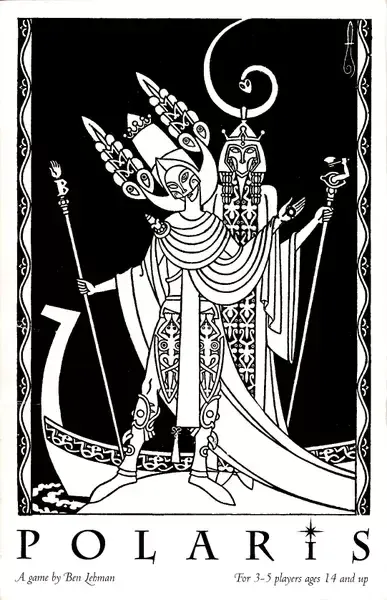
The aelfir come from all the way to the north on the polar ice cap, because I read Ben Lehman’s Polaris at a very impressionable time in my life. The ones who’ve reached Spire are viewed as libertine weirdos by the ones who stayed behind - because the ones who stayed behind are bound into a hivemind under their immortal Queen and live bitter, dark lives of hiding from predatory gods and building a palace the size of a small country. Bit of fun, and it lets me talk about bees kind of, which is right up there with trains and Catholicism and revolvers in terms of Things I Enjoy Conceptually.
We’ve mentioned them in passing before, but I felt it was time to have them as a player character ancestry. So I’ve had to come up with a proper name for them, and crumbs its hard - best I’ve got so far is either aelfnor (north elves) or hyvkin (hive... family. I dunno) and neither is working. But we’ll see.
My first instinct was to make them vikings, basically, and any player characters are refugees from or exiles of the hive mind that keeps everyone on the same page up north, and they’re coming to terms with making their own decisions and learning about things like preferences and desires and lying. But the vikings thing isn’t landing for me, so I might push it a bit inuit, or just treble-down on the bees and try to avoid tying them to any particular real-world culture.
IT’S GOT DEAD PEOPLE IN IT
I didn’t want Salt to be abandoned. I didn’t want to have the Prokatakos shuffling around inside, either, nor did I want to have it heavily populated with, like, people because that rather knackers the great mystery of it. (And like: where are they getting their food and water from? What kind of sandwiches do they like? Who cuts their hair? It’s all a bit mundane.)
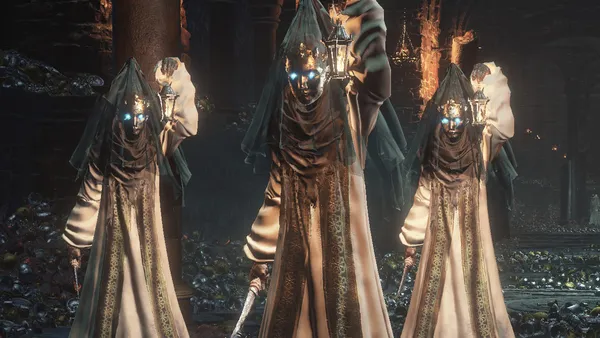
So: everyone inside is dead. A lot of them got over it and are trying to live normal lives, but it’s not working very well. I like the idea of Salt preserving people, drying them out like jerky, and keeping them in case it needs them later; every shipwreck that accidentally hit the boundaries of Salt, every previous expedition lead by a lunatic visionary who insists they can see the city on the horizon and has enough money to put a boatful of rubes together, every misaligned gnollish dimension-hop that deposited them in Salt by accident, everyone who tried to learn about it before is still there frozen in time.
I’m hoping this gives me room to write some gags about culture getting weird and twisted in on itself, and gives GMs someone else to describe aside from the PCs and the people they brought along with them. Plus I get to say “this is what the human kingdoms were like three hundred years ago” and “this is what Aliquami silk traders are like when you drive them mad and stick them in an attic for a century” and “what happens when a boatload of convicts crash-lands in Atlantis and they decide to set up an undead mafia?” That sort of thing.
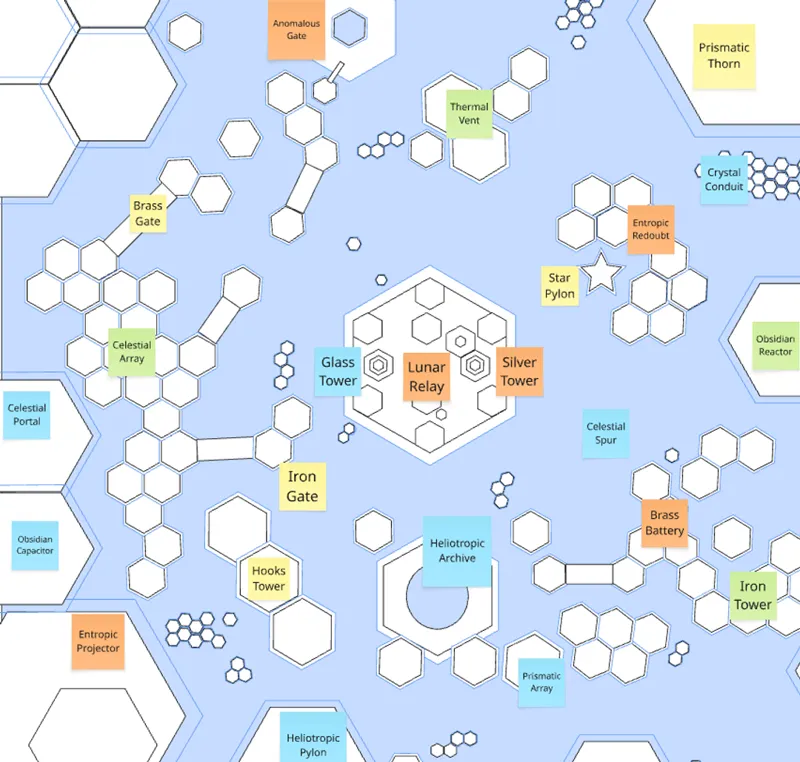
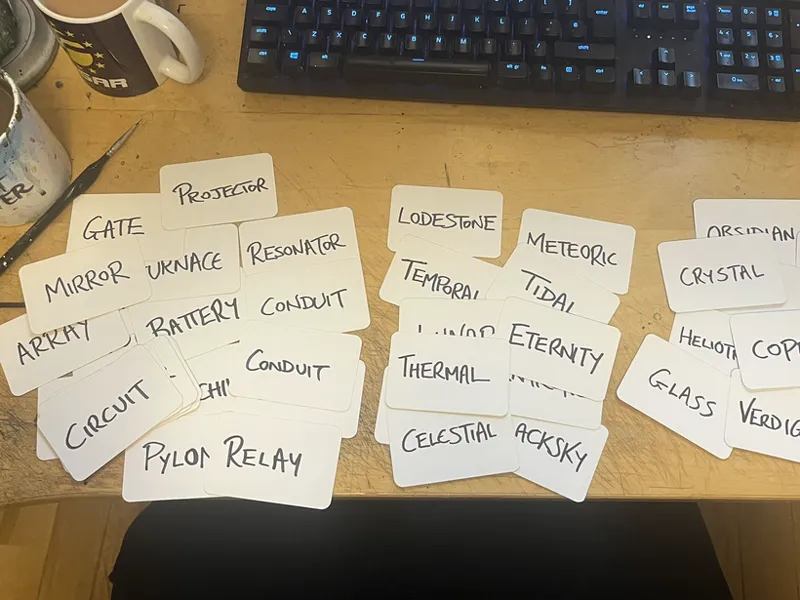
I DREW A MAP
Heart doesn’t have a map; it remakes itself anew each time a group of sufficiently deathwishy delvers step foot inside, which is a very clever metacommentary on how GMs work, and also just happens to mean that we don’t have to make any firm decisions about where anything is so there’s no wrong answers.
Spire is a bit more coherent - Ivory Row is beneath the Silver Quarter, New Heaven is above everything else, the North Docks are on the ground on the opposite side from the Blue Port, the Works are somewhere in the middle, Derelictus is beneath Red Row, and so on. (We have a map in the front, and a brief scene-setting which locates at least some of the districts we mention later on in the book.) But even then we’ve resisted detailed, canonical maps because they very rarely help a game based on communal imagination get going and more often get in the way - even Tim Wilkinson Lewis’ incredibly detailed maps of the city and undercity are fiercely inaccurate, and drawn by a blind gnollish mapmaker who lives in a cave in the desert and has never visited Spire.
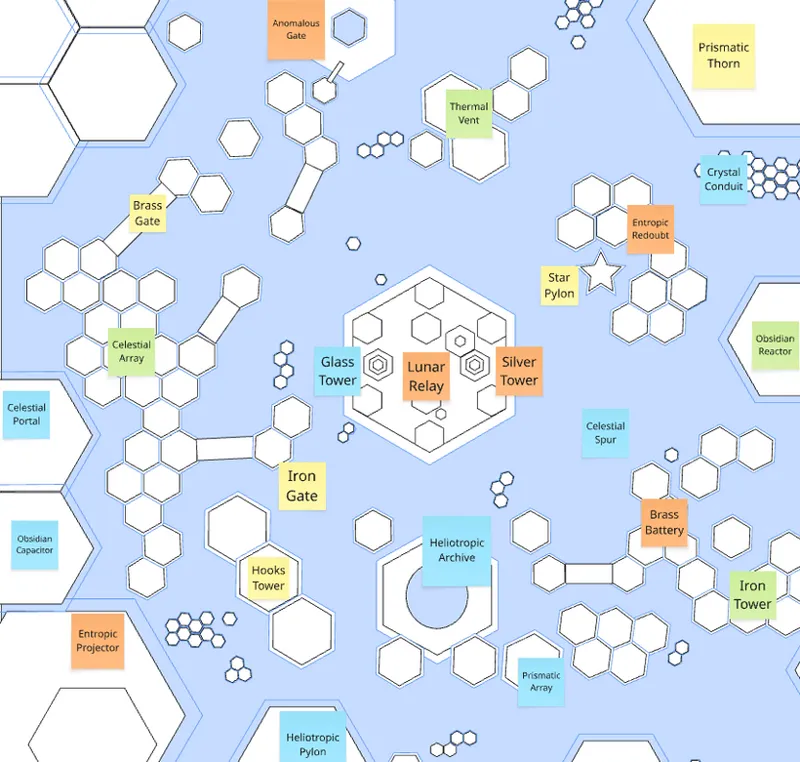
I want Salt to be different. I want a shape for it - a thing you can explore, choices you can make which affect your journey outside of a dice roll solidifying probable locations into definite ones. I want to hint at what it once was, and what it did as a machine.
So I’m drawing a map. Not one that exists in-world, mind - no-one’s mapped Salt yet, aside from brief efforts on the coasts - but I want the GM to know what’s ahead of you. I want you to walk down the wrong flooded megastreet and get caught when the tides change. I want the sense of something massive and malevolent and out of your understanding, so maybe a canonical map you never get to see is part of that.
Or maybe parts of it are defined and parts aren't, so you get to insert your own gags. Maz had the idea for Obsidian Doors and Iron Gates and Agate Portals that appear in the city, and there's random tables or guidelines for what's behind 'em. Which has a nice ring to it, I think.
THE RULES
I KILLED THE FALLOUT CHECK
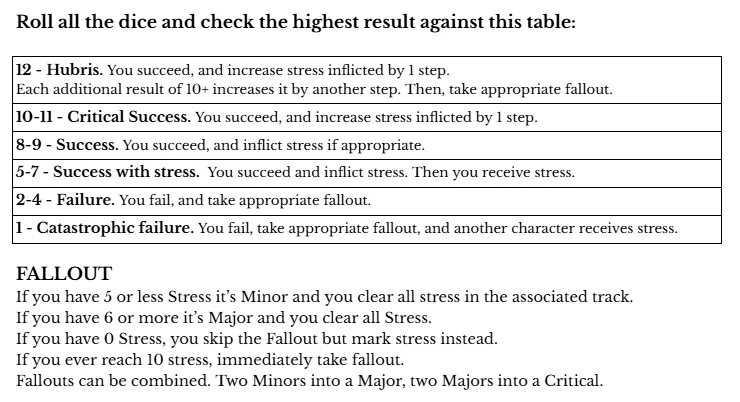
I’ve never been a fan of the fallout check, where each time you take stress the GM rolls to see if it translates into concrete fallout. It’s okay, and it makes for quite a measured playstyle (and gives the GM an easy option to fudge outcomes if it doesn’t suit the pace of the session), but I find it a bit stoppy-starty. You roll to resolve the action. You roll outgoing stress. You roll incoming stress. You roll for fallout. It could be more brisk.
To which end! There is no fallout check. If you fail a check, you take fallout. So try not to fail. I’m hoping this will mean more fallout and less admin.
It also means that characters can accrue stress ambiently and we don’t have to roll for fallout as a result, it just makes future fallout more punishing, so the GM can just say “cool, take 3 blood stress” at the end of a situation and there’s no chance of that immediately spiralling into a broken arm, etc.
I INCLUDED SOMETHING WE’VE USED IN EVERY GAME BUT NEVER WRITTEN DOWN
Hey! Imagine a roleplaying game. Any one. Doesn’t matter which. Let’s say you’ve had a good idea in-character, and the GM agrees it’s a good idea - what happens when you act on it? Something mechanical, right? Either it’s a +1 or a spare dice pick high or a bigger dice or whatever. And we’ve never put a rule like that in any of our games.
Now, when we run our games, we give out rewards like that in exchange for - well, I say good ideas, but it’s more like honouring the fiction and combining things in an interesting a viable way - and we never write it down. I think I feel a bit ashamed of it, like my beautiful games design should just handle the situation and there’s no need to entertain the GM or make things happen in the fiction to justify mechanical outcomes.
(AN ASIDE ABOUT THE PRINCIPLES OF GOOD DESIGN)
(I used to have an example about old-school and new-school design, which doesn’t quite ring true for me these days, but I want to bring it up here. When you want to search a room in D&D 3.5, you roll Search and tell the GM how high you rolled and if it’s above a certain number, you find the thing. When you want to search a room in D&D 2nd and earlier, you describe searching the room. The GM’s at liberty to spring traps on you if you described, say, running your fingers around the edge of a treasure chest or striding boldly into the centre of a room without checking for pits.
I used to champion the more modern version, because I was of the opinion that the GM was fallible, and they couldn’t hope to describe the room in enough detail to satisfyingly trick you or subtly clue you in, so any trap they sprung would be a dick move and we should just abstract the whole thing instead.
That’s where the split between fiction and mechanics comes, in my work, a split that you won’t often see in other stuff - I never quite moved past the Forge as the pinnacle of games design and onto the new OSR, and very often the things I make are something to do whilst you’re telling a story rather than anything approaching a simulation, or even an evocation. (See Eat the Reich for a set of mechanics almost entirely sheared free from fiction.)
These days I don’t think you should roll Search at all, really. You should just tell them what’s in there if it’s interesting. And if someone’s “ooh I wanna search for potions!” then you make up some potions for them to find if it makes sense, because this is improv. But I’m allergic to preparation and I don’t want to run someone else’s adventure, and the older I get, the more I see myself in a niche for those two things. You know a lot of people actually like doing prep for games? Weird.)
OKAY BACK TO THE RULE
ANYWAY I got over the shackles of my pretension, in this element at least, and decided to finally put in a mechanic for a player doing something neat or clever or fun that you want to reward. If that happens, they swap out their D10s for D12s and roll as normal; if they’re attempting to do something tricky or weird or awkward, they swap them for D8s.
The idea of rolling 4D12 for something is, and I understand this, objectively disgusting. They’re too round and too rare. But hopefully it’ll be unusual enough, and offer a substantial enough bonus, for people to get over the uncanny sensation of a D12 pool.
But it also lets me include a Hubris! Outcome, where you succeed but with dreadful complications, and I’ve waxed lyrical in the past about how much I love succeeding backward as the sexy, dangerous cousin of the well-worn principle of failing forward so I shan’t do so again.
Crucially, nothing in an ability or a location or a special rule or anything will trigger switching to D8s or D12s. It’s all fiction, and it’s all adjudicated by the table live in response to ongoing events, and it’s just... there. Use it. Justify it. (or don’t. The game should work fine without.)
I’VE HAD A BASH AT MAKING GROUP ACTIONS NOT TERRIBLE
One problem we’ve found whenever we write a game where the entire party pilots the same mech or sails the same ship or scoots around in the same tank is that there ends up not being much for each person to do on their turn. The guy nearest the steering wheel picks where you go; maybe the guy with the gun gets to shoot the gun.
In real life you have a captain or commander or what-have-you to let you work together efficiently, especially in the difficult circumstances of combat or exploration, but I don’t want to rely on just one person to call all the shots because that’s sort of boring in roleplaying games (where you don’t have the satisfaction of, say, physically driving the thing or aiming the thing or scanning the thing). It’s a lot of input for not a lot of output.
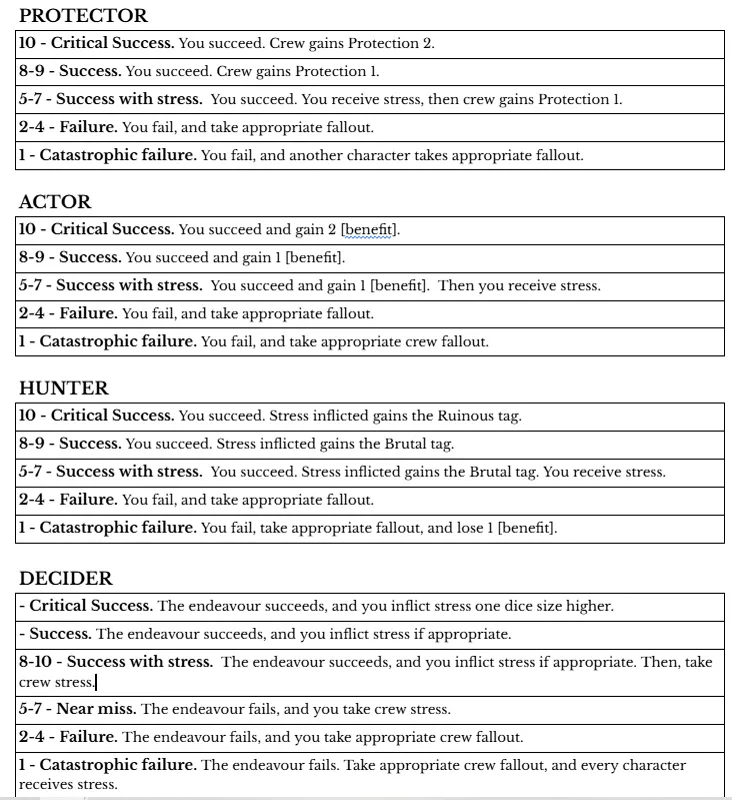
So I’ve put some more bits in around group actions in an effort, really, to allow us to have a scene where one ship fights another and it isn’t just an exercise in dice-rolling and listening carefully to the captain. (This is the part I’m most interested to try out, because it’s a big mechanical swing.) When you do something together, whether that’s piloting a ship or navigating dangerous terrain or having a big fight, you pick a role from the following:
And then you describe your actions, and you roll in a pre-determined order, and everything should shake out interesting:
Chris says it reminds him of Apocalypse World and I’m not sure how to take that.
I GOT RID OF DOMAINS
Domains! One of the best things we did in Spire: like skills, but they’re tied to parts of culture and geography instead of particular skills. So if you’ve got the Academia domain, you add a dice when you’re scouring old books for clues - but you also add a dice when you’re sneaking into a library, or blackmailing a professor, or having a shootout in the Dean’s office.
(Now: the domains are not at all balanced. Low Society is one, and given that the vast majority of the city of Spire consists of low society by necessity, it’s too useful too often when you compare it to Commerce or Academia or Crime. But it’s a good concept.)
We struggled a lot to incorporate Domains into Salt in a way that felt right. There was a brief period where we had a school of magic tied to each one, which I liked, but every solution we came to wound up feeling incomplete. We were trying to represent the entire world, or at least the coastal regions of it, in a set of eight equally-weighted words. (And: what domain do you use on the boat? Why not just pick that one? And if there isn’t one, why not?)
But thankfully, when I sidelined the boats in favour of the City, I found the solution: no more Domains. Why should you have expertise over this strange new (old) frontier? So it’s all skills now, and I’ve put in bonus dice for equipment fairly generously, and hopefully that should portray the fact that you don’t know what’s in here and you can’t really hope to grasp it in your lifetime.
AND REPLACED THEM WITH REPUTATION
One of the drafts of Salt - the second or third, I can’t remember which - was based on Reputation gain and loss. Chris loves the idea of Reputation, and usually comes up with some complex measure of representing it in most games that we write, but it rarely gets past the stage of several audacious progress meters and a lot of “???” in between “they hate you” and “they love you.”
I wanted to show the way that Salt is new with regards to the current geopolitical climate, and how the various power blocs available were trying to get a foothold on it - so now you get a rating of how much they like you. At high levels it gives you bonus dice when interacting with them; at very low levels it gives you bonus dice too, because they’re so desperate to kill you it’s making them stupid. Presumably there’s some stuff in the middle too; I’m starting to see why Chris relied so much on the old question marks.
Those communities of undead people work the same way, too, so as you progress into the city you can start making bonds with them as your old ones wither away. And they’re bound to the relics, too, so maybe you’ll need to earn their trust to further your progression towards a beautiful heartless legacy cyborg.
---
That’s quite enough words about words, I think. I should finish the playtest and run the damned thing. But it’s been fizzing away in my brain since I finished Hollows last year, and as I described above honestly a few years before that, and I wanted to talk about what I’ve done to show my working.
I’ll let you know how it goes.
With love and fury,
- Grant

Comments (5)
Excited to see the new version of fallout rules! Do you think they could they be ported as-is to Heart, or would the frequency of taking stress/fallout be thrown off?
Honestly, I think they could work pretty well! There'd be some adjustment needed, but not much interacts directly with the Fallout roll. Give it a go!
This was a great read, love to see inside your design process a bit. On Actors - could they be Executors? “Doer” also works but is too daft.
I like this! I was flopping between Executor and Instigator. Instigator makes me think of an overzealous first mate pushing everyone else to hit their marks. But it could also work against the opposition.
Neat!