








Coin-Op Collection Presents: DECO-16 (Tumble Pop)
Today's release for the Analogue Pocket and MiSTerFPGA platforms covers Data East's Tumble Pop, the first entry to the DECO-16 platform. Tumble Pop is a single-screen platformer built on Data East's 16-bit custom chipsets, the same hardware family behind:
Kuhga / Vapor Trail (1989)
Crude Buster / Two Crude (1990)
Dark Seal / Gate of Doom (1990)
The Cliffhanger: Edward Randy (1990)
Super Burger Time (1990)
Death Brade / Mutant Fighter (1991)
Tatakae Genshijin: Joe & Mac / Caveman Ninja (1991)
Robocop 2 (1991)
Thunder Zone / Desert Assault (1991)
Wolf Fang: Kuhga 2001 / Rohga (1991)
Tumble Pop (1991)
Dark Seal II / Wizard Fire (1992)
Funky Jet (1992)
Gun Ball / Nitro Ball (1992)
Diet Go Go (1992)
The Great Ragtime Show / Boogie Wings (1992)
Released in November 1991, Tumble Pop ranked as the 8th most successful table arcade unit in Japan that month. Published by Namco in Japan and distributed by Leprechaun Inc. in North America as a conversion kit, it earned a cult following for its Bubble Bobble-inspired gameplay and globe-trotting level design inspired by Pang / Buster Bros.
This post covers a technical overview of the DECO-16 hardware as implemented in Tumble Pop along with updates on the DECO-16 project. We will cover the DECO-8 hardware when that platform's first installment releases.
Overview:
Tumble Pop runs on Data East's DECO-16 hardware, driven by a Motorola MC68000 (DECO Custom 59) at 10.738 MHz. The sound system uses a HuC6280 (DECO Custom 45) at 8.055 MHz paired with a Yamaha YM2151 for FM synthesis and an OKI M6295 for ADPCM sample playback. Audio output is mono.
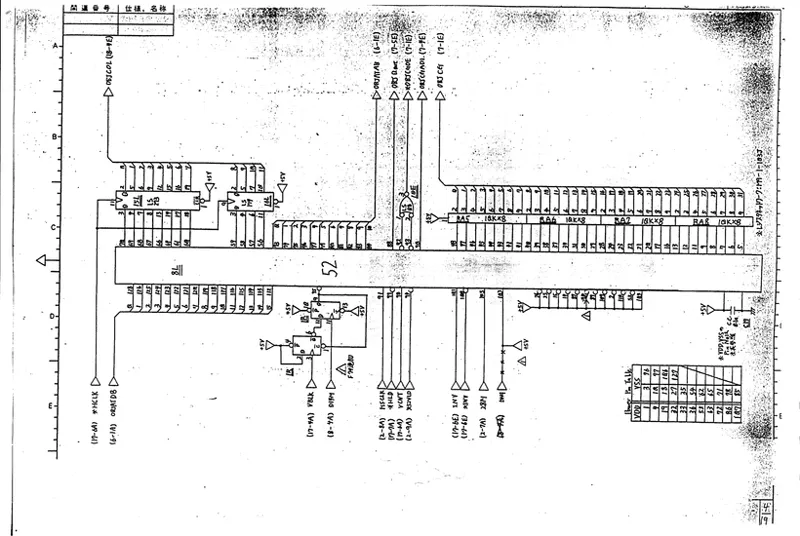
The video system outputs 320x240 at approximately 57.799 Hz in a horizontal orientation. Graphics are rendered by two Data East custom ICs: the DECO 55 (with DECO 56 on-chip tile decryption) generates two 4bpp playfields with independent scroll, rowscroll, and column scroll, while the DECO 52 handles sprites at 16x16 with multi-height support and per-sprite priority. The palette holds 1024 entries in 12-bit xBGR format. The DECO 56 sits between the tile ROMs and the playfield generator, decrypting graphics data on the fly as it is read from ROM.
Development Challenges:
The DECO 55 tilemap generator and DECO 52 sprite engine were developed from the Desert Assault schematics and verified against my Robocop 2 PCB. Some of the research behind the DECO 55 and DECO 52 builds on work by Bryan McPhail and David Haywood.
Both the DECO 55 and DECO 52 are being developed to support the full DECO-16 library. Some titles may introduce functionality not yet implemented, and verification continues against my Tumble Pop and Funky Jet PCBs as new configurations are brought up. The DECO 55 supports dual playfields with independent 8x8 or 16x16 tile modes, per-scanline rowscroll, per-column colscroll, GFX ROM banking, and scanline-atomic control register shadowing to prevent mid-line tearing. The DECO 52 handles multi-height sprites, double-width sprites, per-sprite flip and flash, and a double-buffered line buffer architecture.
The HuC6280 sound CPU relies on the T65 work covered in the Mat Mania post, using memory paging registers for 21-bit address translation across the full sound address space. The HuC6280 controls all sound hardware on this board: the YM2151, which uses Raki's IKAOPM, a BSD licensed open source implementation, and the OKI M6295, handled by Pramod's x6295, a complete implementation with four independent ADPCM voice channels and a shared sequential ALU.
Core Options:
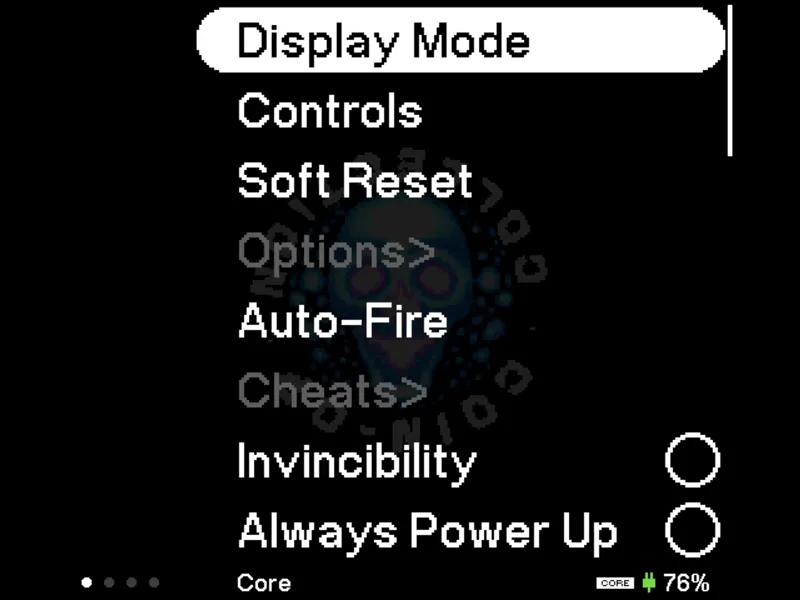
The MiSTer core includes video settings for aspect ratio, vertical scaling and cropping, scandoubler effects, and H/V positioning and sync adjustments. The refresh rate toggle is disabled while the core is in development.
Audio settings provide separate OPM and PCM toggle and volume control. Game settings include per-player auto-fire with adjustable rates and cheats accessible from the OSD. Arcade dip switches are directly accessible from the OSD.
The Pocket core provides auto-fire with per-button targeting and adjustable rates. Cheats and dip switches are configurable through the interact menu.
History, Gameplay, and Regional Information:
The game takes players on a worldwide adventure where two ghosthunters armed with backpack-mounted vacuum cleaners work together to clear stages of enemies. The vacuum can suck in enemies at close range, stun them from a distance, and spit captured enemies back out as projectile balls that ricochet off walls and defeat anything in their path. Enemies that are held too long will break free and become lethal on escape. A time pressure mechanic spawns an invincible creature if the player takes too long to clear a stage.
Ten themed worlds take players from Moscow to Egypt, Paris, New York, Rio de Janeiro, Antarctica, Australia, Japan, and finally into space and the Moon, each ending with a boss encounter. The final confrontation with the villain Dr. Dogedo takes place on the Moon. Dr. Dogedo is a recurring Data East antagonist who also appears in Diet Go Go and the Joe & Mac series.
Power-ups include speed boosts and vacuum upgrades. Alphabet letters appear throughout stages, and collecting them to spell TUMBLEPOP grants access to a timed bonus stage. Players lose all power-ups when hit, reverting to their base state.
Tumble Pop features cameo appearances from characters across Data East's catalog, including Karnov, Chelnov, and Joe & Mac. Each world brings its own enemy types and attack patterns tied to the setting.
Regional differences between the World and Japan releases are minor. The game was extensively bootlegged, particularly in Korea, where multiple variants appeared with altered music and sound hardware. A near-complete clone titled Jumping Pop surfaced in 2001 from Korean developer ESD.
The game has maintained a dedicated cult following since release, driven by its accessible cooperative gameplay, colorful presentation, and the enduring appeal of its capture-and-defeat loop.
Updates:
Tumble Pop is the first DECO-16 release, but development on the platform extends well beyond this title. Vapor Trail, Crude Buster, Dark Seal, Edward Randy, Super Burger Time, Funky Jet, and Diet Go Go are all in preparation for release.
The remaining DECO-16 titles include Mutant Fighter, Caveman Ninja, Robocop 2, Desert Assault, Rogha, Wizard Fire, Nitro Ball, and Boogie Wings. These are in various stages of development but all are booting and semi-functional. They will follow as the custom DECO chipset implementations continue to mature across the library.
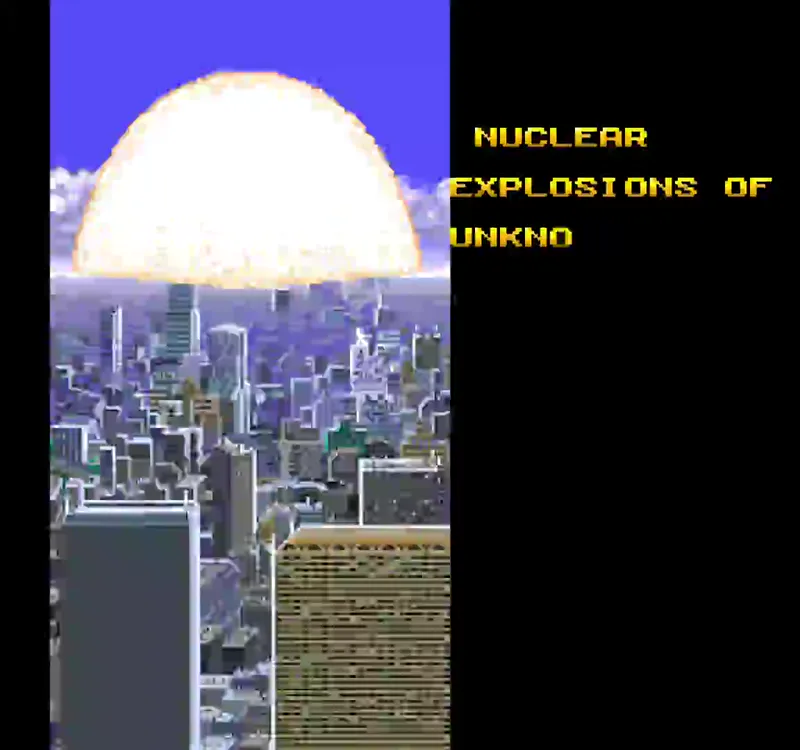
Initial standup of the DECO-32 platform is also underway, targeting Captain America and The Avengers, Fighter's History, Night Slashers, and Dragon Gun. The DECO-32 hardware uses an ARM-based CPU, and I have been writing my own ARM2/3 compatible processor core for this platform since mid-February. Once the core is completed, xARM will be added to the Development-Modules repository. Here's a glimpse of Captain America and The Avengers.
The MiSTerFPGA and Analogue Pocket updaters may take some time to sync. Files can also be pulled directly from the repositories or from this post. Stay tuned for tomorrow's release!
Disclaimer: All product names, trademarks, and registered trademarks mentioned are the property of their respective owners. "Analogue", "Analogue Pocket", "MiSTer", "MiSTerFPGA", "OpenFPGA", "ARM", "Data East", "HuC", "Motorola", "Namco", "OKI", "Taito", and "Yamaha" and all derivative works are trademarks, registered trademarks, or copyrighted materials of their respective holders. Use of these names does not imply endorsement or association with this post. All rights reserved to their respective owners. This post is for educational and research purposes only.
Comments (13)
Great work chaps, as always when development is complete highscore saving would be much appreciated
It's a pleasure to see such dedicated work and such impressive results. I appreciate the effort and feel rewarded for my humble support. Congratulations!
What an age to be alive! Please take your time for releasing new games! You are awesome!
Great work! But i noticed the HQ2x option is missing under scandoubler Fx (MisterFPGA). This is sad, as this option works great on comic art games. Any chance to bring it back?
No. HQ2x is not apart of our framework and hasn't been for sometime. Sorry.
Great stuff , thank atract17 and pramod💯💯
atrac like the audio format!
Booooom Another hit It has been released!!!! Fantastic game!!! I have great memories of playing it!!! Keep it upn guys, you're the best!!!!
Love these detailed write-ups/posts. Kudos!
I'm loving this and looking forward to Crude Buster and Super Burger Time. Great stuff as always!
Kick-ass! Thanks for your hard work.
Wolf Fang!!!!!!!!
Are you reading my memory? First Mat Manía and now Tumblepop! Another beloved arcade! Thank you team, as always!